

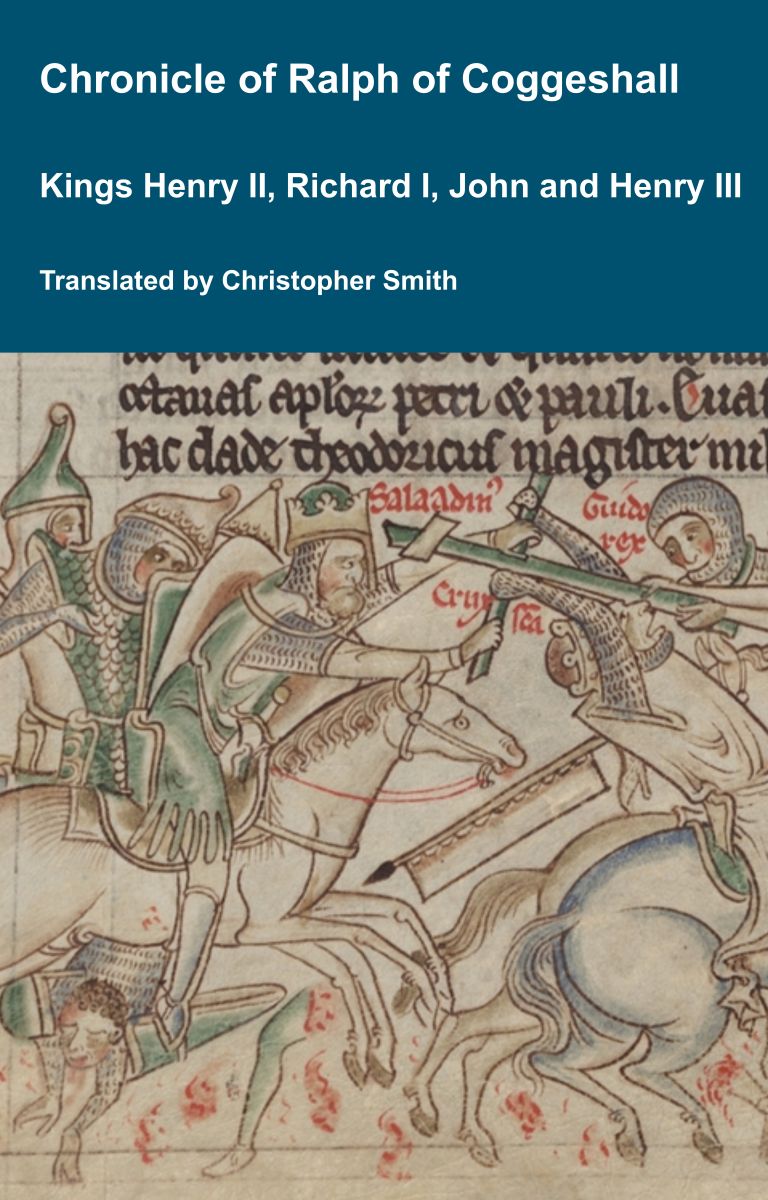
Chronicle of Abbot Ralph of Coggeshall
The Chronicle of Abbot Ralph of Coggeshall (Chronicon Anglicanum) is an indispensable medieval history that brings to life centuries of English and European affairs through the eyes of a learned Cistercian monk. Ralph of Coggeshall, abbot of the Abbey of Coggeshall in Essex in the early 13th century, continued and expanded his community’s chronicle, documenting events from the Norman Conquest of 1066 into the tumultuous reign of King Henry III. Blending eyewitness testimony, careful compilation, and the monastic commitment to record-keeping, this chronicle offers a rare narrative of political intrigue, royal power struggles, and social upheaval in England and beyond. Ralph’s work captures the reigns of pivotal figures such as Richard I and King John, providing invaluable insights into their characters, decisions, and the forces that shaped medieval rule. More than a simple annal, Chronicon Anglicanum conveys the texture of medieval life and governance, making it a rich source for scholars and readers fascinated by English history, monastic authorship, and the shaping of the medieval world.
Available at Amazon in eBook and Paperback format.
Brighton is in East Sussex.
Samuel Pepys' Diary. 17th September 1666. Up betimes, and shaved myself after a week's growth, but, Lord! how ugly I was yesterday and how fine to-day! By water, seeing the City all the way, a sad sight indeed, much fire being still in. To Sir W. Coventry [aged 38], and there read over my yesterday's work: being a collection of the particulars of the excess of charge created by a war, with good content. Sir W. Coventry was in great pain lest the French fleete should be passed by our fleete, who had notice of them on Saturday, and were preparing to go meet them; but their minds altered, and judged them merchant-men, when the same day the Success, Captain Ball, made their whole fleete, and come to Brighthelmstone, and thence at five o'clock afternoon, Saturday, wrote Sir W. Coventry newes thereof; so that we do much fear our missing them. Here come in and talked with him Sir Thomas Clifford [aged 36], who appears a very fine gentleman, and much set by at Court for his activity in going to sea, and stoutness everywhere, and stirring up and down.


On 25th July 1787 Arthur Devis [aged 75] died at Brighton.
On 31st May 1847 John Beckett 2nd Baronet [aged 72] died at Brighton. He was buried at All Saints Church, Fulham. His brother Thomas [aged 68] succeeded 3rd Baronet Beckett of Leeds.
On 13th August 1850 Martin Archer Shee [aged 80] died at Brighton.
On 22nd February 1855 John Ponsonby 1st Viscount Ponsonby [aged 85] died at Brighton. Viscount Ponsonby of Imokilly in Cork extinct. His nephew William [aged 39] succeeded 3rd Baron Ponsonby of Imokilly in County Cork.
On 31st May 1883 Edwyn Sherard Burnaby [aged 53] died at Brighton. Algernon Edwyn Burnaby [aged 15] inherited Baggrave Hall.
On 3rd April 1890 George Phipps 2nd Marquess Normanby [aged 70] died at Brighton. His son Constantine [aged 43] succeeded 3rd Marquess Normanby, 4th Earl Mulgrave, 4th Viscount Normanby, 6th Baron Mulgrave of New Ross in Wexford and 4th Baron Mulgrave.
On 3rd March 1891 Leonard Jerome "King of Wall Street" Financier [aged 73] died in Brighton. His wife Clarissa Hall [aged 66] and daughters Clarita "Clara" Jerome [aged 40], Jenny Jerome [aged 37] and Leonie Blanche Jerome Lady Leslie [aged 32] were present.
On 17th August 1899 John Savile 4th Earl Mexborough [aged 89] died at Brighton. His son John [aged 56] succeeded 5th Earl Mexborough of Lifford in County Donegal.

Anne Boleyn. Her Life as told by Lancelot de Carle's 1536 Letter.
In 1536, two weeks after the execution of Anne Boleyn, her brother George and four others, Lancelot du Carle, wrote an extraordinary letter that described Anne's life, and her trial and execution, to which he was a witness. This book presents a new translation of that letter, with additional material from other contemporary sources such as Letters, Hall's and Wriothesley's Chronicles, the pamphlets of Wynkyn the Worde, the Memorial of George Constantyne, the Portuguese Letter and the Baga de Secrets, all of which are provided in Appendices.
Available at Amazon in eBook and Paperback format.
On 20th November 1917 Cecil Weld-Forester 5th Baron Forester [aged 75] died at Brighton. He was buried at Willey Church, Shropshire. His son George [aged 50] succeeded 6th Baron Forester of Willey Park in Shropshire.
On 27th December 1830 Lucius Cary 10th Viscount Falkland [aged 27] and Amelia Fitz-Clarence Viscountess Falkland [aged 23] were married at the Brighton Royal Pavilion. King William IV [aged 65] gave away his daughter. The service was conducted by Bishop Charles Richard Sumner. She the illegitmate daughter of King William IV of the United Kingdom and Dorothea Bland aka "Mrs Jordan".


On 21st October 1864 Christabel Cockerell was baptised at the Chapel Royal, Brighton.
On 22nd November 1926 Francis Pelham 7th Earl Chichester [aged 21] died of pneumonia unmarried at Stanmer Park Falmer Brighton. His brother John [aged 14] succeeded 8th Earl Chichester, 9th Baron Pelham of Stanmer in Sussex and 13th Baronet Pelham of Laughton.
On 28th May 1902 Walter John Pelham 4th Earl Chichester [aged 63] died at Stanmer House Stanmer Park Falmer Brighton. He was buried at Stanmer Church Stanmer Park Falmer Brighton. His brother Francis [aged 57] succeeded 5th Earl Chichester, 6th Baron Pelham of Stanmer in Sussex and 10th Baronet Pelham of Laughton. Alice Carr Glyn Countess Chichester by marriage Countess Chichester.
On 28th May 1902 Walter John Pelham 4th Earl Chichester [aged 63] died at Stanmer House Stanmer Park Falmer Brighton. He was buried at Stanmer Church Stanmer Park Falmer Brighton. His brother Francis [aged 57] succeeded 5th Earl Chichester, 6th Baron Pelham of Stanmer in Sussex and 10th Baronet Pelham of Laughton. Alice Carr Glyn Countess Chichester by marriage Countess Chichester.
On 2nd December 1624 Anthony Shirley [aged 78] died at Preston Manor Brighton.
On 24th September 1930 Ellis William Roberts [aged 69] died at the Queens Hotel Brighton. His will was proved 31st December 1930 the summary of which reads:
Ellis William of 6 William Street Lowndes Square Westminster Middlesex and of 12 Wexford Road Wandsworth Common Surrey died 24 Sep 1930 at Queens Hotel Brighton. Probate London 31 December to Eliza Roberts widow Robert Ellis Roberts [aged 40] schoolmaster Walter Kearsey Smith cashier and Millicent Elsie Fraser (wife of Ronald Fraser). Effects £12732 2s 8d. Resworn £12832 15s 3d.

On 24th May 1912 Edward Albert Sassoon 2nd Baronet [aged 55] died. He was buried in the Sassoon Mausoleum. His son Philip [aged 23] succeeded 3rd Baronet Sassoon of Kensington-gore in London.
In 1933 the remains of the Sassoon family interred in the Sassoon Mausoleum were removed to the Liberal Jewish Cemetery, Wilesden.
On 18th May 1830 Richard Henry Rycroft 3rd Baronet [aged 36] and Charlotte Ann Josephine Tennant Lady Rycroft were married at St Nicholas' Church, Brighton. She by marriage Lady Rycroft of Calton in Yorkshire.
On 17th June 1835 Admiral Francis Laforey 2nd Baronet [aged 67] died unmarried and without issue. He was buried in the churchyard of St Nicholas' Church, Brighton. Baronet Laforey of Whitby in Devon extinct.
Whitehawk Camp is also in South-East England Causewayed Enclosures.
Around 3600BC. Whitehawk Camp [Map] is a causewayed enclosure near Brighton in Sussex. In 1929 R. P. Ross Williamson and E. Cecil Curwen undertook atn excavation at Whitehawk Camp. In 1930, the archaeologist E. Cecil Curwen identified sixteen sites that were definitely or probably Neolithic causewayed enclosures.
The Iron-Age Hill Fort consists of a well-defined bank and ditch, with a smaller outer bank, in an irregular nine-sided polygon. There are two gaps, at the east-northeast and west-southwest edges, indicating entrances. The depth of the ditch and the height of the bank vary, with the highest point reaching 5.5 m (6.0 yd) above the bottom of the ditch.
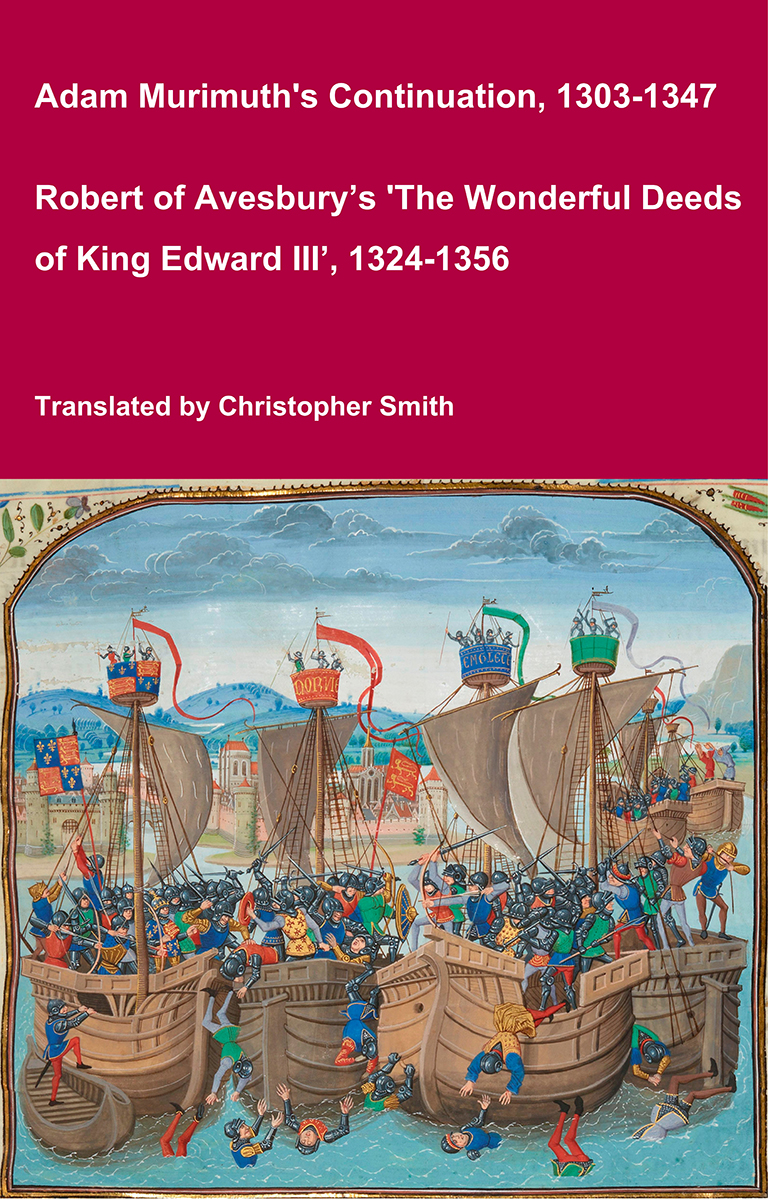
Adam Murimuth's Continuation and Robert of Avesbury’s 'The Wonderful Deeds of King Edward III'
This volume brings together two of the most important contemporary chronicles for the reign of Edward III and the opening phases of the Hundred Years’ War. Written in Latin by English clerical observers, these texts provide a vivid and authoritative window into the political, diplomatic, and military history of fourteenth-century England and its continental ambitions. Adam Murimuth Continuatio's Chronicarum continues an earlier chronicle into the mid-fourteenth century, offering concise but valuable notices on royal policy, foreign relations, and ecclesiastical affairs. Its annalistic structure makes it especially useful for establishing chronology and tracing the development of events year by year. Complementing it, Robert of Avesbury’s De gestis mirabilibus regis Edwardi tertii is a rich documentary chronicle preserving letters, treaties, and official records alongside narrative passages. It is an indispensable source for understanding Edward III’s claim to the French crown, the conduct of war, and the mechanisms of medieval diplomacy. Together, these works offer scholars, students, and enthusiasts a reliable and unembellished account of a transformative period in English and European history. Essential for anyone interested in medieval chronicles, the Hundred Years’ War, or the reign of Edward III.
Available at Amazon in eBook and Paperback format.
On 2nd January 1821 Edward Kerrison 2nd Baronet was born to Edward Kerrison 1st Baronet [aged 44] and Mary Martha Ellice at Wick House, Brighton. He married 23rd July 1844 Caroline Margaret Fox-Strangways Lady Kerrison, daughter of Henry Fox-Strangways 3rd Earl of Ilchester and Caroline Leonora Murray Countess Ilchester.