


William of Worcester's Chronicle of England
William of Worcester, born around 1415, and died around 1482 was secretary to John Fastolf, the renowned soldier of the Hundred Years War, during which time he collected documents, letters, and wrote a record of events. Following their return to England in 1440 William was witness to major events. Twice in his chronicle he uses the first person: 1. when writing about the murder of Thomas, 7th Baron Scales, in 1460, he writes '… and I saw him lying naked in the cemetery near the porch of the church of St. Mary Overie in Southwark …' and 2. describing King Edward IV's entry into London in 1461 he writes '… proclaimed that all the people themselves were to recognize and acknowledge Edward as king. I was present and heard this, and immediately went down with them into the city'. William’s Chronicle is rich in detail. It is the source of much information about the Wars of the Roses, including the term 'Diabolical Marriage' to describe the marriage of Queen Elizabeth Woodville’s brother John’s marriage to Katherine, Dowager Duchess of Norfolk, he aged twenty, she sixty-five or more, and the story about a paper crown being placed in mockery on the severed head of Richard, 3rd Duke of York.
Available at Amazon in eBook and Paperback format.
Chenies Manor House, Buckinghamshire is in Chenies, Buckinghamshire.
Chenies Manor House, Buckinghamshire [Map].
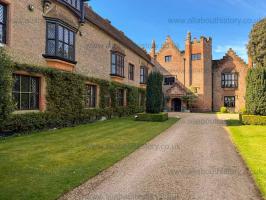
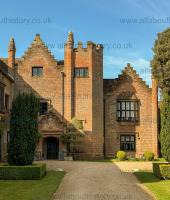
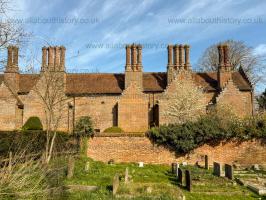
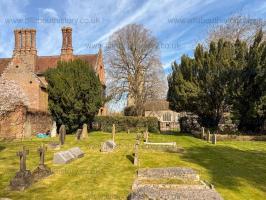
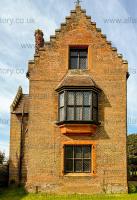
Before 1285 Alexander Cheyne is record as owning Chenies Manor House, Buckinghamshire [Map].
In 1296 Chenies Manor House, Buckinghamshire [Map] was given to Bartholemew Cheyne.
A History of the County of Buckingham: Volume 3: Parishes: Chenies. 1296. The next to hold Isenhampstead was Bartholomew Cheyne, whose name occurs between the years 1296 and 131615. He was followed by Alexander Cheyne, who with Margaret his wife was in 1321 in possession of Isenhampstead Chenies Manor [Map], so called for the first time16, and was still holding in 134617. By 1350 it had passed to John Cheyne18, who was Sheriff of Bedfordshire and Buckinghamshire in 137119 and a knight of the shire in 137320. He was afterwards knighted21, but in 1397 was condemned to death as a Lollard with Sir John Oldcastle22. The sentence was, however, at the intercession of the Lords, commuted to one of perpetual imprisonment23.
Note 15. Feud. Aids, i, 91, 18; Lipscomb, Hist. and Antiq. of Bucks. iii, 251.
Note 16. De Banco R. 238, m. 155. Alexander presented to the church in 1325 (Add. MS. 5480, fol. 39).
Note 17. Feet of F. Bucks. Mich. 6 Edw. III, no. 8; Feud. Aids, i, 116.
Note 18. Cal. Close, 1349-54, p. 230.
Note 19. P.R.O. List of Sheriffs, 2.
Note 20. Ret. of Memb. of Parl. i, 190.
Note 21. Cal. Pat. 1377-81, p. 235; Close, 6 Ric. II, pt. i, m. 32 d.
Note 22. V.C.H. Bucks. i, 291.
Note 23. Ibid.
 Become a Member via our Buy Me a Coffee page to read more.
A History of the County of Buckingham: Volume 3: Parishes: Chenies. On Sir John Cheyne's (age 78) death without issue in 146833 his widow Agnes married Edmund Molyneux, who was sheriff of the county in 147534 and presented to the church in 147935. He died in 148436, and Agnes survived him ten years. By her will 20 November 1494 her first husband's great-great-nephew John Cheyne of Chesham Bois (q.v.) obtained Drayton Beauchamp, Grove and Cogenhoe Manors, but Chenies [Map] passed to Agnes Cheyne's niece Anne (age 35) wife of David Philip37. Anne and David Philip, who was sheriff in 149838, had some difficulty in inducing the trustees to hand over the manor39, but were in possession in 1500, when Chenies was settled on Anne and her issue40. She died seised of it in 1510, when it passed to her granddaughter Anne wife of John Broughton and daughter and heir of Guy Sapcote (age 19), son of Anne Philip by a former husband (age 39)41.
Note 33. Chan. Inq. p.m. 8 Edw. IV, no. 51.
Note 34. P.R.O. List of Sheriffs, 2.
Note 35. Lipscomb, Bucks. iii, 252.
Note 36. Brass in church.
Note 37. Add. MS. 5840, fol. 39.
Note 38. P.R.O. List of Sheriffs, 2.
Note 39. Early Chan. Proc. bdle. 218, no. 30.
Note 40. De Banco R. Hil. 15 Hen. VII, m. 297; Chan. Inq. p.m. (Ser. 2), xxv, 162.
Note 41. Chan. Inq. p.m. (Ser. 2), xxv, 162.
Become a Member via our Buy Me a Coffee page to read more.
In 1479 Guy Sapcote of Thornhaugh, Bedfordshire (age 30) died. His daughter Anne Sapcote Countess Bedford and her husband John Russell 1st Earl Bedford inherited Chenies Manor House, Buckinghamshire [Map]
On 21st June 1485 Edmund Molyneux died at Chenies Manor House, Buckinghamshire [Map].
Chronicle of a Bourgeois of Valenciennes
Récits d’un bourgeois de Valenciennes aka The Chronicle of a Bourgeois of Valenciennes is a vivid 14th-century vernacular chronicle written by an anonymous urban chronicler from Valenciennes in the County of Hainaut. It survives in a manuscript that describes local and regional history from about 1253 to 1366, blending chronology, narrative episodes, and eyewitness-style accounts of political, military, and social events in medieval France, Flanders, and the Low Countries. The work begins with a chronological framework of events affecting Valenciennes and its region under rulers such as King Philip VI of France and the shifting allegiances of local nobility. It includes accounts of conflicts, sieges, diplomatic manoeuvres, and the impact of broader struggles like the Hundred Years’ War on urban life in Hainaut. Written from the perspective of a burgher (bourgeois) rather than a monastery or royal court, the chronicle offers a rare lay viewpoint on high politics and warfare, reflecting how merchants, townspeople, and civic institutions experienced the turbulence of the 13th and 14th centuries. Its narrative style combines straightforward reporting of events with moral and civic observations, making it a valuable source for readers interested in medieval urban society, regional politics, and the lived experience of war and governance in pre-modern Europe.
Available at Amazon in eBook and Paperback format.
On 1st August 1510 Anne de Semarc (age 77) died. Her grand-daughter Anne Sapcote Countess Bedford (age 31) inherited Chenies Manor House, Buckinghamshire [Map].
A History of the County of Buckingham: Volume 3: Parishes: Chenies. John Broughton died in 151842, and by 1523 Anne (age 39) was the wife of Richard Jermingham43. He died before 1526, in which year Anne married John Lord Russell (age 33)44, the favourite of Henry VIII (age 26), who stayed at Chenies [Map] in 153445. Lord Russell was made lord high admiral in 154046, and in 1541 the privy council met at Chenies47. In 1550 Russell was created Earl of Bedford, and on his death in 1555 he was buried in the mausoleum in Chenies Church built by his widow Anne48, and in which all the succeeding Earls and Dukes of Bedford lie buried.
Note 42. Ibid. xxxiii, 108.
Note 43. Feet of F. Div. Co. East. 15 Hen. VIII; Bucks. East. 15 Hen. VIII.
Note 44. Dict. Nat. Biog.; Feet of F. Bucks Trin. and Mich. 20 Hen. VIII.
Note 45. L. and P. Hen. VIII, vii, 965.
Note 46. Ibid. xvi, 1339; Dict. Nat. Biog.
Note 47. L. and P. Hen. VIII, xvi, 1287.
Note 48. G.E.C. Complete Peerage.
Become a Member via our Buy Me a Coffee page to read more.
In 1534 King Henry VIII of England and Ireland (age 42), Queen Anne Boleyn of England (age 33) and Princess Elizabeth visited Chenies Manor House, Buckinghamshire [Map].
Before November 1541 King Henry VIII of England and Ireland (age 50) and Queen Catherine Howard of England (age 18) visited Chenies Manor House, Buckinghamshire [Map]. The house was subsequently mentioned in evidence against her as somewhere she had committed adultery with Thomas Culpepper (age 27).
In 1544 Sir John Leland visited the house in 1544 and wrote:
"The old house of Cheynies [Map] is so translated by my Lord Russell that little or nothing of it in a manner remaineth untranslated: and a great deal of the house has been newly set up made of brick and timber: and fair lodgings be new erected in the garden. The house is within diverse places richly painted with antique works of white and Black. And there be about the House two Parkes as I remember. The Manor Place standeth at the West Ende of the Parishe Churche. In the Parishe Churche on the North side of it, as in a Chapelle, be two Tumbes of the Cheynies Lords of the Manor and the small village bearing their name".(Leland's Itinerary, fol 122)
On 14th March 1559 Anne Sapcote Countess Bedford (age 80) died. Her son Francis Russell 2nd Earl Bedford (age 32) inherited Chenies Manor House, Buckinghamshire [Map]
A History of the County of Buckingham: Volume 3: Parishes: Chenies. Francis the second Earl of Bedford (age 34) established his right to the manor [Map] beyond all dispute in 1561, when he procured a renunciation from John Cheyne of any claim which might be put forward by the Cheynes of Chesham Bois49.
Note 49. Com. Pleas D. Enr. Mich. 2 & 3 Eliz.; Hil. 3 Eliz.; Feet of F. Bucks. Hil. 3 Eliz.
A History of the County of Buckingham: Volume 3: Parishes: Chenies. In October 1592 the privy council again met at Chenies [Map]52.
Note 52. Acts of P.C. 1592, p. 228.
A History of the County of Buckingham: Volume 3: Parishes: Chenies. Lord William Russell (age 43), son of the fifth earl, is perhaps the most interesting figure in connexion with Chenies [Map]. As a member of the country party in the House of Commons he backed the Bill excluding the Duke of York from the throne. Being afterwards implicated in the Rye House Plot he was executed for treason in Lincoln's Inn Fields on 21 July 1683 and has earned for himself the name of 'patriot' or martyr of the Revolution52. He was buried at Chenies and his widow Lady Rachel Russell (age 47) visited the church in later years, when she decided to 'make a little monument' and erected the one to the fifth earl (age 66) and his wife (age 67) with medallions of their children, conspicuous among which is that of Lord William Russell, ranged in rows on either side54. Chenies has remained in the Russell family until the present day55, the present Duke of Bedford being lord of the manor, but it is many years since the family ceased to use the old manor-house as a residence.
Note 53. Dict. Nat. Biog.; G.E.C. Complete Peerage.
Note 54. Froude, op. cit. iv, 517.
Note 55. 55. Feet of F. Div. Co. Mich. 8 & 9 Eliz.; Chan. Inq. p.m. (Ser. 2), ccxi, 132; ccccxxxv, 118; Cal. S. P. Dom. 1581-90, p. 380; Acts of P.C. 1601-4, p. 145; Hist.MSS. Com. Rep. xii, App. v, 131; Recov. R. Hil. 11 Jas. I, m. 97; Mich. 14 Jas. I, m. 136; Mich. 6 Geo. II, m. 291; Mich. 1 Geo. III, m. 139; Trin. 49 Geo. III, m. 152; Fine R. 16 Jas. I, pt. i, no. 4; Lysons, Mag. Brit. i (3), 584.


The History of William Marshal was commissioned by his son shortly after William’s death in 1219 to celebrate the Marshal’s remarkable life; it is an authentic, contemporary voice. The manuscript was discovered in 1861 by French historian Paul Meyer. Meyer published the manuscript in its original Anglo-French in 1891 in two books. This book is a line by line translation of the first of Meyer’s books; lines 1-10152. Book 1 of the History begins in 1139 and ends in 1194. It describes the events of the Anarchy, the role of William’s father John, John’s marriages, William’s childhood, his role as a hostage at the siege of Newbury, his injury and imprisonment in Poitou where he met Eleanor of Aquitaine and his life as a knight errant. It continues with the accusation against him of an improper relationship with Margaret, wife of Henry the Young King, his exile, and return, the death of Henry the Young King, the rebellion of Richard, the future King Richard I, war with France, the death of King Henry II, and the capture of King Richard, and the rebellion of John, the future King John. It ends with the release of King Richard and the death of John Marshal.
Available at Amazon in eBook and Paperback format.
Time Team Series 12 Episode 1: The Manor That's Back to Front undertook excavations to determine the location of Chenies Manor House, Buckinghamshire [Map].
A History of the County of Buckingham: Volume 3: Parishes: Chenies. He entertained Queen Elizabeth at Chenies [Map] on 19 July 157050 and she thought of returning there in August 157651.
Note 50. Nichols, Queen Elizabeth's Progresses, i, 274.
Note 51. Hist. MSS. Com. Rep. vii, App. 629; Pepys MSS. (Hist. MSS. Com.), 179.