

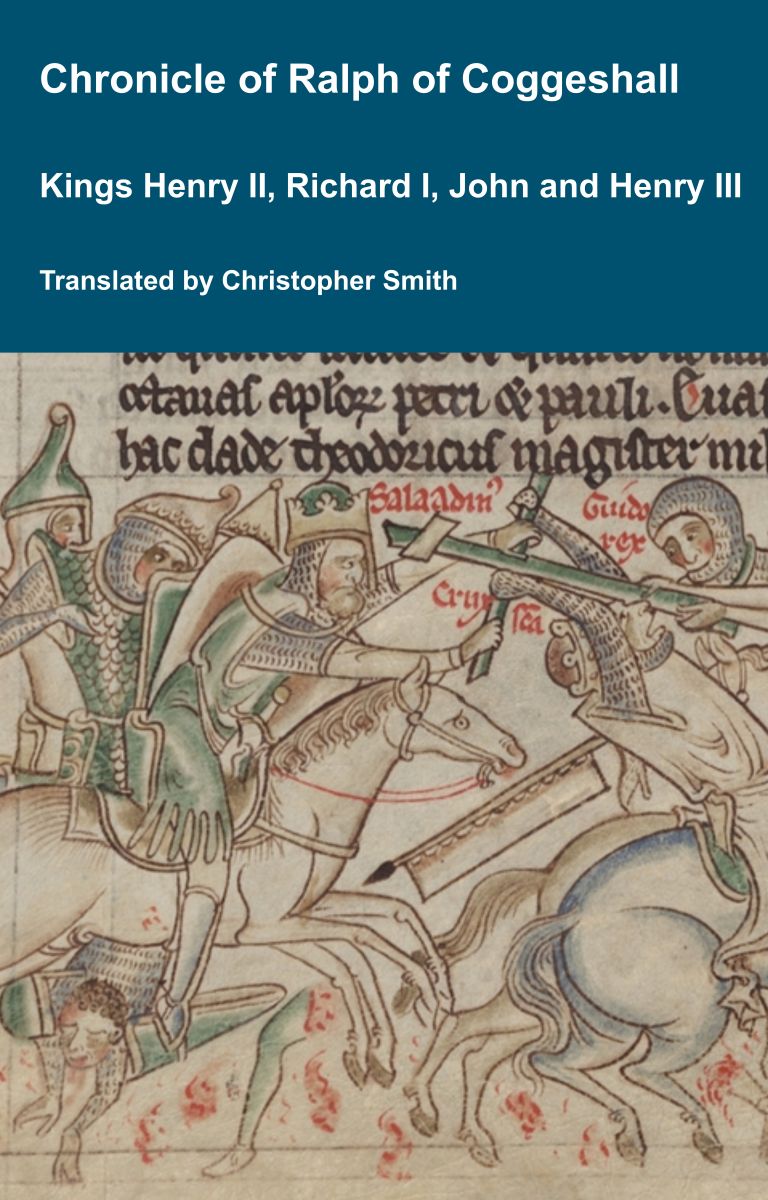
Chronicle of Abbot Ralph of Coggeshall
The Chronicle of Abbot Ralph of Coggeshall (Chronicon Anglicanum) is an indispensable medieval history that brings to life centuries of English and European affairs through the eyes of a learned Cistercian monk. Ralph of Coggeshall, abbot of the Abbey of Coggeshall in Essex in the early 13th century, continued and expanded his community’s chronicle, documenting events from the Norman Conquest of 1066 into the tumultuous reign of King Henry III. Blending eyewitness testimony, careful compilation, and the monastic commitment to record-keeping, this chronicle offers a rare narrative of political intrigue, royal power struggles, and social upheaval in England and beyond. Ralph’s work captures the reigns of pivotal figures such as Richard I and King John, providing invaluable insights into their characters, decisions, and the forces that shaped medieval rule. More than a simple annal, Chronicon Anglicanum conveys the texture of medieval life and governance, making it a rich source for scholars and readers fascinated by English history, monastic authorship, and the shaping of the medieval world.
Available at Amazon in eBook and Paperback format.
The River Witham rises near South Witham, South Kesteven [Map] from where it flows past North Witham, South Kesteven [Map], Colsterworth, South Kesteven [Map], Easton, South Kesteven [Map] to Great Ponton, South Kesteven [Map] where it is joined by the Cringle Brook.
From Great Ponton, South Kesteven [Map] the River Witham flows through Grantham [Map], Belton, Grantham [Map], past Barkston, South Kesteven [Map], Marston, South Kesteven [Map] and Hougham, South Kesteven [Map], Westborough, South Kesteven [Map], Long Benington, South Kesteven [Map], Claypole, South Kesteven [Map], Beckingham, North Kesteven [Map], Norton Disney, North Kesteven [Map], Bassingham, North Kesteven [Map], Haddington, North Kesteven [Map], Aubourn, North Kesteven [Map] through the centre of Lincoln, Lincolnshire [Map] where it joined by the River Till.
From Lincoln, Lincolnshire [Map] it flows under Five Mile Bridge [Map], past Bardney Abbey [Map], Kirkstead [Map], under Tattershall Bridge [Map] after which it is joined by the River Bain
After Tattershall the River Witham flows through canalised sections under Lanrick Bridge [Map], past Anton's Gowt [Map] to Boston [Map] where it is joined by the South Forty Foot Drain. After Boston [Map] the River Witham flows into the The Wash around eight kilometres away.
The River Bain rises near Ludford [Map] from where it flows past Donington on Bain [Map], Goulceby [Map], Hemingby [Map], Horncastle [Map], Dalderby [Map], Kirkby on Bain [Map], Tumby [Map] past Tattershall Castle [Map] after which it joins the River Witham.
The River Bain rises near Ludford [Map] from where it flows past Donington on Bain [Map], Goulceby [Map], Hemingby [Map], Horncastle [Map], Dalderby [Map], Kirkby on Bain [Map], Tumby [Map] past Tattershall Castle [Map] after which it joins the River Witham.
On 4th December 1859 Mary Molyneux [aged 66] died at Elkington Rectory. She was buried in the Chancel of St Oswald's Church, Brereton [Map] on 8th December 1859 where she has a memorial window in the south transept.
The River Bain rises near Ludford [Map] from where it flows past Donington on Bain [Map], Goulceby [Map], Hemingby [Map], Horncastle [Map], Dalderby [Map], Kirkby on Bain [Map], Tumby [Map] past Tattershall Castle [Map] after which it joins the River Witham.
The River Bain rises near Ludford [Map] from where it flows past Donington on Bain [Map], Goulceby [Map], Hemingby [Map], Horncastle [Map], Dalderby [Map], Kirkby on Bain [Map], Tumby [Map] past Tattershall Castle [Map] after which it joins the River Witham.
On 27th August 1398 Ralph Cromwell 1st Baron Cromwell [aged 57] died at Horncastle [Map]. His son Ralph [aged 30] succeeded 2nd Baron Cromwell.
On 23rd September 1455 Philip Dymoke [aged 53] died at Scrivelsby. He was buried at Horncastle [Map].
Around 1500 Margaret Dymoke aka Mistress Coffin was born to Robert Dymoke [aged 39] at Horncastle [Map]. She married (1) in or before 1508 her fourth cousin once removed Richard Vernon and had issue (2) after August 1517 William Coffin (3) 1539 her fifth cousin Richard Manners, son of George Manners 11th Baron Ros Helmsley and Anne St Leger Baroness Ros of Helmsley.
The River Bain rises near Ludford [Map] from where it flows past Donington on Bain [Map], Goulceby [Map], Hemingby [Map], Horncastle [Map], Dalderby [Map], Kirkby on Bain [Map], Tumby [Map] past Tattershall Castle [Map] after which it joins the River Witham.
Henrici Quinti, Angliæ Regis, Gesta, is a first-hand account of the Agincourt Campaign, and subsequent events to his death in 1422. The author of the first part was a Chaplain in King Henry's retinue who was present from King Henry's departure at Southampton in 1415, at the siege of Harfleur, the battle of Agincourt, and the celebrations on King Henry's return to London. The second part, by another writer, relates the events that took place including the negotiations at Troye, Henry's marriage and his death in 1422.
Available at Amazon in eBook and Paperback format.

On 9th July 1813 Emily Sellwood Baroness Tennyson was born to Henry Sellwood [aged 31] at Market Place, Horncastle. She married 13th June 1850 Alfred Tennyson 1st Baron Tennyson and had issue.
In or before 1816 Louisa Sellwood was born to Henry Sellwood [aged 33] at Market Place, Horncastle. She married 24th May 1836 Charles Tennyson Turner.
The River Bain rises near Ludford [Map] from where it flows past Donington on Bain [Map], Goulceby [Map], Hemingby [Map], Horncastle [Map], Dalderby [Map], Kirkby on Bain [Map], Tumby [Map] past Tattershall Castle [Map] after which it joins the River Witham.
The River Bain rises near Ludford [Map] from where it flows past Donington on Bain [Map], Goulceby [Map], Hemingby [Map], Horncastle [Map], Dalderby [Map], Kirkby on Bain [Map], Tumby [Map] past Tattershall Castle [Map] after which it joins the River Witham.
On 30th July 1570 William Willoughby 1st Baron Willoughby of Parham [aged 55] died at Minting Park, East Lindsey. His son Charles [aged 33] succeeded 2nd Baron Willoughby Parham.
The River Bain rises near Ludford [Map] from where it flows past Donington on Bain [Map], Goulceby [Map], Hemingby [Map], Horncastle [Map], Dalderby [Map], Kirkby on Bain [Map], Tumby [Map] past Tattershall Castle [Map] after which it joins the River Witham.