

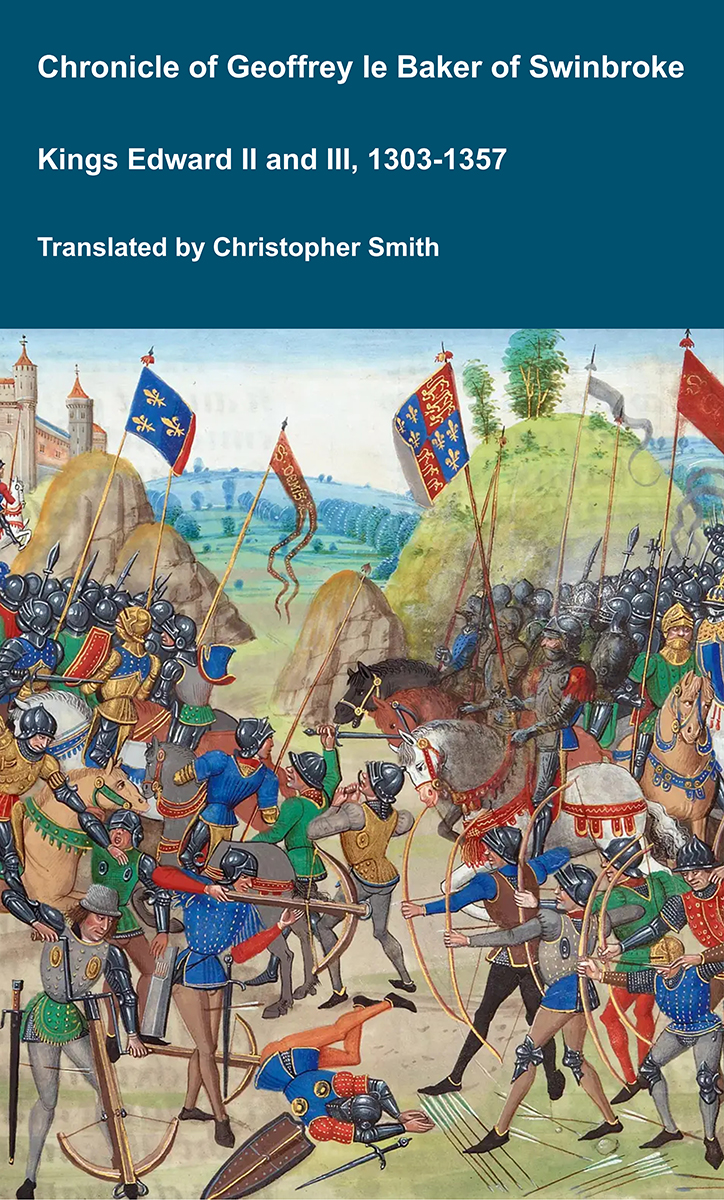
Chronicle of Geoffrey le Baker of Swinbroke
Baker was a secular clerk from Swinbroke, now Swinbrook, an Oxfordshire village two miles east of Burford. His Chronicle describes the events of the period 1303-1356: Gaveston, Bannockburn, Boroughbridge, the murder of King Edward II, the Scottish Wars, Sluys, Crécy, the Black Death, Winchelsea and Poitiers. To quote Herbert Bruce 'it possesses a vigorous and characteristic style, and its value for particular events between 1303 and 1356 has been recognised by its editor and by subsequent writers'. The book provides remarkable detail about the events it describes. Baker's text has been augmented with hundreds of notes, including extracts from other contemporary chronicles, such as the Annales Londonienses, Annales Paulini, Murimuth, Lanercost, Avesbury, Guisborough and Froissart to enrich the reader's understanding. The translation takes as its source the 'Chronicon Galfridi le Baker de Swynebroke' published in 1889, edited by Edward Maunde Thompson.
Available at Amazon in eBook and Paperback format.
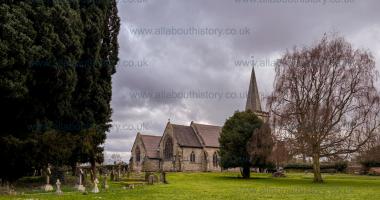
St Michael's Church, Rocester is in Rocester, Staffordshire [Map], Churches in Staffordshire.
St Michael's Church, Rocester [Map].
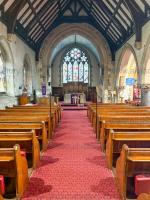
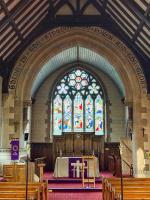
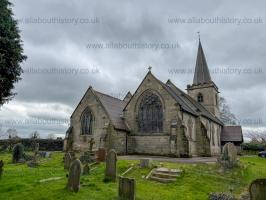
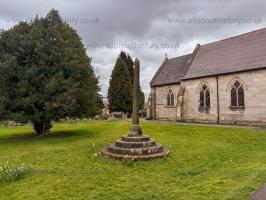
St Michael's Church, Rocester [Map]. Cross in Churchyard.
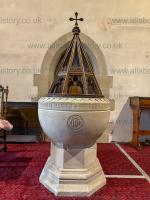
St Michael's Church, Rocester [Map]. Font.
In 1872 the spire was added to St Michael's Church, Rocester [Map].
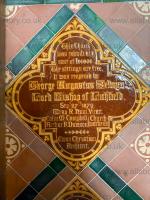
St Michael's Church, Rocester [Map]. Church reopened 27th September 1872.
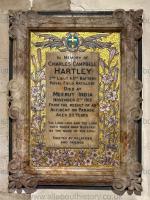
St Michael's Church, Rocester [Map]. Memorial to Charles Campbell Hartley, 2nd Lieutenant, 63rd Battery Royal Field Artillery. Died at Meerut, India, 11th November 1912 from the result of an accident on parade, aged 23 years.
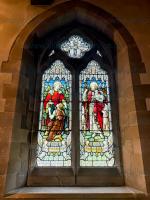
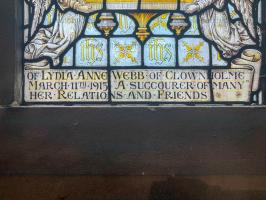
St Michael's Church, Rocester [Map]. Window in memory of Lydia Anne Webb of Clownholme died 70 years 11th March 1913.

St Michael's Church, Rocester [Map]. 6283 Private G. Harper. North Staffordshire Regiment. Died 5th April 1917 aged 36.
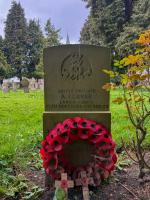
St Michael's Church, Rocester [Map]. 281235 Private A.Clarke, Labour Corps. Died 25th November 1917, aged 29. Son of James and Elizabeth Clarke, of 19, West View, Rocester.
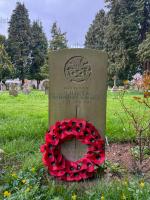
St Michael's Church, Rocester [Map]. Lych Gate War Memorial.
Abbot John Whethamstede’s Chronicle of the Abbey of St Albans
Abbot John Whethamstede's Register aka Chronicle of his second term at the Abbey of St Albans, 1451-1461, is a remarkable text that describes his first-hand experience of the beginning of the Wars of the Roses including the First and Second Battles of St Albans, 1455 and 1461, respectively, their cause, and their consequences, not least on the Abbey itself. His text also includes Loveday, Blore Heath, Northampton, the Act of Accord, Wakefield, and Towton, and ends with the Coronation of King Edward IV. In addition to the events of the Wars of the Roses, Abbot John, or his scribes who wrote the Chronicle, include details in the life of the Abbey such as charters, letters, land exchanges, visits by legates, and disputes, which provide a rich insight into the day-to-day life of the Abbey, and the challenges faced by its Abbot.
Available at Amazon in eBook and Paperback format.
St Michael's Church, Rocester [Map]. East Window, and two windows in the chancel, by William Frend De Morgan restored 1991. One of the windows signed "DM".


