Henrici Quinti, Angliæ Regis, Gesta, is a first-hand account of the Agincourt Campaign, and subsequent events to his death in 1422. The author of the first part was a Chaplain in King Henry's retinue who was present from King Henry's departure at Southampton in 1415, at the siege of Harfleur, the battle of Agincourt, and the celebrations on King Henry's return to London. The second part, by another writer, relates the events that took place including the negotiations at Troye, Henry's marriage and his death in 1422.
Available at Amazon in eBook and Paperback format.
St Nicholas Square, Newcastle upon Tyne is in Newcastle upon Tyne, Northumberland [Map].
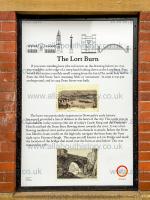
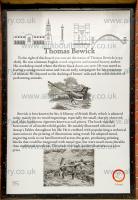
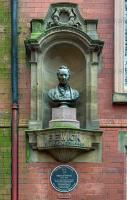
After 1827. St Nicholas Square, Newcastle upon Tyne. The Lort Burn and Statue of Thomas Bewick.
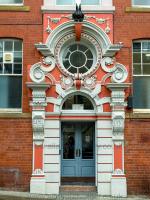
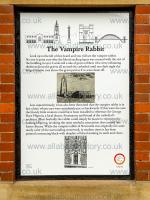
1860. St Nicholas Square, Newcastle upon Tyne. "The Vampire Rabbit". Above the doorway. Arguably a hare with its ears on backwards which might be a reference to a local doctor George Hare Phipson.
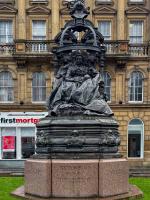
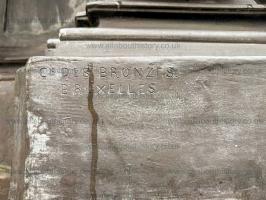
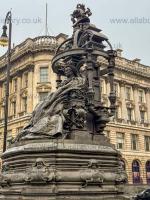
Bronze Status of Queen Victoria [Map] commemorating 500 years of Shrievalty i.e. the jurisdiction of a sheriff of Newcastle. The statue was a gift to Newcastle by William Haswell Stephenson who was mayor of the city seven times. He commissioned the sculptor Sir Alfred Gilbert [aged 48] to create it and was finally unveiled on the 24th of April 1903, two years after her death. There are two inscriptions on the pedestal reading "Victoria RI 1837-1901" and "Thine is the Greatness and the Power and the Glory and the Victory and the Majesty".