

Abbot John Whethamstede’s Chronicle of the Abbey of St Albans
Abbot John Whethamstede's Register aka Chronicle of his second term at the Abbey of St Albans, 1451-1461, is a remarkable text that describes his first-hand experience of the beginning of the Wars of the Roses including the First and Second Battles of St Albans, 1455 and 1461, respectively, their cause, and their consequences, not least on the Abbey itself. His text also includes Loveday, Blore Heath, Northampton, the Act of Accord, Wakefield, and Towton, and ends with the Coronation of King Edward IV. In addition to the events of the Wars of the Roses, Abbot John, or his scribes who wrote the Chronicle, include details in the life of the Abbey such as charters, letters, land exchanges, visits by legates, and disputes, which provide a rich insight into the day-to-day life of the Abbey, and the challenges faced by its Abbot.
Available at Amazon in eBook and Paperback format.
On 30th April 1331 Gaston Phoebus Foix III Count Foix was born to Gaston Foix II Count Foix [aged 23] and Eleanore Comminges Countess Foix.
In September 1343 [his father] Gaston Foix II Count Foix [aged 35] died of plague at Seville. His son Gaston [aged 12] succeeded III Count Foix.
In 1349 Gaston Phoebus Foix III Count Foix [aged 17] and Agnes Évreux Countess Foix [aged 15] were married. She by marriage Countess Foix. She the daughter of Philip "Noble" III King Navarre. He the son of Gaston Foix II Count Foix and Eleanore Comminges Countess Foix.
On 11th January 1350 King Philip "Fortunate" VI of France [aged 56] and [his sister-in-law] Blanche Évreux Queen Consort France [aged 19] were married. She by marriage Queen Consort of France. The difference in their ages was 37 years. She the daughter of Philip "Noble" III King Navarre and Joan Capet II Queen Navarre. He the son of Charles Valois I Count Valois and Margaret Capet Countess Valois. They were half first cousin once removed. He a great x 4 grandson of King Henry "Curtmantle" II of England. She a great x 3 granddaughter of King Henry III of England.
On 12th February 1352 [his brother-in-law] Charles "Bad" II King Navarre [aged 19] and Joan Valois Queen Consort Navarre [aged 8] were married at Chateau du Vivie, Coutevroult. She by marriage Queen Consort Navarre. She the daughter of King John "The Good" II of France [aged 32] and Bonne Luxemburg Queen Consort France. He the son of Philip "Noble" III King Navarre and Joan Capet II Queen Navarre. They were second cousins. He a great x 3 grandson of King Henry III of England. She a great x 5 granddaughter of King Henry "Curtmantle" II of England.
On 8th January 1354 Charles de la Cerda [aged 27] was murdered on the orders of [his brother-in-law] Charles "Bad" II King Navarre [aged 21] in an inn in L'Aigle.
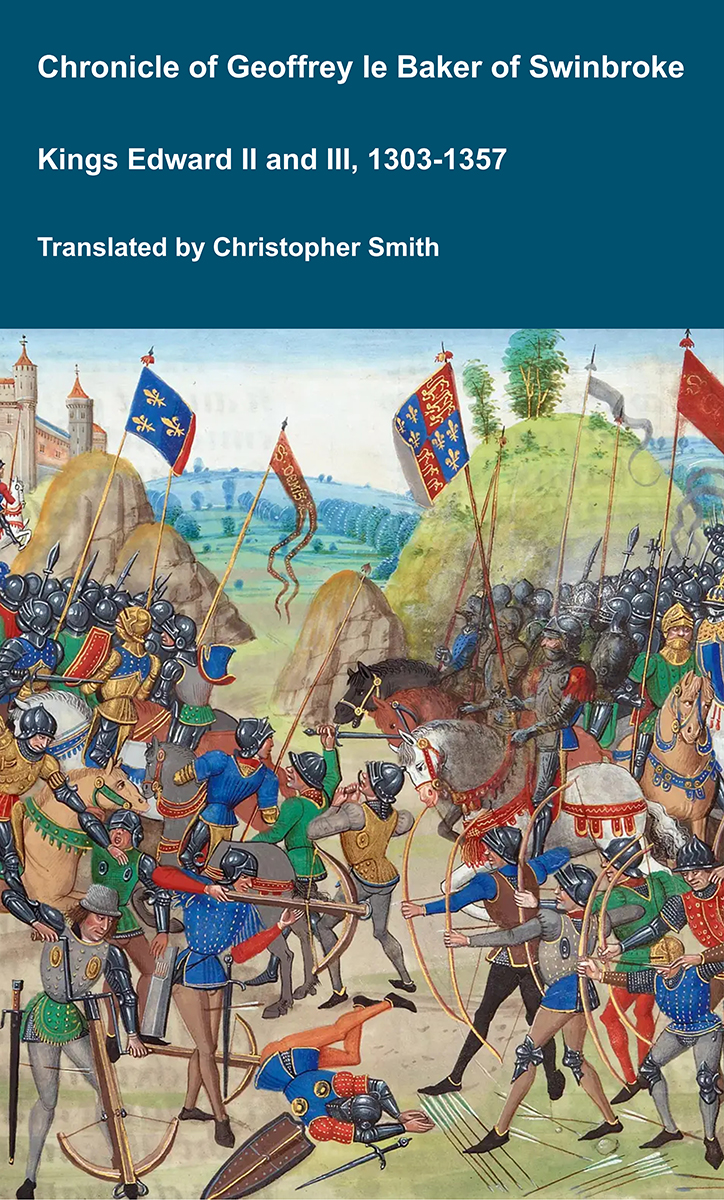 Chronicle of Geoffrey le Baker of Swinbroke. On Monday, the middle battle of the army was lodged at a fine town called Ayollpuhbone, which had long been defended but was at last taken by assault; its outer castle surrendered thereafter. The Prince ordered that nothing should be harmed by fire, out of respect for the Count of Foix, to whose domain it belonged. On the morning of Tuesday, crossing with difficulty the river called Besyle, they entered a very desolate region. But around the first hour [around 7 a.m.], they arrived before a great monastery of the Cistercian order,1 founded by the grandfather of the Count of Foix, called Burgbone. There, the Count himself,2 the senior noble of all the Langue d'Oc, came joyfully to meet the Lord Prince, having escaped from the prison of the French king, where he had lain in Paris for two years. From that point forward, he remained faithfully with the Prince. At that time, the Count was young, about twenty-one years of age, and not yet a knight. That day they rode through the Count's territory, through the villages of Maselle and Calmon, separated by a river, on the far side of which once stood an ancient, now-ruined castle. They left to the right the large town of Saint-Cavele and the high stronghold called Hautripe, which belonged to the French. But that day they burned nothing, out of reverence for the said Count and respect for his neighbourhood.
Die Lune media custodia ospitabatur apud bonam villam vocatam Ayollpuhbone, diu defensam, set conquisitam per insultum; cuius castrum ad extra se reddidit; quibus princeps iussit nihil noceri per ignem, ratione comitis Fluxensis, cuius dominio pertinebant. Mane diei Martis, transcuntes set districte flumen vocatum Besyle, intrarunt patriam nimis vastam; set circa horam primam venecrunt coram grandi monasterio ordinis Cisterciensis, fundato per avum comitis Fluxensis, vocato Burgbone, ubi comes prefatus, maior scilicet tocius lingue Doxitane, obviavit cum magna leticia domino principi, evasus de carcere coronati Francorum, in quo Parisius iacuit duobus annis; et mansit ex tunc cum principe fidelis. Tunc erat predictus comes iuvenis, etatis quasi viginti unius annorum, necdum miles extiterat. Illo die equitarunt in dominio illius comitis per villas de Maselle et Calmon, quam dividit aqua, ex cuius parte ulteriori fuit antiquitus castrum destructum; et dimiserunt a dextris magnam villam de Seint Cavele et arduum castrum vocatum Hautripe, que sunt Gallicorum. Set illo die nihil incenderunt propter reverenciam comitis prefati et sue vicinie.
Note 1. The abbey of Boulbonne was founded in 1129 as a Benedictine house, but in 1150 it was transferred to the Cistercian order. Roger Bernard, comte de Foix, was a benefactor in 1160. Gallia Christ., 13.288.
Note 2. Gaston Phœbus [aged 24], comte de Foix, sided with his brother-in-law, Charles of Navarre [aged 23], against king John, who thereupon imprisoned him; but, on the prince of Wales's advance, he was liberated and sent to oppose it.
In 1361 [his son] Gaston Foix was born to Gaston Phoebus Foix III Count Foix [aged 29] and [his wife] Agnes Évreux Countess Foix [aged 27]. He a great x 4 grandson of King Henry III of England. He married 1379 his fourth cousin Beatrix Armagnac, daughter of John II Count Armagnac and Jeanne Countess Armagnac.
In 1363 [his brother-in-law] Philip Évreux Count Longueville [aged 27] died.
In 1379 Gaston Foix [aged 18] and Beatrix Armagnac were married. She the daughter of John II Count Armagnac [aged 46] and Jeanne Countess Armagnac. He the son of Gaston Phoebus Foix III Count Foix [aged 47] and Agnes Évreux Countess Foix [aged 45]. They were fourth cousins. He a great x 4 grandson of King Henry III of England.
Life of Charles VI by a Monk of St Denis. The duke of Berry, however, mindful of his oath, together with the count of Armagnac, whose sister he had married, led great forces of chosen soldiers into Aquitaine around the beginning of June. For three months they ravaged the country like enemies, carrying out everything that enemies usually inflict upon enemies, except for slaughter and arson. The inhabitants, worn down by such hardships, appealed to the count of Foix, earnestly begging him to avenge the injuries done to them by force. He immediately sent the duke of Berry notice of a day for battle and, marching out from Toulouse with a very large force of nobles and common soldiers, reached the battlefield first. When the duke arrived there and had surveyed the enemy's position, he realized that they greatly outnumbered his own men. Because of the disadvantage of the terrain, several brave men advised that the battle should be postponed. But he replied: "May God turn away from the heart of the king's son such a sign of cowardice as to have the enemy nearby and refuse battle! For I swear an oath that I will not withdraw from here." Thus the engagement took place. Once the battle lines had been drawn up, the fight did not last long: the smaller force quickly gave way to the greater, and the count gained the victory. Three hundred of the duke's men were killed, and he himself, spurring his horse, took flightENDNOTE1ENDNOTE. The duke tried several times during that year to redeem this disgrace, now near Toulouse, now near Béziers, sometimes by assaults on castles, sometimes by bloody raids, but always in vain, since the men of Aquitaine were constantly ready to resist. At last, however, the noble count of Foix, moved by compassion for the devastation of the land, decided to prefer the common good to his own advantage. Content that he had honourably defeated the duke, he made a treaty of peace with him, confirmed by oaths, and voluntarily resigned from the government of the countryENDNOTE2ENDNOTE.
Dux vero Biturie, juramenti non immemor, cum comite Armeniaci, cujus sorori nupserat, electorum bellatorum ingentes copias circa principium junii secum in Aquitaniam traxit; que trium mensium spacio per patriam grassando hostiliter sevierunt, quidquid hostis in hostem consuevit exercentes, duntaxat cedibus et incendiis exceptis. Tantis gravaminibus incole attediati, comitem Fuxi adeunt, vallidis precibus requirentes ut dampna illata viribus susciperet vindicanda; qui mox duci Biturie diem belli mutui intimavit, quo eciam, cum cuneo nobilium et ignobilium permaximo exiens de Tholosa anticipavit locum pugne. Illic eciam dux accedens, statu hostium explorato, cum eos comperisset suos longe antecedere numero, et propter iniquitatem loci nonnulli viri strenui ad tempus bellum differre censerent: «Ab animo, inquit, filii regis Deus avertat tante pusillanimitatis signum, ut hostes habeat in vicino et bellum detrectet! Nam jurejurando firmo inde me non recessurum, consulciüs dictum fuit; nam, instructis aciebus, non diu pugna duravit, sed paucitas multitudini cito cessit, sicque comes victoria potitus est, trecentisque ex parte ducis occisis, ipse, equo calcaribus adacto, fuga dilabitur; Quod dedecus anno illo pluries temptavit redimere, nunc prope Tholosam, nunc prope Besiers, nunc oppugnacionibus castrorum, nunc discursibus cruen tis, frustra tamen, Aquitanis semper-ad. resistenciam paratis. Tandem tamen vastacioni patrie nobilis comes Fuxi compaciens, bonum commune utilitati proprie preferre excogitavit, et contentus ducem laudabiliter debellasse, cum eodem. federe pacis inito et sacramentis vallato, a regimine patrie se voluntarie abdicavit.
Note 1. The Monk gives neither the day nor the place of the battle. The Duke of Berry having besieged Revel, in the diocese of Lavaur, the Count of Foix appointed for the Duke of Berry, as the place of combat, the plain which lies around that town, and the battle took place on 15th or 16th July 1381. Histoire générale de Languedoc, vol. IV, p. 378.
1. Le Religieux ne marque ni le jour, ni le lieu du combat. Le due de Berri ayant asiégé Revel, dans le diocèse de Lavaur, le comte de Foix assigna au duc de Berri, pour le combat, la plaine qui est aux environsde cette ville, et la bataille eut lieu le 15 ou le 16 juillet. Hist. gener. de Languedoc, tom. IV, page 378.
Note 2. The Cardinal of Amiens, having intervened by order of Pope Clement to pacify the province, went to Capestang towards the end of December, and finally mediated an agreement between the Duke of Berry and the Count of Foix. Histoire générale de Languedoc, vol. IV, p. 580.
2. Le cardinal d’Amiens s’étant entremis, par ordre du pape Clément, pour pacifier la province, se rendit à Capestang vers la fin du mois de décembre, et moyenna enfin un accord entre le duc de Berri et le comte de Foix. Hist. génér. de Languedoc, tom. IV, p. 580.
In 1382 [his son] Gaston Foix [aged 21] died.
The History of William Marshal was commissioned by his son shortly after William’s death in 1219 to celebrate the Marshal’s remarkable life; it is an authentic, contemporary voice. The manuscript was discovered in 1861 by French historian Paul Meyer. Meyer published the manuscript in its original Anglo-French in 1891 in two books. This book is a line by line translation of the first of Meyer’s books; lines 1-10152. Book 1 of the History begins in 1139 and ends in 1194. It describes the events of the Anarchy, the role of William’s father John, John’s marriages, William’s childhood, his role as a hostage at the siege of Newbury, his injury and imprisonment in Poitou where he met Eleanor of Aquitaine and his life as a knight errant. It continues with the accusation against him of an improper relationship with Margaret, wife of Henry the Young King, his exile, and return, the death of Henry the Young King, the rebellion of Richard, the future King Richard I, war with France, the death of King Henry II, and the capture of King Richard, and the rebellion of John, the future King John. It ends with the release of King Richard and the death of John Marshal.
Available at Amazon in eBook and Paperback format.
On 2nd October 1386 John Montfort V Duke Brittany [aged 47] and Joanna of Navarre Queen Consort England [aged 16] were married at Saillé [Map]. She by marriage Duchess Brittany 1221 Dreux, Countess Richmond. His third marriage, her first. The marriage proceeded when her father [his brother-in-law] Charles "Bad" II King Navarre [aged 53] agreed to give his daughter 120,000 gold francs and to pay 6,000 francs owed to John, duke of Brittany, for the rent of certain lands. He, John, gave her the cities of Nantes [Map] and Guerrand [Map]. The difference in their ages was 31 years. She the daughter of Charles "Bad" II King Navarre and Joan Valois Queen Consort Navarre. They were second cousin twice removed. He a great x 2 grandson of King Henry III of England. She a great x 4 granddaughter of King Henry III of England.
On 1st January 1387 [his brother-in-law] Charles "Bad" II King Navarre [aged 54] burned to death. His son Charles [aged 26] succeeded III King Navarre. Eleanor of Castile Queen Consort Navarre [aged 24] by marriage Queen Consort Navarre.
See Note p Harleian Library 6217: ""
In 1391 Gaston Phoebus Foix III Count Foix [aged 59] died.
In 1396 [his former wife] Agnes Évreux Countess Foix [aged 62] died.
[his father] Gaston Foix II Count Foix and [his mother] Eleanore Comminges Countess Foix were married. She by marriage Countess Foix.
Father: Gaston Foix II Count Foix
Gaston Phoebus Foix III Count Foix
GrandFather: Bernard VII Comminges
Mother: Eleanore Comminges Countess Foix