

Abbot John Whethamstede’s Chronicle of the Abbey of St Albans
Abbot John Whethamstede's Register aka Chronicle of his second term at the Abbey of St Albans, 1451-1461, is a remarkable text that describes his first-hand experience of the beginning of the Wars of the Roses including the First and Second Battles of St Albans, 1455 and 1461, respectively, their cause, and their consequences, not least on the Abbey itself. His text also includes Loveday, Blore Heath, Northampton, the Act of Accord, Wakefield, and Towton, and ends with the Coronation of King Edward IV. In addition to the events of the Wars of the Roses, Abbot John, or his scribes who wrote the Chronicle, include details in the life of the Abbey such as charters, letters, land exchanges, visits by legates, and disputes, which provide a rich insight into the day-to-day life of the Abbey, and the challenges faced by its Abbot.
Available at Amazon in eBook and Paperback format.
1838-1849 Victoria is in 19th Century Events.
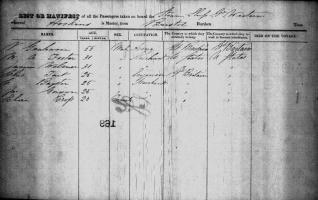
On 9th April 1838 the SS Great Western, the first steamship designed for the purpose of crossing the Atlantic, sailed from Avonmouth for New York. She arrived on 23rd April 1838. During the ship journey to Bristol a fire broke out in the engine room as a result of which fifty passengers cancelled their book. In the event on its first voyage only seven passengers sailed.
On 9th April 1838 the National Gallery in Trafalgar Square opened to the public. The design of the building was unpopular with King William IV thought the building a 'nasty little pokey hole', while William Makepeace Thackeray called it 'a little gin shop of a building'.
On 28th June 1838 Queen Victoria of the United Kingdom [aged 19] was crowned I Queen Great Britain and Ireland.


Around 28th June 1838. George Hayter [aged 45]. Coronation Portrait of Queen Victoria of the United Kingdom [aged 19].
On 6th January 1839 an enormous storm, known in Ireland as "Night of the Big Wind", the largest in three-hundred years, caused significant loss of life and damage in Ireland, particularly Dublin [Map] where one fifth of property was destroyed, and western Britain, particularly Liverpool [Map]. The next day a number of passenger ships were lost.

On 31st January 1839 Henry Fox Talbot [aged 38] read his paper "Some Account of the Art of Photogenic Drawing, or, the proof by which Natural Objects may be made to delineate themselves, without the Aid of the Artist's Pencil."
Henry Fox Talbot: On 11th February 1800 he was born to William Davenport Talbot of Lacock Abbey and Elizabeth Theresa Fox-Strangways at Melbury House, Sampford. On 17th September 1877 he died.
On 5th July 1839 Flora Elizabeth Rawdon-Hastings [aged 33] died. She had suffered a swelling in her abdomen. She refused an examination. Rumours were spread, by among others the future Queen Victoria [aged 20], that she was pregnant. When Lady Flora did finally consent to an examination she was found to an advanced cancerous liver tumour, and had only months left to live. The future Queen Victoria visited Lady Flora on 27th June 1839 eight days before her death.

Adeline Horsey Recollections. As I have previously stated, I used to see a great deal of Lord Cardigan [aged 50] at my father's house, but he treated me quite like a jeune fille, although I was always asked to the great parties he gave during the Season. In January 1857 I went with my father to Deene, and this visit was destined to change the whole of my life.
We arrived late in the afternoon to find ourselves the additions of a great house-party, and I can picture Lord Cardigan as I saw him then, surrounded by the Duchess of Montrose [aged 30], Baroness Ufford and Mrs. Dudley Ward, who all regarded me with none too friendly eyes. Cardigan told me afterwards that, when I entered the room, he realised at once I was the one woman in the world for him. He was an impulsive character, and he lost no time in letting me see the impression I had made, and I was flattered and delighted to feel that I was loved by him.
After we left Deene, Lord Cardigan followed us to London, and needless to say his marked attentions to me soon became the topic of much spiteful and jealous gossip. Those Early Victorian days were exceptionally conventional, and the Court was still as narrow-minded as when poor Lady Flora Hastings [See Death of Flora Hastings] had been the victim of its lying slander.
On 10th February 1840 Prince Albert Saxe Coburg Gotha [aged 20] and Queen Victoria of the United Kingdom [aged 20] were married by Archbishop Charles Longley [aged 45] at Chapel Royal, St James's Palace. She the daughter of Edward Augustus Hanover 1st Duke Kent and Strathearn and Marie Luise Victoria Saxe Coburg Gotha Duchess Kent and Strathearn [aged 53]. He the son of Ernest Saxe Coburg Gotha I Duke Saxe Coburg Gotha [aged 56] and Duchess Louise Dorothea of Saxe Coburg Altenburg. They were first cousins. She a granddaughter of King George III of Great Britain and Ireland.


This is a translation of the 'Memoires of Jacques du Clercq', published in 1823 in two volumes, edited by Frederic, Baron de Reissenberg. In his introduction Reissenberg writes: 'Jacques du Clercq tells us that he was born in 1424, and that he was a licentiate in law and a counsellor to Philip the Good, Duke of Burgundy, in the castellany of Douai, Lille, and Orchies. It appears that he established his residence at Arras. In 1446, he married the daughter of Baldwin de la Lacherie, a gentleman who lived in Lille. We read in the fifth book of his Memoirs that his father, also named Jacques du Clercq, had married a lady of the Le Camelin family, from Compiègne. His ancestors, always attached to the counts of Flanders, had constantly served them, whether in their councils or in their armies.' The Memoires cover a period of nineteen years beginning in in 1448, ending in in 1467. It appears that the author had intended to extend the Memoirs beyond that date; no doubt illness or death prevented him from carrying out this plan. As Reissenberg writes the 'merit of this work lies in the simplicity of its narrative, in its tone of good faith, and in a certain air of frankness which naturally wins the reader’s confidence.' Du Clercq ranges from events of national and international importance, including events of the Wars of the Roses in England, to simple, everyday local events such as marriages, robberies, murders, trials and deaths, including that of his own father in Book 5; one of his last entries.
Available at Amazon in eBook and Paperback format.
11th February 1840. Tuesday. Supplement to the London Gazette.
St James's Palace [Map]. February 10, 1840.
THIS day the Marriage of the QUEEN'S MOST EXCELLENT MAJESTY [aged 20] with Field Marshal His ROYAL HIGHNESS FRANCIS ALBERT AUGUSTUS CHARLES EMANUEL, DUKE OF SAXE, PRINCE OF SAXE COBOURG AND GOTHA, Knight of the Most Noble Order of the Garter [aged 20], was solemnized at the Chapel Royal, St James's Palace.
Field Marshal His Royal Highness the Prince Albert, attended by his Suite, proceeded from Buckingham-Palace [Map] this day, about half past eleven o'clock, to St. James's-Palace [Map], in the following order:
The first Carriage,.
Conveying General Sir George Anson, G.C.B. [aged 43]; George Edward Anson, Esq [aged 27]; and Francis Seymour, Esq [aged 26]; the Bridegroom's Gentlemen of Honour.
The second Carriage,.
Conveying the Lord Chamberlain of the Household, the Earl of Uxbridge [aged 42] (who afterwards returned to Buckingham-Palace [Map], to attend in Her Majesty's Procession), and the Officers of the Suite of His Serene Highness the Reigning Duke of Saxe Cobourg and Gotha, and the Hereditary Prince of Saxe Cobourg and Gotha, viz. Count Kolowrath [aged 62], Baron Alvensleben, and Baron De Lowenfels.
The third Carriage,.
Conveying His Royal Highness the Prince Albert, His Serene Highness the Reigning Duke of Saxe Colourg and Gotha [aged 56] (father), and the Hereditary Prince of Saxe Cobourg and Gotha [aged 21] (elder brother).
Her Majesty, attended by Her Royal Household, accompanied by Her Royal Highness the Duchess of Kent [aged 53], proceeded, at twelve o'clock, from Buckingham-Palace [Map] to St James's Palace [Map], in the following order:
The first Carriage,
Conveying two Gentlemen Ushers, Charles Heneage, Esq [aged 33] and the Honourable Heneage Legge [aged 51]; Yeoman of the Yeomen of the Guard, Charles Hancock, Esq,; and the Groom of the Robes, Captain Francis Seymour [aged 51].
The second Carriage,.
Conveying the Equerry in Waiting, Lord Alfred Paget [aged 23]; two Pages of Honour, Charles T. Wemyss, Esq and Henry William John Byng [aged 8], Esq j and the Groom in Waiting, the Honourable George Keppel.
The third Carriage,.
Conveying the Clerk Marshal, Colonel the Honourable H. E. G. Cavendish [aged 50]; the Vice-Chamberlain, the Earl of Belfast, G. C. H. [aged 43]; and the Comptroller of the Household, the Right Honourable George Stevens Byng [aged 33].
The fourth Carriage,.
Conveying the Woman of the Bedchamber in Waiting, Mrs. Brand [aged 60]; the Captain of the Yeomen of the Guard, the Earl of Ilchester [aged 52]; the Master of the Buck Hounds, Lord Kinaird; and the Treasurer of the Household, the Earl of Surrey [aged 48].
The fifth Carriage,.
Conyeying the Maid of Honour in Waiting, the Honourable Caroline Cocks [aged 45]; the Duchess of Kent's Lady in Waiting, Lady K Howard; the Gold Stick, General Lord Hill, G. C.B., G. C. H.; and the Lord in Waiting, Viscount Torrington [aged 27].
The sixth Carriage,.
Conveying the Lady of the Bedchamber in Waiting, the Countess of Sandwich [aged 27]; the Master of the Horse, the Earl of Albemarle, G. C.H. [aged 67]; the Lord Steward, the Earl of Erroll, K.T. G.C.H. [aged 38]; and the Lord Chamberlain, the Earl of Uxbridge.
The seventh Carriage,.
Conveying Her Most Excellent Majesty the QUEEN; Her Royal Highness the Duchess of Kent; and the Duchess of Sutherland, the Mistress of the Robes to Her Majesty [aged 33].
The illustrious Personages, and others composing the Procession, then assembled in the Throneroom, and, having been called over by Garter Principal King of Arms, the Processions, moyed in the following order, to the Chapel Royal:
THE PROCESSION OF THE BRIDEGROOM.
Drums and Trumpets.
Serjeant Trumpeter.
Master of the Ceremonies, Sir Robert Chester, Knt.
Lancaster Herald, George Frederick Beltz, Esq K.H [aged 65], York Herald, Charles George Young, Esq [aged 44].
The Bridegroom's Gentlemen of Honour, viz. Francis Seymour, Esq Gen. Sir George Anson, G.C B. George Edward Anson, Esq.
Vice-Chamberlain of Her Majesty's Household, The Earl of Belfast, G.C.H., Lord Chamberlain of Her Majesty's Household, The Earl of Uxbridge.
Continues...
THE QUEEN. Wearing the Collar of the Order of the Garter.
Her Majesty's Train borne by the following twelve unmarried Ladies, viz.
Lady Adelaide Paget [aged 20], Lady Caroline Amelia Gordon-Lennox [aged 20], Lady Sarah Frederica Caroline Villiers [aged 18], Lady Elizabeth Anne Georgiana Dorothea Howard [aged 23], Lady Frances Elizabeth Cowper [aged 20], Lady Ida Harriet Augusta Hay [aged 18], Lady Elizabeth West [aged 21], Lady Catherine Lucy Wilhelmina Stanhope, Lady Mary Augusta Frederica Grimston [aged 20], Lady Jane Harriet Bouverie [aged 20], Lady Eleanora Caroline Paget [aged 12], Lady Mary Charlotte Howard [aged 18].
Assisted by the Groom of the Robes, Captain Francis Seymour.
Master of the Horse, The Earl of Albemarle, G.C.H., Mistress of the Robes, The Duchess of Sutherland.
Ladies of the Bedchamber, The Marchioness of Normanby [aged 41], The Duchess of Bedford [aged 56], The Countess of Burlington [aged 28], The Countess of Sandwich, The Baroness Portman [aged 30], The Dowager Lady Lyttleton [aged 52], The Lady Barham [aged 25].
Maids of Honour, The Hon. Amelia Murray, The Hon. Harriet Pitt, The Hon. Caroline Cocks, The Hon. Henrietta Anson, The Hon. Matilda Paget, The Hon. Harriet Lister, The Hon. Sarah Mary Cavendish.


10th February 1840. George Hayter [aged 47]. Wedding of Queen Victoria and Prince Albert. Hayter included portraits of fifty-six of those present at the occasion and sittings took place over the next year. The Queen [aged 20] sat for him in March in her 'Bridal dress, veil, wreath & all', and Prince Albert [aged 20] also posed for his portrait several times during the following months. Hayter's family too helped out with his son, Henry, modelling the Prince's costume, while his daughter Mary posed for the Queen's arm and wearing the veil. Victoria's aunt Queen Adelaide [aged 47], however, was unwilling to co-operate and the artist had to refer to a miniature for her likeness. Hayter included himself in the painting, on the lower right, with his sketchbook and pencil.
Narrative of a Voyage Round the World. On the return of the commodore on the 24th, we were directed to proceed to Hongkong, and commence its survey. We landed on Monday, the 26th, at fifteen minutes past eight, and being the bona fide first possessors, her Majesty's health was drank with three cheers on Possession Mount.
On the 26th [January 1841], the squadron arrived; the marines were landed, the union hoisted on our post, and formal possession taken of the island, by Commodore Sir J. G. Bremer, accompanied by the other officers of the squadron, under a feu-de-joie from the marines, and a royal salute from the ships of war.
On the Cowloon Peninsula were situated two batteries, which might have commanded the anchorage, but which appeared at present to be but thinly manned ; these received due notice to withdraw their men and guns, as part of the late treaty.

In 1842 Queen Victoria of the United Kingdom [aged 22] appointed Knights of the Garter:
690th. Henry Somerset 7th Duke Beaufort [aged 49].
691st. Richard Temple-Nugent-Brydges-Chandos-Grenville 2nd Duke of Buckingham and Chandos [aged 44].
692nd. James Brownlow William Gascoyne-Cecil 2nd Marquess Salisbury [aged 50].
693rd. Henry Vane 2nd Duke Cleveland [aged 53].
On 29th August 1842 The Treaty of Nanking signed aboard Cornwallis. The peace treaty that concluded the First Opium War. The Chinese regarded it as an 'Unequal Treaty'; the British fleet were anchored in Nanking poised to attack. The treaty required the Chinese to pay the British six million silver dollars for the opium that had been confiscated by Lin Zexu in 1839 (Article IV), 3 million dollars in compensation for debts that the Hong merchants in Canton owed British merchants (Article V), and a further 12 million dollars in war reparations for the cost of the war (Article VI). The total sum of 21 million dollars was to be paid in instalments over three years and the Qing government would be charged an annual interest rate of 5 percent for the money that was not paid in a timely manner (Article VII) (See Wikipedia).

Around 1842. Captain John Platt [aged 40]. The Signing of the Treaty of Nanking. Admiral William Parker 1st Baronet [aged 60] fifth from right.
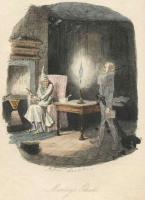
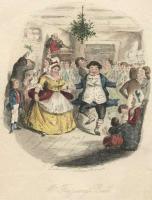
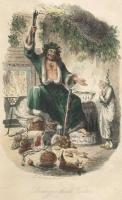
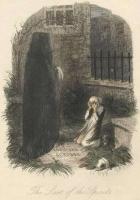
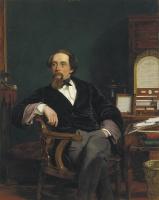
On 17th December 1843 the first print run of 6,000 copies of Charles Dicken's [aged 31] 'A Christmas Carol' was completd. On 19th December 1843 it was made available to the public and all 6,000 copies sold out by the end of Christmas Eve. The book included for colour and four black and white etchings by John Leech: 1. Marley’s Ghost, 2. Mr. Fezziwig’s Ball, 3. Scrooge’s Third Visitor, 4. The Last of the Spirits.

In 1844 Queen Victoria of the United Kingdom [aged 24] appointed Knights of the Garter:
694th. King Louis Philippe I of France [aged 70].
695th. Ernest Saxe Coburg Gotha II Duke Saxe Coburg Gotha [aged 25].
696th. Thomas de Grey 2nd Earl de Grey [aged 62].
697th. James Hamilton 1st Duke of Abercorn [aged 32].
698th. Charles Chetwynd-Talbot 2nd Earl Talbot [aged 66].
699th. Edward Herbert 2nd Earl Powis [aged 58].


On 21 and 22nd December 1845 the Battle of Ferozeshah was a victory by the British East India Company over the Sikh Empire.
After 1845. Durham Cathedral [Map]. Memorial to Robert Mackellar Hunter killed at the Battle of Ferozeshah.


On 10th February 1846 the Battle of Sabraon was a decisive victory by the forces of the East India Company and over the army of the Sikh Empire of the Punjab.

Anne Boleyn. Her Life as told by Lancelot de Carle's 1536 Letter.
In 1536, two weeks after the execution of Anne Boleyn, her brother George and four others, Lancelot du Carle, wrote an extraordinary letter that described Anne's life, and her trial and execution, to which he was a witness. This book presents a new translation of that letter, with additional material from other contemporary sources such as Letters, Hall's and Wriothesley's Chronicles, the pamphlets of Wynkyn the Worde, the Memorial of George Constantyne, the Portuguese Letter and the Baga de Secrets, all of which are provided in Appendices.
Available at Amazon in eBook and Paperback format.
On 4th March 1846 Lieutenant John Lambert [aged 24] died from wounds received at the Battle of Sabraon.
In 1846 Queen Victoria of the United Kingdom [aged 26] appointed Knights of the Garter:
700th. George Pratt 2nd Marquess Camden [aged 46].
701st. Richard Seymour-Conway 4th Marquess Hertford [aged 45].
On 10th October 1846 two Spanish Princesses were married...
Francisco de Asís King Consort Spain [aged 24] and Isabella II Queen Spain [aged 16] were married. They were double first cousins. She was forced to marry by the Moderare Party. She, apparently commented, "what shall I tell you about a man whom I saw wearing more lace than I was wearing on our wedding night?". She the daughter of Ferdinand VII King Spain and Maria Christina of the Two Sicilies Queen Consort Spain [aged 40]. They were first cousins.
Antoine Orléans Duke Montpensier [aged 22] and Infanta Luisa Fernanda Duchess of Montpensier [aged 14] were married. She the daughter of Ferdinand VII King Spain. He the son of King Louis Philippe I of France [aged 73]. They were fifth cousins.


The 1846 Third Cholera Pandemic was the third major outbreak of cholera which lasted until 1860. It originated in India.