

The History of William Marshal was commissioned by his son shortly after William’s death in 1219 to celebrate the Marshal’s remarkable life; it is an authentic, contemporary voice. The manuscript was discovered in 1861 by French historian Paul Meyer. Meyer published the manuscript in its original Anglo-French in 1891 in two books. This book is a line by line translation of the first of Meyer’s books; lines 1-10152. Book 1 of the History begins in 1139 and ends in 1194. It describes the events of the Anarchy, the role of William’s father John, John’s marriages, William’s childhood, his role as a hostage at the siege of Newbury, his injury and imprisonment in Poitou where he met Eleanor of Aquitaine and his life as a knight errant. It continues with the accusation against him of an improper relationship with Margaret, wife of Henry the Young King, his exile, and return, the death of Henry the Young King, the rebellion of Richard, the future King Richard I, war with France, the death of King Henry II, and the capture of King Richard, and the rebellion of John, the future King John. It ends with the release of King Richard and the death of John Marshal.
Available at Amazon in eBook and Paperback format.
Long Parliament is in 1640-1649 Civil War and Regicide.
In November 1640 Humphrey Coningsbury [aged 17] was elected MP Herefordshire in the Long Parliament.
William Heveningham [aged 36] was elected MP Stockbridge during the Long Parliament.
Robert Crane 1st Baronet [aged 54] was elected MP Sudbury in the Long Parliament holding the seat until his death in 1643.
John Jennings was elected MP St Albans during the Long Parliament.
John Glynne [aged 38] was elected MP Westminster during the Long Parliament.
In 1626 John Hobart 2nd Baronet [aged 32] was elected MP Norfolk in the Long Parliament which seat he held until his death.
In 1640 Hugh Pollard 2nd Baronet [aged 37] was elected MP Bere Alston in the Long Parliament.
In 1640 John Paulett 2nd Baron Paulett [aged 25] was elected MP Somerset during the Long Parliament.

In 1640 Edward Phelips [aged 27] was elected MP Ilchester during the Long Parliament.
In 1640 Simonds D'Ewes 1st Baronet [aged 37] was elected MP Sudbury during the Long Parliament.
In October 1640 Sidney Godolphin [aged 30] was elected MP Helston during the Long Parliament.

In November 1640 Francis Godolphin [aged 34] was elected MP Hereford during the Long Parliament.
In November 1640 Gervase Holles [aged 33] was elected MP Grimsby in the Long Parliament.
Jean de Waurin's Chronicle of England Volume 6 Books 3-6: The Wars of the Roses
Jean de Waurin was a French Chronicler, from the Artois region, who was born around 1400, and died around 1474. Waurin’s Chronicle of England, Volume 6, covering the period 1450 to 1471, from which we have selected and translated Chapters relating to the Wars of the Roses, provides a vivid, original, contemporary description of key events some of which he witnessed first-hand, some of which he was told by the key people involved with whom Waurin had a personal relationship.
Available at Amazon in eBook and Paperback format.
In November 1640 Anthony Hungerford [aged 32] was elected MP Malmesbury during the Long Parliament.
In November 1640 Philip Musgrave 2nd Baronet [aged 33] was elected MP Westmoreland in the Long Parliament.
In November 1640 Francis Newport 1st Earl Bradford [aged 20] was elected MP Shrewsbury during the Long Parliament.

In November 1640 Dudley North 4th Baron North [aged 38] was elected MP Cambridgeshire in the Long Parliament.

In November 1640 John Craven 1st Baron Craven [aged 30] was elected MP Tewkesbury during the Long Parliament.

In November 1640 William Pierrepont of Thoresby [aged 32] was elected MP Great Wenlock during the Long Parliament.
In November 1640 James Fiennes 2nd Viscount Saye and Sele [aged 38] was elected MP Oxfordshire in the Long Parliament.
In November 1640 Ambrose Browne 1st Baronet was elected MP Surrey during the Long Parliament.
In November 1640 John Curzon 1st Baronet [aged 41] was elected MP Derbyshire during the Long Parliament.

In November 1640 Philip Sidney 3rd Earl of Leicester [aged 21] was elected MP Yarmouth Isle of Wight during the Long Parliament.
In November 1640 John Melbury Sampford Strangeways [aged 55] was elected MP Dorset during the Long Parliament.
In November 1640 Giles Strangeways [aged 25] was elected MP Bridport during the Long Parliament.

Anne Boleyn. Her Life as told by Lancelot de Carle's 1536 Letter.
In 1536, two weeks after the execution of Anne Boleyn, her brother George and four others, Lancelot du Carle, wrote an extraordinary letter that described Anne's life, and her trial and execution, to which he was a witness. This book presents a new translation of that letter, with additional material from other contemporary sources such as Letters, Hall's and Wriothesley's Chronicles, the pamphlets of Wynkyn the Worde, the Memorial of George Constantyne, the Portuguese Letter and the Baga de Secrets, all of which are provided in Appendices.
Available at Amazon in eBook and Paperback format.
In November 1640 Humfrey Tufton 1st Baronet [aged 56] was elected MP Maidstone during the Long Parliament.
In November 1640 John Wray 2nd Baronet [aged 53] was elected MP Lincolnshire during the Long Parliament.
In November 1640 Christopher Wray [aged 39] was elected MP Grimsby during the Long Parliament.
In November 1640 Charles Cecil [aged 21] was elected MP Hertford during the Long Parliament.
In November 1640 William Jephson [aged 32] was elected MP Stockbridge in the Long Parliament.
In November 1640 Isaac Penington [aged 56] was elected MP City of London in the Long Parliament which seat he held until 1653.

In November 1640 Alexander Carew 2nd Baronet [aged 32] was elected MP Cornwall during the Long Parliament.
In November 1640 Gervase Clifton 1st Baronet [aged 52] was elected MP East Retford during the Long Parliament.
In November 1640 William Fitzwilliam 2nd Baron Fitzwilliam [aged 31] was elected MP Peterborough during the Long Parliament.
In November 1640 Edward Rodney [aged 50] was elected MP Wells during the Long Parliament.
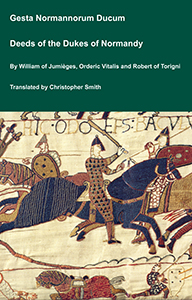
The Deeds of the Dukes of Normandy
The Gesta Normannorum Ducum [The Deeds of the Dukes of Normandy] is a landmark medieval chronicle tracing the rise and fall of the Norman dynasty from its early roots through the pivotal events surrounding the Norman Conquest of England. Originally penned in Latin by the monk William of Jumièges shortly before 1060 and later expanded at the behest of William the Conqueror, the work chronicles the deeds, politics, battles, and leadership of the Norman dukes, especially William’s own claim to the English throne. The narrative combines earlier historical sources with firsthand information and oral testimony to present an authoritative account of Normandy’s transformation from a Viking settlement into one of medieval Europe’s most powerful realms. William’s history emphasizes the legitimacy, military prowess, and governance of the Norman line, framing their expansion, including the conquest of England, as both divinely sanctioned and noble in purpose. Later chroniclers such as Orderic Vitalis and Robert of Torigni continued the history, extending the coverage into the 12th century, providing broader context on ducal rule and its impact. Today this classic work remains a foundational source for understanding Norman identity, medieval statesmanship, and the historical forces that reshaped England and Western Europe between 800AD and 1100AD.
Available at Amazon in eBook and Paperback format.
In November 1640 Henry Mildmay [aged 47] was elected MP Maldon during the Long Parliament.
In November 1640 Framlingham Gawdy of West Harling [aged 51] was elected MP Thetford in the Long Parliament.
In November 1640 Thomas Littleton 2nd Baronet [aged 19] was elected MP Much Wenlock in the Long Parliament.

In November 1640 Edmund Waller [aged 34] was elected MP Ives in the Long Parliament.
In November 1640 Thomas Tomkins [aged 35] was elected MP Weobley in the Long Parliament.
In November 1640 John Borlase 1st Baronet [aged 21] was elected MP Great Marlow in the Long Parliament but the election was subequently declared void.
In November 1640 Archbishop William Laud [aged 67] was accused of treason during the Long Parliament.


In November 1640 Thomas Jermyn [aged 23] was elected MP Bury St Edmunds during the Long Parliament.
In November 1640 Henry Jermyn 1st Earl St Albans [aged 35] was elected MP Bury St Edmunds during the Long Parliament.
In November 1640 Thomas Fanshawe of Jenkins [aged 33] was elected MP Lancaster in the Long Parliament.
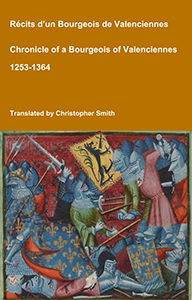
Chronicle of a Bourgeois of Valenciennes
Récits d’un bourgeois de Valenciennes aka The Chronicle of a Bourgeois of Valenciennes is a vivid 14th-century vernacular chronicle written by an anonymous urban chronicler from Valenciennes in the County of Hainaut. It survives in a manuscript that describes local and regional history from about 1253 to 1366, blending chronology, narrative episodes, and eyewitness-style accounts of political, military, and social events in medieval France, Flanders, and the Low Countries. The work begins with a chronological framework of events affecting Valenciennes and its region under rulers such as King Philip VI of France and the shifting allegiances of local nobility. It includes accounts of conflicts, sieges, diplomatic manoeuvres, and the impact of broader struggles like the Hundred Years’ War on urban life in Hainaut. Written from the perspective of a burgher (bourgeois) rather than a monastery or royal court, the chronicle offers a rare lay viewpoint on high politics and warfare, reflecting how merchants, townspeople, and civic institutions experienced the turbulence of the 13th and 14th centuries. Its narrative style combines straightforward reporting of events with moral and civic observations, making it a valuable source for readers interested in medieval urban society, regional politics, and the lived experience of war and governance in pre-modern Europe.
Available at Amazon in eBook and Paperback format.
In November 1640 Samuel Sandes [aged 25] was elected MP Droitwich in the Long Parliament.
In November 1640 John Coke [aged 33] was elected MP Derbyshire in the Long Parliament which seat he held until his death in 1650.
In December 1640 Robert Pye [aged 20] was elected MP Woodstock during the Long Parliament.
In 1641 John Burgoyne 2nd Baronet [aged 22] was elected MP Bedfordshire in the Long Parliament.
In 1641 Colonel John Russell [aged 21] was elected MP Tavistock in the Long Parliament.


On 3rd May 1642 William Waller [aged 45] was elected MP Andover during the Long Parliament.
In November 1642 Roger Palmer [aged 65] was elected MP Newton during the Long Parliament.
In 1645 Francis Pierrepont [aged 32] was elected MP Nottingham during the Long Parliament.
In 1645 John Burgoyne 1st Baronet [aged 52] was elected MP Warwickshire in the Long Parliament which seat he held until 1648 when excluded by Pride's Purge.
In 1645 Francis Bacon [aged 44] was elected MP Ipswich in the Long Parliament.
Chronicle of a Bourgeois of Valenciennes
Récits d’un bourgeois de Valenciennes aka The Chronicle of a Bourgeois of Valenciennes is a vivid 14th-century vernacular chronicle written by an anonymous urban chronicler from Valenciennes in the County of Hainaut. It survives in a manuscript that describes local and regional history from about 1253 to 1366, blending chronology, narrative episodes, and eyewitness-style accounts of political, military, and social events in medieval France, Flanders, and the Low Countries. The work begins with a chronological framework of events affecting Valenciennes and its region under rulers such as King Philip VI of France and the shifting allegiances of local nobility. It includes accounts of conflicts, sieges, diplomatic manoeuvres, and the impact of broader struggles like the Hundred Years’ War on urban life in Hainaut. Written from the perspective of a burgher (bourgeois) rather than a monastery or royal court, the chronicle offers a rare lay viewpoint on high politics and warfare, reflecting how merchants, townspeople, and civic institutions experienced the turbulence of the 13th and 14th centuries. Its narrative style combines straightforward reporting of events with moral and civic observations, making it a valuable source for readers interested in medieval urban society, regional politics, and the lived experience of war and governance in pre-modern Europe.
Available at Amazon in eBook and Paperback format.
In 1645 John Spelman [aged 38] was elected MP Castle Rising in the Long Parliament.
In May 1646 James Herbert [aged 23] was elected MP Wiltshire in the Long Parliament.
Samuel Pepys' Diary. 25th March 1664. Lady-day. Up and by water to White Hall, and there to chappell; where it was most infinite full to hear Dr. Critton [aged 71]. Being not knowne, some great persons in the pew I pretended to, and went in, did question my coming in. I told them my pretence; so they turned to the orders of the chappell, which hung behind upon the wall, and read it; and were satisfied; but they did not demand whether I was in waiting or no; and so I was in some fear lest he that was in waiting might come and betray me. The Doctor preached upon the thirty-first of Jeremy, and the twenty-first and twenty-second verses, about a woman compassing a man; meaning the Virgin conceiving and bearing our Saviour. It was the worst sermon I ever heard him make, I must confess; and yet it was good, and in two places very bitter, advising the King [aged 33] to do as the Emperor Severus did, to hang up a Presbyter John (a short coat and a long gowne interchangeably) in all the Courts of England. But the story of Severus was pretty, that he hanged up forty senators before the Senate house, and then made a speech presently to the Senate in praise of his owne lenity; and then decreed that never any senator after that time should suffer in the same manner without consent of the Senate: which he compared to the proceeding of the Long Parliament against my Lord Strafford. He said the greatest part of the lay magistrates in England were Puritans, and would not do justice; and the Bishopps, their powers were so taken away and lessened, that they could not exercise the power they ought. He told the King and the ladies plainly, speaking of death and of the skulls and bones of dead men and women1, how there is no difference; that nobody could tell that of the great Marius or Alexander from a pyoneer; nor, for all the pains the ladies take with their faces, he that should look in a charnels-house could not distinguish which was Cleopatra's, or fair Rosamond's, or Jane Shoare's.
Note 1. The preacher appears to have had the grave scene in "Hamlet" in his mind, as he gives the same illustration of Alexander as Hamlet does.


John Evelyn's Diary. 25th January 1679. The Long Parliament, which had sat ever since the Restoration, was dissolved by persuasion of the Lord Treasurer [aged 46], though divers of them were believed to be his pensioner. At this, all the politicians were at a stand, they being very eager in pursuit of the late plot of the Papists.
John Evelyn's Diary. 30th December 1640. I saw his Majesty [aged 40] (coming from his Northern Expedition) ride in pomp and a kind of ovation, with all the marks of a happy peace, restored to the affections of his people, being conducted through London with a most splendid cavalcade; and on the 3d of November following (a day never to be mentioned without a curse), to that long ungrateful, foolish, and fatal Parliament, the beginning of all our sorrows for twenty years after, and the period of the most happy monarch in the world: Quis talia fando!


