

Henrici Quinti, Angliæ Regis, Gesta, is a first-hand account of the Agincourt Campaign, and subsequent events to his death in 1422. The author of the first part was a Chaplain in King Henry's retinue who was present from King Henry's departure at Southampton in 1415, at the siege of Harfleur, the battle of Agincourt, and the celebrations on King Henry's return to London. The second part, by another writer, relates the events that took place including the negotiations at Troye, Henry's marriage and his death in 1422.
Available at Amazon in eBook and Paperback format.
Return of Queen Isabella and Roger Mortimer is in 1320-1329 Despencer War.
In October 1326 Isabella of France Queen Consort England [aged 31] landed at Harwich, Suffolk with her son Edward [aged 13] and Roger Mortimer 1st Earl March [aged 39], John Maltravers 1st Baron Maltravers [aged 36] and Nicholas Abrichecourt [aged 36]. Bishop Henry Burghesh [aged 34] joined her shortly afterwards.
Historia Roffensis [1275-1346]. On the Wednesday [24th September 1326] before the feast of Saint Michael, the Queen and her followers landed in England. When the King and his adherents heard of her arrival, they fled to the parts around Bristol. The Queen, together with her son, her entire company, and all the chief men of the realm, as well as the whole seditious populace, who always are, and always have been, prone to sedition, pursued them. Walter, Archbishop of Canterbury, summoned the Bishops of London, Winchester, Exeter, Worcester, and Rochester to Lambeth on the fifteenth day after Saint Michael's feast, proposing to hold a discussion in Saint Paul's Church about sending bishops to the King and Queen in order to restore peace. But the Bishop of Rochester dissuaded the Archbishop from going into the city or across the Thames to negotiate; he explained that the hearts of the whole people had turned against the bishops, and that all hated the bishops, since all the evils which had befallen England were imputed to the sloth, folly, and ignorance of the bishops. Moreover, all loved the Queen and hated the King. Then, on the following day, all the bishops who had been summoned gathered at Lambeth to deliberate about sending two of their number to the King and Queen. The Bishop of Winchester agreed to go, if he had a companion. The others refused to go, and at last all the bishops urged the Bishop of Rochester to go with him; but he utterly excused himself.
Regina & sequaces sui die Mercurii ante Festum S. Michaelis in Angliâ applicuerunt. Cujus adventu audito Rex & adhærentes sui fugerunt ad partes Bristolliæ; quas Regina cum filio & totá sequelâ ac omnes Majores regni & totus populus seditiosus, qui semper sunt & fuerunt proni ad seditionem, insecuti sunt. Walterus Archiepiscopus Cant. Episcopis London. Winton. Exon. Wigorn. & Roffensi apud Lamheth in quindenâ S. Michaelis convocatis, tractatum de Episcopis mittendis ad Regem & Reginam pro pace reformandâ in Ecclesiâ S. Pauli habere proponens, Roffensis Episcopus dissuasit Archiepiscopo, ne in civitatem vel ultra Thamisiam transiret ad tractandum; exponens ei quòd corda totius populi ab Episcopis aversa fuerant, & omnes Episcopos oderunt, quia totum malum quod contigit in Anglia, pigritiæ, fatuitati & ignorantiæ Episcoporum fuit imputatum; & omnes Reginam dilexerunt, & Regem oderunt. Tunc in crastino apud Lamheth omnes Episcopi vocati convenerunt ad tractandum de duobus mittendis ad Regem & Reginam. Wintoniensis ire concessit, si socium haberet. Cæteris ire negantibus, tandem omnes Episcopi Roffensem rogaverunt, ut cum eo iret; qui totaliter se excusavit.
Thomas Walsingham [~1422]. [24th September 1326] Therefore, taking with her her son, the Duke of Aquitaine, about fourteen years of age, Lord Edmund of Woodstock, Earl of Kent, the King of England's brother, Lord Roger de Mortimer, Lord of Wigmore, and many other distinguished men of the kingdom of England who had been exiled, and with Lord John, a valiant man, brother of the Count of Hainaut, at their head, whom many mercenary soldiers from Germany and Hainaut followed, so that their number was two thousand seven hundred and fifty-seven men-at-arms, she embarked with the fleet prepared by the Count of Hainaut. Boldly committing herself to the sea, she sailed safely and happily, and arrived with her whole household at Orwell, and at the port of Harwich entered England, into the land of the Earl Marshal. The Earl Marshal immediately joined her, as did the Earl of Mar and the Earl of Leicester, and other barons and knights of those parts, together with nearly all the prelates, and especially the bishops of Lincoln, Hereford, Dublin, and Ely, who, uniting with the Queen, raised a great army. Others too, and particularly Walter, Archbishop of Canterbury, provided her with money.
Assumptis igitur filio suo, Duce Aquitanniæ, fere quatuordecim annos ætatis habente, Domino Edmundo de Wodestoke Comite Cantiæ, germano Regis Angliæ, Domino Rogero de Mortuo Mari, Domino de Wygomor, et aliis multis viris illustribus de regno Angliæ profligatis, Duce Domino Johanne, viro strenuo fratreque Comitis Hanoniæ, quem sequebantur milites stipendiarii de Alemannia et Hanonia plures valde, ita quod numerus eorundem fuit duo millia septingenti quinquaginta septem hominum armatorum, parata classe per Comitem Hanoniæ, pervenit ad mare, et satis audaciter committens se pelago, feliciter navigavit, pervenitque ad Orwelle cum familia integra, et in portu de Herewych Angliam est ingressa, in terra Comitis Marescalli; cui mox Comes Marescallus et Comes Murimuth, land at Harwich with a great force. Leycestriæ, aliique barones et milites illarum partium, adhæserunt, cum Prælatis fere omnibus, et præcipue Lincolniensi, Herefordensi, Dublinensi, et Eliensi, Episcopis, qui juncti Reginæ magnum exercitum conflaverunt. Alii vero, et præcipue Walterus, Cantuariensis Archiepiscopus, sibi pecuniam ministravit.
Note 1. The narrative here resembles that of Adam Murimuth Continuation, but has been derived from a fuller source.
The Brut. [24th September 1326] The Quene Isabell and Sir Edward hir sone, Duc of Gyene, Sir Edmunde of Wodestok, Erl of Kent, and Sir Iohn þe Erles broþer of Henaud, and her company, drade nouȝt þe manace of þe Kyng ne of his traitoures, for þai truste al in Godes grace, & come vnto Herwiche in Southfolc, þe x day in þe mounthe of Ottobr, And in þe ȝere of grace Ml CCC xxvj [1326]. And at þe same tyme, at London, þere was Kyng Edward in the Toure at his metee; and a messenger come into þe hall, and saide þat Que[en] Isabell was comen to lande at Herewiche, and hade brouȝt in her company Sire Iohn of Henaude, and wiþ him men of armes wiþoute nombre. And wiþ þat worde, Sir Hugh þe Spenser; þe fader, spake & þus to þe Kyng saide: "my most worshipful Lorde, Kyng of Engeland, now mow ȝe make gode chere, for certeinly þai ben al oures." The Kyng saw þis worde comfortable; ȝitte he was ful sorweful & pensif in hert. And þe Kyng hade nouȝt ȝitte fulliche eten, þat þere ne come into þe halle anoþer messager, and saide þat þe Quene Isabel was arryuede at Herewich, bisides Skipwich in Southfolc. Sir Hugh þe Spenser, þe fader, spake to þe messager, and saide: "telle þe soþ in goode fay," quod he to þe messager, "my faire frende, is she comen wiþ a grete strengþ?" "Certis, sir, soþ forto say, she haþ in her company but vij C men of Armes." And wiþ þat worde, Sire Hughe þe Spenser, þe fader, criede wiþ an hye voice, and saide: "Allas, Allas! we beþ alle bitraiede; for certes wiþ so litil power she nad neuer comen to londe, but folc of þis lande were to her consentede." And þerfore, after mete þai toke her conseile, and went toward Walys, forto arere þe Walshemen aȝeins Quene Isabell and Edwarde her sone, al forto fight; and so þai were in purpos, euerycheon.
 Bourgeois de Valenciennes. Then my lord John and his company set out on their way, and he brought with him Queen Isabel and the young King of England her son, and his uncle. They embarked upon the sea on the side toward Holland, and commended themselves to God and to my lord Saint George, that He might bring them safely to harbour. They sailed until they arrived in England in great peril, at a deserted place; for the King of England, the father, and many men-at-arms were stationed at the landing where the queen and her company intended and expected to disembark1. He had been warned that such people were to arrive there. But it did not please God; and from that moment God worked on behalf of Edward, the young King of England.
Dont se mist monseigneur Jehan et sa routte à la voye et emmena la royne Yzabel et le josne roy d’Engleterre son fils et son oncle, et montèrent en mer au lez devers Holande, et se commandèrent à Dieu et à monseigneur saint Jorge qu’il les menast ariver à bon port. Et nagèrent tant qu’il arivèrent en Engleterre à grant péril en ung lieu désert; car le roy d’Engleterre le père et grans gens d'armes estoient au pas où la royne et ses gens voloient et cuidoient descendre, et luy avoit-on nonchiet que tels gens debvoient là ariver, mais il ne pleut mye à Dieu; et dès dont ouvra Dieu pour Édouart le josne roy d’Engleterre.
Note 1. Queen Isabella, Edward and Edmund landed on the 24th or 26th September 1326. Chronicle of Geoffrey le Baker of Swinbroke: "A favourable wind drove the fleet, bound for the shores of England, into the port of Orwell on the Friday just before the feast of Saint Michael. There, the Earl Marshal and Henry, Earl of Leicester, along with a defiant multitude of barons and knights, came out to meet them. Nor were prelates lacking among those treacherously joined to the leaders against their own country and its prince."
Adam Murimuth Continuation: "At the end of the same year the queen went to Hainaut and attached herself to the count of Hainaut and his council. With her son, the earl of Kent, Roger Mortimer, and other English exiles, and supported by the company of Lord John, brother of the count of Hainaut, together with many hired soldiers from Germany and Hainaut, she entered England on the Friday immediately before the feast of Saint Michael in the year of our Lord 1326. They landed at the port of Harwich, at Orwell in the lands of the earl Marshal at Walton. Immediately the earl Marshal, the earl of Leicester, and other barons and knights of those regions joined them. Almost all the prelates did the same, especially the bishops of Lincoln, Hereford, Durham, and Ely, who helped the queen gather a large army. Others, especially Walter of Canterbury and others, supplied them with money."
Annales Paulini. In the same year [1326], on the 24th day of September, namely on the Wednesday just before the feast of Saint Michael, Lady Isabella, Queen of England, who had been sent into France to her brother, the King of France, for the re-establishment of peace, and who remained there for a year and a half, came together with Lord Edward, her firstborn son, and landed at the port of Orwell. She took land at a place called Harwich, about four leagues distant from Colvasse,1 around the hour of noon; and in the town of Walton2 she lodged the first night with her household. Ten ships had been assigned to her, and they so quickly made ready to unload their vessels that all their provisions, arms, horses, and all necessities were brought ashore from the said ships. And so it was that, from the said port, with their sails raised and with a favourable and pleasant wind, they returned before sunset of the same day, except for the ship in which the said queen had come, which the king's bailiffs brought to London, and presented it to the king, who was then staying in the Tower, recounting to him the whole order of the queen's arrival. When he heard this, the king withdrew toward Wales, and, passing through the whole country, sought to subjugate it, so that in every county men might be ready to give him aid against the Lady Queen. But few yielded to him or adhered to him. These are the magnates who came with the Lady Queen: Lord Edward, her son, Duke of Aquitaine; John, brother of the Count of Hainaut; the Earl of Beaumont; Edmund of Woodstock, Earl of Kent, with his wife; Roger de Mortimer; John de Cromwell; Thomas Russelyn; William Trussel; and other knights and squires of Hainaut, well equipped with arms, at least fifteen hundred, it was said. The queen, moreover, found favour with all, so that the whole community of the counties of Norfolk and Suffolk obeyed her and gave her aid with armed force. She proceeded with her adherents toward [Bury] Saint Edmund's as though on pilgrimage; and in the said abbey she found 800 marks sterling, which Lord Hervé de Stanton, the king's justiciar, had deposited there for safekeeping. This money the Lady Queen borrowed to pay the wages of her household, since Hervé himself was absent. From that place she came to Cambridge, and stayed for several days at the priory of Barnwell; and from there she set out for Baldock. There Thomas Catel, brother of Master Robert de Baldock, then Chancellor of the Lord King, was captured, all his goods destroyed, and he was led to a certain castle. From that place she went on to Dunstable, and so she moved her camp from place to place, following the Lord King toward Hertford, harming or injuring no one, but devastating only the manors and goods of Lord Hugh Despenser, father and son, and of Master Robert de Baldock.
Eodem anno, XXIIII die Septembris, videlicet feria quarta proxima ante festum Sancti Michaelis, domina Isabella regina Angliæ, que missa fuit in Franciam fratri suo regi Franciæ pro pace reformanda, et stetit ibi per annum et dimidium, venit una cum domino Edwardo filio suo primogenito, et applicuit in portu de Arewelle, et cepit terram qua vocatur Colvasse, distantem de Herewich per iiiior leucas, circa horam meridiem; et in villa de Waleton prima nocte hospitabatur cum suis familiaribus; et x naves fuerunt sibi deditæ, et tam celeriter expedierunt ad evacuandum eorum naves, quod omnia eorum victualia, arma et equi, et omnia necessaria a dictis navibus fuerunt deducts ad terram, ita quod a dicto portu, velis eorum levatis, cum prospero vento et amœno, ante occasum solis dictæ diei redierunt, excepta nave in qua dicta regina venit; quam quidem navem paute regis Londonias adduxerunt, et domino regi, ad Turrim tunc commoranti, illam præsentarunt, narrantes regi totum ordinem adventus reginæ. Quo audito, rex se transtulit versus Walliam, et transeundo totam patriam sibi subjugavit, ut in quolibet comitatu parati essent sibi in adjutorium contra dominam reginam; sed pauci sibi adquiescebant vel adhærebant. Isti sunt magnates venientes cum domina regina; dominus Edwardus filius suus, dux Aquitannim; Johannes frater comitis Hennaudiæ; comes de Beaumond; Edmundus de Wodestouke comes Kantiæ cum uxore sua; Rogerus de Mortuomari, Johannes de Crombwelle, Thomas Russelyn, Willelmus Trussel, et alii milites et armigeri Hennagii, in armis bene dispositi, ad minus XVc ut dicebatur. Regina autem invenit gratiam erga omnes, ita quod tota communitas comitatnum Northfolck et Suthfoch sibi obediebat, et auxilium eidemn cum vi armata præstabat. Movebat se regina cum suis adhærentibus versus Sanctum Edmundum quasi peregrinando; invenit in dicta abathia VIIIc marcarum sterlingorum, quas dominus Herveus de Stantone, justitiarius domini regis, ibidem apposuerat ad custodiendum. Quod quidem argentum domina regina mutuavit ad solvendum pro stipendiis familiæ suæ, ipso Herveo absente. De illo loco venit ad Grantebrigge, et ad prioratum de Bernewelle per aliquot dies perhendinavit; et ab illo loco apud Baldock iter arripuit; et Thomas Catel, frater magistri Roberti de Baldock tunc cancellarii domini regis, ibidem fuit captus, et omnia ejus bona destructa, et ductus ad quoddam castellum; et ab illo loco perrexit apud Dunstaple, et sic mutavit dietas suas de loco ad locum, dominum regem sequendo versus Herfordiam, neminem tamen lædendo vel malum faciendo, sed tantummodo maneria et bona dominorum Hugonum Despenser patris et filii et magistri Roberti de Baldock devastavit.
Note 1. The location, or significance, of Colvasse is unknown. Three leagues being around twelve miles.
Note 2. Walton is now part of Felixstowe, lying between the rivers Orwell and Deben.
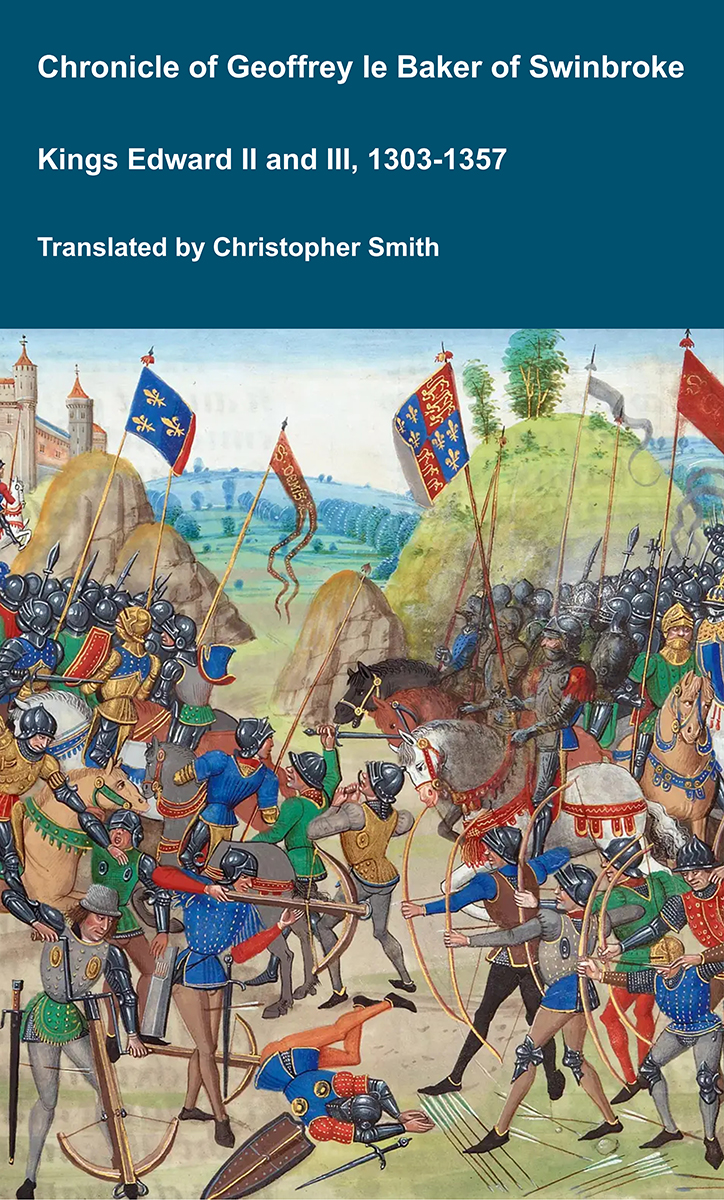 Chronicle of Geoffrey le Baker of Swinbroke. A favourable wind drove the fleet, bound for the shores of England, into the port of Orwell on the Friday [26th September 1326] just before the feast of Saint Michael.1 There, the Earl Marshal2 and Henry, Earl of Leicester, along with a defiant multitude of barons and knights, came out to meet them. Nor were prelates lacking among those treacherously joined to the leaders against their own country and its prince. But the chief instigators of this most wicked crime, trained disciples of their mistress in arms and treachery, appeared at the appointed day: not as shepherds of sheep or lambs, but as armed wolves, cruel warriors, less like pastors than tyrants, and leaders of the vanguard of this impious host. There stood the two elder men from whom the Babylonian iniquity sprang forth, not against Susanna, but in favour of Jezebel: these, I say, were the priests of Baal, foster sons of Jezebel, namely the Bishops of Lincoln and Hereford. With them were also the Bishops of Dublin and Ely.3 Together with the queen, they had raised a great army.
Classem ad Anglie littora ventus directam votivus depulit in portum Horewille die Veneris proxima ante festum sancti Michaelis; cui se obvios confederaverunt comes Mariscalli et Henricus comes Leicestrie, et cum eiis baronum atque commilitonum proterva multitudo. Nec defue: runt prelati ducibus contra patriam et patrie principem infideliter commixti; set tanti facinoris machinatores sceleratissimi sue discipule, armis docte sceleris, obviaverunt ad diem expectatum; non quidem lanigerorum aut ovium, set luporum armigerorum crudelium, pastores minus quam tiranni horum falangis precipue ducatum prebuere. Ibi duo seniores a quibus egressa est iniquitas Babilonica contra Susannam, set pro Iezabele, hii, inquam, Baal sacerdotes, alumpni Iesabel, scilicet Lincolniensis et Herefordensis, cum iis quoque Dublinensis atque Heliensis, cum eadem regina magnum exercitum congregarunt.
Note 1. Friday before Michaelmas in 1326 fell on the 26th September but the queen landed on the 24th. Edward's order for the array of the eastern counties, in which he refers to the queen's landing, is dated 27th September. Rymer's Fœdera 2.643.
Note 2. Thomas of Brotherton, the king's brother, created earl of Norfolk in 1312, and earl marshal in 1316. Henry here styled earl of Leicester, was restored to his brother's forfeited earldoms of Lancaster and Leicester in 1324. He was the king's first cousin.
Note 3. Alexander Bicknor, archbishop of Dublin, 1317-1349. John Hotham, bishop of Ely (afterwards chancellor and treasurer), 1316-1337.
 Chronicle of Jean le Bel Volume 1. Now it happened that at the end of two days the storm ceased, and the sailors sighted land in England. They steered joyfully toward it and came ashore upon the sand and the open seashore, without harbour or proper port1, and remained upon that beach for three days with little provision of food, unloading their horses and their armour. They did not know in what part of England they had landed, nor whether they were in the power of friends or enemies. On the fourth day they set out, committing themselves to God's will, like men who had endured all hardships of hunger and cold, together with the great fear they had felt and still felt. They rode up and down, here and there, until they found some small hamlets and villages, and afterward a great abbey of black monks [Benedictines] called Saint Edmund's. There they lodged and refreshed themselves in that abbey for the space of three days.
Or, avint au chief de II jours que celluy tourment cessa, et veirent les maronniers terre en Angleterre, et trahirent celle part moult joyeux, et prirent terre sur le sablon et sur le droit rivage de la mer, sans havre et sans droit port et demeurerent sur celluy sablon par trois jours à petite pourveance de vivres et deschargicrent leurs chevaulx et leurs harnas. Et si ne sçavoient en quel endroit d'Angleterre ilx estoient arrivez, ou en pouoir d'amis ou d'anemis. Au quart jour, ilz se mirent à la voye à l'aventure de Dieu, comme ceulx lesquelz avoient eu toutes mesaises de fain et de froit, avecques la grand paour qu'ilz avoient eu et avoient encores; et chevauch[er]ent tant d'amont et d'aval, et d'une part et d'aultre, que ilz trouverrent aucuns petis hamelès et villages. et puis aprez une grande abaye de noirs moynes que on appelle Saint Hemon; sy se heberglierjent et rafreschirent en celle abbaye par l'espace de III jours.
Note 1. Walsingham and Murimuth state that they landed at the port of Harwich, in the county of Essex: 'They came by ship to Orwell in the port of Harwich.' Edward II, in his proclamation dated 27th September 1326, ordering all his subjects to arrest Roger Mortimer, the queen, and those accompanying them, says that they had entered England in the county of Suffolk; Rymer 2.643: 'The King, to all leaders and conductors of men-at-arms and foot soldiers, and to the counties of Norfolk, Suffolk, Essex, Hertfordshire, Kent, and Huntingdonshire, and to all our other faithful subjects who shall see these letters, greeting. Which thing greatly grieves and displeases us, since those who ought chiefly to seek and uphold our good and honour act so shamefully and basely in receiving, aiding, and favouring our enemies and adversaries; and moreover, what is worse, they have brought with them unknown people, foreigners and strangers, both men-at-arms and foot soldiers, in great numbers, to strengthen and increase their wickedness and false designs, seeking pretexts, inventing causes, preaching and falsely declaring to our people that they have come for our good and the honour of our realm, whereas in truth they aim to overthrow us, diminish our power, subject us to others, and disinherit us and our royal crown as far as lies in them; as every good man may well see and perceive. Which thing is against our peace and the estate of our crown, and may turn to the ruin and destruction of our people. God forbid. Therefore, we, wishing firmly to maintain our peace, uphold the judgments of the peers and parliament, and preserve the laws and customs of our realm, as we are bound by oath, have ordained, just as has previously been commanded and proclaimed throughout our realm, that all our faithful and loyal subjects of our allegiance and friendship shall pursue, cause to be pursued, remove, seize, and destroy our said enemies and the foreigners entering with them, with all the power and force they can muster, upon pain of forfeiture toward us, as they are bound to do by their allegiance and fealty; except for our said wife and son, and our brother the Edmund of Woodstock, who is also in their company, whom we wish to be preserved, if it can be done, and brought safely to us. Wherefore, trusting fully in the diligence and zeal of our dear and faithful Robert de Waterville, we have assigned him in the aforesaid counties and give him full power to raise and assemble all men-at-arms and foot soldiers capable of bearing arms, each according to his condition, both within liberties and without; and with them to pursue, capture, and destroy the said traitors, enemies, felons, unknown foreigners, by all ways and means possible, as traitors, destroyers, and disheritors of us and of our realm, sparing no one (except our said wife, son, and brother, whom we wish to be saved), as far as may be done, and brought safely to us as aforesaid. And for this reason we command and charge you and each of you, upon the faith and allegiance which you owe us, and upon all that you may forfeit in body and goods, that you be diligently occupied day and night in pursuing, capturing, and destroying the said traitors, enemies, felons, unknown foreigners, and disheritors of us and of our realm, and each of them, by all ways and means you know or can, whenever you are able; and likewise be attentive, advising, and assisting the said Robert in doing this whenever required. Making known to all that those who do not do this with all their power and intent, or who shall be rebellious, contrary, or negligent in these matters, we shall hold them as our enemies and partners, adherents, and supporters of our said enemies, and shall punish them accordingly. And we give power to the said Robert, if he finds any such persons in the said counties, to seize their bodies and keep them in secure prison without release except by our special command; and likewise to take their lands and chattels into our hands, and to certify us of their names. And if he finds any resisting arrest in this matter and unwilling to submit to justice, we will and grant power to the said Robert to slay and destroy them as aforesaid; and that all shall be obedient to him in doing this, in the manner aforesaid, upon pain of forfeiture of body and goods. And we have commanded our sheriffs of the said counties that in these matters they be attentive to the said Robert whenever he shall warn them on our behalf. And by this our commission it is not our intent to take away or diminish any authority previously granted by our letters patent to the captains or leaders of the said counties, but that all shall assist one another together with the said Robert in carrying out and fulfilling our commands. Given at our Tower of London, the 27th day of September.' In the same collection are several interesting letters relating to Isabella's landing and her march in England.
1. Walsingham (éd. cit., t. 1, p. 180) et Adam Murimuth (p. 46) disent qu'ils abordèrent au port de Harwich, dans le comté d'Essex: «Apud Orwelle, in portu de Herewych.» (Voy. aussi Chronographia Regum Francorum, t.1, p281.) Édouard II, dans sa proclamation, datée du 27 septembre 1326, mandant à tous ses sujets d'arrêter Roger de Mortimer, la reine et ceux qui les accompagnaient, dit qu'ils sont entrés en Angleterre dans le comté de Suffolk. (Rymer Fœdera, t. II, IIr partie, p. 643). On trouve dans ce recueil (p. 643 et suiv.) plusieurs lettres intéressantes relatives au débarquement et à la marche d'Isabelle en Angleterre.
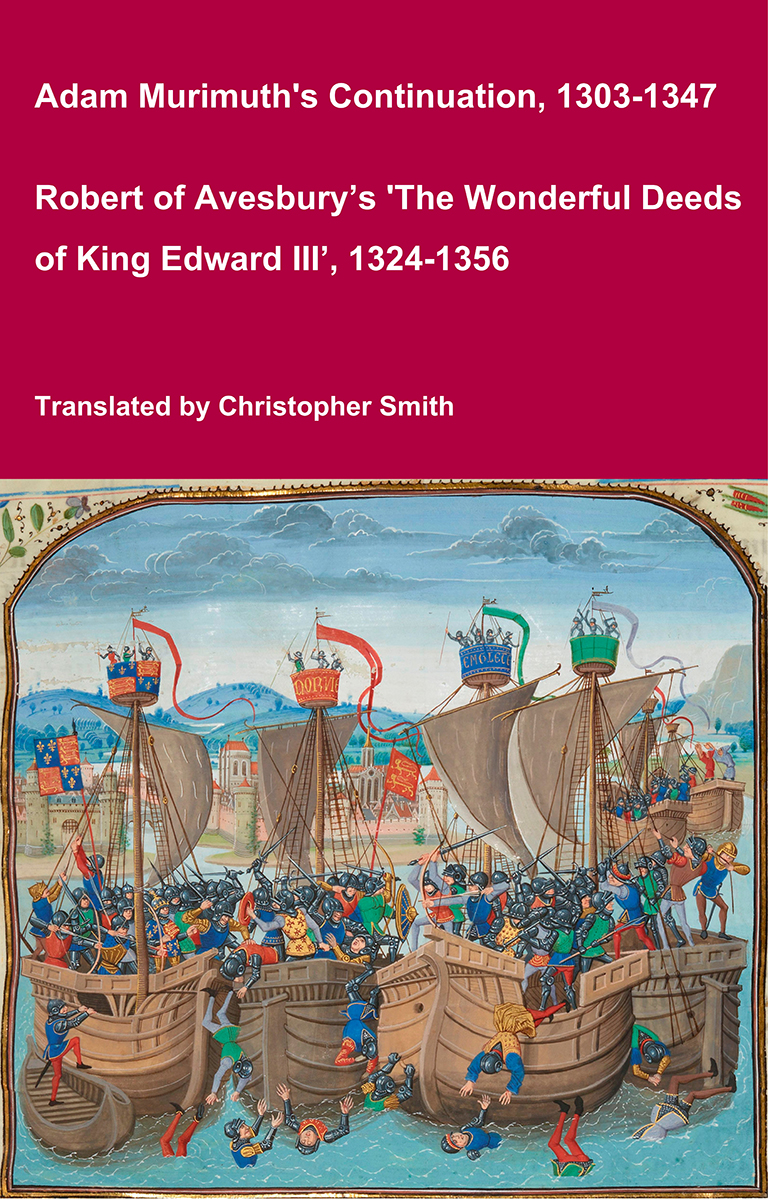 Adam Murimuth Continuation. In the year of our Lord 1325, in the tenth year of Pope John and the nineteenth year of King Edward, immediately after the feast of Saint Michael [29th September], the king of England wished that Queen Isabella and their son, after performing homage as described above, should quickly return. But after sending most of their household back to England, they remained abroad throughout that year. Some said they remained unwillingly, while others claimed they did so voluntarily because of the close relationship that had arisen between the queen and Lord Roger Mortimer. Without him and the other English nobles who had fled, the queen refused to return, especially out of hatred for the Despensers, who in the previous year had arranged for the queen's household to be removed from her. This displeased the queen greatly, as the later outcome showed. When Walter, bishop of Exeter, who was in the queen's company, realized this, he secretly withdrew and returned to England.
Anno Domini millesimo CCCXXV, pontificatus Johannis papæ X, dicti vero regis Edwardi XIX, statim post festum sancti Michaelis, voluit rex Angliæ quod domina regina Angliæ et filius suus prædictus, facto homagio, ut præmittitur, cito redirent. Sed, remissa magna familia utriusque in Angliam, ibidem per totum illum annum remanserunt, ut dicebatur, inviti, et aliis asserentibus quod voluntarie, propter nimiam familiaritatem contractam inter dictam reginam et dominum Rogerum de Mortuo mari, sine quo et aliis nobilibus de Anglia profugatis noluit dicta regina redire et maxime in odium illorum Dispensatorum, qui anno præcedenti procuraverunt familiam reginæ ab ipsa removeri; quod propositum reginæ displicuit, ut exitus negotii postmodum comprobavit. Quod percipiens Walterus episcopus Exoniensis de comitiva dictæ reginæ in Angliam clam recessit.