

The History of William Marshal was commissioned by his son shortly after William’s death in 1219 to celebrate the Marshal’s remarkable life; it is an authentic, contemporary voice. The manuscript was discovered in 1861 by French historian Paul Meyer. Meyer published the manuscript in its original Anglo-French in 1891 in two books. This book is a line by line translation of the first of Meyer’s books; lines 1-10152. Book 1 of the History begins in 1139 and ends in 1194. It describes the events of the Anarchy, the role of William’s father John, John’s marriages, William’s childhood, his role as a hostage at the siege of Newbury, his injury and imprisonment in Poitou where he met Eleanor of Aquitaine and his life as a knight errant. It continues with the accusation against him of an improper relationship with Margaret, wife of Henry the Young King, his exile, and return, the death of Henry the Young King, the rebellion of Richard, the future King Richard I, war with France, the death of King Henry II, and the capture of King Richard, and the rebellion of John, the future King John. It ends with the release of King Richard and the death of John Marshal.
Available at Amazon in eBook and Paperback format.
Short Parliament is in 1640-1649 Civil War and Regicide.
On 20th February 1640 Henry Berkeley of Bruton [aged 61] was elected MP Ilchester
John Glanville [aged 54] was elected Speaker of the House of Commons.
In April 1640 Samuel Sandes [aged 24] was elected MP Droitwich.
Thomas Jermyn [aged 67] was elected MP Cambridge University.
Thomas Jermyn [aged 23] was elected MP Corfe Castle, Dorset.
Henry Jermyn 1st Earl St Albans [aged 35] was elected MP Corfe Castle, Dorset.
John Jennings was elected MP St Albans.
Ambrose Browne 1st Baronet was elected MP Surrey.
John Curzon 1st Baronet [aged 41] was elected MP Derbyshire.
George Fane of Burston [aged 59] was elected MP Maidstone.
On 5th May 1640 King Charles I of England, Scotland and Ireland [aged 39] dissolved the Short Parliament.


In 1640 Thomas Lyttelton 1st Baronet [aged 47] was elected MP Worcestershire in the Short Parliament.

In 1640 Edward Phelips [aged 27] was elected MP Ilchester during the Short Parliament.
In 1640 Charles Berkeley 2nd Viscount Fitzhardinge [aged 40] was elected MP Bath during the Short Parliament.
In 1640 Thomas Salusbury 2nd Baronet [aged 27] was elected MP Denbighshire during the Short Parliament.
In February 1640 Francis Newport 1st Earl Bradford [aged 19] was elected MP Shrewsbury during the Short Parliament.
In March 1640 Sidney Godolphin [aged 30] was elected MP Helston during the Short Parliament.
In April 1640 Edward Hussey 1st Baronet [aged 54] was elected MP Lincolnshire in the Short Parliament.
In April 1640 Anthony Hungerford [aged 32] was elected MP Malmesbury during the Short Parliament.
Henrici Quinti, Angliæ Regis, Gesta, is a first-hand account of the Agincourt Campaign, and subsequent events to his death in 1422. The author of the first part was a Chaplain in King Henry's retinue who was present from King Henry's departure at Southampton in 1415, at the siege of Harfleur, the battle of Agincourt, and the celebrations on King Henry's return to London. The second part, by another writer, relates the events that took place including the negotiations at Troye, Henry's marriage and his death in 1422.
Available at Amazon in eBook and Paperback format.
In April 1640 Gervase Holles [aged 33] was elected MP Grimsby in the Short Parliament.
In April 1640 William Glynne was elected MP Caernarfonshire during the Short Parliament.

In April 1640 Dudley North 4th Baron North [aged 38] was elected MP Cambridgeshire in the Short Parliament.

In April 1640 William Pierrepont of Thoresby [aged 32] was elected MP Shropshire during the Short Parliament.
In April 1640 Francis Pierrepont [aged 27] was elected MP East Retford during the Short Parliament.
In April 1640 Edward Rodney [aged 49] was elected MP Wells during the Short Parliament.
In April 1640 Philip Musgrave 2nd Baronet [aged 32] was elected MP Westmoreland in the Short Parliament.
In April 1640 John Melbury Sampford Strangeways [aged 54] was elected MP Dorset during the Short Parliament.
In April 1640 Giles Strangeways [aged 24] was elected MP Weymouth and Melcombe Regis during the Short Parliament.
In April 1640 John Wray 2nd Baronet [aged 53] was elected MP Lincolnshire during the Short Parliament.
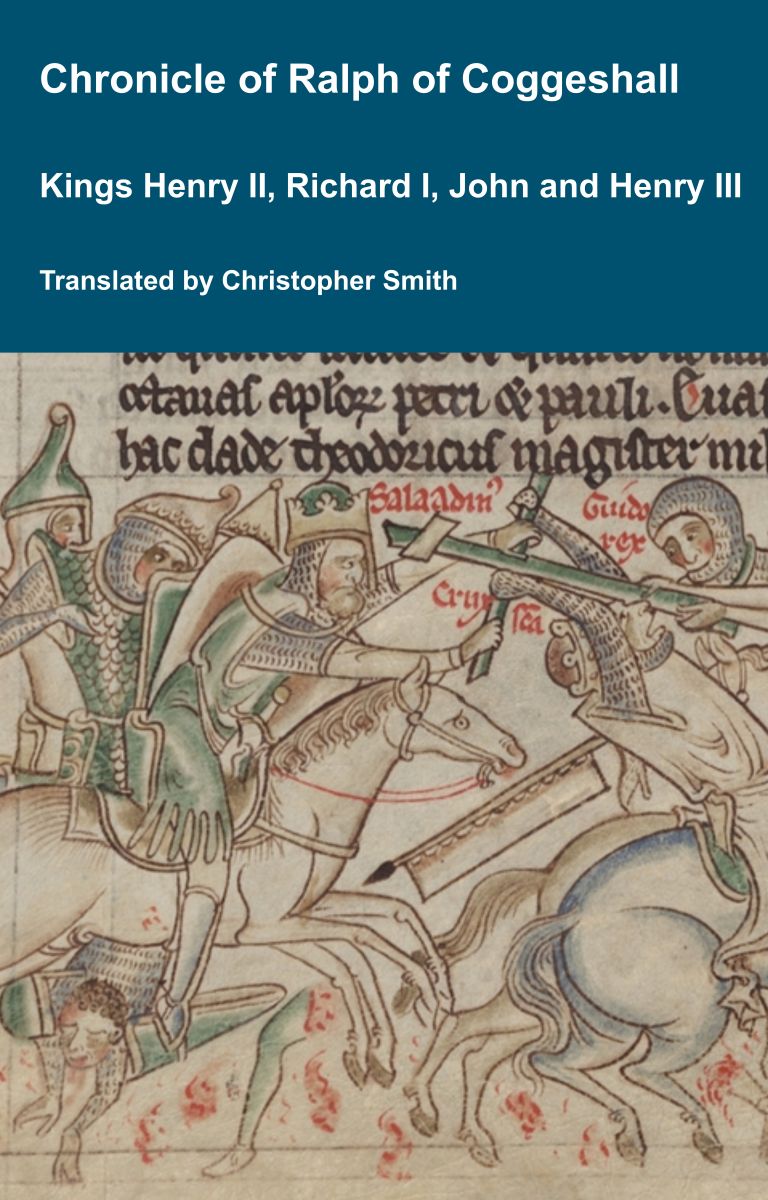
Chronicle of Abbot Ralph of Coggeshall
The Chronicle of Abbot Ralph of Coggeshall (Chronicon Anglicanum) is an indispensable medieval history that brings to life centuries of English and European affairs through the eyes of a learned Cistercian monk. Ralph of Coggeshall, abbot of the Abbey of Coggeshall in Essex in the early 13th century, continued and expanded his community’s chronicle, documenting events from the Norman Conquest of 1066 into the tumultuous reign of King Henry III. Blending eyewitness testimony, careful compilation, and the monastic commitment to record-keeping, this chronicle offers a rare narrative of political intrigue, royal power struggles, and social upheaval in England and beyond. Ralph’s work captures the reigns of pivotal figures such as Richard I and King John, providing invaluable insights into their characters, decisions, and the forces that shaped medieval rule. More than a simple annal, Chronicon Anglicanum conveys the texture of medieval life and governance, making it a rich source for scholars and readers fascinated by English history, monastic authorship, and the shaping of the medieval world.
Available at Amazon in eBook and Paperback format.
In April 1640 Christopher Wray [aged 39] was elected MP Grimsby during the Short Parliament.
In April 1640 Charles Cecil [aged 21] was elected MP Hertford during the Short Parliament.
In April 1640 Simon Archer [aged 58] was elected MP Tamworth during the Short Parliament.
In April 1640 William Fitzwilliam 2nd Baron Fitzwilliam [aged 31] was elected MP Peterborough during the Short Parliament.
In April 1640 Henry Mildmay [aged 47] was elected MP Maldon during the Short Parliament.
In April 1640 William Waller [aged 43] was elected MP Andover during the Short Parliament.

In April 1640 Edmund Waller [aged 34] was elected MP Amersham in the Short Parliament.
In April 1640 Thomas Tomkins [aged 35] was elected MP Weobley in the Short Parliament.
In April 1640 Henry Poole [aged 48] was elected MP Chichester during the Short Parliament.
In April 1640 James Fiennes 2nd Viscount Saye and Sele [aged 38] was elected MP Oxfordshire in the Short Parliament.
Abbot John Whethamstede’s Chronicle of the Abbey of St Albans
Abbot John Whethamstede's Register aka Chronicle of his second term at the Abbey of St Albans, 1451-1461, is a remarkable text that describes his first-hand experience of the beginning of the Wars of the Roses including the First and Second Battles of St Albans, 1455 and 1461, respectively, their cause, and their consequences, not least on the Abbey itself. His text also includes Loveday, Blore Heath, Northampton, the Act of Accord, Wakefield, and Towton, and ends with the Coronation of King Edward IV. In addition to the events of the Wars of the Roses, Abbot John, or his scribes who wrote the Chronicle, include details in the life of the Abbey such as charters, letters, land exchanges, visits by legates, and disputes, which provide a rich insight into the day-to-day life of the Abbey, and the challenges faced by its Abbot.
Available at Amazon in eBook and Paperback format.
In April 1640 William Heveningham [aged 36] was elected MP Stockbridge during the Short Parliament.

In April 1640 Philip Sidney 3rd Earl of Leicester [aged 21] was elected MP Yarmouth Isle of Wight during the Short Parliament.
In April 1640 Thomas Littleton 2nd Baronet [aged 19] was elected MP Much Wenlock in the Short Parliament.
In April 1640 Roger Twysden 2nd Baronet [aged 42] was elected MP Kent in the Short Parliament.
In April 1640 Framlingham Gawdy of West Harling [aged 50] was elected MP Thetford in the Short Parliament.
In April 1640 Thomas Godfrey [aged 54] was elected MP New Romney in the Short Parliament.
In April 1640 Thomas Liddell 1st Baronet [aged 62] was elected MP Newcastle upon Tyne in the Short Parliament.
In April 1640 Isaac Penington [aged 56] was elected MP City of London in the Short Parliament.
In April 1640 John Glynne [aged 38] was elected MP Westminster during the Short Parliament.
In April 1640 Robert Bernard 1st Baronet [aged 39] was elected MP Huntingdon in the Short Parliament.
Chronicle of Walter of Guisborough
A canon regular of the Augustinian Guisborough Priory, Yorkshire, formerly known as The Chronicle of Walter of Hemingburgh, describes the period from 1066 to 1346. Before 1274 the Chronicle is based on other works. Thereafter, the Chronicle is original, and a remarkable source for the events of the time. This book provides a translation of the Chronicle from that date. The Latin source for our translation is the 1849 work edited by Hans Claude Hamilton. Hamilton, in his preface, says: 'In the present work we behold perhaps one of the finest samples of our early chronicles, both as regards the value of the events recorded, and the correctness with which they are detailed; Nor will the pleasing style of composition be lightly passed over by those capable of seeing reflected from it the tokens of a vigorous and cultivated mind, and a favourable specimen of the learning and taste of the age in which it was framed.'
Available at Amazon in eBook and Paperback format.
In April 1640 Robert Crane 1st Baronet [aged 54] was elected MP Sudbury in the Short Parliament.
In April 1640 William Jephson [aged 32] was elected MP Stockbridge in the Short Parliament.
In April 1640 John Borlase 1st Baronet [aged 20] was elected MP Great Marlow in the Short Parliament.
John Evelyn's Diary. 11th April 1640. I went to London to see the solemnity of his Majesty's [aged 39] riding through the city in state to the Short Parliament, which began the 13th following,-a very glorious and magnificent sight, the King circled with his royal diadem and the affections of his people: but the day after I returned to Wotton, Surrey [Map] again, where I stayed, my father's [aged 53] indisposition suffering great intervals, till April 27th, when I was sent to London to be first resident at the Middle Temple: so as my being at the University, in regard of these avocations, was of very small benefit to me. Upon May the 5th following, was the Parliament unhappily dissolved; and, on the 20th I returned with my brother George to Wotton, Surrey [Map], who, on the 28th of the same month, was married at Albury to Mrs. Caldwell (an heiress of an ancient Leicestershire family1, where part of the nuptials were celebrated.
Note 1. A daughter of Daniel Caldwell, Esq., by Mary, daughter of George Duncomb, Esq., of Albury. She died 15th May, 1644, and he afterwards married the widow of Sir John Cotton.