

Abbot John Whethamstede’s Chronicle of the Abbey of St Albans
Abbot John Whethamstede's Register aka Chronicle of his second term at the Abbey of St Albans, 1451-1461, is a remarkable text that describes his first-hand experience of the beginning of the Wars of the Roses including the First and Second Battles of St Albans, 1455 and 1461, respectively, their cause, and their consequences, not least on the Abbey itself. His text also includes Loveday, Blore Heath, Northampton, the Act of Accord, Wakefield, and Towton, and ends with the Coronation of King Edward IV. In addition to the events of the Wars of the Roses, Abbot John, or his scribes who wrote the Chronicle, include details in the life of the Abbey such as charters, letters, land exchanges, visits by legates, and disputes, which provide a rich insight into the day-to-day life of the Abbey, and the challenges faced by its Abbot.
Available at Amazon in eBook and Paperback format.
Ermine is in Field.
 Weston Arms. Ermine, on a chief azure five bezants.
 Fox Arms. Ermine, on a chevron azure three fox's heads and necks erased or on a canton of the second a fleur de lys of the third. The canton is an augmentation of honour to his paternal arms, granted out of the Royal Arms as a mark of esteem to him and his heirs forever, by King Charles II following the Restoration of the Monarchy. Source.


 Adams Arms. Ermine three cats argent. Source
 Ingram Arms. Ermine on a fess gules three escallops or. Source.
 Bagot Arms. Ermine, two chevronels azure. Source.
 Jodrell Arms. Ermine. Source.
 Calthorpe Arms. Ermine, a maunch gules. Source.
 Knightley Arms. Quarterly 1&4 Ermine, 2&3 Unknown. Source.
 Chudleigh Arms. Ermine, three lions rampant gules. Source.
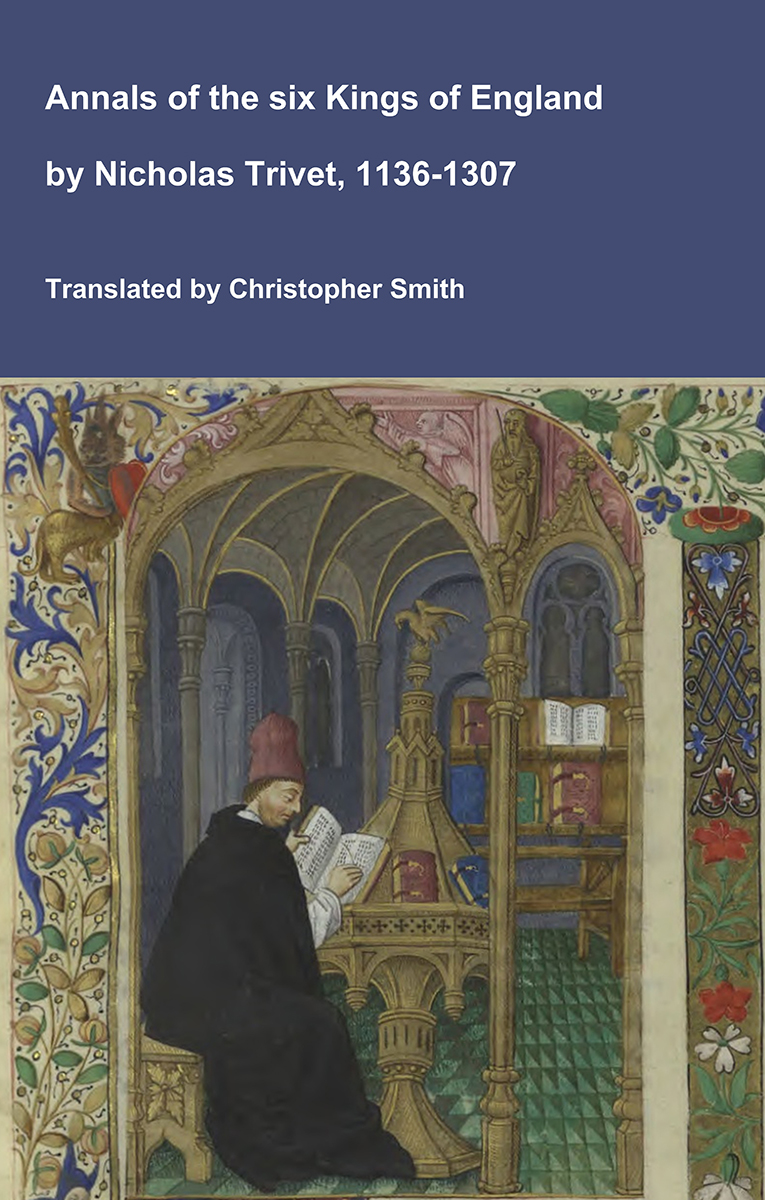
Annals of the six Kings of England by Nicholas Trivet
Translation of the Annals of the Six Kings of England by that traces the rise and rule of the Angevin aka Plantagenet dynasty from the mid-12th to early 14th century. Written by the Dominican scholar Nicholas Trivet, the work offers a vivid account of English history from the reign of King Stephen through to the death of King Edward I, blending political narrative with moral reflection. Covering the reigns of six monarchs—from Stephen to Edward I—the chronicle explores royal authority, rebellion, war, and the shifting balance between crown, church, and nobility. Trivet provides detailed insight into defining moments such as baronial conflicts, Anglo-French rivalry, and the consolidation of royal power under Edward I, whose reign he describes with particular immediacy. The Annals combines careful year-by-year reporting with thoughtful interpretation, presenting history not merely as a sequence of events but as a moral and political lesson. Ideal for readers interested in medieval history, kingship, and the origins of the English state, this chronicle remains a valuable and accessible window into the turbulent world of the Plantagenet kings.
Available at Amazon in eBook and Paperback format.
 Lister Arms. Ermine, a fess sable three mullets or. Source.
 Denison Arms. Ermine, a bend azure cotised sable between a unicorn's head erased in chief and a cross crosslet fitchy in base gules. Source.
 Pye Arms. Ermine, a bend lozengy gules. Source.
 Chaplin Arms. Ermine a chief azure three griffin's heads erased or.
 Dagworth Arms. Ermine, a fess gules three torteaux. Source.
 Dorward Arms. Ermine on a chevron sable, three crescents or.
 Boscawen Arms. Ermine, a rose gules barbed and seeded proper. Source.
 Tuchet Arms. Ermine, a chevron gules. Source.
 Wendesley Arms. Ermine, on a bend gules three escallops argent. Source.
 Arden Arms. Ermine, a fess chequy or and azure. Source.

_Arms.png)
.svg)


.svg)

.svg)


#/media/File:Strode_OfParnham_Arms.svg)


