

Henrici Quinti, Angliæ Regis, Gesta, is a first-hand account of the Agincourt Campaign, and subsequent events to his death in 1422. The author of the first part was a Chaplain in King Henry's retinue who was present from King Henry's departure at Southampton in 1415, at the siege of Harfleur, the battle of Agincourt, and the celebrations on King Henry's return to London. The second part, by another writer, relates the events that took place including the negotiations at Troye, Henry's marriage and his death in 1422.
Available at Amazon in eBook and Paperback format.
Windsor Beauties is in Paintings.
The Windsor Beauties are a set of portraits of the ladies of the court of King Charles II painted by Peter Lely.


Around 1662 Peter Lely [aged 43]. Portrait of Anne Hyde Duchess of York [aged 24]. One of the Windsor Beauties.

Around 1662 Peter Lely [aged 43]. Portrait of Frances Teresa Stewart Duchess Lennox and Richmond [aged 14]. One of the Windsor Beauties.

Around 1662 Peter Lely [aged 43]. Portrait of Princess Henrietta Stewart Duchess Orléans [aged 17]. One of the Windsor Beauties.

Around 1664 Peter Lely [aged 45]. Portrait of Jane Needham [aged 19]. One of the Windsor Beauties.

Around 1664 Peter Lely [aged 45]. Portrait of Margaret Brooke Lady Denham [aged 24]. One of the Windsor Beauties.

Around 1665 Peter Lely [aged 46]. Portrait of Frances Brooke Lady Whitmore [aged 25]. One of the Windsor Beauties.
Frances Brooke Lady Whitmore: Around 1640 she was born to William Brooke and Pembroke Lennard. Before May 1665 Thomas Whitmore and she were married. In 1690 Frances Brooke Lady Whitmore died.

Around 1665 Peter Lely [aged 46]. Portrait of Elizabeth Wriothesley Countess Gainsborough [aged 19]. One of the Windsor Beauties.

Around 1665 Peter Lely [aged 46]. Portrait of Mary Bagot Countess Falmouth. One of the Windsor Beauties.
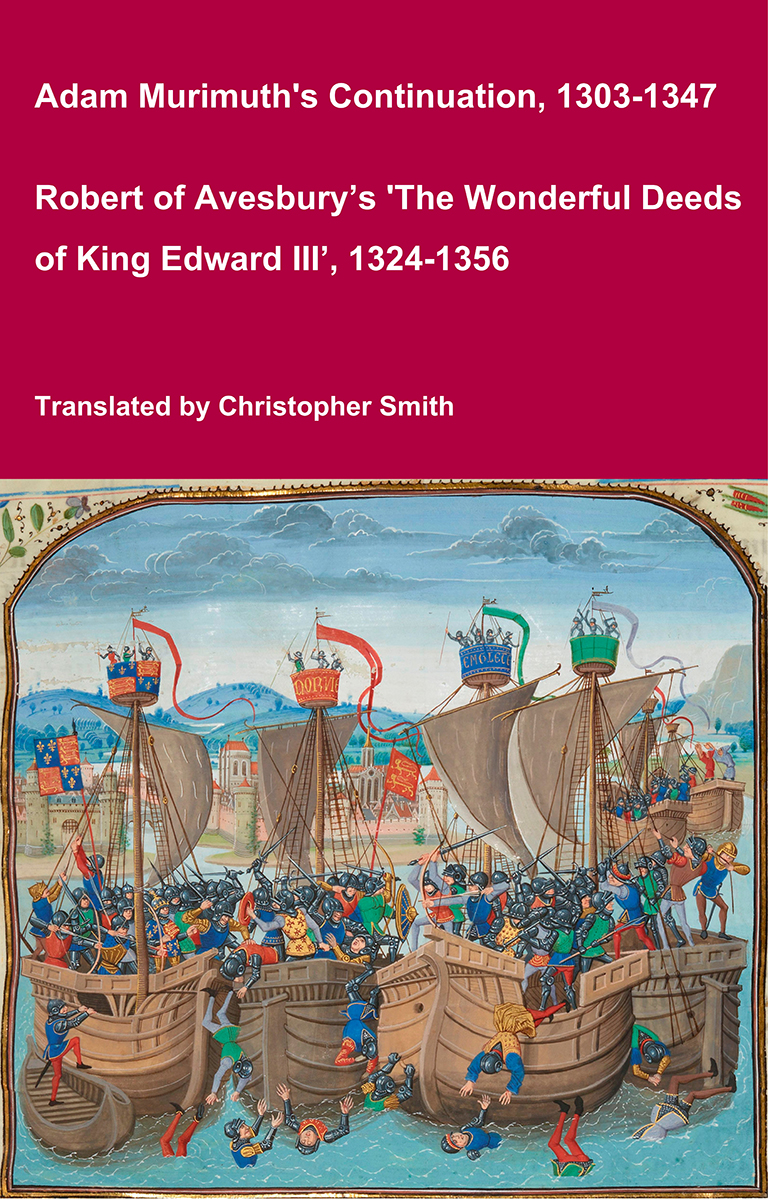
Adam Murimuth's Continuation and Robert of Avesbury’s 'The Wonderful Deeds of King Edward III'
This volume brings together two of the most important contemporary chronicles for the reign of Edward III and the opening phases of the Hundred Years’ War. Written in Latin by English clerical observers, these texts provide a vivid and authoritative window into the political, diplomatic, and military history of fourteenth-century England and its continental ambitions. Adam Murimuth Continuatio's Chronicarum continues an earlier chronicle into the mid-fourteenth century, offering concise but valuable notices on royal policy, foreign relations, and ecclesiastical affairs. Its annalistic structure makes it especially useful for establishing chronology and tracing the development of events year by year. Complementing it, Robert of Avesbury’s De gestis mirabilibus regis Edwardi tertii is a rich documentary chronicle preserving letters, treaties, and official records alongside narrative passages. It is an indispensable source for understanding Edward III’s claim to the French crown, the conduct of war, and the mechanisms of medieval diplomacy. Together, these works offer scholars, students, and enthusiasts a reliable and unembellished account of a transformative period in English and European history. Essential for anyone interested in medieval chronicles, the Hundred Years’ War, or the reign of Edward III.
Available at Amazon in eBook and Paperback format.

Around 1665 Peter Lely [aged 46]. Portrait of Henrietta Boyle Countess Rochester [aged 19]. One of the Windsor Beauties.

Before 1666 Peter Lely [aged 47]. Portrait of Anne Digby Countess Sunderland [aged 19]. One of the Windsor Beauties.

Around 1666 Peter Lely [aged 47]. Portrait of Barbara Villiers 1st Duchess of Cleveland [aged 25]. One of the Windsor Beauties.
Samuel Pepys' Diary. 21st August 1668. After dinner I by coach to my bookseller's in Duck Lane [Map], and there did spend a little time and regarder su moher, and so to St. James's, where did a little ordinary business; and by and by comes Monsieur Colbert [aged 43], the French Embassador, to make his first visit to the Duke of York [aged 34], and then to the Duchess [aged 31]: and I saw it: a silly piece of ceremony, he saying only a few formal words. A comely man, and in a black suit and cloak of silk, which is a strange fashion, now it hath been so long left off: This day I did first see the Duke of York's room of pictures of some Maids of Honour, done by Lilly [aged 49]: good, but not like1.
Note 1. The set of portraits known as "King Charles's Beauties", formerly in Windsor Castle, but now at Hampton Court [Map]. B.


Diary of the Times of George IV Volume 1 Section 1. There is nothing new here under the sun, since you left the metropolis, and. I lead literally the life of a recluse, for still public amusements are prohibited for the present. Thanks to heaven, no Lord Chamberlain has. been appointed yet, otherwise the dear operas would have begun by this time, and I should have felt myself obliged to renounce this great amusement. The parties in, Hanover Square, are not more lively than they were last.winter in Spring Gardens, except we miss the galanti show., which was exhibited, of all the 'old fograms, since the reign of George the First,' which, I suppose, was intended to show the difference that existed between them and the beauties [Windsor Beauties] of Charles the Second, painted by Sir Peter Lely; but I am afraid his pencil, as that of Titian, or of Marc Angelo1, would never have succeeded in making them rivals of that happy century;— their beauty was much more valued and praised, except there is one precedent, which will remain on record in the Argyle family2. Your letter arrived most welcomely, as, there had, been various reports about a suspension d'armes, an armistice, or a reireat; resembling that of Massena; but all this puff must have been merely raised by envy, love of gossip, and newsmongers.
Note 1. It would appear, her Royal Highness was not very learned in vertù, or very correct in nomenclature.
Note 2. I suppose Her Royal Highness alluded to Lady Charlotte Campbell, the beauty of the Argyle family of that day.