

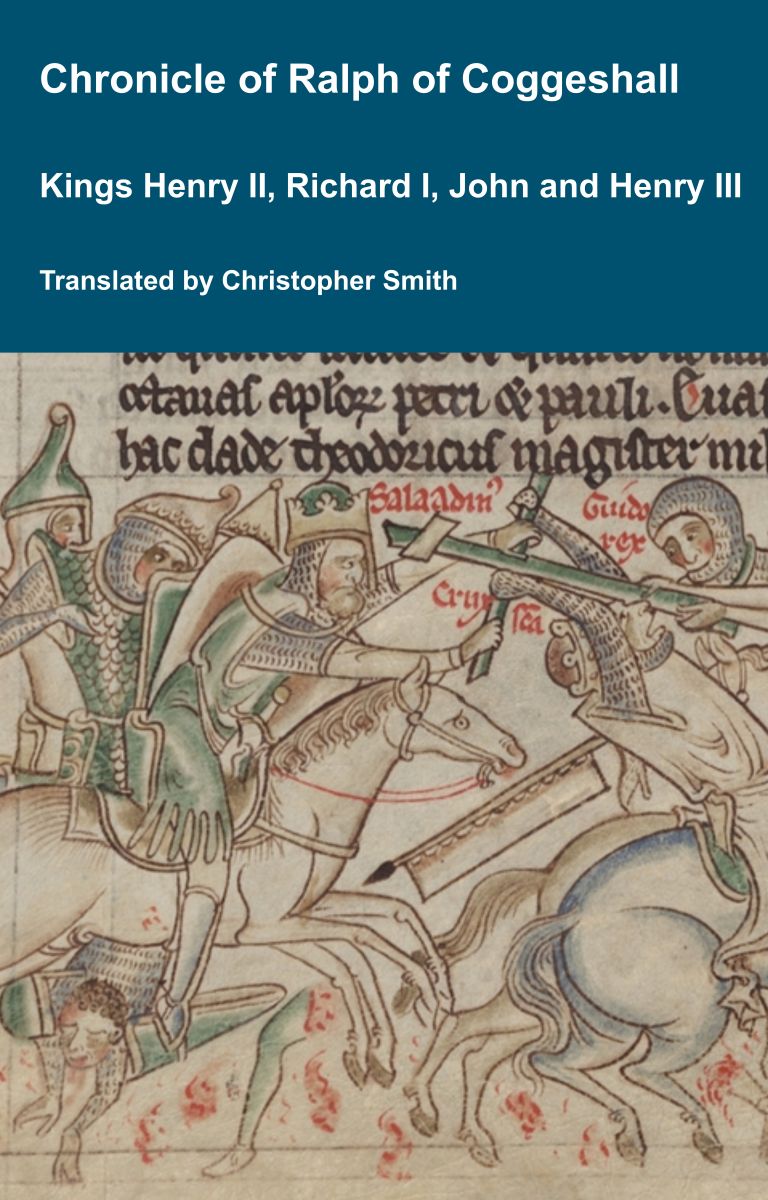
Chronicle of Abbot Ralph of Coggeshall
The Chronicle of Abbot Ralph of Coggeshall (Chronicon Anglicanum) is an indispensable medieval history that brings to life centuries of English and European affairs through the eyes of a learned Cistercian monk. Ralph of Coggeshall, abbot of the Abbey of Coggeshall in Essex in the early 13th century, continued and expanded his community’s chronicle, documenting events from the Norman Conquest of 1066 into the tumultuous reign of King Henry III. Blending eyewitness testimony, careful compilation, and the monastic commitment to record-keeping, this chronicle offers a rare narrative of political intrigue, royal power struggles, and social upheaval in England and beyond. Ralph’s work captures the reigns of pivotal figures such as Richard I and King John, providing invaluable insights into their characters, decisions, and the forces that shaped medieval rule. More than a simple annal, Chronicon Anglicanum conveys the texture of medieval life and governance, making it a rich source for scholars and readers fascinated by English history, monastic authorship, and the shaping of the medieval world.
Available at Amazon in eBook and Paperback format.
On 7th March 1868 Susannah Jane Beverly was born to [her father] James Beverly (age 25) at Hope, Derbyshire [Map].
2nd April 1871. Census. 35 Conway Street, Brightside.
[her father] James Beverley (age 28). Head. Married. 28. Labourer in Iron. Born in Castleton, Derbyshire [Map].
Fanny Beverley (age 26). Wife. Married. 25. Born in Hope, Derbyshire [Map].
Susannah Jane Beverly (age 3). Daughter. 3. Born in Hope, Derbyshire [Map].
Ellen Beverly. Daughter. 1. Born in Sheffield.
3rd April 1881. Census. Highgate Head Farm, Hayfield [Map].
[her father] James Beverley (age 38). Head. Married. 38. Outdoor Labourer. Born in Castleton, Derbyshire [Map].
Fanny Beverley. Wife. Married. 36. Housekeeper. Born in Hope, Derbyshire [Map].
Susannah Jane Beverly (age 13). Daughter. Spinster. 13. Born in Hope, Derbyshire [Map].
5th April 1891. Census. Bank Vale, Hayfield [Map].
[her future husband] Joseph Singleton (age 25). Head. 25. Coachman, Domestic Servant (Groom written in pencil). Born in Hyde, Cheshire.
Susannah Singleton (age 23). Wife. 23. Born in Hope, Derbyshire.
Herbert Singleton. Son. 1. Born in Hayfield, Derbyshire [Map].
Before 15th November 1899 Joseph Singleton (age 34) and Susannah Jane Beverly (age 31) were married.
On 15th November 1899 [her son] Frank Singleton was born to [her husband] Joseph Singleton (age 34) and Susannah Jane Beverly (age 31) at Little Hayfield, Derbyshire [Map].
31st March 1901. Census. Little Hayfield, Derbyshire [Map].
[her husband] Joseph Singleton (age 35). Head. 35. Coal Carter. Born in Hyde, Cheshire.
Susannah Singleton (age 33). Wife. 33. Born in Hope, Derbyshire.
[her son] Frank Singleton (age 1). Son. 2. Born in Hayfield, Derbyshire [Map].
2nd April 1911. Census. Little Hayfield, Derbyshire [Map].
[her husband] Joseph Singleton (age 45). Head. 45. Labourer (Paper Works). Born in Hyde, Lancashire.
Susannah Jane Singleton (age 43). Wife. 43. 22 years married. Born in Hope, Derbyshire.
[her son] Frank Singleton (age 11). Son. 12. School. Born in Hayfield, Derbyshire [Map].
Three other children.
On 23rd July 1918 [her son] Frank Singleton (age 18) was killed in action serving with the 1/8th Battalion Royal Scots (The Lothian Regiment). Service Number 331065. He was buried at the Marfaux British Cemetery, Marne, France.
From the web:
The 1/8th spent 1916 in support of their division. Often they could see the work of a week destroyed in just a few minutes of shelling. Despite the setbacks, they honed their efficiency such that a team of 9 could erect 50 yards of barbed wire barrier in just 9 minutes and the 1/8th trained their division to match this standard. In 1917 it had spells with the 12th and 4th divisions and then had a particularly trying spell at Ypres: roads, railways, trenches, and dug-outs were built under shelling and the new peril of gas attacks.
In March of 1918 the battalion was in line standing off the advancing Germans. Their ability to entrench and wire as well as fight was all that saved them several times: over 200 casualties were recorded in the space of five days. In April they lost another 174 in similar fluid fighting. A month later they recorded 12000 yards of 8×6 foot trenching and 23000 yards of wire constructed – on top of their normal duties. The last months of the war were spent on the offensive, often in open countryside, celebrating the Armistice in quarters near Cambrai. Early in 1919 they were in Belgium with demobilisation underway and the cadre of the battalion was welcomed home to Haddington on 30th April 1919.
During its service the 1/8th battalion recorded 1669 casualties, including 309 fatalities or missing.
Chronicle of Abbot Ralph of Coggeshall
The Chronicle of Abbot Ralph of Coggeshall (Chronicon Anglicanum) is an indispensable medieval history that brings to life centuries of English and European affairs through the eyes of a learned Cistercian monk. Ralph of Coggeshall, abbot of the Abbey of Coggeshall in Essex in the early 13th century, continued and expanded his community’s chronicle, documenting events from the Norman Conquest of 1066 into the tumultuous reign of King Henry III. Blending eyewitness testimony, careful compilation, and the monastic commitment to record-keeping, this chronicle offers a rare narrative of political intrigue, royal power struggles, and social upheaval in England and beyond. Ralph’s work captures the reigns of pivotal figures such as Richard I and King John, providing invaluable insights into their characters, decisions, and the forces that shaped medieval rule. More than a simple annal, Chronicon Anglicanum conveys the texture of medieval life and governance, making it a rich source for scholars and readers fascinated by English history, monastic authorship, and the shaping of the medieval world.
Available at Amazon in eBook and Paperback format.
On or before 12th June 1940 Susannah Jane Beverly (age 72) died. She was buried in Hayfield, Derbyshire [Map].
In September 1948 [her former husband] Joseph Singleton (age 83) died.