


The True Chronicles of Jean le Bel Volume 1 Chapters 1-60 1307-1342
The True Chronicles of Jean le Bel offer one of the most vivid and immediate accounts of 14th-century Europe, written by a knight who lived through the events he describes, and experienced some of them first hand. Covering the early decades of the Hundred Years’ War, this remarkable chronicle follows the campaigns of Edward III of England, the politics of France and the Low Countries, and the shifting alliances that shaped medieval warfare. Unlike later historians, Jean le Bel writes with a strong sense of eyewitness authenticity, drawing on personal experience and the testimony of fellow soldiers. His narrative captures not only battles and sieges, but also the realities of military life, diplomacy, and the ideals of chivalry that governed noble society. A key source for Jean Froissart, Le Bel’s chronicle stands on its own as a compelling and insightful work, at once historical record and literary achievement. This translation builds on the 1905 edition published in French by Jules Viard, adding extensive translations from other sources Rymer's Fœdera, the Chronicles of Adam Murimuth, William Nangis, Walter of Guisborough, a Bourgeois of Valenciennes, Geoffrey le Baker of Swinbroke and Richard Lescot to enrich the original text and Viard's notes.
Available at Amazon in eBook and Paperback format.
St Peter's Church, Llanbedr is in Llandedr.
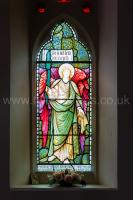
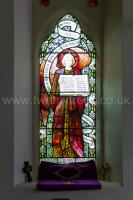
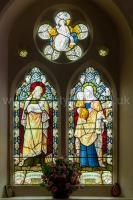
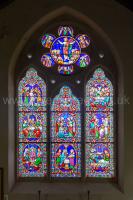
1350. St Peter's Church, Llanbedr [Map]. Windows by Shrigley and Hunt.
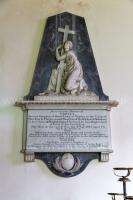
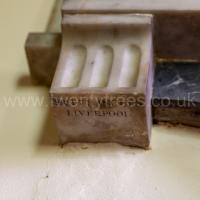
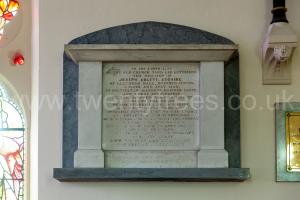
After 1795. St Peter's Church, Llanbedr [Map]. Monument to Ursula Lloyd (age 73), her son John Lloyd (age 49) and his wife Margaret Morrall (age 32). Sculpted by S&T Franceys of Liverpool. Originally in the old church. A white marble tablet with moulded cornice and a surmounting sculpted figure of Faith; shallow obelisk behind, of dark grey figured marble, and a shaped grey marble apron with wreathed heraldic roundel.
Ursula Lloyd: Hugh Lloyd of Berth in Denbighshire and she were married. Around 1722 she was born to Howel Lloyd of Wygfair in Flintshire and Phoebe Lloyd. She was their second daughter. On 21st September 1795 she died.
John Lloyd: Around 1746 he was born to Hugh Lloyd of Berth in Denbighshire and Ursula Lloyd. Before 9th September 1806 he and Margaret Morrall were married. On 9th September 1806 he died.
Margaret Morrall: Around 1763 she was born to Josiah Morrall of Plasyollyn in Shropshire and Margaret Lloyd. On 27th March 1810 she died.
On 13th May 1834 Archdeacon John Jones (age 58) died. He was buried at St Peter's Church, Llanbedr [Map] where he had been rector for fifteen years. Source.
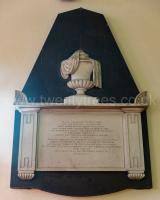
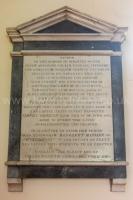
1835. St Peter's Church, Llanbedr [Map]. Monument to Archdeacon John Jones.
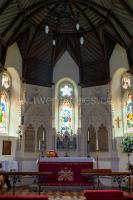
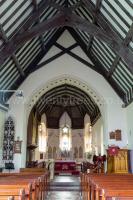
1863. St Peter's Church, Llanbedr [Map]. Interior.
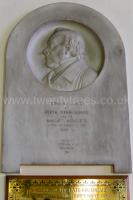
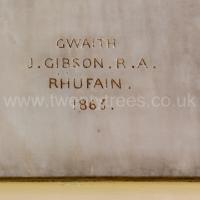
1863. St Peter's Church, Llanbedr [Map]. Monument to Edward Lloyd of Berth in Denbighshire. Sculpted by John Gibson (age 72).
Edward Lloyd of Berth in Denbighshire: Around 1778 he was born. On 14th October 1859 he died.
1863. St Peter's Church, Llanbedr [Map]. Windows.
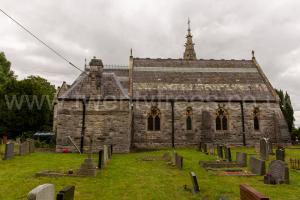
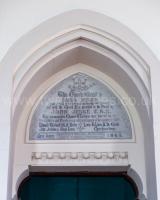
1863. St Peter's Church, Llanbedr [Map]. Exterior
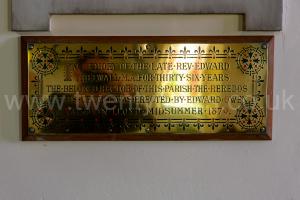
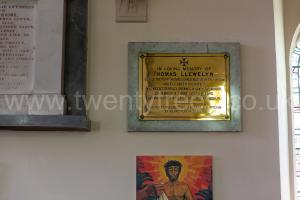
1879. St Peter's Church, Llanbedr [Map]. Monument to Reverend Edward Thelwall died 1879.