

North Aisle, Edinburgh Cathedral is in St Giles' Cathedral, Edinburgh.
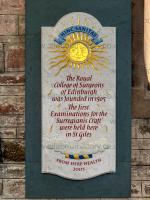
In 1505 the Royal College of Surgeons was founded. The first examinations for the 'Surregianis Craft' were held in St Giles [Map].
On 27th May 1661 Archibald Campbell 1st Marquess Argyll [aged 54] was beheaded for his perceived treason on the restoration of Charles II at Edinburgh. He was buried at Kilmun Church.
Monument in the North Aisle, Edinburgh Cathedral [Map].


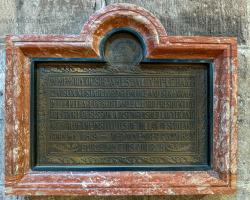
After 1695. North Aisle, Edinburgh Cathedral [Map]. Memorial to James Dalrymple 1st Viscount of Stair [aged 75].
James Dalrymple 1st Viscount of Stair: In May 1619 he was born. On 29th November 1695 James Dalrymple 1st Viscount of Stair died.
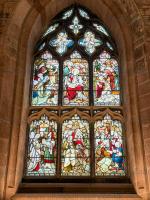
Around 1870. North Aisle, Edinburgh Cathedral [Map]. The Ballantyne Windows by Joseph Noel Paton, 1821-1901.
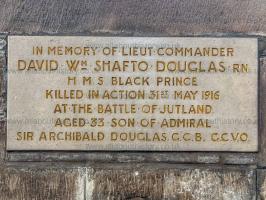
After 31st May 1916. North Aisle, Edinburgh Cathedral [Map]. Memorial to Lieutenant-Commander David Shafto Douglas [deceased].
Lieutenant-Commander David Shafto Douglas: On 1st July 1883 he was born to Admiral Archibald Douglas. On 31st May 1916 HMS Black Prince was lost with her entire crew including Lieutenant-Commander David Shafto Douglas.
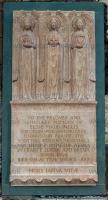
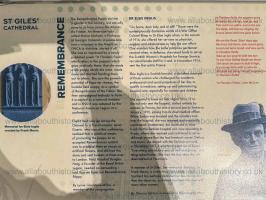
After 1917. North Aisle, Edinburgh Cathedral [Map]. Memorial to Dr Elsie Inglis.
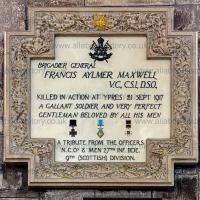
After 21st September 1917. North Aisle, Edinburgh Cathedral [Map]. Memorial to Brigadier-General Francis Aylmer Maxwell, killed in action at Ypres.
On 18th November 1917 Neil James Archibald Primrose [aged 34] died from wounds while leading his squadron of the 1/1st Royal Buckinghamshire Yeomanry against Turkish positions on the Abu Shusheh ridge during the Third Battle of Gaza. He was buried at the Ramleh Commonwealth War Graves Commission Cemetery at Ramla, in Israel. The inscription on his gravestone reads: He Lives By Love.
Memorial at the North Aisle, Edinburgh Cathedral [Map] commissioned by his father Archibald Philip Primrose 5th Earl Rosebery 1st Earl Midlothian [aged 70].
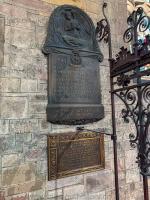
After 1918. North Aisle, Edinburgh Cathedral [Map]. Memorial to the 743 Offices and 6130 non-commissione offices of the Royal Army Medical Corps who fell in the Great War. Below a memorial to Mary Caroline Fraser, died 1937.
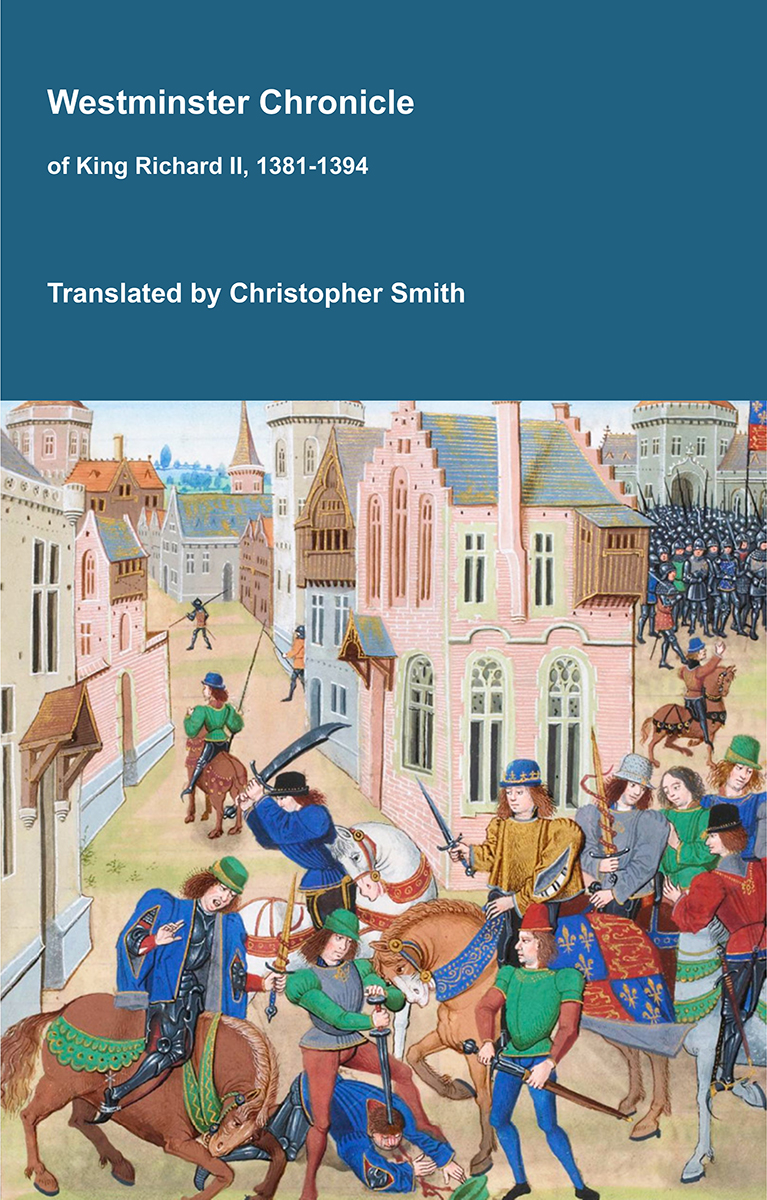
Westminster Chronicle of King Richard II, 1381-1394
The Westminster Chronicle is one of the most vivid and important narrative sources for the reign of Richard II. Written by an anonymous chronicler closely connected with Westminster Abbey, it covers the years 1381 to 1394, from the Peasants’ Revolt to the political tensions, court ceremonies, diplomatic negotiations, royal progresses, and public crises of Richard’s later reign. Rich in detail the chronicle records major events such as the conflicts between the King and Lords Appellant, King and the City of London, negotiations with France and Scotland, the death and funeral of Queen Anne of Bohemia, the illness of Charles VI of France, and the changing fortunes of leading nobles including John of Gaunt, Thomas of Gloucester, Robert de Vere, and the Earl of Arundel. The Chronicle offers readers a remarkable window into late fourteenth-century England, combining political observation, courtly spectacle, urban drama, ecclesiastical affairs, and moral judgement. It is an essential source for anyone interested in medieval monarchy, London, Westminster, and the troubled reign of Richard II.
Available at Amazon in eBook and Paperback format.
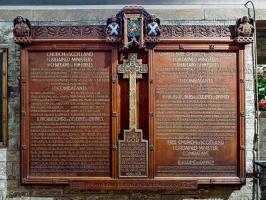
North Aisle, Edinburgh Cathedral [Map]. After 1919. Memorial to the Scottish Ministers, Probationers and Students of Divnity who laid down their lives in the Great War,
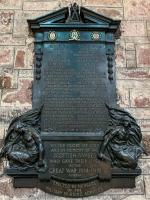
After 1919. North Aisle, Edinburgh Cathedral [Map]. Memorial to the Scottish Nurses who gave their lives during the Great War. Sculpteed by L F Roslyn
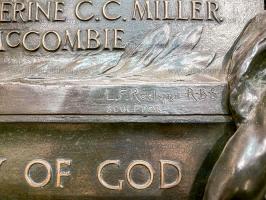
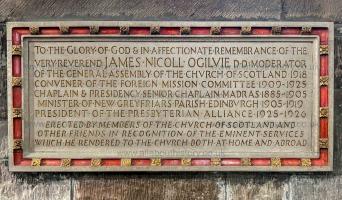
After 1926. North Aisle, Edinburgh Cathedral [Map]. Memorial to Scottish minister James Nicoll Ogilvie.
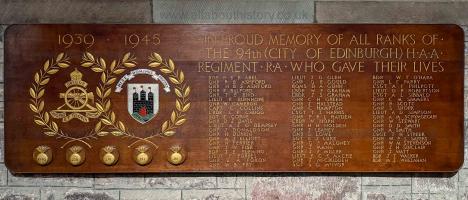
North Aisle, Edinburgh Cathedral [Map]. After 1945. Memorial to all ranks of the 94th (city of Edinburgh) HAA Regiment RA.