The True Chronicles of Jean le Bel Volume 2 Chapters 61-109 1342-1361
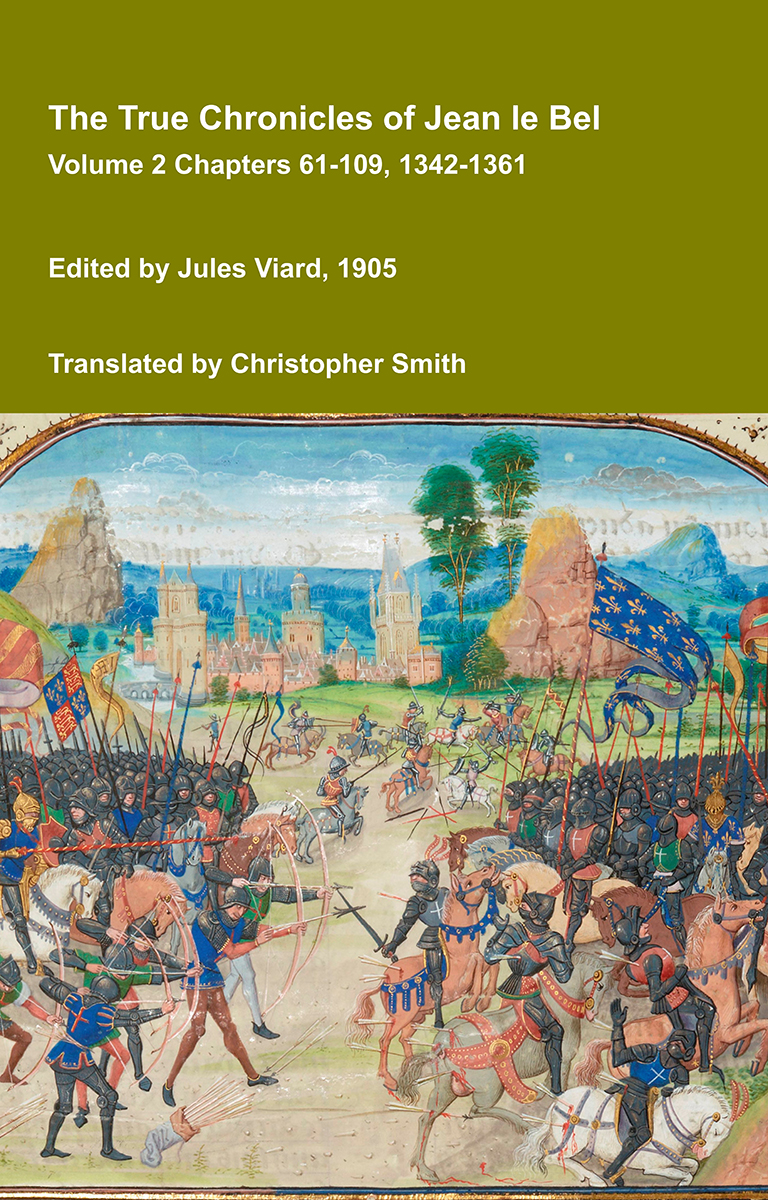
The Chronicle of Jean le Bel, Volume 2 continues one of the most important fourteenth-century accounts of the early Hundred Years’ War. Written by the Liège chronicler Jean le Bel, this vivid narrative follows the fortunes of Edward III, Jean II of France, the Black Prince, the great nobles of France and England, and the soldiers, captains and companies who shaped the conflict. This volume covers some of the most dramatic events of the period, including the battles of Crécy and Poitiers, the siege and capture of Calais, the captivity of King John, the rise of the Jacquerie, the turmoil in Paris under Étienne Marcel and Charles of Navarre, the devastation caused by the free companies, Edward III’s great campaign of 1359–1360, and the negotiations leading to the Treaty of Brétigny. Jean le Bel’s chronicle is especially valuable for its lively detail, its interest in chivalry, warfare, politics and reputation, and its influence on later chroniclers, most famously Froissart. This English translation presents the text in clear, readable British English while preserving the force and character of the original narrative. The translation includes extensive notes to help the reader better understand Jean le Bel's text. Volume 2 also includes translated appendices drawn from royal and administrative records, many from the English Record Office, which illuminate Edward III’s campaigns in Brittany, the siege and occupation of Calais, naval preparations, military finance, appointments, safe conducts and related affairs.
Available at Amazon in eBook and Paperback format.
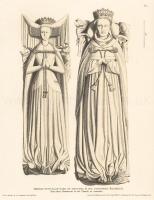
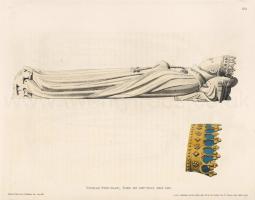
Effigy of Thomas Earl of Arundel and his Countess Beatrice is in Monumental Effigies of Great Britain.
THOMAS Earl of Arundel was the son and heir of Richard Earl of Arundel, who suffered death as a traitor by the severity of Richard the Second, in the 20th year of the reign of that monarch. In the 1st of Henry IV. he was restored in blood, the attainder against his father being reversed by the Parliament. He was made a Knight of the Bath at the coronation of King Henry the Fourth.
In 1404, he espoused Beatrice, an illegitimate daughter of the King of Portugal. The King and Queen were present at the wedding feast, which was kept at London. In 1411 he was sent into France, accompanied by certain nobles, knights, and men-at-arms, to aid the Duke of Burgundy against the Duke of Orleans, and performed good service in the cause of the formera. He died on the 13th October, 1416, having directed by his last will that his body should be buried in the choir of the collegiate church of the Holy Trinity at Arundel [Map], under a tomb to be there erected to his memory. On his monument are the effigies delineated in the Plates. He directed £130 to be expended on his funeral, and in celebrating masses for the good of his soul. He gave other sums to religious and pious uses, between which terms a distinction in the days of superstition is obviously to be drawn.
Beatrice his wife survived, and in 1432 license was granted for her marriage with John Holland, Earl of Huntingdon, afterwards Duke of Exeter; but this alliance does not appear to have taken place. She died at Bourdeaux in 1439.
Note a. See Stow's Annals, 4to. edit. p. 541.
The Earl wears the collar of SS. a decoration introduced by his sovereign Henry the Fourthb.
Note b. See our observations on the collar of SS. in the account of the effigy of Henry the Fourth, who seems to have made this emblem of his sovereignty an honorary mark of distinction; we find it employed as such by his son Henry the Fifth at the battle of Agincourt. "He exhorted such of his train as were not noble to demean themselves well in the fight, he promised them letters of nobility, and to distinguish them he gave them leave to wear his collar of SS." "Il leur donna conge de porter un Collier seme de lettres S de son ordre." Chronique des Ursins, as quoted by Favines in his "Theater of Honour and Knighthood." Translation, edit. 1623, Book 5, p. 67.