

Ingestre Hall, Staffordshire is in Ingestre, Staffordshire.
In 1613 Walter Chetwynd [aged 53] commissioned the building of Ingestre Hall, Staffordshire. The house was built in red brick on the site of an earlier manor house
On 31st May 1638 Walter Chetwynd [aged 78] died. His son Walter Chetwynd [aged 40] inherited Ingestre Hall, Staffordshire.
On 19th April 1669 Walter Chetwynd [aged 71] died. His son Walter Chetwynd [aged 36] inherited Ingestre Hall, Staffordshire.
On 21st March 1693 Walter Chetwynd [aged 60] died of smallpox. He was buried at St Mary the Virgin Church, Ingestre [Map]. John Chetwynd of Boughton [aged 50] inherited Ingestre Hall, Staffordshire.
On 9th December 1702 John Chetwynd of Boughton [aged 59] died. Walter Chetwynd 1st Viscount Chetwynd [aged 24] inherited Ingestre Hall, Staffordshire.
On 21st February 1736 Walter Chetwynd 1st Viscount Chetwynd [aged 57] died. His brother John [aged 54] succeeded 2nd Viscount Chetwynd of Bearhaven in Kerry, and inherited Ingestre Hall, Staffordshire.Esther Kent Viscountess Chetwynd [aged 36] by marriage Viscountess Chetwynd of Bearhaven in Kerry.
On 21st June 1767 John Chetwynd 2nd Viscount Chetwynd [aged 85] died. His brother William [aged 83] succeeded 3rd Viscount Chetwynd of Bearhaven in Kerry. Catherine Chetwynd [aged 44] inherited Ingestre Hall, Staffordshire.

On 20th January 1785 Catherine Chetwynd [aged 62] died. John Chetwynd-Talbot 1st Earl Talbot [aged 35] inherited Ingestre Hall, Staffordshire.
On 10th January 1849 Charles Chetwynd-Talbot 2nd Earl Talbot [aged 71] died at Ingestre Hall, Staffordshire. His son Henry [aged 45] succeeded 3rd Earl Talbot, 3rd Viscount Ingestre, 5th Baron Talbot of Hensol in Glamorganshire. Sarah Elizabeth Beresford Countess Talbot Shrewsbury Waterford [aged 41] by marriage Countess Talbot.


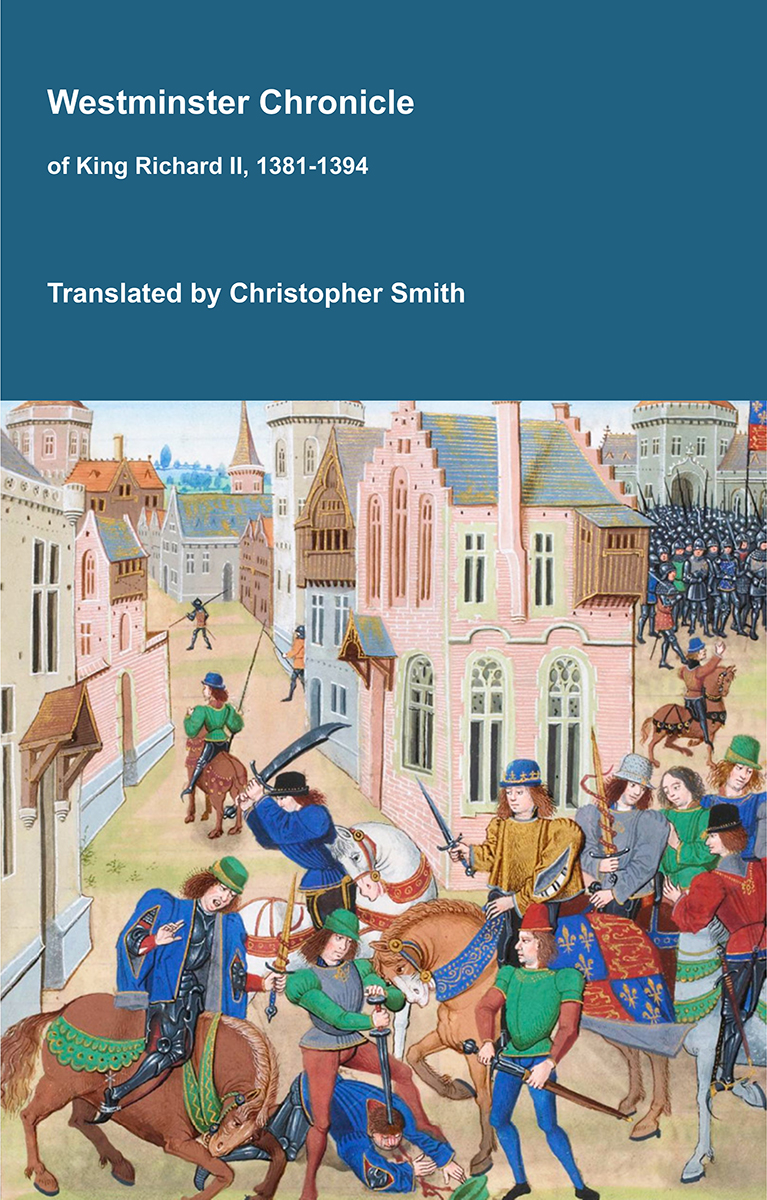
Westminster Chronicle of King Richard II, 1381-1394
The Westminster Chronicle is one of the most vivid and important narrative sources for the reign of Richard II. Written by an anonymous chronicler closely connected with Westminster Abbey, it covers the years 1381 to 1394, from the Peasants’ Revolt to the political tensions, court ceremonies, diplomatic negotiations, royal progresses, and public crises of Richard’s later reign. Rich in detail the chronicle records major events such as the conflicts between the King and Lords Appellant, King and the City of London, negotiations with France and Scotland, the death and funeral of Queen Anne of Bohemia, the illness of Charles VI of France, and the changing fortunes of leading nobles including John of Gaunt, Thomas of Gloucester, Robert de Vere, and the Earl of Arundel. The Chronicle offers readers a remarkable window into late fourteenth-century England, combining political observation, courtly spectacle, urban drama, ecclesiastical affairs, and moral judgement. It is an essential source for anyone interested in medieval monarchy, London, Westminster, and the troubled reign of Richard II.
Available at Amazon in eBook and Paperback format.
Henry Chaplin A Memoir: 2 Family and Social Life Part II. His last letter to his bride a few days before their wedding has a pathetic interest in view of the few years of marriage which were before them.
[Henry Chaplin 1st Viscount Chaplin [aged 35] to Florence Sutherland Leveson-Gower [aged 21]]
October 11 [Note. A mistake for November 1876].— Ted [aged 34] has gone to Lincoln to make a speech to his constituents to-night. His marriage is settled, and announced to Lady Gwendoline [aged 18], and I've had a letter from Shrewsbury acquainting me with that fact. It may be some consolation and perhaps relief to you to know that they have a "Royal Party " at Ingestre and can't come to Trentham next week, but he sends every sort of kind message to you.... I am nervous, not about the ceremony! Now didn't you hope I was going to be? but about your rooms being done by the time they ought to be, but the paper you chose is up and they will look very nice, I feel sure. Darling little woman, do not fret or fidget about the awful ceremony. I often tell you that it has no effect of that sort upon me, and I will tell you why. Because I am as firmly convinced as I can be of anything that the step we are about to take with God's blessing will be, and ought to be, except through our own faults, for our mutual and enduring happiness both here and hereafter. Think of it in this light, and then the momentary passing agitation of a ceremony will not trouble you, and remember, child, that it is to you and your good influence that I look to help us in the cares, may be in the trials and temptations and, please God, the happiness which awaits us in the future.


