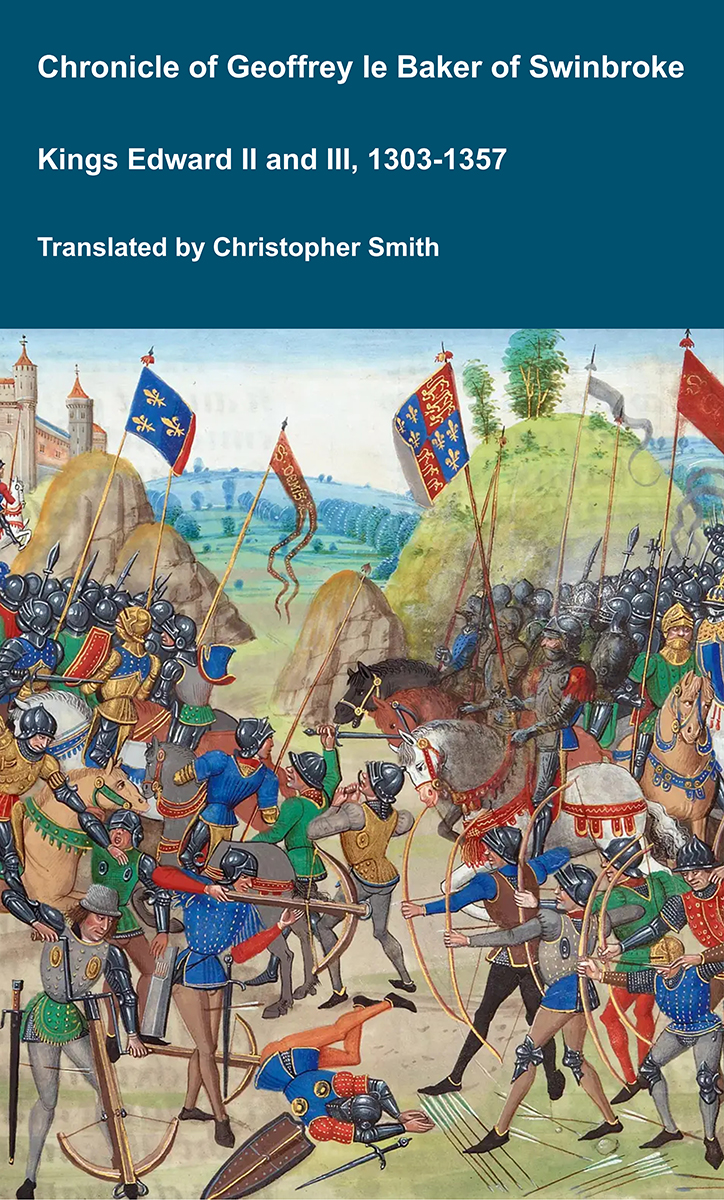
The True Chronicles of Jean le Bel Volume 1 Chapters 1-60 1307-1342

The True Chronicles of Jean le Bel offer one of the most vivid and immediate accounts of 14th-century Europe, written by a knight who lived through the events he describes, and experienced some of them first hand. Covering the early decades of the Hundred Years’ War, this remarkable chronicle follows the campaigns of Edward III of England, the politics of France and the Low Countries, and the shifting alliances that shaped medieval warfare. Unlike later historians, Jean le Bel writes with a strong sense of eyewitness authenticity, drawing on personal experience and the testimony of fellow soldiers. His narrative captures not only battles and sieges, but also the realities of military life, diplomacy, and the ideals of chivalry that governed noble society. A key source for Jean Froissart, Le Bel’s chronicle stands on its own as a compelling and insightful work, at once historical record and literary achievement. This translation builds on the 1905 edition published in French by Jules Viard, adding extensive translations from other sources Rymer's Fœdera, the Chronicles of Adam Murimuth, William Nangis, Walter of Guisborough, a Bourgeois of Valenciennes, Geoffrey le Baker of Swinbroke and Richard Lescot to enrich the original text and Viard's notes.

Available at Amazon in eBook and Paperback format.

Escape of Roger Mortimer

Escape of Roger Mortimer is in 1320-1329 Despencer War.

Chronicles of Trokelowe and Blaneforde. [1st August 1323] In the year of our Lord 1323, on the feast of Saint Peter in Chains (ad Vincula), the noble lord, Sir Roger de Mortimer, Lord of Wigmore, confined in the highest and most secure part of the Tower of London—along with his uncle, Sir Roger, and other nobles of the realm, who, having returned from the conflict between the King and the Barons mentioned above, had submitted themselves to the King's mercy—was held in a manner less civil than befitted their station. From the depths of his heart and by the utmost ingenuity of his mind, he devised a clandestine escape, one unheard of and unimaginable for ages past.

Anno Domini millesimo trecentesimo vicesimo quarto, in festo Sancti Petri quod dicitur "Ad Vincula," nobilis vir, Dominus Rogerus de Mortuo Mari, Dominus de Wigemor, in eminentiori et arctiori loco Turris Londoniarum, cum Domino Rogero, avunculo suo, et cum ceteris regni nobilibus, qui a conflictu inter Regem et Barones supra memorato redeuntes gratie Regis se submiserant, minus civiliter quam decuit, detentus et detrusus, a sæculis inaudibilem et inexcogitabilem, ex profundissimo cordis ingenio, suam ordinavit clandestinam liberationem.

Chronicle of Henry Knighton. [1st August 1323] In the year of grace 1323, Lord Roger de Mortimer escaped from the Tower of London with the help of a certain Gerard de Alspaye, who was under the authority of Lord Stephen de Segrave, Mortimer's jailer, as mentioned above. He fled to France, where he remained with many others who had also fled from the face of King Edward, out of fear of the king and the Despensers, who were ravenous to be filled with the lands and possessions of others.

Anno gratiæ MCCCXXIII dominus Rogerus de Mortuo mari evasit de turri Londoniensi per auxilium ecujusdam Girardi de Alspaye qui sub domino Stephano de Segrave custodiam ejus habuit ut supra, et fugit in Franciam, ibique moram traxit cum multis aliis qui fugerant a facie regis Edwardi præ timore regis et Dispensatorum qui esuriebant alienis terris et possessionibus saturari.

Chronicles of Trokelowe and Blaneforde. [1st August 1323] For in the stillness of the night during that same feast (of Saint Peter in Chains), when both the guards of the Tower and many others had fallen into deep sleep and rest — having been given a certain harmful drink — Roger [Mortimer] [aged 36] did not escape through the door of his chamber, which had been secured with many locks and bars, but rather through another way. By breaking through a wall, he entered the royal palace kitchen attached to the Tower. From the top of this building, he climbed down into one of the Tower's guard posts. Then, using ropes ingeniously fashioned like a ladder, which had been procured for him by a certain friend and secretly brought to him beforehand, he descended with considerable fear to another guard post. And, just as Saint Peter, imprisoned under Nero, passed the first and second guards with the help of an angel, so too did he—though with great difficulty—finally reach the Thames. There, he found a small, fragile boat, into which he entered with his helper and two other members of his inner circle. With God's help, they swiftly crossed the river. They then hurried with all speed toward the sea, carefully avoiding public roads throughout their journey, and did not rest until, united in purpose, they reached a certain port. In that place, where they were known to no one, they found a ship—prepared for them and waiting for some time near the port. With all haste, they boarded the vessel and, aided by a favorable wind granted by God, they swiftly arrived in the realms of France.

Nam intempestæ noctis silentio dictæ festivitatis, tarn custodibus castri quam cæteris multis, per quendam pestiferum potum eis ministratum, nocturno quieti ac sopori deditis, repentine, noii per ostium cameræ suæ, quod multis seris et repagulis fuerat obseratum, sed aliunde, per ruptionem muri, venit in coquina palatio Regis annexa; per cujus sunimitatem exiens, ad unam oastri devenit eustodiam; deinde per cordas, ad modum scalæ ingeniose compositas, per quenidam amicum suum pro visas, et sibi secrete prius allatas, ad aliam castri eustodiam cum non modico timore per venit. Et, sicut Beatus Petrus, in vinculis Neronis detentus, Angelo ducente, primam et secundam transivit custodiam, cum maxima difficultate tandem venit ad aquam Tamisiæ; ibi quamdam fragilem cymbam reperiens, quam, cum adjutore suo, et aliis duobus de consilio suo, intravit, et dictam aquam, Deo volente, concito transmearunt. Et cum omni festinatione ad mare properantes, publicas stratas semper in itinere devitarunt; nec cessare voluerunt, donec ad quemdam portum unanimes pervenirent. Quo vero in loco, ab omnibus ignoti, navem, aliquandiu eos ibidem expectantem, prope portum promptam ibidem reperientes; quam cum omni festinatione intraverunt, et, prosperam auram eis Deo ministrante, ad Gallicana regna concito pervenerunt.

Click to read more ...

Chronicle of Geoffrey le Baker of Swinbroke. In the year 1323, Roger de Mortimer,1 who had formerly been imprisoned in the Tower of London, as was said above, escaped with the help of traitors and through the bribery of corrupted guards. He fled to France and attached himself to the aforesaid Charles of Valois, the enemy of the English and supporter of their exile. He was thus preserved for a new discord and miserable civil war, as a sower of strife.

Anno MCCCXXIIJ, Rogerus de Mortuo mari, quondam in turri Londoniensi, ut superius dicebatur, incarceratus, auxilio proditorum, custodibus corruptis muneribus, evasit et, in Franciam dilapsus, predicto Karolo de Valoys exul Anglorum ipsorum inimico inclinatus adesit, in novum discidium atque miserabilem guerram intestinam reservatus per seminatorem zizanniorum.

Note 1. .

Knighton 2453

Blaneforde 145

The Brute chronicle has the following: "And anone after, sir Roger Mortymer of Wygmour brake oute of the toure of Londone, and in this maner. Sir Roger the forsaide herde that he shulde ben drawe and hongede at Londone in the morue after seint Laurence day; and on the day before he helde a faire feste in the toure of Londone, and fio was sir Stephin Segrave, constabil of London, and meny grete men with him. And when thei shulde sopen, the forsaide Stephin sente for alle the officers of the toure; and thei come and sopede with him. And when thei shulde take here leve of him, a squyer that men callede Stephin, that was ful pryve with the forsaide Roger, thurgh hire counsel yaf hem all suche a drinke that the leste of hem slepte ii dayes and ii nyjtes. And in the mene tyme he skapede awaye by water, that is to sein, by the Thamyse, and wente over the see and helde him in Fraunce. The kyng was sore annoyede, and tho putte the same Stephene oute of his constabelrie."

Click to read more ...

Life of Edward II of Caernarfon by a Monk of Bridlington. In the year of Our Lord 1325, Edmund, Earl of Kent, the king's brother, and Sir John, Earl Warenne, were sent by the lord king and the magnates of the land to Gascony, with many horsemen and armed men, for its protection and defence, but they accomplished very little. For this reason, after consultation with the magnates of the realm, the king sent his eldest son Edward overseas, so that he and his mother, mentioned above, might negotiate with his uncle, the king of France, concerning the settlement of the aforesaid dispute. The queen, however, remained in those parts with her eldest son for longer than her lord, the king of England, had commanded her. She feared the king's displeasure and therefore sought assistance for herself. She dealt so effectively with the Count of Hainault that they reached an agreement concerning the marriage of her eldest son Edward, who was then there with her, to Philippa, the count's daughter, as will appear below. Sir Roger Mortimer the younger also joined the queen there. He had secretly escaped from the Tower of London, which had been assigned to him as his prison.

Anno Domini millesimo CCCXXV missi sunt per dominum regem et magnates terræ ad Wasconiam, in protectionem et defensionem ejusdem, Edmundus comes Cantiæ germanus regis, et dominus Johannes comes Warenniæ, cum multis equitibus et armatis; sed valde modicum profuerunt. Et propter hoc habito tractatu cum proceribus regni, misit rex primogenitum suum Edwardum ad partes transmarinas, ut ipse et mater sua præmissa cum avunculo suo rege Franciæ tractarent super pacificatione inquietationis supradictæ. Regina vero cum primogenito suo moram prolixiorem in illis partibus trahens, quam dominus suus rex Angliæ sibi dederat in mandatis, timuit sibi de indignatione regis, et propter hoc sibi subsidium adinvenit, et tantum egit erga comitem Hanoniæ quod contraxerunt super matrimonio primogeniti sui Edwardi, tuncsecum ibidem existentis, cum filia comitis Philippa, ut in sequentibus apparebit. Adhæsit ibidem reginæ dominus Rogerus de Mortuomari nepos, qui de Turri Londoniæ pro carcere sibi deputata latenter exiit et evsait.