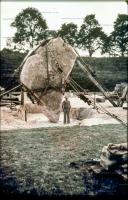
Keiller's Slides is in Keiller Collection.

1938 to 1939. Keiller's Slides comprise 550 Slides taken by Alexander Keiller [aged 48] during the archaeological work undertaken between 1938 and 1939. They show general views around the henge and along West Kennet Avenue, both before and after restoration work. Others show the excavation of banks and ditches and the re-erection of stones in progress. There are also several slides which depict maps and plans of the area, archaeological finds from the site.
General view of stones 15a and 15b [Map] in West Kennet Avenue, showing the west faces.
General view of stones 26a and 26b [Map] in West Kennet Avenue, showing the west faces.
General view of West Kennet Avenue towards the henge, with stone 37a [Map] in the foreground.
General view of stones 13a and 13b [Map] in West Kennet Avenue, showing the west faces.
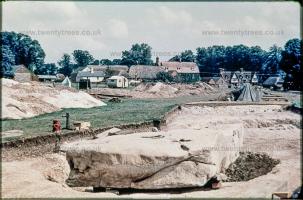
1938. General view of the south west sector of the henge at Avebury, prior to restoration.
1938. General view of men working on an excavation around an unidentified stone in the henge at Avebury
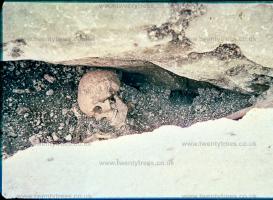
1938. General view of the skull of the Barber Surgeon in situ during the excavation of stone 9 [Map] in the south west sector of the henge at Avebury. Items found with the body including three silver coins dated to around 1320–25, as well as a pair of iron scissors and an iron probe led to him being identified as an itinerant mediaeval barber surgeon.
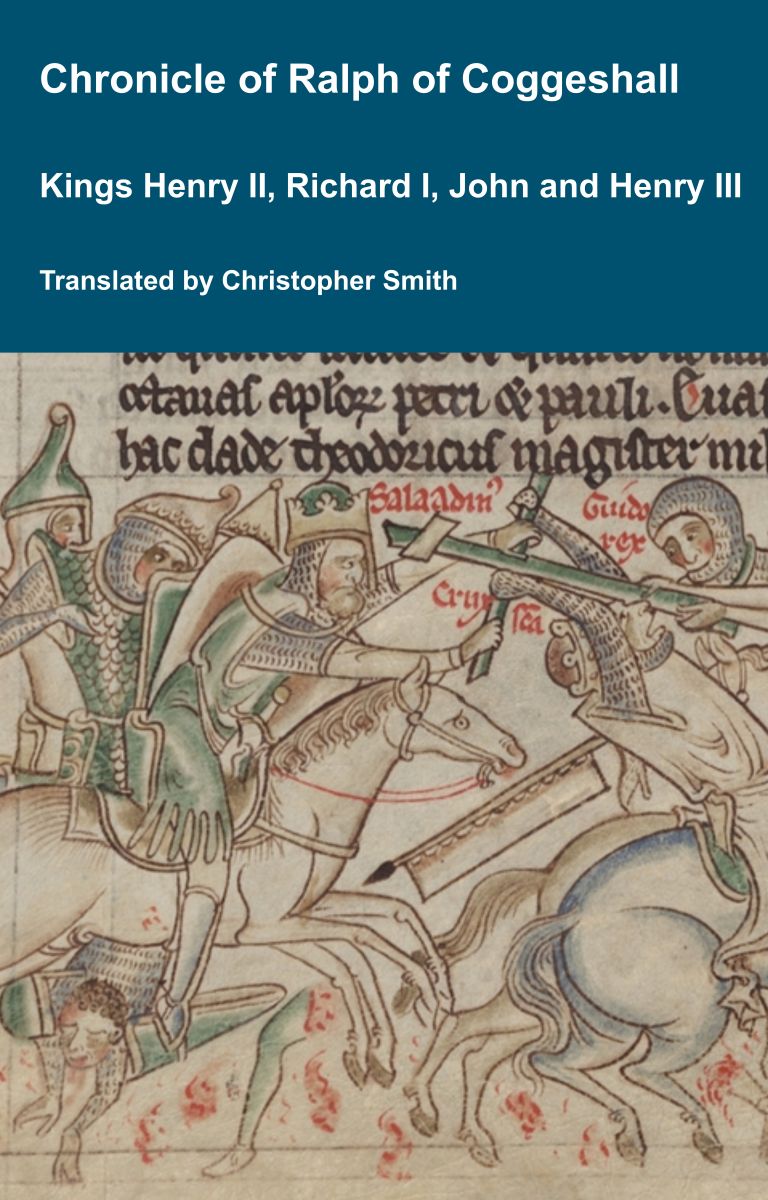
Chronicle of Abbot Ralph of Coggeshall
The Chronicle of Abbot Ralph of Coggeshall (Chronicon Anglicanum) is an indispensable medieval history that brings to life centuries of English and European affairs through the eyes of a learned Cistercian monk. Ralph of Coggeshall, abbot of the Abbey of Coggeshall in Essex in the early 13th century, continued and expanded his community’s chronicle, documenting events from the Norman Conquest of 1066 into the tumultuous reign of King Henry III. Blending eyewitness testimony, careful compilation, and the monastic commitment to record-keeping, this chronicle offers a rare narrative of political intrigue, royal power struggles, and social upheaval in England and beyond. Ralph’s work captures the reigns of pivotal figures such as Richard I and King John, providing invaluable insights into their characters, decisions, and the forces that shaped medieval rule. More than a simple annal, Chronicon Anglicanum conveys the texture of medieval life and governance, making it a rich source for scholars and readers fascinated by English history, monastic authorship, and the shaping of the medieval world.
Available at Amazon in eBook and Paperback format.
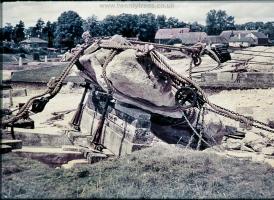
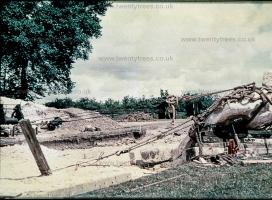
1938. General view of men working to excavate and re-erect an unidentified stone in the henge at Avebury.