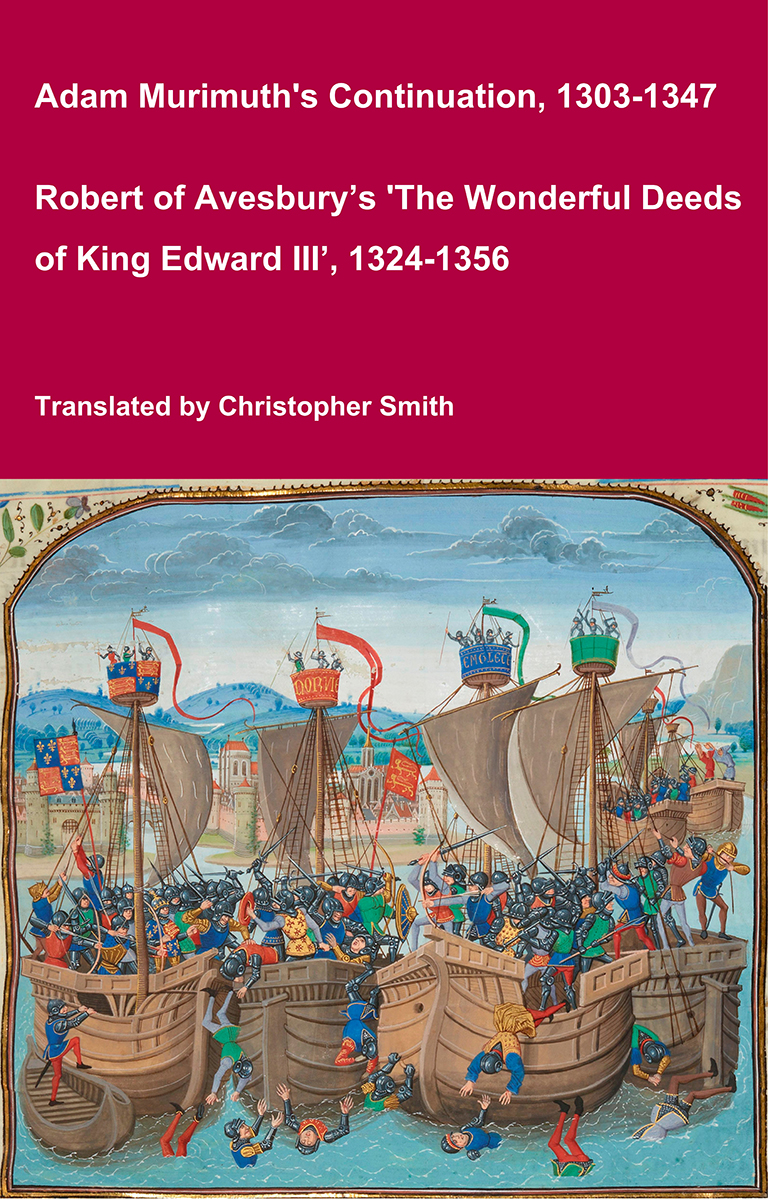
Adam Murimuth's Continuation and Robert of Avesbury’s 'The Wonderful Deeds of King Edward III'
This volume brings together two of the most important contemporary chronicles for the reign of Edward III and the opening phases of the Hundred Years’ War. Written in Latin by English clerical observers, these texts provide a vivid and authoritative window into the political, diplomatic, and military history of fourteenth-century England and its continental ambitions. Adam Murimuth Continuatio's Chronicarum continues an earlier chronicle into the mid-fourteenth century, offering concise but valuable notices on royal policy, foreign relations, and ecclesiastical affairs. Its annalistic structure makes it especially useful for establishing chronology and tracing the development of events year by year. Complementing it, Robert of Avesbury’s De gestis mirabilibus regis Edwardi tertii is a rich documentary chronicle preserving letters, treaties, and official records alongside narrative passages. It is an indispensable source for understanding Edward III’s claim to the French crown, the conduct of war, and the mechanisms of medieval diplomacy. Together, these works offer scholars, students, and enthusiasts a reliable and unembellished account of a transformative period in English and European history. Essential for anyone interested in medieval chronicles, the Hundred Years’ War, or the reign of Edward III.
Available at Amazon in eBook and Paperback format.
Archaeologia Cambrensis 1820 Page 464 is in Archaeologia Cambrensis 1820.
APPENDIX A. Some Memoranda of the Civil War in North Wales, written at the time, by Mr. Wm. Maurice, of Llan-Silin, extracted from the Wynnstay Manuscripts. 1644.
Nov. 29. "The Parlm burnt Mathavarn, in Mountg, and made that part of the country conformable to the rest.
1645.
Aug. 2,—"The Montgomeryshire forces invaded Meirionyddshyre, and lay for a time at Dolgelle. The same day the King's forces burnt Ynys y Maengwyn lest the Parlm should find any harbour there.
"The same day E. V. fortified a new garrison1 at Aber Marchand.
Note 1. The house, then fortified, is still called by the name of Y Garris; it is in the parish of Llanwdddyn, opposite Cynon isa.
Aug. 21. "The Montgom forces invaded again Meirionyddshyre, and lay for a week at Bala, until they were driven out of the country by Sir John Owen and the North Wales men.
"In this voyage the Parlm burnt Caer Gai1.
Note 1. Caer Gai, supposed to have been a Roman station, was at this time the seat of Rowland Vychan, Esq. a staunch loyalist, who suffered much in the royal cause.—See Camero-Briton, No. 6, p. 231, Note.—Ed.
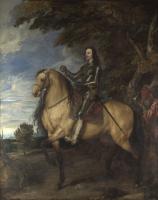
Sept. 21. "The King [aged 44] passed through Mountgomeryshyre, and lay that night at Llan Fyllin. The next day, the 22d Sept., the King marched from Llan Fyllin by Brithdir, where he dined? and gave proclamation among his souldiers, that they should not plunder any thing in Denbyshire, and thence through Mochnant to Cevn hir Fynydd, and so along the tops of the mountains to Chirk Castle [Map]. The rest of the forces marched to Llan-Silin. The next day after, being Tuesday, the King advanced towards Chester.
Sept. 24. "Being Wednesday, the King's forces were routed by the Parlm army in a place called Rowton Moor.
"From Chester the King retreated to Denbigh Castle, and, having layed there two or three nights, retourned to Chirk Castle [Map]. The next morning, viz. 29th, he advanced from thence with his army through Llan-Silin, and quartered that night in Halchdyn1 and so passed through Mountgomeryshyre towards Ludlow.
Note 1. Halchdyn is in Deuddwr, between the rivers Havren and Vyrnwy, aad near Llandrinio. The name of the place has been anglicised into Haughton.