

Baron Baltimore of Longford in Leinster is in Baron Ireland.
In 1625 George Calvert 1st Baron Baltimore [aged 45] was created 1st Baron Baltimore of Longford in Leinster.
On 15th April 1632 George Calvert 1st Baron Baltimore [aged 52] died. His son Cecil [aged 26] succeeded 2nd Baron Baltimore of Longford in Leinster. Ann Arundell Baroness Baltimore [aged 16] by marriage Baroness Baltimore of Longford in Leinster.
On 30th November 1675 Cecil Calvert 2nd Baron Baltimore [aged 70] died. His son Charles [aged 38] succeeded 3rd Baron Baltimore of Longford in Leinster. Jane Lowe Baroness Baltimore [aged 31] by marriage Baroness Baltimore of Longford in Leinster.
On 2nd January 1699 Benedict Calvert 4th Baron Baltimore [aged 19] and Charlotte Lee Baroness Baltimore [aged 19] were married. She by marriage Baroness Baltimore of Longford in Leinster. She the daughter of Edward Lee 1st Earl Lichfield [aged 35] and Charlotte Fitzroy Countess Lichfield [aged 34].
Around 1705 Charles Calvert 3rd Baron Baltimore [aged 67] and Mary Bankes Baroness Baltimore were married. She by marriage Baroness Baltimore of Longford in Leinster.
In 1712 Charles Calvert 3rd Baron Baltimore [aged 74] and Margaret Charleton Baroness Baltimore were married. She by marriage Baroness Baltimore of Longford in Leinster.
On 21st February 1715 Charles Calvert 3rd Baron Baltimore [aged 77] died. His son Benedict [aged 35] succeeded 4th Baron Baltimore of Longford in Leinster.
On 16th April 1715 Benedict Calvert 4th Baron Baltimore [aged 36] died. His son Charles [aged 15] succeeded 5th Baron Baltimore of Longford in Leinster.
On 20th July 1730 Charles Calvert 5th Baron Baltimore [aged 30] and Mary Janssen Baroness Baltimore were married. She by marriage Baroness Baltimore of Longford in Leinster.
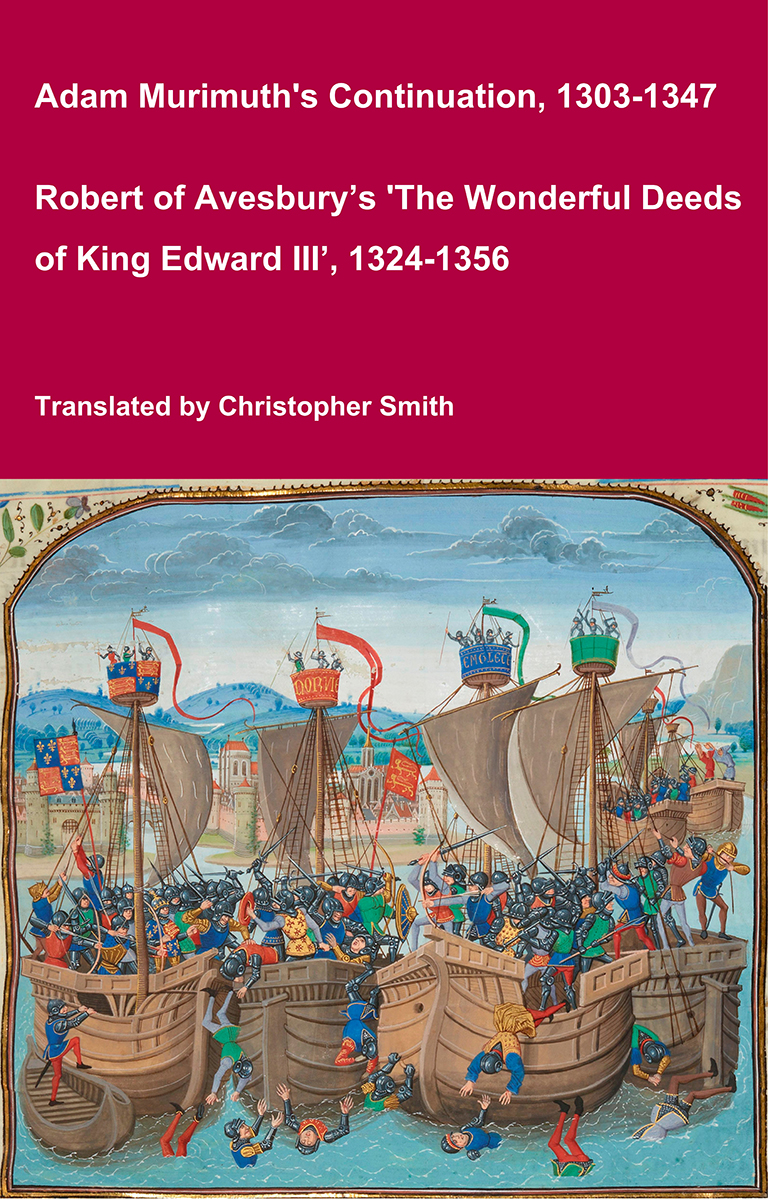
Adam Murimuth's Continuation and Robert of Avesbury’s 'The Wonderful Deeds of King Edward III'
This volume brings together two of the most important contemporary chronicles for the reign of Edward III and the opening phases of the Hundred Years’ War. Written in Latin by English clerical observers, these texts provide a vivid and authoritative window into the political, diplomatic, and military history of fourteenth-century England and its continental ambitions. Adam Murimuth Continuatio's Chronicarum continues an earlier chronicle into the mid-fourteenth century, offering concise but valuable notices on royal policy, foreign relations, and ecclesiastical affairs. Its annalistic structure makes it especially useful for establishing chronology and tracing the development of events year by year. Complementing it, Robert of Avesbury’s De gestis mirabilibus regis Edwardi tertii is a rich documentary chronicle preserving letters, treaties, and official records alongside narrative passages. It is an indispensable source for understanding Edward III’s claim to the French crown, the conduct of war, and the mechanisms of medieval diplomacy. Together, these works offer scholars, students, and enthusiasts a reliable and unembellished account of a transformative period in English and European history. Essential for anyone interested in medieval chronicles, the Hundred Years’ War, or the reign of Edward III.
Available at Amazon in eBook and Paperback format.
On 24th April 1751 Charles Calvert 5th Baron Baltimore [aged 51] died. His son Frederick [aged 20] succeeded 6th Baron Baltimore of Longford in Leinster.
On 9th March 1753 Frederick Calvert 6th Baron Baltimore [aged 22] and Diana Egerton Baroness Baltimore [aged 22] were married. She by marriage Baroness Baltimore of Longford in Leinster. She the daughter of Scroop Egerton 1st Duke Bridgewater and Rachel Russell Duchess Bridgewater [aged 46].
On 4th September 1771 Frederick Calvert 6th Baron Baltimore [aged 40] died at Naples [Map]. Baron Baltimore of Longford in Leinster extinct. His body was returned to London, lying in state at the Great Room of Exeter Exchange, Strand, and was interred in his family's vault at St. Martin's "with much funeral pomp, the cavalcade extending from the church to the eastern extremity of Epsom".