

See Painters.
Memoir of the Life of William James Müller. Of this marriage three sons were born ; also one daughter, who died in infancy. The eldest son, Henry, born in 1808, was brought up to the medical profession, and having early in life obtained a country practice at Congresbury, about ten miles from Bristol, he married. But he only lived or one year after his marriage, and died in 1843. William James Müller was the second son; and the youngest, Edmund G. Muller, born in 1816, still survives. Like his brother William he has followed the profession of an artist, although educated first for the medical profession, and is a resident in the neighbourhood of Bristol.
On 28th June 1812 William James Müller was born.

1831-1833. William James Müller [aged 18]. "Four Stars Inn, Counterslip, Bristol".
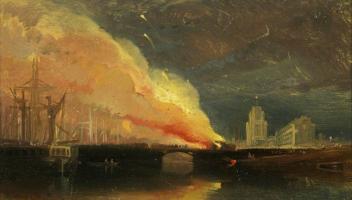
1831. William James Müller [aged 18]. "Bristol Riots: The Burning of the Toll Houses on Prince Street Bridge with St Mary Redcliffe".

1831. William James Müller [aged 18]. Font at St Mary's and All Saints Church, Little Walsingham.
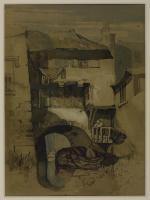
1831-1833. William James Müller [aged 18]. "Castle Ditch, Bristoj Castle [Map]".
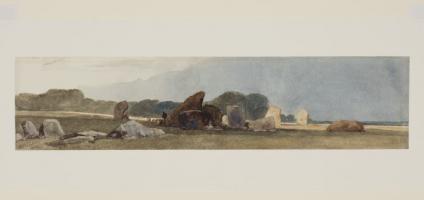
1832. William James Müller [aged 19]. Watercolor of Stanton Drew Great Circle.
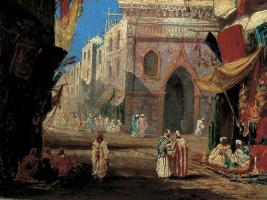
Around 1832. William James Müller [aged 19]. "A Street in Cario, Egypt.
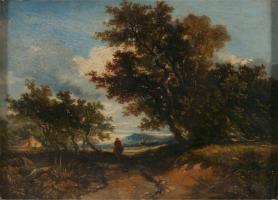
Around 1832. William James Müller [aged 19]. Landscape with Horseman.
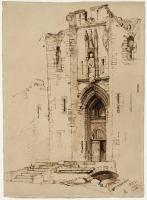
1833. William James Müller [aged 20]. "Gateway of Caernarfon Castle [Map]".
William of Worcester's Chronicle of England
William of Worcester, born around 1415, and died around 1482 was secretary to John Fastolf, the renowned soldier of the Hundred Years War, during which time he collected documents, letters, and wrote a record of events. Following their return to England in 1440 William was witness to major events. Twice in his chronicle he uses the first person: 1. when writing about the murder of Thomas, 7th Baron Scales, in 1460, he writes '… and I saw him lying naked in the cemetery near the porch of the church of St. Mary Overie in Southwark …' and 2. describing King Edward IV's entry into London in 1461 he writes '… proclaimed that all the people themselves were to recognize and acknowledge Edward as king. I was present and heard this, and immediately went down with them into the city'. William’s Chronicle is rich in detail. It is the source of much information about the Wars of the Roses, including the term 'Diabolical Marriage' to describe the marriage of Queen Elizabeth Woodville’s brother John’s marriage to Katherine, Dowager Duchess of Norfolk, he aged twenty, she sixty-five or more, and the story about a paper crown being placed in mockery on the severed head of Richard, 3rd Duke of York.
Available at Amazon in eBook and Paperback format.

1835. William James Müller [aged 22]. View of Bristol Cathedral [Map].
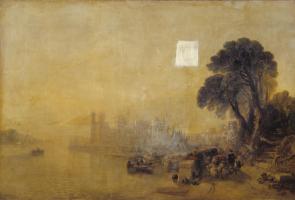
1837. William James Müller [aged 24]. "Caernarfon Castle [Map]".

1837. William James Müller [aged 24]. View of Bristol Cathedral [Map].

1837. William James Müller [aged 24]. "View of Bristol, Gloucestershire [Map] from Clifton Wood".
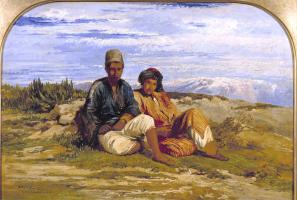
1837. William James Müller [aged 24]. "Eastern Landscape".
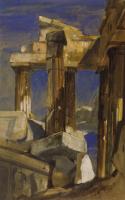
1838. William James Müller [aged 25]. "The Parthenon, Athens".

1842. William James Müller [aged 29]. Gillingham, Kent [Map] on the River Medway.

1842. William James Müller [aged 29]. Gillingham, Kent [Map].
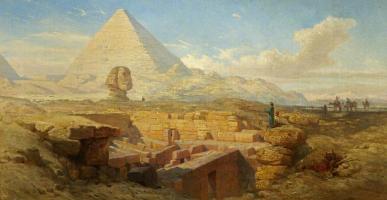
1843. William James Müller [aged 30]. "The Pyramids".
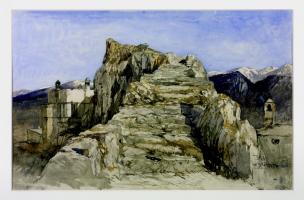
1844. William James Müller [aged 31]. "Lycia: The Rocky Stair at Tlos".
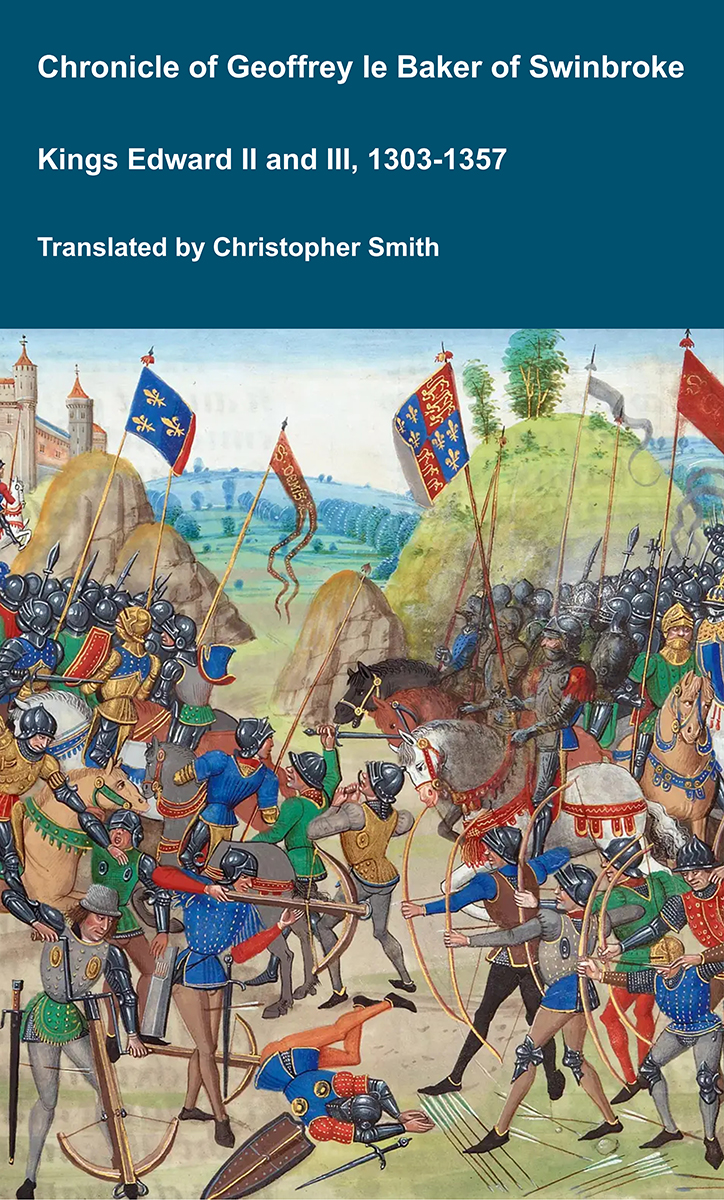
Chronicle of Geoffrey le Baker of Swinbroke
Baker was a secular clerk from Swinbroke, now Swinbrook, an Oxfordshire village two miles east of Burford. His Chronicle describes the events of the period 1303-1356: Gaveston, Bannockburn, Boroughbridge, the murder of King Edward II, the Scottish Wars, Sluys, Crécy, the Black Death, Winchelsea and Poitiers. To quote Herbert Bruce 'it possesses a vigorous and characteristic style, and its value for particular events between 1303 and 1356 has been recognised by its editor and by subsequent writers'. The book provides remarkable detail about the events it describes. Baker's text has been augmented with hundreds of notes, including extracts from other contemporary chronicles, such as the Annales Londonienses, Annales Paulini, Murimuth, Lanercost, Avesbury, Guisborough and Froissart to enrich the reader's understanding. The translation takes as its source the 'Chronicon Galfridi le Baker de Swynebroke' published in 1889, edited by Edward Maunde Thompson.
Available at Amazon in eBook and Paperback format.
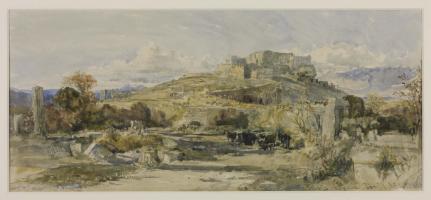
1844. William James Müller [aged 31]. "Lycia: The Citadel of Tlos".
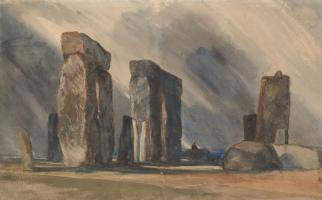
Before 1845. William James Müller [aged 32]. "Historic Stonehenge".
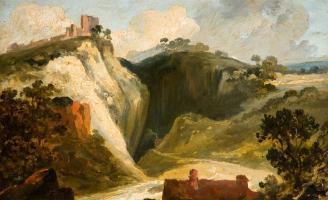
Before 1845. William James Müller [aged 32]. "The Peak Cavern [Map], Derbyshire, Peveril Castle [Map]".
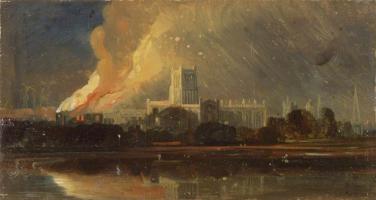
Before 1845. William James Müller [aged 32]. "Bristol Riots: The Burning of the Bishop's Palace".
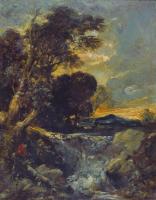
Before 1845. William James Müller [aged 32]. "Waterfall with Fisherman".

Before 1845. William James Müller [aged 32]. "The Ramesseum at Thebes".
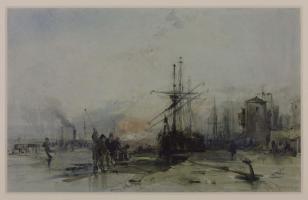
Before 1845. William James Müller [aged 32]. "Bristol Harbour in ice".

Before 1845. William James Müller [aged 32]. Bristol Harbour with St Mary Redcliffe Church, Bristol.

Before 1845. William James Müller [aged 32]. "Santa Maria della Salute, Venice".
William of Worcester's Chronicle of England
William of Worcester, born around 1415, and died around 1482 was secretary to John Fastolf, the renowned soldier of the Hundred Years War, during which time he collected documents, letters, and wrote a record of events. Following their return to England in 1440 William was witness to major events. Twice in his chronicle he uses the first person: 1. when writing about the murder of Thomas, 7th Baron Scales, in 1460, he writes '… and I saw him lying naked in the cemetery near the porch of the church of St. Mary Overie in Southwark …' and 2. describing King Edward IV's entry into London in 1461 he writes '… proclaimed that all the people themselves were to recognize and acknowledge Edward as king. I was present and heard this, and immediately went down with them into the city'. William’s Chronicle is rich in detail. It is the source of much information about the Wars of the Roses, including the term 'Diabolical Marriage' to describe the marriage of Queen Elizabeth Woodville’s brother John’s marriage to Katherine, Dowager Duchess of Norfolk, he aged twenty, she sixty-five or more, and the story about a paper crown being placed in mockery on the severed head of Richard, 3rd Duke of York.
Available at Amazon in eBook and Paperback format.

1845. William James Müller [aged 32]. "Compton Dando, Somerset [Map]".
Memoir of the Life of William James Müller. A few more lines, brief and sad, and this memoir will be finished. On Monday morning, the 8th of September [1845], Edmund Muller had commenced to set his brother's palette after breakfast, as was his wont; and William Muller [aged 33], who was propped up, seemed about as well as he had been of late, when suddenly a change came over him. He appears to have broken an internal blood-vessel. He had just strength to call to his brother for help, and then said, "Remember Gooden and — and — that other." He could not pronounce the name, but it was supposed to be Charles Bentley, to whom he was much attached. Soon after this, exhausted nature gave way, his head fell, and he never spoke again. He had entered "the Silent Land," and all his work and sufferings were over.
On Friday, the 12th, he was quietly laid to rest in the old Lewin's Mead burial-ground, situated in a retired part of Bristol, leading out of Brunswick Square. Several of his mother's relatives, the Jameses, had long been buried there. It is a small and secluded cemetery, with a few trees, shrubs, and flowers ; and the grave of Muller, marked only with a flat stone and a simple inscription, is situated at its furthest end, and is placed underneath an overhanging elder-bush. As Tennyson sang in memory of another young Englishman, we may say of Muller —
"'Tis well; 'tis something ; we may stand
Where he in English earth is laid.
And from his ashes may be made
The violets of his native land.
'Tis little; but it looks in truth
As if the quiet bones were blest
Among familiar names to rest.
And in the places of his youth."
On 8th September 1845 William James Müller [aged 33] died.
Memoir of the Life of William James Müller. Memoir of the life of William James Müller: a native of Bristol, landscape and figure painter: with original letters and an account of his travels and of his principal works by Solly, N. Neal (Nathaniel Neal). 1875.


