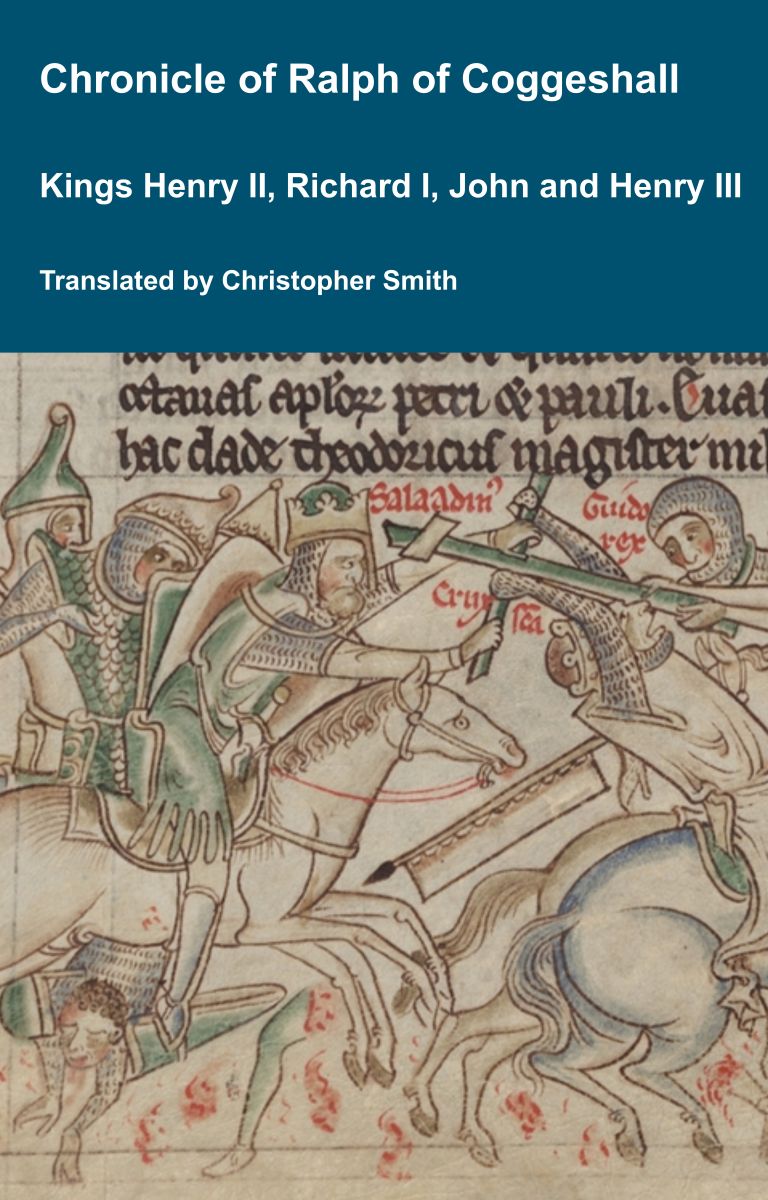
Chronicle of Abbot Ralph of Coggeshall
The Chronicle of Abbot Ralph of Coggeshall (Chronicon Anglicanum) is an indispensable medieval history that brings to life centuries of English and European affairs through the eyes of a learned Cistercian monk. Ralph of Coggeshall, abbot of the Abbey of Coggeshall in Essex in the early 13th century, continued and expanded his community’s chronicle, documenting events from the Norman Conquest of 1066 into the tumultuous reign of King Henry III. Blending eyewitness testimony, careful compilation, and the monastic commitment to record-keeping, this chronicle offers a rare narrative of political intrigue, royal power struggles, and social upheaval in England and beyond. Ralph’s work captures the reigns of pivotal figures such as Richard I and King John, providing invaluable insights into their characters, decisions, and the forces that shaped medieval rule. More than a simple annal, Chronicon Anglicanum conveys the texture of medieval life and governance, making it a rich source for scholars and readers fascinated by English history, monastic authorship, and the shaping of the medieval world.
Available at Amazon in eBook and Paperback format.
Chronicle of Greyfriars 1555 is in Chronicle of Greyfriars.
5th January 1555. Item the vth day of January [1555] was sent Edwardes day and thene was sett up the scrynne1 at Westmyster, and the aulter, with dyvers juelles that the qwene sent thether.
Note 1. The shrine of saint Edward: but it had not been fully "set up again" at the beginning of the year 1557: see the passage in Machyn's Diary, p. 131 [130].
25th January 1555. Item the xxv. day of the same monyth was the Conversione of sent Paulles day. and then was a generall procession1 with the chelderne of alle the scolles in London, with alle the clarkes, curattes, and parsons, and vikeres, in coppes, with their crossis; and the qwere of Powlles in lyke wysse; and dyvers byshoppes in their habbettes, and the byshoppe of Londone in hys pontificalles and coppe, berynge the sacrament under a canyppy, and iiij. prebenttes berynge it in ther gray amos; and soo up unto Ledynhalle with the mayer [and] aldermen in scarlet, with their clokes, and alle the crafttes in their best aray; and soo came downe agayne on the other syde and soo to Powlles agayne; and then the kynge with my lorde cardnalle came to Powlles and harde masse, and went home agayne; and at nyght was commandment gevyn to make bonfiers thorrow alle Londone for joy of the pepulle that ware convertyd lyke wyse as sent Powlle was convertyd.
Note 1. Compare with Machyn, p. 80.
4th February 1555. Item the iiij. day of Februarij was John Rogers, that was sometyme viker of sent Sepulkeres and recler in Powlles and prebendary after doctor Royston1, burnyd in Smythfelde for gret herysy. And Hopper [aged 60] and [blank] send un-to Glociter, and ther to (be) burnyd lyke wyse; and dijvers more un-to other places2.
Note 1. John Rogers was instituted to the prebend of Pancras, vacant by the death of John Royston, D.D. on the 24th Aug. 1551. (Newcourt, Repert. Lond. i. 196.) He was appointed reader of the lecture in St. Paul's by the dean and chapter: and is fully commemorated by Foxe as the protomartyr of the Marian persecution.
Note 2. At the same time that bishop Hooper was sent to Gloucester, Lawrence Saunders [aged 36] was sent to Coventry, and Rowland Taylor [aged 45] to Hadley: see Machyn, p. 82.