


The True Chronicles of Jean le Bel Volume 1 Chapters 1-60 1307-1342
The True Chronicles of Jean le Bel offer one of the most vivid and immediate accounts of 14th-century Europe, written by a knight who lived through the events he describes, and experienced some of them first hand. Covering the early decades of the Hundred Years’ War, this remarkable chronicle follows the campaigns of Edward III of England, the politics of France and the Low Countries, and the shifting alliances that shaped medieval warfare. Unlike later historians, Jean le Bel writes with a strong sense of eyewitness authenticity, drawing on personal experience and the testimony of fellow soldiers. His narrative captures not only battles and sieges, but also the realities of military life, diplomacy, and the ideals of chivalry that governed noble society. A key source for Jean Froissart, Le Bel’s chronicle stands on its own as a compelling and insightful work, at once historical record and literary achievement. This translation builds on the 1905 edition published in French by Jules Viard, adding extensive translations from other sources Rymer's Fœdera, the Chronicles of Adam Murimuth, William Nangis, Walter of Guisborough, a Bourgeois of Valenciennes, Geoffrey le Baker of Swinbroke and Richard Lescot to enrich the original text and Viard's notes.
Available at Amazon in eBook and Paperback format.
After 22nd August 1307 Archbishop Walter Reynolds was appointed Lord Treasurer.
On 13th November 1307 Archbishop Walter Reynolds was elected Bishop of Worcester.
On 13th October 1308 Archbishop Walter Reynolds was consecrated Bishop of Worcester.
On 6th July 1310 Archbishop Walter Reynolds was appointed Lord Keeper of the Great Seal and Lord Chancellor.
On 13th November 1312 King Edward III of England was born to King Edward II of England [aged 28] and Isabella of France Queen Consort England [aged 17] at Windsor Castle [Map]. He was christened on 17th November 1312 with Archbishop Walter Reynolds being one of his godfathers. Coefficient of inbreeding 2.17%. He married 24th January 1328 his second cousin Philippa of Hainaut Queen Consort England, daughter of William of Avesnes I Count Hainaut III Count Avesnes III Count Holland II Count Zeeland and Joan Valois Countess Zeeland Holland Avesnes and Hainaut, and had issue.
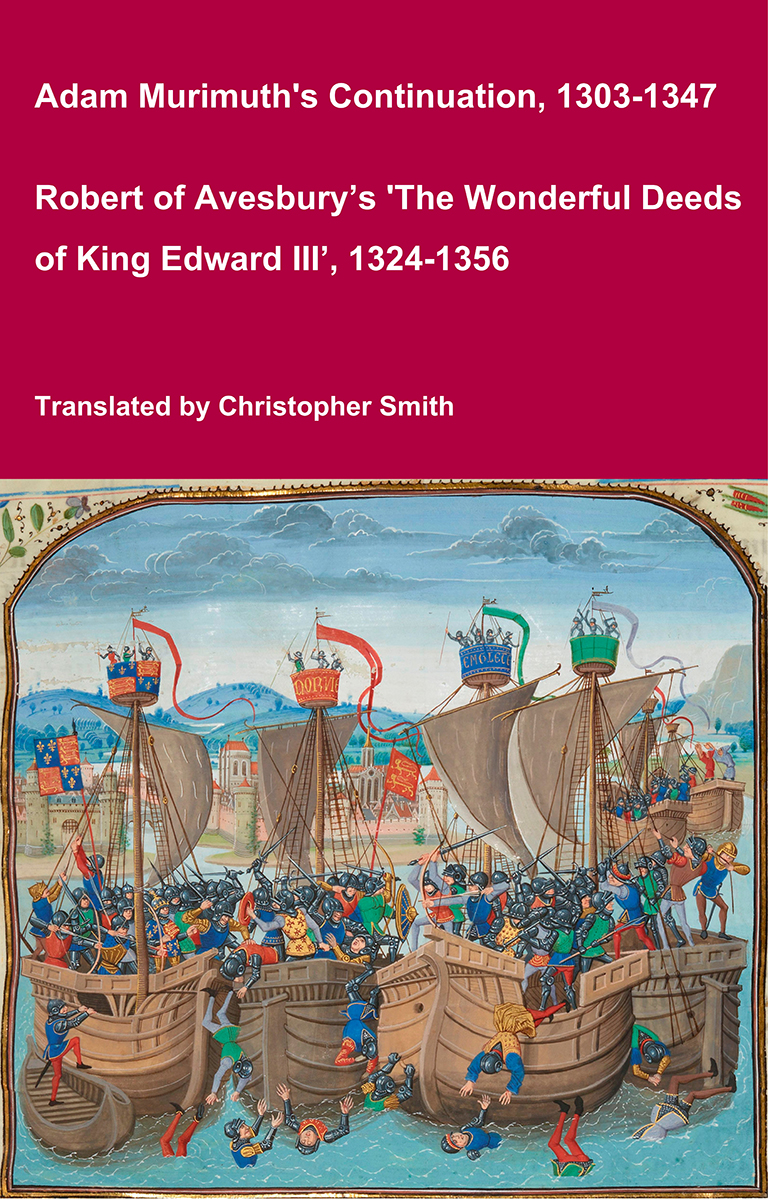 Adam Murimuth Continuation. In this year of our Lord 1312, namely on the thirteenth day of November, Queen Isabella bore a son1 to the king at Windsor. He had him baptized by Arnald, cardinal of Albano, and named Edward. He afterwards reigned, as will be described below, and was called Edward the Third from the Conquest.
Hoc anno Domini MCCCXII scilicet XIIJ die Novembris, Isabella regina peperit regi filium apud Windelesore, quem fecit baptizari per cardinalem Albanensem Arnaldum, et vocari Edwardum; qui postea regnavit, sicut inferius describetur, et vocatus est Edwardus tertius a conquæstu.
Note 1. Edward, the future King Edward III, was born on 13th November 1312. He was christened on 17th November 1312 with Archbishop Walter Reynolds being one of his godfathers.
In 1313 Archbishop Walter Reynolds was appointed Archbishop of Canterbury.
Adam Murimuth Continuation. In this year, on the twelfth day of the month of May, in the year of our Lord 1313, Archbishop Robert of Winchelsea [deceased] died, and Master Thomas de Cobham [aged 45], who was then in France on affairs of the kingdom, was unanimously elected in his place. Nevertheless, the king asked Pope Clement that Lord Walter Reynolds, bishop of Worcester, should be transferred to the church of Canterbury. This was done on the first day of October in the following year, namely in the year of our Lord 1313. Immediately afterwards he gave the bishopric of Worcester to Lord Walter de Maidstone, a man indeed widely spoken against in England for dishonourable conduct and life, and secretly familiar with the pope in an unseemly way. He remained in that bishopric only a short time. Later Pope John gave the bishopric of Worcester to the said Master Thomas de Cobham, who, because of the shame of his voluntary rejection from the church of Canterbury, remained for a long time at the Roman Curia, as will appear below.
Hoc anno, XIJ die mensis Maii, anno Domini MCCCXIII, obiit archiepiscopus Robertus de Wynchelse et fuit concorditer electus magister Thomas de Cobham, exsistens in Francia pro regni negotiis. Et tamen rex rogavit papam Clementem pro domino Waltero Reginaldi, episcopo W ygorniensi, ut ipsum transferret ad ecclesiam Cantuariensem; quod et factum fuit primo die Octobris in anno sequenti, scilicet anno Domini MCCCXIII, et statim dedit episcopatum Wygorniensem domino Waltero de Manestone, viro utique diffamato in Anglia de inhonesta conversatione et vita, et papæ ex inhonesta familiaritate secreto, qui modico tempore postmodum in episcopatu duravit Et postes papa Johannes dedit ipsum episcopatum Wygorniensem dicto magistro Thome de Cobham, qui propter verecundiam voluntariæ repulsionis suæ ab ecclesia Cantuariensi diu in Romana curia morabatur, sicut inferius apparebit.
In January 1314 Archbishop Walter Reynolds was enthroned Archbishop of Canterbury at Canterbury Cathedral [Map].
On 1st February 1327 King Edward III of England [aged 14] was crowned III King of England at Westminster Abbey [Map] by Archbishop Walter Reynolds.
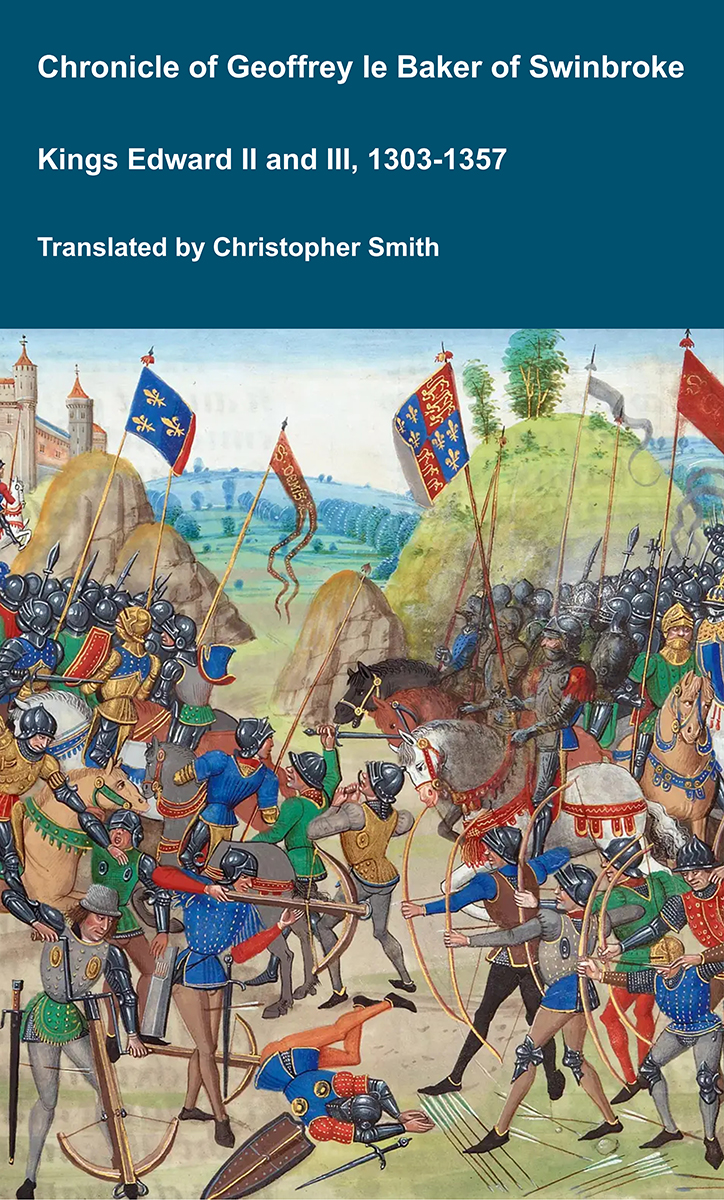 Chronicle of Geoffrey le Baker of Swinbroke. After the glorious King Edward had, as previously stated, resigned the crown of the realm to his firstborn son, Lord Edward of Windsor, and once certain reports of this had spread, the nobles and prelates of the realm gathered in Parliament at London and most eagerly acknowledged this same Edward, son of Edward, then a youth of about fifteen years,1 as successor to the throne, a young man gracious in the sight of God and of all the world. On the first day of February at Westminster, he was crowned by the Archbishop of Canterbury, Walter Reynolds. Many attended this great solemnity, both foreigners and natives, and especially the hired soldiers of Queen Isabella, his mother, whom, as has been said, she had summoned from Hainault and Germany. Thus the new king was adorned with the royal crown, the same which the most blessed confessor Saint Edward, his predecessor, had been accustomed to wear. Though the crown was of great weight and size, he bore it with such manly strength that all who knew the tenderness of his youth, the crown's great size, and its heaviness, were filled with wonder. On the same day, three sons of Roger de Mortimer, along with many others, were honoured with the belt of knighthood.
Postquam gloriosus rex Edwardus regni diadema, ut prescriptum est, suo primogenito, domino Edwardo de Wyndesore, resignaverat, habitis de hoc certis rumouribus, in parliamento Londoniis regni proceres ct prelati ipsum Edwardum Edwardi primogenitum, quindecim circiter annorum adolescentem, Deo et toti mundo graciosum, in patris successorem promtissime admiserunt, atque prima die Februarii, apud Westmonasterium, per archiepiscopum Cantuariensem, Walterum Renald, coronari fecerunt. Tante solemnitati interfuerunt multi tam alienigene quam indigene et precipue stipendiarii Isabelle regine matris sue, quos, ut dictum est, de Hanonia et Germania ipsa invitavit. Novus itaque rex regia corona insignitus, quam beatissimus confessor sanctus Edwardus suus predecessor gestare solebat, quantumcumque gravis ponderis et amplam, tamen ita viriliter ipsam gessit, ut inde mirarentur qui pueri teneritudinem et amplitudinem corone atque ponderositatem experti noverunt. Eodem die IIJ filii Rogeri de Mortuo mari atque multi alii milicie cingulo fuerunt decorati.
Note 1. Edward was just over fourteen years and two months old. The memorandum in the Rymer's Fœdera 2.683, relating to the coronation states that there were present the bishops of Ely, Hereford, Winchester, Chichester, Worcester, Durham, Lincoln, Llandaff, and Norwich; the earls of Norfolk, Kent, Surrey, and Hereford; Roger Mortimer, Henry Beaumont, and others.
William of Worcester's Chronicle of England
William of Worcester, born around 1415, and died around 1482 was secretary to John Fastolf, the renowned soldier of the Hundred Years War, during which time he collected documents, letters, and wrote a record of events. Following their return to England in 1440 William was witness to major events. Twice in his chronicle he uses the first person: 1. when writing about the murder of Thomas, 7th Baron Scales, in 1460, he writes '… and I saw him lying naked in the cemetery near the porch of the church of St. Mary Overie in Southwark …' and 2. describing King Edward IV's entry into London in 1461 he writes '… proclaimed that all the people themselves were to recognize and acknowledge Edward as king. I was present and heard this, and immediately went down with them into the city'. William’s Chronicle is rich in detail. It is the source of much information about the Wars of the Roses, including the term 'Diabolical Marriage' to describe the marriage of Queen Elizabeth Woodville’s brother John’s marriage to Katherine, Dowager Duchess of Norfolk, he aged twenty, she sixty-five or more, and the story about a paper crown being placed in mockery on the severed head of Richard, 3rd Duke of York.
Available at Amazon in eBook and Paperback format.
On 16th November 1327 Archbishop Walter Reynolds died at Mortlake, Richmond.
Chronicle of Geoffrey le Baker of Swinbroke. In this year, in the month of November, Walter,1 Archbishop of Canterbury, died, and he was succeeded by Master Simon de Mepham, a doctor of theology, through a canonical election. In this same year, Master Thomas de Cobham2, Bishop of Worcester, also died; and he was succeeded by papal provision by Adam Orleton, formerly Bishop of Hereford, who had gone to the papal court on behalf of his own affairs and those of the king's mother. Likewise, the pope provided the Church of Hereford with Master Thomas de Charlton, who was then present at the court.
Hoc anno, mense Novembris, obiit Walterus Cantuariensis archiepiscopus, cui successit per eleccionem canonicam magister Symon de Mepham, doctor in theologia. Hoc anno moriebatur magister Thomas de Cobham episcopus Wigorniensis; cui successit per provisionem pape Adam Torltoine, prius episcopus Herefordensis, ad curiam pro negociis propriis et matris regis profectus. Item papa providit ecclesie Herefordensi de magistro Thoma de Charletone, tunc in curia presente.
Note 1. Archbishop Walter Reynolds died on 16th November 1327.
Note 2. Thomas de Cobham, Bishop of Worcester, died on 27th August 1327.