

Europe, British Isles, South-East England, Kent, Canterbury Cathedral [Map]
Canterbury Cathedral is in Canterbury, Kent [Map].
616 Death of Æthelberht King of Kent
1052 Coronation of William The Conqueror
1170 Murder of Thomas a Becket
1236 Wedding of Henry III and Eleanor of Provence
1299 Edward I and Margaret of France Wedding
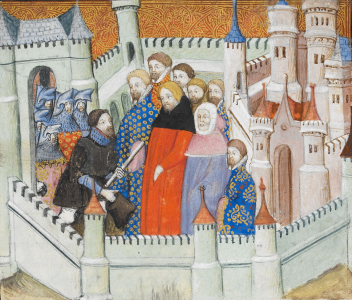
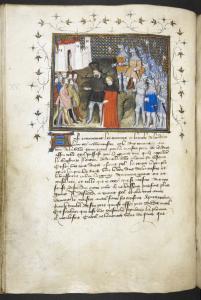
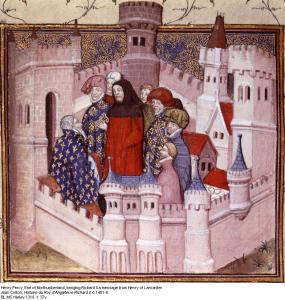
1360 Release of King John II of France
1376 Death of the Black Prince
1413 Death of King Henry IV Accession of Henry V
1457 John Neville married Isabel Ingaldsthorpe
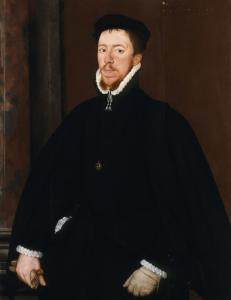
1532 Cranmer appointed Archbishop of Canterbury
1538 Thomas Becket Shrine destroyed
1559 Consecration of Matthew Parker as Archbishop of Canterbury
Around 604 Archbishop Laurence was appointed Archbishop of Canterbury.
Anglo-Saxon Chronicle. 616. This year died Ethelbert (age 66), king of Kent, the first of English kings that received baptism: he was the son of Ermenric. He reigned fifty-six winters, and was succeeded by his son Eadbald. And in this same year had elapsed from the beginning of the world five thousand six hundred and eighteen winters. This Eadbald renounced his baptism, and lived in a heathen manner; so that he took to wife the relict of his father. Then Laurentius, who was archbishop in Kent, meant to depart southward over sea, and abandon everything. But there came to him in the night the apostle Peter, and severely chastised him19, because he would so desert the flock of God. And he charged him to go to the king, and teach him the right belief. And he did so; and the king returned to the right belief. In this king's days the same Laurentius, who was archbishop in Kent after Augustine, departed this life on the second of February, and was buried near Augustine. The holy Augustine in his lifetime invested him bishop, to the end that the church of Christ, which yet was new in England, should at no time after his decease be without an archbishop. After him Mellitus, who was first Bishop of London, succeeded to the archbishopric. The people of London, where Mellitus was before, were then heathens: and within five winters of this time, during the reign of Eadbald, Mellitus died. To him succeeded Justus, who was Bishop of Rochester, whereto he consecrated Romanus bishop.
Note 19. Literally, "swinged, or scourged him." Both Bede and Alfred begin by recording the matter as a vision, or a dream; whence the transition is easy to a matter of fact, as here stated by the Norman interpolators of the "Saxon Annals".
In 619 Bishop Mellitus was appointed Archbishop of Canterbury.
In 624 Archbishop Justus was appointed 4th Archbishop of Canterbury.
On 21 Jul 625 Archbishop Paulinus of York was appointed Archbishop of Canterbury.
Anglo-Saxon Chronicle. 627. This year was King Edwin (age 41) baptized at Easter, with all his people, by Paulinus, who also preached baptism in Lindsey [Map], where the first person who believed was a certain rich man, of the name of Bleek, with all his people. At this time Honorius succeeded Boniface in the papacy, and sent hither to Paulinus the pall; and Archbishop Justus having departed this life on the tenth of November, Honorius was consecrated at Lincoln, Lincolnshire [Map] Archbishop of Canterbury by Paulinus; and Pope Honorius sent him the pall. And he sent an injunction to the Scots, that they should return to the right celebration of Easter.
Anglo-Saxon Chronicle. This year Ithamar, Bishop of Rochester, consecrated Deus-dedit to Canterbury, on the twenty-sixth day of March.
Anglo-Saxon Chronicle. 667. This year Oswy (age 55) and Egbert sent Wighard, a priest, to Rome, that he might be consecrated there Archbishop of Canterbury; but he died as soon as he came thither.
Anglo-Saxon Chronicle. 668. This year Theodore (age 66) was consecrated archbishop, and sent into Britain.
On 26 Mar 668 Archbishop Theodore of Tarsus (age 66) was appointed Archbishop of Canterbury in Rome, Italy.
Bede. 689. How when Archbishop Theodore died Bertwald succeeded him as archbishop and among many others whom he ordained he made the learned Tobias bishop of the church of Rochester. [690 a.d.]
The year after that in which Caedwalla died at Rome, Italy, that is, 690 after the Incarnation of our Lord, Archbishop Theodore (age 87), of blessed memory, departed this life, being old and full of days, for he was eighty-eight years of age; which number of years he had been wont long before to foretell to his friends that he should live, the same having been revealed to him in a dream. He held the bishopric twenty-two years, and was buried in St. Peter's church [Map], where all the bodies of the bishops of Canterbury are buried. Of whom, as well as of his fellows of the same degree, it may rightly and truly be said, that their bodies are buried in peace, and their names shall live to all generations. For to say all in few words, the English Churches gained more spiritual increase while he was archbishop, than ever before. His character, life, age, and death, are plainly and manifestly described to all that resort thither, by the epitaph on his tomb, in thirty-four heroic verses. The first whereof are these:
"Here in the tomb rests the body of the holy prelate, called now in the Greek tongue Theodore. Chief pontiff, blest high priest, pure doctrine he set forth to his disciples.".
The last are as follow:
"For September had reached its nineteenth day, when his spirit went forth from the prison-bars of the flesh. Mounting in bliss to the gracious fellowship of the new life, he was united to the angelic citizens in the heights of Heaven.".
Anglo-Saxon Chronicle. 690. This year Archbishop Theodore (age 88), who had been bishop twenty-two winters, departed this life22, and was buried within the city of Canterbury [Map]. Bertwald, who before this was abbot of Reculver [Map], on the calends of July succeeded him in the see; which was ere this filled by Romish bishops, but henceforth with English. Then were there two kings in Kent, Wihtred (age 20) and Webherd.
Note 22. He was a native of Tarsus in Cilicia, the birth-place of St. Paul.
On 10 Jun 729 Archbishop Tatwine (age 59) was consecrated Archbishop of Canterbury by Bishop Daniel of Winchester.
In 735 Archbishop Nothelm was appointed Archbishop of Canterbury.
In 740 Archbishop Cuthbert was consecrated Archbishop of Canterbury.
In 760 Archbishop Bregowine was appointed Archbishop of Canterbury.
On 02 Feb 765 Archbishop Jænberht was consecrated Archbishop of Canterbury.
In 792 Archbishop Æthelhard was translated to Archbishop of Canterbury by King Offa of Mercia.
On 21 Jan 793 Archbishop Æthelhard was enthroned Archbishop of Canterbury in a service presided over by Archbishop Hygeberht.
Anglo-Saxon Chronicle. 803. This year died Hibbald, Bishop of Holy-island, on the twenty-fourth of June, and Egbert was consecrated in his stead, on the thirteenth of June following. Archbishop Ethelherd also died in Kent, and Wulfred was chosen archbishop in his stead. Abbot Forthred, in the course of the same year, departed this life.
Anglo-Saxon Chronicle. 870. This year the army rode over Mercia into East-Anglia, and there fixed their winter-quarters at Thetford [Map]. And in the winter King Edmund fought with them; but the Danes gained the victory, and slew the king; whereupon they overran all that land, and destroyed all the monasteries to which they came. The names of the leaders who slew the king were Hingwar and Hubba. At the same time came they to Medhamsted [Map], burning and breaking, and slaying abbot and monks, and all that they there found. They made such havoc there, that a monastery [Map], which was before full rich, was now reduced to nothing. The same year died Archbishop Ceolnoth; and Ethered, Bishop of Witshire, was chosen Archbishop of Canterbury.
In 870 Archbishop Æthelred was consecrated Archbishop of Canterbury.
In 890 Archbishop Plegmund was appointed Archbishop of Canterbury.
Around 923 Archbishop Athelm was appointed Archbishop of Canterbury.
Around 926 Archbishop Wulfhelm was appointed Archbishop of Canterbury.
In 941 Archbishop Oda was appointed Archbishop of Canterbury.
In 958 a charter of King Edgar "Peaceful" I of England (age 15) describes Penkridge, Staffordshire [Map] as a "famous place". St Michael's Church Penkridge [Map] was established as a Royal Free Chapel making it a Royal Peculiar. The church was independent of the Bishop of Lichfield and, correspondingly, the Archbishop of Canterbury.
In 959 Archbishop Dunstan (age 50) was appointed Archbishop of Canterbury.
Anglo-Saxon Chronicle. 961. This year departed Odo, the good archbishop, and St. Dunstan (age 52) took to the archbishopric. This year also died Elfgar, a relative of the king, in Devonshire; and his body lies at Wilton [Map]: and King Sifferth killed himself; and his body lies at Wimborn [Map]. This year there was a very great pestilence; when the great fever was in London; and St. Paul's minster was consumed with fire, and in the same year was afterwards restored. In this year Athelmod the masspriest, went to Rome, and there died on the eighteenth before the calends of September.
In 988 Archbishop Ethelgar was elected Archbishop of Canterbury.
In 989 Archbishop Sigeric was elected Archbishop of Canterbury.
In 994 Archbishop Ælfric was elected Archbishop of Canterbury.
Anglo-Saxon Chronicle. 996. This year was Elfric consecrated archbishop at Christ church.49
Note 49. i.e. at Canterbury. He was chosen or nominated before, by King Ethelred (age 30) and his council, at Amesbury: vid. an. 994. This notice of his consecration, which is confirmed by Florence of Worcester, is now first admitted into the text on the authority of three MSS.
In 1004 Archibishop Ælfheah (age 51) was elected Archbishop of Canterbury.
In 1006 Archibishop Ælfheah (age 53) was consecrated Archbishop of Canterbury.
In 1013 Archibishop Ælfstan aka Lyfing was appointed Archbishop of Canterbury by King Æthelred "Unready" II of England (age 47).
Before 1020 Archbishop Æthelnoth was appointed Dean of Canterbury.
Anglo-Saxon Chronicle. 1020. This year came King Knute (age 25) back to England; and there was at Easter a great council at Cirencester, Gloucestershire [Map], where Alderman Ethelward was outlawed, and Edwy, king of the churls. This year went the king (age 25) to Assingdon; with Earl Thurkyll, and Archbishop Wulfstan, and other bishops, and also abbots, and many monks with them; and he ordered to be built there a minster of stone and lime, for the souls of the men who were there slain, and gave it to his own priest, whose name was Stigand; and they consecrated the minster at Assingdon. And Ethelnoth the monk, who had been dean at Christ's church, was the same year on the ides of November consecrated Bishop of Christ's church by Archbishop Wulfstan.
On 12 Jun 1020 Archibishop Ælfstan aka Lyfing died. He was buried at Canterbury Cathedral [Map].
On 13 Nov 1020 Archbishop Æthelnoth was consecrated Archbishop of Canterbury by Archibishop Wulfstan.
Anglo-Saxon Chronicle. 1023. This year returned King Knute (age 28) to England; and Thurkyll and he were reconciled. He committed Denmark and his son to the care of Thurkyll, whilst he took Thurkyll's son with him to England. This year died Archbishop Wulfstan; and Elfric succeeded him; and Archbishop Egelnoth blessed him in Canterbury. This year King Knute (age 28) in London, in St. Paul's minster [Map], gave full leave60 to Archbishop Ethelnoth, Bishop Britwine, and all God's servants that were with them, that they might take up from the grave the archbishop, Saint Elphege. And they did so, on the sixth day before the ides of June; and the illustrious king, and the archbishop, and the diocesan bishops, and the earls, and very many others, both clergy and laity, carried by ship his holy corpse over the Thames to Southwark [Map]. And there they committed the holy martyr to the archbishop and his companions; and they with worthy pomp and sprightly joy carried him to Rochester. There on the third day came the Lady Emma (age 38) with her royal son Hardacnute (age 5); and they all with much majesty, and bliss, and songs of praise, carried the holy archbishop into Canterbury Cathedral [Map], and so brought him gloriously into the church, on the third day before the ides of June. Afterwards, on the eighth day, the seventeenth before the calends of July, Archbishop Ethelnoth, and Bishop Elfsy, and Bishop Britwine, and all they that were with them, lodged the holy corpse of Saint Elphege on the north side of the altar of Christ; to the praise of God, and to the glory of the holy archbishop, and to the everlasting salvation of all those who there his holy body daily seek with earnest heart and all humility. May God Almighty have mercy on all Christian men through the holy intercession of Elphege!
Note 60. Matthew of Westminster says the king took up the body with his own hands.
Anglo-Saxon Chronicle. 1031. This year returned King Knute (age 36); and as soon as he came to England he gave to Christ's church in Canterbury [Map] the haven of Sandwich, Kent [Map], and all the rights that arise therefrom, on either side of the haven; so that when the tide is highest and fullest, and there be a ship floating as near the land as possible, and there be a man standing upon the ship with a taper-axe in his hand, whithersoever the large taper-axe might be thrown out of the ship, throughout all that land the ministers of Christ's church should enjoy their rights. This year went King Knute (age 36) to Rome; and the same year, as soon as he returned home, he went to Scotland; and Malcolm, king of the Scots (age 77), submitted to him, and became his man, with two other kings, Macbeth and Jehmar; but he held his allegiance a little while only. Robert, Earl of Normandy (age 30), went this year to Jerusalem, where he died; and William (age 3), who was afterwards King of England, succeeded to the earldom, though he was a child.
In 1038 Archbishop Eadsige was appointed Archbishop of Canterbury.
In 1044 Archbishop Robert of Robert of Jumièges was appointed Archbishop of Canterbury; the first Norman Archbishop of Canterbury.
In 1052 Archbishop Stigand was appointed Archbishop of Canterbury which he held jointly with his Bishopric of Worcester making him very wealthy. Five successive Popes excommunicated Stigand for his holding of both Winchester and Canterbury. His excommunication meant he could ot preside at the Coronation of William The Conqueror.
Anglo-Saxon Chronicle. 1067. This year came the king (age 39) back again to England on St. Nicholas's day; and the same day was burned the church of Christ at Canterbury [Map]. Bishop Wulfwy also died, and is buried at his see in Dorchester [Map].
On 29 Aug 1070 Archbishop Lanfranc (age 65) was consecrated Archbishop of Canterbury.
Flowers of History. 08 Apr 1071. A general council of the kingdom of England was held, to discuss the question of the primacy of the church of Canterbury, as superior to the church of York, on the eighth of April. And at last it was decreed that the archbishop of Canterbury had the preeminence, and that the archbishop of York was subordinate to him in everything.
Flowers of History. 24 Apr 1071. Lanfranc (age 66), abbot of Caen, was consecrated archbishop of Canterbury, on the twenty-fourth of April. And this Lanfranc (age 66), when archbishop, established the order of monks according to the rule of Saint Benedict in many of the convents of England. And he did so, first of all, in the church of Canterbury; after that, in the church of Saint Alban [Map], the protomartyr of the English, where also, when the abbot Frederic died, he appointed his [Lanfranc's] nephew Paul as his successor; who, relying on the support of his uncle (age 66), restored the church, and reformed the brotherhood, which had fallen into some irregularities.
In 1072 the Accord of Winchester established the primacy of the Archbishop of Canterbury over the Archbishop of York. It was signed by ...
King William "Conqueror" I of England (age 44) and Matilda Flanders Queen Consort England (age 41).
Archbishop Ealdred who signed "I concede" whereas other signatories signed "I subscribe".
Bishop Wulfstan (age 64).
Herfast Bishop Chancellor.
On 29 Dec 1079 Robert the Lotharingian was consecrated Bishop of Hereford by Archbishop Lanfranc (age 74) at Canterbury Cathedral [Map].
In 1093 Archbishop Anselm (age 60) was appointed Archbishop of Canterbury.
On 21 Apr 1109 Archbishop Anselm (age 76) was appointed Archbishop of Canterbury.
On 26 Apr 1114 Archibishop Ralph d'Escures was appointed Archbishop of Canterbury.
Florence of Worcester Continuation. 12 Jun 1121. After a few days, one named Everard, attached to the king's chapel, was elected bishop of Norwich, and consecrated at Canterbury [Map] by archbishop Ralph on the second of the ides [the 12th] of June; Arnulph, bishop of Rochester, Richard, bishop of Hereford, and Robert, bishop of Coventry, having met for the purpose.
Florence of Worcester Continuation. 16 Feb 1123. William (age 53), a canon of St. Osythe, at Chiche1, was named to the archbishopric of Canterbury at Gloucester, where the king held his court at the feast of the Purification of St. Mary; and he was consecrated at Canterbury by William, bishop of Winchester, assisted by many other bishops, on the fourteenth of the calends of March [16th February]. With his approval, the bishopric of Lincoln was given to Alexander, archdeacon of Salisbury. Afterwards, archbishop William (age 53), in company with Thurstan (age 53), archbishop of York, Bernard, bishop of St. David's2, Sigefred, abbot Glastonbury, and Anselm, abbot of St. Edmund's, went to Rome to receive the pallium.
Note 1. St. Osythe, in Essex, a priory rebuilt in 1118 for canons of the Augustine order, of which there are considerable remains.
Note 2. Henry of Huntingdon includes Alexander, the new bishop of Lincoln, among the archbishop's companions to Rome, and it is probable that the historian attended his patron. See his character of bishop Alexander, p. 253, of his history in the Antiq. Lib.
In 1139 Archbishop Theobald of Bec (age 49) was appointed Archbishop of Canterbury.
On 19 Dec 1148 Bishop David Fitzgerald (age 42) was consecrated Bishop of St David's at Canterbury Cathedral [Map] by Archbishop Theobald of Bec (age 58).
On 24 May 1162 Archbishop Thomas Becket (age 42) was appointed Archbishop of Canterbury.
On 22 Dec 1163 Bishop Robert Melun (age 63) was consecrated Bishop of Hereford by Archbishop Thomas Becket (age 44) at Canterbury Cathedral [Map].
On 29 Dec 1170 Archbishop Thomas Becket (age 51) was murdered at Canterbury Cathedral [Map] by four knights on behalf of King Henry "Curtmantle" II of England (age 37). Whether the ordered the murder, or whether the four knights were acting without orders, is a matter of conjecture.
On 07 Apr 1174 Archbishop Richard de Dover was consecrated Archbishop of Canterbury in Anagni Frosinone Latium by Pope Alexander III.
On 07 Nov 1176 Bishop Peter de Leia was consecrated Bishop of St David's at Canterbury Cathedral [Map].
In Dec 1184 Archbishop Baldwin Avigo (age 59) was translated to Archbishop of Canterbury.
On 29 May 1193 Archbishop Hubert Walter (age 33) was elected as Archbishop of Canterbury.
On 07 Jun 1207 Archbishop Stephen Langton (age 57) was consecrated Archbishop of Canterbury at Viterbo by Pope Innocent III (age 47).
On 19 Jun 1229 Bishop Hugh of Northwold was consecrated Bishop of Ely at Canterbury Cathedral [Map].
In 1233 Archbishop Edmund Rich (age 58) was appointed Archbishop of Canterbury.
On 12 Nov 1234 Bishop Ralph de Maidstone was consecrated Bishop of Hereford by Archbishop Edmund Rich (age 59) at Canterbury Cathedral [Map].
On 14 Jan 1236 or 24 Jan 1236 King Henry III of England (age 28) and Eleanor of Provence Queen Consort England (age 13) were married at Canterbury Cathedral [Map] by Archbishop Edmund Rich (age 61). She the daughter of Raymond Berenguer Provence IV Count Provence (age 38) and Beatrice Savoy Countess Provence (age 38). He the son of King John "Lackland" of England and Isabella of Angoulême Queen Consort England (age 48). They were fourth cousins.
On 15 Jan 1245 Archbishop Boniface Savoy (age 38) was consecrated Archbishop of Canterbury at Lyon, France [Map] by Pope Innocent IV during the First Council of Lyon.
On 25 Jan 1279 Archbishop John Peckham (age 49) was appointed Archbishop of Canterbury.
On 13 Feb 1293 Archbishop Robert Winchelsey (age 48) was elected Archbishop of Canterbury.
On 12 Sep 1294 Archbishop Robert Winchelsey (age 49) was consecrated Archbishop of Canterbury in Aquila by Pope Celestine V.
On 08 Sep 1299 King Edward "Longshanks" I of England (age 60) and Margaret of France Queen Consort England (age 20) were married at Canterbury Cathedral [Map]. She by marriage Queen Consort England. The difference in their ages was 39 years. She the daughter of Philip "Bold" III King France and Maria Reginar Queen Consort France (age 43). He the son of King Henry III of England and Eleanor of Provence Queen Consort England. They were first cousin once removed. She a great x 3 granddaughter of King Henry "Curtmantle" II of England. 
Guy Beauchamp 10th Earl Warwick (age 27) was present.
In 1313 Archbishop Walter Reynolds was appointed Archbishop of Canterbury.
In Jan 1314 Archbishop Walter Reynolds was enthroned Archbishop of Canterbury at Canterbury Cathedral [Map].
On 30 Jun 1360 King John "The Good" II of France (age 41) left the Tower of London [Map] and proceeded to Eltham Palace, Kent [Map] where Queen Philippa (age 46) had prepared a great farewell entertainment. Passing the night at Dartford, Kent [Map], he continued towards Dover, Kent [Map], stopping at the Maison Dieu of St Mary at Ospringe, and paying homage at the shrine of St Thomas Becket at Canterbury [Map] on 04 Jul 1360. He dined with the Black Prince (age 30) at Dover Castle [Map], and reached English-held Calais [Map] on 08 Jul 1360.
In May 1375 Archbishop Simon Sudbury (age 59) was appointed Archbishop of Canterbury.
On 08 Jun 1376 Edward "Black Prince" (age 45) died of dysentery at Westminster Palace [Map]. He was buried in Canterbury Cathedral [Map]. His son Richard (age 9) succeeded King England. His niece Philippa Plantagenet Countess March 5th Countess Ulster (age 20) succeeded Heir to the Throne of England.
On 14 Jun 1381 the mob gained access to the Tower of London [Map] capturing Joan "Fair Maid of Kent" Princess Wales (age 52), the future King Henry IV of England (age 14), Joan Holland Duchess York (age 1) and Archbishop Simon Sudbury (age 65).

Archbishop Simon Sudbury (age 65) was beheaded at Tower Hill [Map]. He was buried at Canterbury Cathedral [Map].
Lord Treasurer Robert Hales (age 56), who had only been appointed on the 1st February 1381, was beheaded at Tower Hill [Map].
On 30 Jul 1381 Archbishop William de Courtenay (age 39) was appointed Archbishop of Canterbury.
On 31 Jul 1396 Archbishop William de Courtenay (age 54) died at Maidstone, Kent [Map]. He was buried in the quire of Canterbury Cathedral [Map].
On 25 Sep 1396 Archbishop Thomas Fitzalan aka Arundel (age 43) was appointed Archbishop of Canterbury.
On 08 Nov 1397 Archbishop Roger Walden was elected Archbishop of Canterbury as a result of the influence of Archbishop Thomas Fitzalan aka Arundel (age 44).
Before 13 Oct 1399 Archbishop Thomas Fitzalan aka Arundel (age 46) was appointed Archbishop of Canterbury.
On 17 Jun 1408 Archbishop Henry Chichele (age 45) was consecrated Archbishop of Canterbury.
On 20 Mar 1413 King Henry IV of England (age 45) died in the Jerusalem Chamber, Cheyneygates, Westminster Abbey [Map] in Westminster Abbey confirming a prophesy that he would die in Jerusalem. His son King Henry V of England (age 26) succeeded V King England. His sons King Henry V of England (age 26) and Humphrey Lancaster 1st Duke Gloucester (age 22) were present. He was buried in the Chancel of Canterbury Cathedral [Map].
After 22 Mar 1421 Thomas Lancaster 1st Duke of Clarence (age 32) was buried at Canterbury Cathedral [Map].
Chronicle of Gregory 1437. Jul 1437. And the same year dyde Quene Jane (deceased) a at Averyng at the Bowre [Map], in Esex, in the monythe of Juylle, and she is buryde at Cauntyrbury [Map] whythe her hosbonde, King Harry the iiij the.
On 12 Apr 1443 Archbishop Henry Chichele (age 80) died. He was buried at Canterbury Cathedral [Map].
In May 1443 Archbishop John Stafford was appointed Archbishop of Canterbury which position he held until his death.
In Jul 1452 Cardinal John Kempe (age 72) was translated to Archbishop of Canterbury.
In Apr 1454 Cardinal Thomas Bourchier (age 36) was appointed Archbishop of Canterbury.
On 25 Apr 1457 John Neville 1st Marquess Montagu (age 26) and Isabel Ingaldsthorpe (age 16) were married by Cardinal Thomas Bourchier (age 39) at Canterbury Cathedral [Map]. She the heir of her father Edmund Ingaldsthorpe who had died the previous year. Eight manors were settled on them in jointure. He the son of Richard Neville Earl Salisbury (age 57) and Alice Montagu 5th Countess of Salisbury (age 50). They were second cousin once removed. He a great x 2 grandson of King Edward III of England. She a great x 5 granddaughter of King Edward "Longshanks" I of England. 

In 1460 a petition noted "The Nevilles state that Isabel was found to be Ingoldisthorpe's daughter and heir. When they requested livery of the estates from the chancellor in Chancery, he refused on the grounds that the king had granted the marriage and wardship to the queen (age 27). The Nevilles disputed this as Isabel was 14, and not a minor at common law. John Neville (age 26) made recognizances in £1,000 to the queen on the understanding that if it was found that such a grant to the queen was not available, then she would not take any money from Neville. The Nevilles are unable to have a day in their law, and the queen has still levied part of the £1,000, and they are forced to sue a special livery at great expense. They request that the recognizances by annulled, and that women of the age of 14 when their ancestors die should have no problem of obtaining livery of their lands and tenements." See National Archives UK John Nevyll (Neville), knight; Isabel Neville, wife of John Neville, knight. SC 8/28/1398 1460.
On 30 Mar 1486 Cardinal Thomas Bourchier (age 68) died at Knole House, Sevenoaks. He was buried at Canterbury Cathedral [Map].
On 06 Oct 1486 Cardinal John Morton (age 66) was appointed Archbishop of Canterbury.
In 1501 Archbishop Henry Deane was appointed Archbishop of Canterbury.
On 22 Jan 1501 Bishop Thomas Langton was elected Archbishop of Canterbury but within a week of the plague before being consecrated.
On 29 Nov 1503 Archbishop William Warham (age 53) was appointed Archbishop of Canterbury.
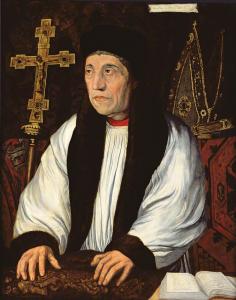
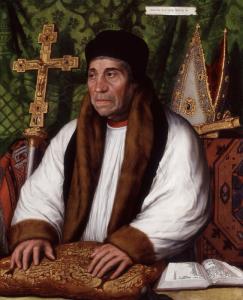
Hall's Chronicle 1522. 31 May 1522. The same day at afternoon, the two noble princes marched forward to Canterbury, where the Mayor and Aldermen received them without the town, with a solemn oration, to whom the Emperor’s Secretary answered ornately. Then the Princes with their swords borne naked before them, and the Emperour (age 22) on the right hand, entered the city of Canterbury, and so with procession were brought to Christes Church [Map] where the Archbishop (age 72) and twelve prelates mitred, received them under a canopy, and so they offered to the Sacrament, and the Emperor was brought to the Bishop’s palace, where he lay for that night, and the King lodged at St Augustine’s [Map].
In 1526 Edward Bocking became a monk serving as Cellarer of Canterbury Cathedral [Map].
After 01 Sep 1532 Thomas Cranmer (age 43), whilst staying in Mantua, received a royal letter dated 01 Sep 1532 by which he was appointed Archbishop of Canterbury; he was ordered to return to England. Cranmer's appointment, supported, if not arranged, by the Boleyn family who he subsequently supported.
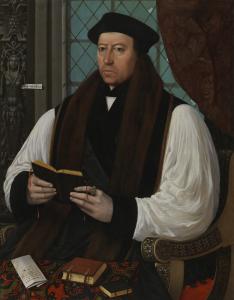
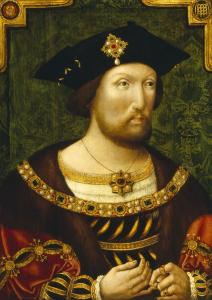
In Sep 1538 Henry VIII (age 47) ordered Thomas of Becket's shrine at Canterbury Cathedral [Map] to be destroyed. Both an attack on the Catholic Church, and a means to generate revenue; Thomas' shrine was covered in precious metals and stones. Two huges chests, each requiring six men to carry, were required to remove the treasure.
On 30 Mar 1553 Archbishop Thomas Cranmer (age 63) was consecrated as Archbishop of Canterbury at St Stephen's Chapel, Westminster Palace [Map] by Bishop John Longland, Bishop John Vesey aka Harman (age 91) and Bishop Henry Standish.
On 01 Aug 1559 Archbishop Matthew Parker (age 54) was elected Archbishop of Canterbury. He was helped by his friend Nicholas Bacon Lord Keeper (age 48).

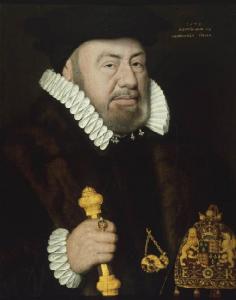
Henry Machyn's Diary. 16 Dec 1559. The xvj day of Desember was the sam man bered in sant Don stones in the est, master Cottell, that was slayne with (the) falle, and he had a sarmon, and all ys compene in ther clothyng, and a grett dener, for ther was mad mon [moan] for hym, and a dolle.... Parker (age 55) electyd byshope of Canturbere.
On 17 Dec 1559 Archbishop Matthew Parker (age 55) was consecrated Archbishop of Canterbury at Lambeth Palace [Map] by Bishop William Barlow (age 61).
In 1595 Charles Fotherby (age 46) was appointed Archdeacon of Canterbury and Prebendary of Canterbury.
In 1596 Bishop Martin Fortherby (age 36) was appointed Prebendary of Canterbury.
In Nov 1604 Richard Bancroft Archibishop Canterbury (age 60) was elected Archbishop of Canterbury.
In 1611 Archbishop George Abbott (age 48) was elected Archbishop of Canterbury.
In 1615 Charles Fotherby (age 66) was appointed Dean of Canterbury.
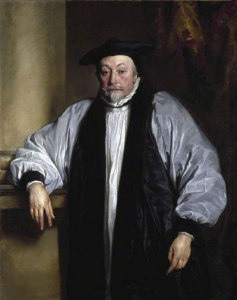
On 06 Aug 1633 Archbishop William Laud (age 59) was appointed Archbishop of Canterbury.
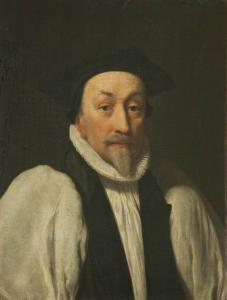
Evelyn's Diary. 12 Oct 1641. From Dover, I that night rode post to Canterbury, Kent [Map]. Here I visited the cathedral [Map], then in great splendour, those famous windows being entire, since demolished by the fanatics. The next morning, by Sittingboume [Map], I came to Rochester [Map], and thence to Gravesend [Map], where a light-horseman (as they call it) taking us in, we spent our tide as far as Greenwich [Map]. From hence, after we had a little refreshed ourselves at the College, (for by reason of the contagion then in London we balked the inns,) we came to London landing at Arundel-stairs [Map]. Here I took leave of his Lordship (age 56), and retired to my lodgings in the Middle Temple, being about two in the morning, the 14th of October.
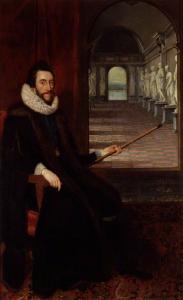
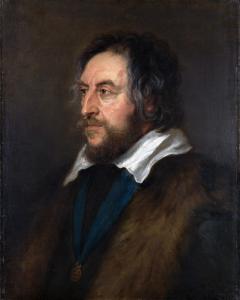
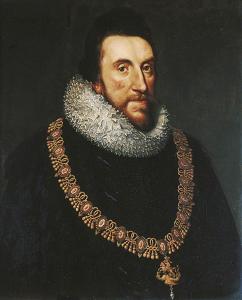
On 11 Sep 1643 Elizabeth aka Mary Fotherby (age 29) died. She was buried on 20 Sep 1643 at Canterbury Cathedral [Map].
On 03 Jan 1644 Dean Thomas Turner (age 53) was appointed Dean of Canterbury.
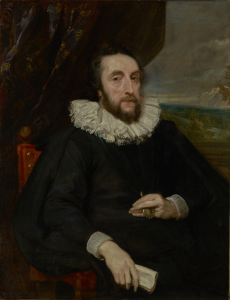
On 30 Oct 1651 Thomas Papillon Merchant (age 28) and Jane Broadnax were married at Canterbury Cathedral [Map].
In 1660 Bishop George Hall (age 47) was appointed Archdeacon of Canterbury.
In 1660, at the Restoration, Bishop Peter Gunning (age 46) was appointed Canon Canterbury.
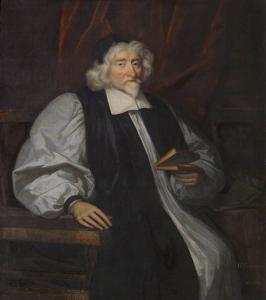
On 13 Sep 1660 Archbishop William Juxon (age 78) was elected Archbishop of Canterbury.
In 1663 Archbishop Gilbert Sheldon (age 64) was appointed Archbishop of Canterbury.
Evelyn's Diary. 31 Aug 1663. I was invited to the translation of Dr. Sheldon (age 65), Bishop of London, from that see to Canterbury, the ceremony performed at Lambeth Palace [Map]. First, went his Grace's mace bearer, steward, treasurer, comptroller, all in their gowns, and with white staves; next, the bishops in their habits, eight in number; Dr. Sweate, Dean of the Arches, Dr. Exton, Judge of the Admiralty, Sir William Merick, Judge of the Prerogative Court, with divers advocates in scarlet. After divine service in the chapel, performed with music extraordinary, Dr. French and Dr. Stradling (his Grace's chaplains) said prayers. The Archbishop in a private room looking into the chapel, the bishops, who were commissioners, went up to a table placed before the altar, and sat round it in chairs. Then Dr. Chaworth presented the commission under the broad seal to the Bishop of Winchester (age 65), and it was read by Dr. Sweate. After which, the Vicar-General went to the vestry, and brought his Grace into the chapel, his other officers marching before. He being presented to the Commissioners, was seated in a great armchair at one end of the table, when the definitive sentence was read by the Bishop of Winchester (age 65), and subscribed by all the bishops, and proclamation was three times made at the chapel door, which was then set open for any to enter, and give their exceptions; if any they had. This done, we all went to dinner in the great hall to a mighty feast. There were present all the nobility in town, the Lord Mayor of London, Sheriffs, Duke of Albemarle (age 54), etc. My Lord Archbishop did in particular most civilly welcome me. So going to visit my Lady Needham, who lived at Lambeth, I went over to London.
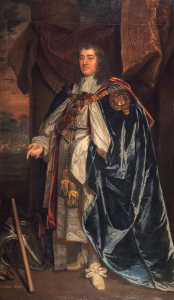
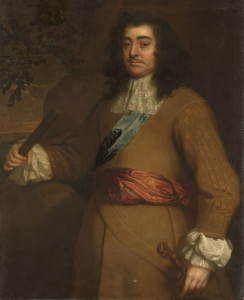
Evelyn's Diary. 05 Jan 1665. I arrived at Canterbury, Kent [Map], and went to the cathedral [Map], exceedingly well repaired since his Majesty's (age 34) return.
Evelyn's Diary. 07 Mar 1666. Dr. Sancroft (age 49), since Archbishop of Canterbury, preached before the King (age 35) about the identity and immutability of God, on Psalm cii. 27.
In 1667 Archbishop William Sancroft (age 49) was appointed Archbishop of Canterbury at the express wish of King Charles II of England Scotland and Ireland (age 36).
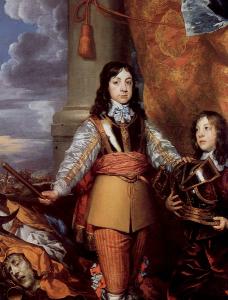
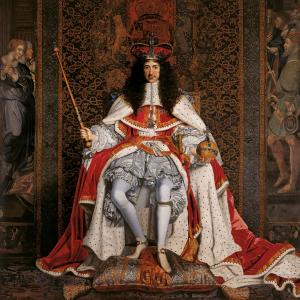
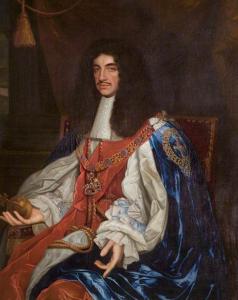
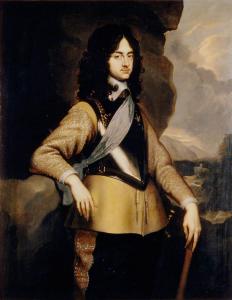
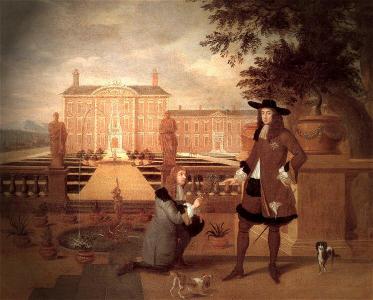
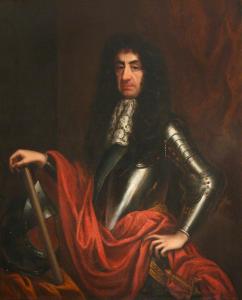
In 1670 Bishop Samuel Parker (age 30) was appointed Archdeacon of Canterbury.
In 1670 Archbishop John Tillotson (age 39) was appointed Prebendary of Canterbury.
In 1672 Archbishop John Tillotson (age 41) was appointed Dean of Canterbury.
In 1683 Charles Kirkoven 1st Earl Bellomont (age 39) died. Earl Bellomont and Baron Wotton extinct. He was buried at Canterbury Cathedral [Map]. He willed Boughton aka Bocton Place, Kent [Map] to his nephew, Charles Stanhope aka Wooton (age 7), son of his half-brother Philip Stanhope 2nd Earl Chesterfield (age 49).
In 1689 Archbishop John Sharp (age 43) was appointed Dean of Canterbury.
Evelyn's Diary. 08 Mar 1689. Dr. Tillotson (age 58), Dean of Canterbury, made an excellent discourse on Matt. v. 44, exhorting to charity and forgiveness of enemies; I suppose purposely, the new Parliament being furious about impeaching those who were obnoxious, and as their custom has ever been, going on violently, without reserve, or modification, while wise men were of opinion the most notorious offenders being named and excepted, an Act of Amnesty would be more seasonable, to pacify the minds of men in so general a discontent of the nation, especially of those who did not expect to see the government assumed without any regard to the absent King, or proving a spontaneous abdication, or that the birth of the Prince of Wales was an imposture; five of the Bishops also still refusing to take the new oath.
Evelyn's Diary. 09 Dec 1694. I had news that my dear and worthy friend, Dr. Tenison (age 58), Bishop of Lincoln, was made Archbishop of Canterbury, for which I thank God and rejoice, he being most worthy of it, for his learning, piety, and prudence.
In 1695 Archbishop Thomas Tenison (age 58) was appointed Archbishop of Canterbury.
On 21 Oct 1747 Archbishop Thomas Herring (age 54) was elected Archbishop of Canterbury.
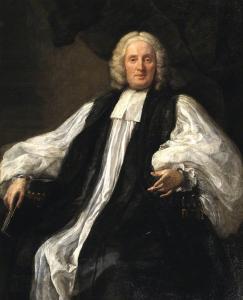
Vesta Monumenta. 1755. Plate 2.15 and 2.16. Two images from a twelfth-century manuscript, the Eadwine Psalter. The first is a plan of the monastery precinct at Christ Church, Canterbury, including Canterbury Cathedral [Map] as it stood prior to 1174. The second plate reproduces an author portrait of Eadwine of Canterbury, after whom the entire manuscript is named. Engravings by George Vertue (age 71) after drawings of the manuscript made at Cambridge in 1753 by an unknown draftsman.
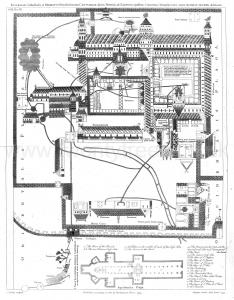
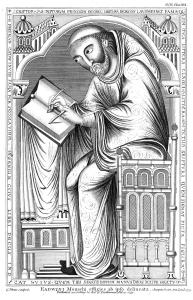
On 07 Oct 1762 Charles Abbott 1st Baron Tenterden was born to John Abbott of Centrebury. He was baptised at Canterbury Cathedral [Map] on 26 Oct 1762.
In 1768 Archbishop Frederick Cornwallis (age 54) was translated to Archbishop of Canterbury.
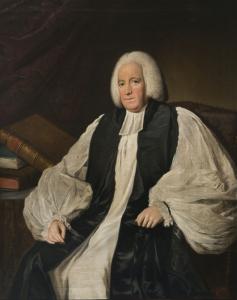
In 1790 Bishop William Buller (age 55) was translated to Dean of Canterbury.
In 1805 Archbishop Charles Manners-Sutton (age 49) was appointed Archbishop of Canterbury.
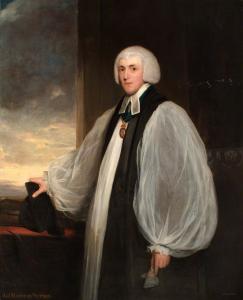
In 1828 Archbishop William Howley (age 61) was appointed Archbishop of Canterbury.
In 1862 Archibishop Charles Longley (age 67) was appointed Archbishop of Canterbury.
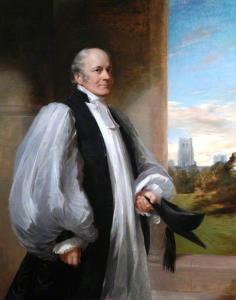
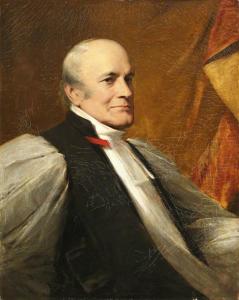
In 1883 Archibishop Edward White Benson (age 53) was appointed Archbishop of Canterbury.
On 24 Jun 1884 Bishop Adelbert John Robert Anson (age 43) was consecrated Bishop of Bishop of Qu'Appelle in Canada by Archbishop of Canterbury at St Mary at Lambeth Church, Surrey [Map].
In 1903 Bishop Randall Davidson (age 54) was elected Archbishop of Canterbury.
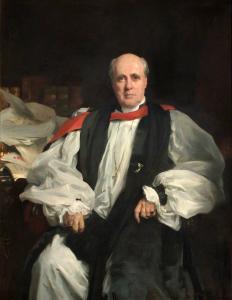
On 26 Jul 1928 Archibishop Cosmo Gordon Lang (age 63) was appointed Archbishop of Canterbury.
On 04 Dec 1928 Archibishop Cosmo Gordon Lang (age 64) was enthroned Archbishop of Canterbury.
On 12 Jan 1945 Archbishop Geoffrey Fisher (age 57) was elected Archbishop of Canterbury.
On 19 Dec 11488 Bishop Robert de Chesney was consecrated Bishop of Lincoln by Archbishop Theobald of Bec at Canterbury Cathedral [Map]. He had been ordained as a Priest the day before.
Bede. But the apostolic pope having consulted about that affair, made diligent inquiry for some one to send to be archbishop of the English churches. There was then in the Niridan monastery, which is not far from the city of Naples in Campania, an abbot, called Hadrian, by nation an African, well versed in holy writ, experienced in monastical and ecclesiastical discipline, and excellently skilled both in the Greek and Latin tongues. The pope, sending for him, commanded him to accept of the bishopric, and repair into Britain; he answered, that he was unworthy of so great a dignity, but said he could name another, whose learning and age were fitter for the episcopal office. And having proposed to the pope a certain monk, belonging to a neighbouring monastery of virgins, whose name was Andrew, he was by all that knew him judged worthy of a bishopric; but bodily infirmity prevented his being advanced to the episcopal station. Then again Hadrian was pressed to accept of the bishopric; but he desired a respite for a time, to see whether he could find another fit to be ordained bishop.
Europe, British Isles, South-East England, Kent, Canterbury Cathedral, Chapel of St Thomas Becket
Calendars. On the third day we went to another town of Flanders, not very remarkable, of the same description as Gemona, called Nieuport, 20 miles from Bruges. On the fourth day, passing through two other small towns by the side of certain rivers which form divers harbours, having the sea near at hand, we arrived at Calais, a distance of 30 miles. It is a very strong place, as I will tell on my return, and is very closely guarded by the most serene King of England, who has no other fortress than this one, and another near it. It is on the sea, and is the port of passage to the island. On that same night, two hours before daybreak, we embarked on board a middling-sized vessel, and with a pleasant south-west wind, and a calm sea, crossed from Calais to England in six hours, without trouble or inconvenience of any sort. The distance is 40 Italian miles. The island has the appearance of a fortress, the sea having advanced and given form to the cliff, producing a fine effect. It is difficult to land elsewhere than in the harbours. Having got into port we found a little town called Dover, and I inspected a certain very ancient castle [Dover Castle [Map]] — erected for the custody of the harbour — in which were some suits of armour and spears, and several sorts of weapons, in use 800 and 1,000 years ago—a very ridiculous thing. We were here supplied with horses of marvellous speed, riding post as it were, according to the custom of travellers, so that on the fifth day after my departure from the Imperial Court at Brussels, I reached Canterbury, distant 12 miles from Dover. The place is very famous by reason of the veneration for the glorious Saint Thomas, and there is a superb and magnificent shrine containing his tomb, ornamented with precious stones and sundry jewels, with so much gold that its value is inestimable; this is a singular thing, nor do I expect to see anything handsomer or more costly. From Canterbury we passed to a small town called Gravesend [Map], traversing a most beautiful country, with many hills and very pleasant, seeing many small streams, and the great river Thames which disembogues in the sea; and on the sixth day, which was the 1st of August, having ridden 20 miles, we embarked in a small boat, and came up this large river a distance exceeding 25 Italian miles, to London.
Europe, British Isles, South-East England, Kent, Canterbury Cathedral, Corona
Europe, British Isles, South-East England, Kent, Canterbury Cathedral, Corona, North Side
On 17 Nov 1558 Cardinal Reginald Pole (age 58) died at London. He was buried at North Side, Corona, Canterbury Cathedral.
Europe, British Isles, South-East England, Kent, Dean's Chapel Canterbury Cathedral
On 08 Oct 1672 Dean Thomas Turner (age 81) died. He was buried in the Dean's Chapel Canterbury Cathedral.
Europe, British Isles, South-East England, Kent, Guest House Canterbury Cathedral
On 03 Oct 1404 Joan Burghesh Baroness Dunster (age 85) died at Guest House Canterbury Cathedral. She was buried at Canterbury, Kent [Map].
Europe, British Isles, South-East England, Kent, Canterbury Cathedral, Lady Chapel
In 1619 Charles Fotherby (age 70) died. He was buried in the Lady Chapel, Canterbury Cathedral where he has a fine tomb-chest monument.
Europe, British Isles, South-East England, Kent, Canterbury Cathedral, Chapel of St Benedict Lady Chapel
After 926 the remains of Archbishop Athelm were moved to the Chapel of St Benedict Lady Chapel, Canterbury Cathedral.
Europe, British Isles, South-East England, Kent, Canterbury Cathedral, North Transept
After 926 the remains of Archbishop Athelm were moved to the North Transept, Canterbury Cathedral.
Europe, British Isles, South-East England, Kent, Canterbury Cathedral, St Michael's Chapel [Map]
On 16 Mar 1410 John Beaufort 1st Marquess Somerset and Dorset (age 37) died at Hospital of St Katharine's by the Tower Tower Hill [Map]. He was buried at St Michael's Chapel, Canterbury Cathedral [Map]. His son Henry Beaufort 2nd Earl Somerset (age 9) succeeded 2nd Earl Somerset.