

Chronicle of Abbot Ralph of Coggeshall
The Chronicle of Abbot Ralph of Coggeshall (Chronicon Anglicanum) is an indispensable medieval history that brings to life centuries of English and European affairs through the eyes of a learned Cistercian monk. Ralph of Coggeshall, abbot of the Abbey of Coggeshall in Essex in the early 13th century, continued and expanded his community’s chronicle, documenting events from the Norman Conquest of 1066 into the tumultuous reign of King Henry III. Blending eyewitness testimony, careful compilation, and the monastic commitment to record-keeping, this chronicle offers a rare narrative of political intrigue, royal power struggles, and social upheaval in England and beyond. Ralph’s work captures the reigns of pivotal figures such as Richard I and King John, providing invaluable insights into their characters, decisions, and the forces that shaped medieval rule. More than a simple annal, Chronicon Anglicanum conveys the texture of medieval life and governance, making it a rich source for scholars and readers fascinated by English history, monastic authorship, and the shaping of the medieval world.
Available at Amazon in eBook and Paperback format.
Elizabeth Wood aka Wode was born to John Wood aka Wode.
Around 1507 John Astley was born to Thomas Astley of Hilmorton and Melton Constable [aged 38] and Anne Wood aka Wode. His mother was the sister of Elizabeth Wood aka Wode who was married to James Boleyn [aged 14] who was uncle to Queen Anne Boleyn of England [aged 6]. He married (1) 1545 Katherine "Kat" Champernowne (2) after 1565 Margaret Grey and had issue.
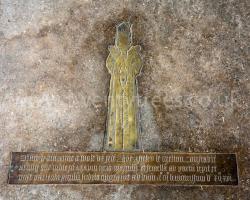
On 18th August 1512 Anne Wood aka Wode died in childbirth whilst visiting her sister Elizabeth, wife of James Boleyn [aged 19], at Blickling, Norfolk. St Andrew's Church, Blickling [Map]. Memorial brass to Anne Wood aka Wode depicted holding the two and female twins that she died giving birth to. The inscription: 'Pray for the soul of Anne Wode, the second wife of Thomas Astley of Melton Constable [aged 43], Esquire, who on the feast day of Saint Agapitus the Martyr gave birth to a male and a female child, and after the peril of childbirth, suddenly departed to the Lord in the year one thousand five hundred and twelve of Christ.' Her brass is an early example of the Norwich 6 style, produced in the workshop of the freemason and marbler William Harmer and laid in a slab of Vaudey Abbey marble. The figure is a unique composition for this workshop, showing Anne with a baby in swaddling in each arm as well as an opening in her gown beneath her girdle that marks her pregnancy and a large rosary hanging in front of her. The church in which it lies has an fine collection of other brasses.
Orate p[ro] a[n]i[m]a Anne a wode ux[oris] s[e]cu[n]de Tho[m]e Asteley de Melton Constable. Armig[eri], que in die s[an]c[t]i Agapiti Martyris masculu[m] et femella[m] ad partu[m] pep[er]it et post pariendi p[er]iculu[m] subito migravit ad Domi[num] A[nn]o M[illensim]o benignissimi Vo XIIo Xpi.
Anne Wood aka Wode: she was born to John Wood aka Wode. Before 1507 Thomas Astley of Hilmorton and Melton Constable and she were married.
Thomas Astley of Hilmorton and Melton Constable: In 1469 he was born. On 19th October 1543 he died.
In or before 1536 James Boleyn [aged 42] and Elizabeth Wood aka Wode were married.
On 2nd May 1536 Queen Anne Boleyn [aged 35] was charged with treason and accused of 'despising her marriage and entertaining malice against the King, and following daily her frail and carnal lust'. She was imprisoned in the Tower of London [Map]. Five ladies were appointed to serve Anne whilst in prison:
Margaret Dymoke [aged 36],
her aunt Anne Boleyn [aged 60],
Mary Scrope [aged 60], wife of the Lieutenant of the Tower of London William Kingston [aged 60],
her aunt by marriage Elizabeth Wood aka Wode, wife of her uncle [her husband] James Boleyn [aged 43], and
Elizabeth Chamber Baroness St John Bletso, wife of Serjeant-at-Arms Walter Stonor [aged 59].


Letters and Papers. 3rd May 1536. Otho, C. x. 225. B. M. Ellis, i Ser. II. 53. Singer's Cavendish, ii. 217. 793. Sir William Kingston [aged 60] to [Cromwell].
On my Lord of Norfolk [aged 63] and the King's Council departing from the Tower, I went before the Queen [aged 35] into her lodging. She said unto me, "Mr. Kingston, shall I go into a dungeon?" I said, "No, Madam. You shall go into the lodging you lay in at your coronation." "It is too g[ood] for me, she said; Jesu have mercy on me;" and kneeled down, weeping a [good] pace, and in the same sorrow fell into a great laughing, as she has done many times since. "She desyred me to move the Kynges hynes that she [might] have the sacarment in the closet by hyr chamber, that she my[ght pray] for mercy, for I am as clere from the company of man as for s[in as I] am clear from you, and am the Kynges trew wedded wyf. And then s[he said], Mr. Kynston, do you know wher for I am here? and I sayd, Nay. And th[en she asked me], When saw you the Kynge? and I sayd I saw hym not syns I saw [him in] the Tylte Yerde. And then, Mr. K., I pray you to telle me wher my [Lord, my fa]der [Thomas Boleyn 1st Earl Wiltshire and Ormonde [aged 59]], ys? And I told hyr I saw hym afore dyner in the Cort. O[where is m]y sweet broder [aged 33]? I sayd I left hym at York Place; and so I dyd. I [hear say, sai]d she, that I shuld be accused with iij. men; and I can say [no more but] nay, withyowt I shuld oppen my body. And ther with opynd her gown. O, No[res] [aged 54], hast thow accused me? Thow ar in the Towre with me, [and thow you and I shall] dy together; and, Marke [aged 24], thow art here to. O, my mother [aged 56], [thou wilt die with] sorow; and myche lamented my lady of Worceter [aged 34], for by c[ause that her child di]d not store in hyre body. And my wyf sayd, what shuld [be the cause? And she sai]d, for the sorow she toke for me. And then she sayd, Mr. [Kyngston, shall I die with]yowt justes? And I sayd, the porest sugett the Ky[ng hath, hath justice. And t]her with she lawed. Alle thys sayinges was yesterny[ght] .... and thys mornyng dyd talke with Mestrys Co[fyn. And she said, Mr. Norr]es Henry Norreys dyd say on Sunday last [30th April 1536] unto the Quenes am[ner that he would s]vere for the Quene that she was a gud woman. [And then said Mrs.] Cofyn [aged 36], Madam, Why shuld ther be hony seche maters [spoken of? Marry,] sayd she, I bad hym do so: for I asked hym why he [did not go through with] hys maryage [to Margaret "Madge" Shelton], and he made ansure he wold tary [a time. Then I said, Y]ou loke for ded men's showys, for yf owth ca[m to the King but good], you would loke to have me. And he sayd yf he [should have any such thought] he wold hys hed war of. And then she sayd [she could undo him if she wou]ld; and ther with thay felle yowt, bot .... and sayd on Wysson Twysday last .... that Nores cam more .. age and further ....
"Wher I was commaunded to charge the gentelwomen that gyfes thayr atendans apon the Quene, that ys to say thay shuld have now (i.e., no) commynycasion with hyr in lese my wyf [aged 60] ware present; and so I dyd hit, notwithstandynge it canot be so, for my Lady Bolen and Mestrys Cofyn lyes on the Quenes palet, and I and my wyf at the dore with yowt, so at thay must nedes talke at be within; bot I have every thynge told me by Mestrys Cofyn that she thinkes met for you to know, and tother ij. gentelweymen lyes withyowt me, and as I may knowe t[he] Kynges plesure in the premysses I shalle folow. From the Towre, thys morny[ng].
"Sir, syns the makynge of thys letter the Quene spake of Wes[ton [Francis Weston [aged 25]], saying that she] had spoke to hym bycause he did love hyr kynswoman [Mrs. Skelton, and] sayd he loved not hys wyf [aged 22], and he made ansere to hyr [again that h]e loved wone in hyr howse better then them bothe. And [the Queen said, Who is] that? It ys yourself. And then she defyed hym, as [she said to me]. William Kyngston."
Hol.

Letters and Papers. Around 5th May 1536. Otho, C. x. 222. B. M. Singer's Cavendish, ii. 220. Ellis, I. Ser. ii. 56. 798. Sir William Kyngston [aged 60] to Cromwell.
"After your departynge yesterday Greneway, gentelman yssher, cam to .... Mr. Caro and Master Bryan commaunded hym in the Kynges name to my .... Ratchfort [aged 33] from my Lady hys wyf [aged 31] and the message was now more .... se how he dyd and also she wold humly sut unto the Kynges hy[nes] .... for hyr husband, and so he gaf hyr thankes and desyred me to kno .... tyme he shuld cum affore the Kynges consell, for I thynk I .... cum forthe tylle I cum to my jogement, wepynge very .... I departed from hym, and when I cam to the chambre the .... of me and sent for me, and sayd, I here say my Lord my .... here; it ys trowth, sayd I. I am very glad, sayd s[he] .... bothe be so ny to gether, and I showed hyr here was .... Weston [aged 25] and Brerton, and she made very gud contenans .... I also sayd Mr. Page and Wyet [aged 15] wase mo then she sayd he ha .... one hys fyst tother day and ys here now bot ma .... I shalle desyre you to bayre a letter from me .... [to Master] Secretory. And then I sayd, Madam, telle it me by [word of mouth, and I] wille do it. And so gaf me thankes, sayinge I ha[ve much marvel] that the Kynges conselle commes not to me and thys .... [she] sayd we shuld have now rayne tyll she ware [delivered out] of the Towre. I pray you it may be shortly, by [cause, said I, of the] fayre wether; you know what I mayne. The Que[ne said unto me that same] nyght that the Kyng wyst what he dyd w[hen he put such] ij. abowt hyr as my Lady Boleyn and Mestres [Cofyn; for] [Margaret Dymoke aka Mistress Coffin [aged 36]] thay cowd tell her now thynge of my [Lord her father [aged 59], nor] nothynge ellys, bot she defyed them alle. [But then upon this my Lady Boleyn [aged 35]] sayd to hyr, Seche desyre as you have h[ad to such tales] hase browthe you to thys, and then sayd [Mrs. Stoner, Mark [aged 24]] ys the worst cherysshe of hony m[an in the house, for he w]ayres yernes. She sayd that was [because he was no gen]telman; bot he wase never in [my chamber but at Winchester, and there] she sent for hym to pl[ay on the virginals, for there my] logynge wa[s above the King's] .... for I never spake with hym syns bot upon Saterday before Mayday; and then I fond hym standyng in the ronde wyndo in my chambre of presens. And I asked why he wase so sad, and he ansured and sayd it was now mater; and then she sayd, You may not loke to have me speke to you as I shuld do to a nobulle man by cause you be an inferor [pe]rson. No, no, madam, a loke sufficed me, and thus fare you welle. [Sh]e hathe asked my wyf whether hony body makes thayr beddes, [and m]y wyf [aged 60] ansured and sayd, Nay, I warant you; then she say[d tha]y myght make balettes well now, bot ther ys non bot .... de that can do it. Yese, sayd my wyf, Master Wyett by .... sayd trew .... my Lorde my broder wille dy .... ne I am sure thys was as .... tt downe to dener thys day.
In 1561 [her husband] James Boleyn [aged 68] died. His great-nephew Edward Clere [aged 24], grandson of James' sister Alice Boleyn, inherited the estate at Blickling, Norfolk. Curiously Edward Clere's mother was Anne Tyrrell, grand-daughter of James Tyrrell who had been executed in 1502, and who had reportedly confessed to the murder of the Princes in the Tower.
He was buried at St Andrew's Church, Blickling [Map] on 6th September 1561. In his will he left he great-niece Queen Elizabeth I of England and Ireland [aged 27] a basin and gilt ewer and "my written book of the revelations of Saint Bridget".
The History of the Reformation Volume 1 Book III. The surprise and confusion she was in raised fits of the mother, which those about her did not seem to understand: but three or four letters, which were writ by sir William Kingston to secretary Cromwell concerning her, to court, say, that she was at some times very devout, and cried much; and of a sudden would burst out in laughter: which are evident signs of vapours. When she heard that those, who were accused with her, were sent to the Tower, she then concluded herself lost; and said, she should be sent thither next; and talked idly, saying, "that if her bishops were about the king, they would all speak for her.She also said, "that she would be a saint in heaven, for she had done many good deeds; and that there should be no rain, but heavy judgments on the land, for what they were now doing to her.Her enemies had now gone too far not to destroy her. Next day she was carried to the Tower, and some lords, that met her on the river, declared to her what her offences were. Upon which she made deep protestations of her innocence, and begged leave to see the king; but that was not to be expected. When she was carried into the Tower, "she fell down on her knees, and prayed God to help her, as she was not guilty of the thing for which she was accused.That same day the king wrote to Cranmer to come to Lambeth; but ordered him not to come into his presence: which was procured by the queen's enemies, who took care, that one who had such credit with the king should not come at him till they had fully persuaded him that she was guilty. Her uncle's lady, the lady Boleyn, was appointed to lie in the chamber with her, which she took very ill; for, upon what reason I know not, she had been in very ill terms with her. She engaged her into much discourse, and studied to draw confessions from her. Whatsoever she laid was presently sent to the court: and a woman full of vapours was like enough to tell every thing that was true, with a great deal more; for persons in that condition not only have no command of themselves, but are apt to say any thing that comes in their fancy.