

Jean de Waurin's Chronicle of England Volume 6 Books 3-6: The Wars of the Roses
Jean de Waurin was a French Chronicler, from the Artois region, who was born around 1400, and died around 1474. Waurin’s Chronicle of England, Volume 6, covering the period 1450 to 1471, from which we have selected and translated Chapters relating to the Wars of the Roses, provides a vivid, original, contemporary description of key events some of which he witnessed first-hand, some of which he was told by the key people involved with whom Waurin had a personal relationship.
Available at Amazon in eBook and Paperback format.
Archdeacon is in Lords Spritual England.
In 1665 John Palmer [aged 53] was appointed Archdeacon of Northamptonshire.
In 1892 Hemming Robeson was appointed Archdeacon Bristol which post he held until 1904.
Before 1463 Archdeacon George Neville was appointed Archdeacon Carlisle which post he held until 1465.
by 1222 Bishop Ralph de Maidstone was appointed Archdeacon Chester.
In 1556 George Carew [aged 58] was appointed Archdeacon Exeter.
On 24th October 1676 Edward Lake [aged 34] was appointed Archdeacon Exeter.
Before 16th October 1486 Bishop Robert Morton [aged 51] was appointed Archdeacon Winchester.
In 1807 Thomas Grey 4th Baron Walsingham [aged 28] was appointed Archdeacon Winchester.
In 1819 Augustus George Legge [aged 45] was appointed Archdeacon Winchester.
Before March 1163 Bishop Geoffrey Ridel was appointed Archdeacon of Canterbury.
In 1595 Charles Fotherby [aged 46] was appointed Archdeacon of Canterbury and Prebendary of Canterbury.
The History of William Marshal was commissioned by his son shortly after William’s death in 1219 to celebrate the Marshal’s remarkable life; it is an authentic, contemporary voice. The manuscript was discovered in 1861 by French historian Paul Meyer. Meyer published the manuscript in its original Anglo-French in 1891 in two books. This book is a line by line translation of the first of Meyer’s books; lines 1-10152. Book 1 of the History begins in 1139 and ends in 1194. It describes the events of the Anarchy, the role of William’s father John, John’s marriages, William’s childhood, his role as a hostage at the siege of Newbury, his injury and imprisonment in Poitou where he met Eleanor of Aquitaine and his life as a knight errant. It continues with the accusation against him of an improper relationship with Margaret, wife of Henry the Young King, his exile, and return, the death of Henry the Young King, the rebellion of Richard, the future King Richard I, war with France, the death of King Henry II, and the capture of King Richard, and the rebellion of John, the future King John. It ends with the release of King Richard and the death of John Marshal.
Available at Amazon in eBook and Paperback format.
In 1660 Bishop George Hall [aged 47] was appointed Archdeacon of Canterbury.
In 1670 Bishop Samuel Parker [aged 30] was appointed Archdeacon of Canterbury.
In or before 1173 Seffrid was appointed Archdeacon of Chichester.
On 22nd January 1554 Dean Hugh Weston [aged 49] was collated Archdeacon of Colchester.
In 1517 Bishop Richard Sampson was appointed Archdeacon of Cornwall.
On 17th October 1547 Dean Hugh Weston [aged 42] was appointed Archdeacon of Cornwall.
In 1715 Lancelot Blackburne [aged 56] was appointed Archdeacon of Cornwall.
Before 29th December 1852 Reverend Francis Hodgson [aged 71] was appointed Archdeacon of Derby.
In 1891 Thomas Henry Freer [aged 58] was appointed Archdeacon of Derby.
Around 1371 Archbishop Alexander Neville [aged 30] was appointed Archdeacon of Durham.
Chronicle of Walter of Guisborough
A canon regular of the Augustinian Guisborough Priory, Yorkshire, formerly known as The Chronicle of Walter of Hemingburgh, describes the period from 1066 to 1346. Before 1274 the Chronicle is based on other works. Thereafter, the Chronicle is original, and a remarkable source for the events of the time. This book provides a translation of the Chronicle from that date. The Latin source for our translation is the 1849 work edited by Hans Claude Hamilton. Hamilton, in his preface, says: 'In the present work we behold perhaps one of the finest samples of our early chronicles, both as regards the value of the events recorded, and the correctness with which they are detailed; Nor will the pleasing style of composition be lightly passed over by those capable of seeing reflected from it the tokens of a vigorous and cultivated mind, and a favourable specimen of the learning and taste of the age in which it was framed.'
Available at Amazon in eBook and Paperback format.
In 1691 Dean Robert Booth [aged 29] was appointed Archdeacon of Durham.
Before 16th October 1486 Bishop Robert Morton [aged 51] was appointed Archdeacon of Gloucester Cathedral.
In 1503 Bishop Thomas Ruthall [aged 31] was appointed Archdeacon of Gloucester Cathedral, Dean of Salisbury and Chancellor of Cambridge.
In 1539 John Bell was appointed Archdeacon of Gloucester Cathedral.
In 1786 Archdeacon Andrew Burnaby [aged 53] was appointed Archdeacon of Leicester.
Shortly after 17th April 1280 Richard de Swinfield was appointed Archdeacon of London.
By December 1559 Archdeacon John Mullins [aged 39] was appointed Archdeacon of London and Canon at St Paul's Cathedral [Map].
In 1770 Archdeacon Anthony Hamilton [aged 31] was appointed Archdeacon of London.
In 1314 Robert de Baldock was appointed Archdeacon of Middlesex.
On 30th August 1691 Bishop Robert Grove [aged 57] was appointed Archdeacon of Middlesex.
In 1842 Bishop John Lonsdale [aged 53] was appointed Archdeacon of Middlesex.
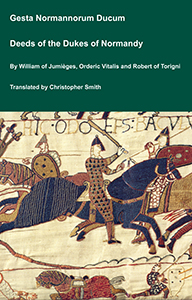
The Deeds of the Dukes of Normandy
The Gesta Normannorum Ducum [The Deeds of the Dukes of Normandy] is a landmark medieval chronicle tracing the rise and fall of the Norman dynasty from its early roots through the pivotal events surrounding the Norman Conquest of England. Originally penned in Latin by the monk William of Jumièges shortly before 1060 and later expanded at the behest of William the Conqueror, the work chronicles the deeds, politics, battles, and leadership of the Norman dukes, especially William’s own claim to the English throne. The narrative combines earlier historical sources with firsthand information and oral testimony to present an authoritative account of Normandy’s transformation from a Viking settlement into one of medieval Europe’s most powerful realms. William’s history emphasizes the legitimacy, military prowess, and governance of the Norman line, framing their expansion, including the conquest of England, as both divinely sanctioned and noble in purpose. Later chroniclers such as Orderic Vitalis and Robert of Torigni continued the history, extending the coverage into the 12th century, providing broader context on ducal rule and its impact. Today this classic work remains a foundational source for understanding Norman identity, medieval statesmanship, and the historical forces that reshaped England and Western Europe between 800AD and 1100AD.
Available at Amazon in eBook and Paperback format.
In 1464 William Say was appointed Archdeacon of Northampton which office he held for life.
On 30th October 1676 Archdeacon William Turner [aged 29] was appointed Archdeacon of Northumberland which office he held until his death in 1685.
On 27th February 1723 Archdeacon Thomas Sharp [aged 29] was collated Archdeacon of Northumberland.
Before 1792 Archdeacon John Sharp [aged 68] was appointed Archdeacon of Northumberland.
On 9th May 1812 Archdeacon Reynold Gideon Bouyer [aged 70] was collated to Archdeacon of Northumberland.
In 1865 George Hans Hamilton [aged 41] was appointed Archdeacon of Northumberland.
In 1200 Bishop Geoffrey Burgh [aged 20] was appointed Archdeacon of Norwich.
In 1385 Bishop Richard Mitford was appointed Archdeacon of Norwich which he held until 1390.
In 1500 Christopher Urswick [aged 52] was appointed Archdeacon of Norwich.
Before March 1870 Venerable Charles Nourse Wodehouse [aged 79] was appointed Archdeacon of Norwich.
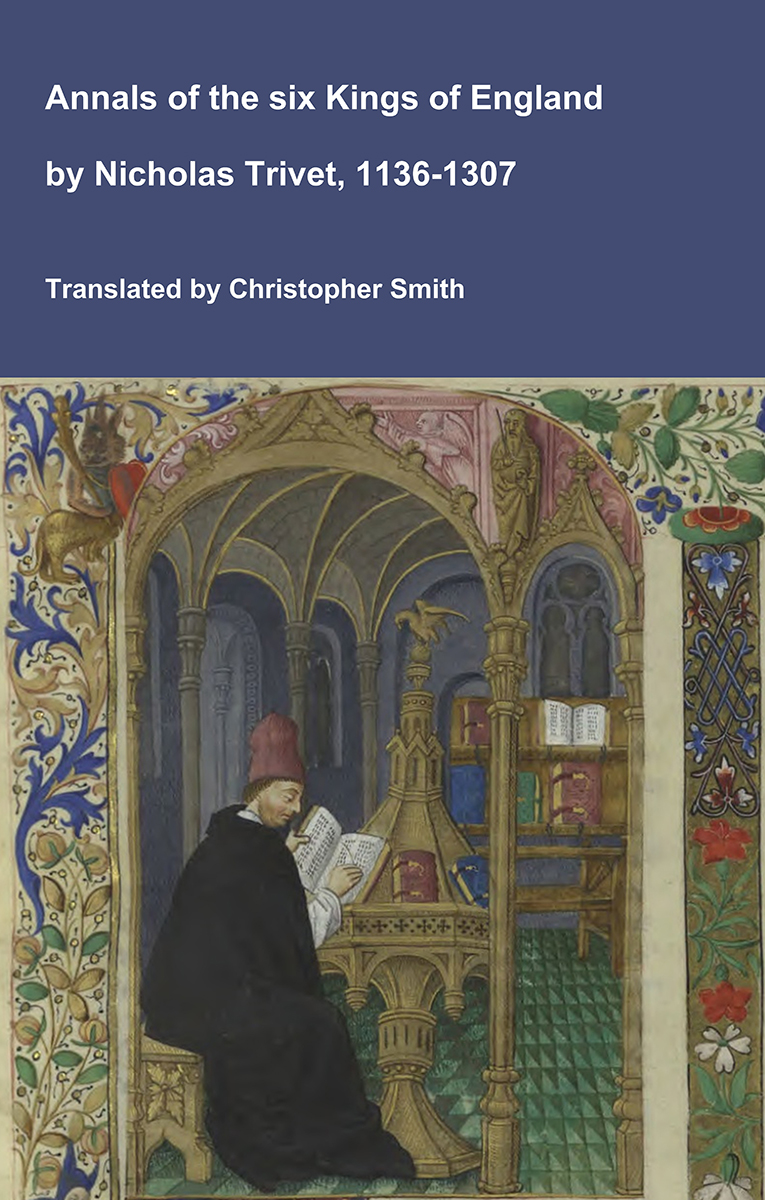
Annals of the six Kings of England by Nicholas Trivet
Translation of the Annals of the Six Kings of England by that traces the rise and rule of the Angevin aka Plantagenet dynasty from the mid-12th to early 14th century. Written by the Dominican scholar Nicholas Trivet, the work offers a vivid account of English history from the reign of King Stephen through to the death of King Edward I, blending political narrative with moral reflection. Covering the reigns of six monarchs—from Stephen to Edward I—the chronicle explores royal authority, rebellion, war, and the shifting balance between crown, church, and nobility. Trivet provides detailed insight into defining moments such as baronial conflicts, Anglo-French rivalry, and the consolidation of royal power under Edward I, whose reign he describes with particular immediacy. The Annals combines careful year-by-year reporting with thoughtful interpretation, presenting history not merely as a sequence of events but as a moral and political lesson. Ideal for readers interested in medieval history, kingship, and the origins of the English state, this chronicle remains a valuable and accessible window into the turbulent world of the Plantagenet kings.
Available at Amazon in eBook and Paperback format.
In 1493 Bishop Richard Mayew [aged 53] was appointed Archdeacon of Oxford.
In 1504 Christopher Urswick [aged 56] was appointed Archdeacon of Oxford.
Reverend Thomas Raven was appointed Archdeacon of Preston.
In 1660 Archdeacon John Lee was appointed Archdeacon of Rochester.
In 1419 Archbishop John Stafford was appointed Archdeacon of Salisbury which position he held until 1423.
In 1438 Adam Moleyns was appointed Archdeacon of Salisbury.
On 22nd May 1766 Archdeacon William Whitworth was appointed Archdeacon of Sarum which office he held for life.
On 9th August 1683 Archdeacon Edward Carter was appointed Archdeacon of St Albans.
In 1576 Bishop John Still [aged 42] was appointed Archdeacon of Sudbury which position he held until 1593.