

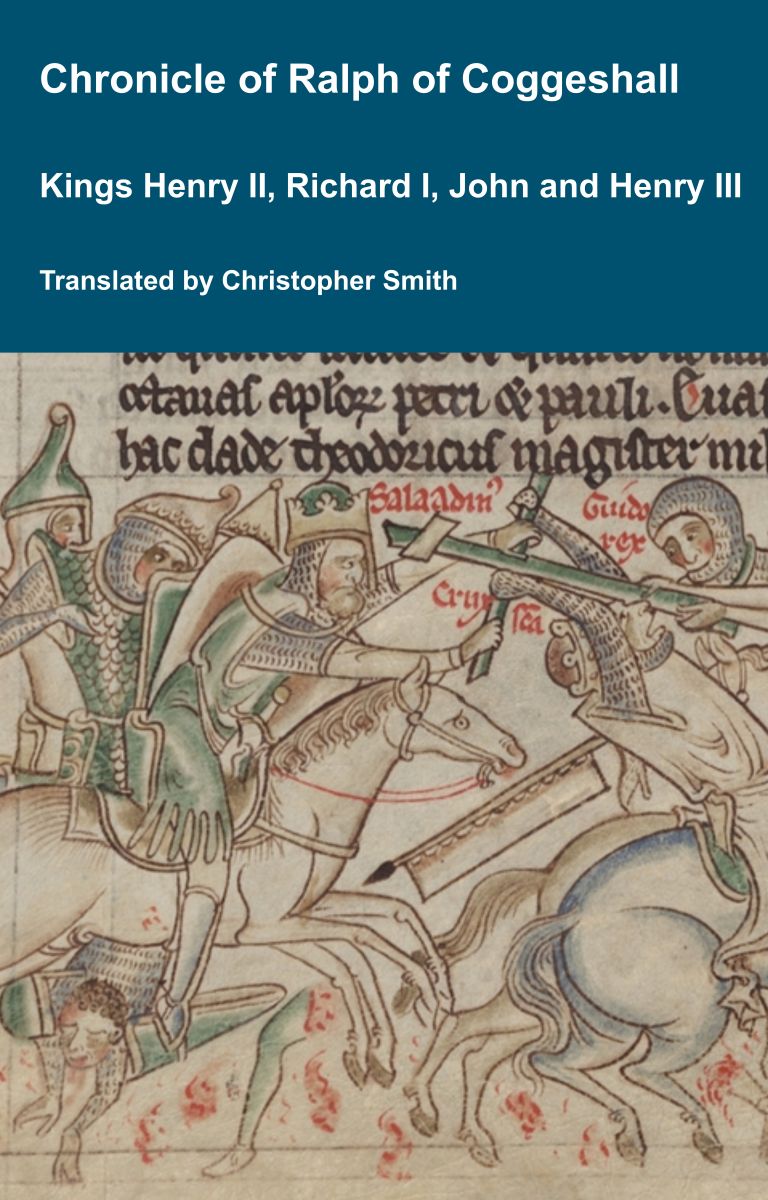
Chronicle of Abbot Ralph of Coggeshall
The Chronicle of Abbot Ralph of Coggeshall (Chronicon Anglicanum) is an indispensable medieval history that brings to life centuries of English and European affairs through the eyes of a learned Cistercian monk. Ralph of Coggeshall, abbot of the Abbey of Coggeshall in Essex in the early 13th century, continued and expanded his community’s chronicle, documenting events from the Norman Conquest of 1066 into the tumultuous reign of King Henry III. Blending eyewitness testimony, careful compilation, and the monastic commitment to record-keeping, this chronicle offers a rare narrative of political intrigue, royal power struggles, and social upheaval in England and beyond. Ralph’s work captures the reigns of pivotal figures such as Richard I and King John, providing invaluable insights into their characters, decisions, and the forces that shaped medieval rule. More than a simple annal, Chronicon Anglicanum conveys the texture of medieval life and governance, making it a rich source for scholars and readers fascinated by English history, monastic authorship, and the shaping of the medieval world.
Available at Amazon in eBook and Paperback format.
Master is in Royal Household.
In 1528 William Holles [aged 57] was appointed Master of the Company of Mercers.
In 1620 Robert Bateman [aged 58] was elected Master of the Worshipful Company of Skinners.
From 1622 to 1623 Edward Barkham [aged 52] was Master of the Worshipful Company of Drapers.
On 8th February 1635 Bishop John Cosins [aged 40] was appointed Master of Peterhouse College, Cambridge University [Map].
In 1642 Thomas Lawley 1st Baronet [aged 61] was elected Master of the Worshipful Company of Drapers.
In 1654 John Frederick [aged 52] was elected Master of the Worshipful Company of Barber Surgeons.
In 1655 Richard Hill of Lime Street was appointed Master of the Worshipful Company of Cordwainers.
In 1656 Alderman William Barker was elected Master of the Worshipful Company of Mercers.
In 1658 John Frederick [aged 56] was elected Master of the Worshipful Company of Barber Surgeons.
Chronicle of Walter of Guisborough
A canon regular of the Augustinian Guisborough Priory, Yorkshire, formerly known as The Chronicle of Walter of Hemingburgh, describes the period from 1066 to 1346. Before 1274 the Chronicle is based on other works. Thereafter, the Chronicle is original, and a remarkable source for the events of the time. This book provides a translation of the Chronicle from that date. The Latin source for our translation is the 1849 work edited by Hans Claude Hamilton. Hamilton, in his preface, says: 'In the present work we behold perhaps one of the finest samples of our early chronicles, both as regards the value of the events recorded, and the correctness with which they are detailed; Nor will the pleasing style of composition be lightly passed over by those capable of seeing reflected from it the tokens of a vigorous and cultivated mind, and a favourable specimen of the learning and taste of the age in which it was framed.'
Available at Amazon in eBook and Paperback format.
In 1658 Anthony Bateman [aged 42] was elected Master of the Worshipful Company of Skinners.
In 1662 Alderman William Crow Upholster [aged 45] was elected Master of the Worshipful Company of Skinners.
In 1665 Arthur Ingram [aged 48] was appointed Master of the Worshipful Company of Haberdashers.
In 1672 Alderman William Barker was elected Master of the Worshipful Company of Mercers.
In 1679 Alderman William Hooker [aged 67] was elected Master of the Worshipful Company of Grocers.
In 1683 Alderman William Hooker [aged 71] was elected Master of St Thomas' Hospital.
Before 1693 John Cutler 1st Baronet [aged 89] was appointed Master of the Worshipful Company of Grocers four times.
In 1709 Thomas Stayner [aged 44] was elected Master of the Worshipful Company of Masons.
In 1710 Samuel Garrard 4th Baronet [aged 60] was elected Master of the Worshipful Company of Grocers.
On 19th June 1716 John Eyles 2nd Baronet [aged 33] was appointed Master of the Worshipful Company of Haberdashers and Alderman of Vintry.
Chronicle of a Bourgeois of Valenciennes
Récits d’un bourgeois de Valenciennes aka The Chronicle of a Bourgeois of Valenciennes is a vivid 14th-century vernacular chronicle written by an anonymous urban chronicler from Valenciennes in the County of Hainaut. It survives in a manuscript that describes local and regional history from about 1253 to 1366, blending chronology, narrative episodes, and eyewitness-style accounts of political, military, and social events in medieval France, Flanders, and the Low Countries. The work begins with a chronological framework of events affecting Valenciennes and its region under rulers such as King Philip VI of France and the shifting allegiances of local nobility. It includes accounts of conflicts, sieges, diplomatic manoeuvres, and the impact of broader struggles like the Hundred Years’ War on urban life in Hainaut. Written from the perspective of a burgher (bourgeois) rather than a monastery or royal court, the chronicle offers a rare lay viewpoint on high politics and warfare, reflecting how merchants, townspeople, and civic institutions experienced the turbulence of the 13th and 14th centuries. Its narrative style combines straightforward reporting of events with moral and civic observations, making it a valuable source for readers interested in medieval urban society, regional politics, and the lived experience of war and governance in pre-modern Europe.
Available at Amazon in eBook and Paperback format.
In 1717 Joseph Eyles [aged 27] was elected Master of the Worshipful Company of Haberdashers which position he held until 1721.
In 1719 Edward Stanton [aged 38] was appointed Master of the Worshipful Company of Masons.
In December 1558 John Astley [aged 51] was appointed Master of the Jewel House. Katherine "Kat" Champernowne [aged 56] was appointed Chief Lady of the Bedchamber.

In 1660 Gilbert Talbot [aged 54] was appointed Master of the Jewel House.
John Evelyn's Diary. 21st August 1662. I was admitted and then sworn one of the Council of the Royal Society, being nominated in his Majesty's [aged 32] original grant to be of this Council for the regulation of the Society, and making laws and statutes conducible to its establishment and progress, for which we now set apart every Wednesday morning till they were all finished. Lord Viscount Brouncker [aged 51] (that excellent mathematician) was also by his Majesty, our founder, nominated our first President. The King gave us the arms of England to be borne in a canton in our arms, and sent us a mace of silver gilt, of the same fashion and size as those carried before his Majesty, to be borne before our president on meeting days. It was brought by Sir Gilbert Talbot [aged 56], master of his Majesty's jewel house.


In 1690 Francis Lawley 2nd Baronet [aged 60] was appointed Master of the Jewel House.
In 1538 John Williams 1st Baron Williams [aged 38] was appointed Master of the Jewels which position he held until 1544.

On 21st June 1603 Edward Carey [aged 63] and his son Henry Carey 1st Viscount Falkland [aged 28] were jointly appointed Master of the Jewels.
In 1465 Thomas Vaughan [aged 55] was appointed Master of the King's Jewels.
On 28th July 1608 Maximilian Colt [aged 33] was nominated the king's Master Carver.
In 1514 Thomas More [aged 35] was appointed Master of Requests.


In 1536 Robert Southwell [aged 30] was appointed Master of Requests.
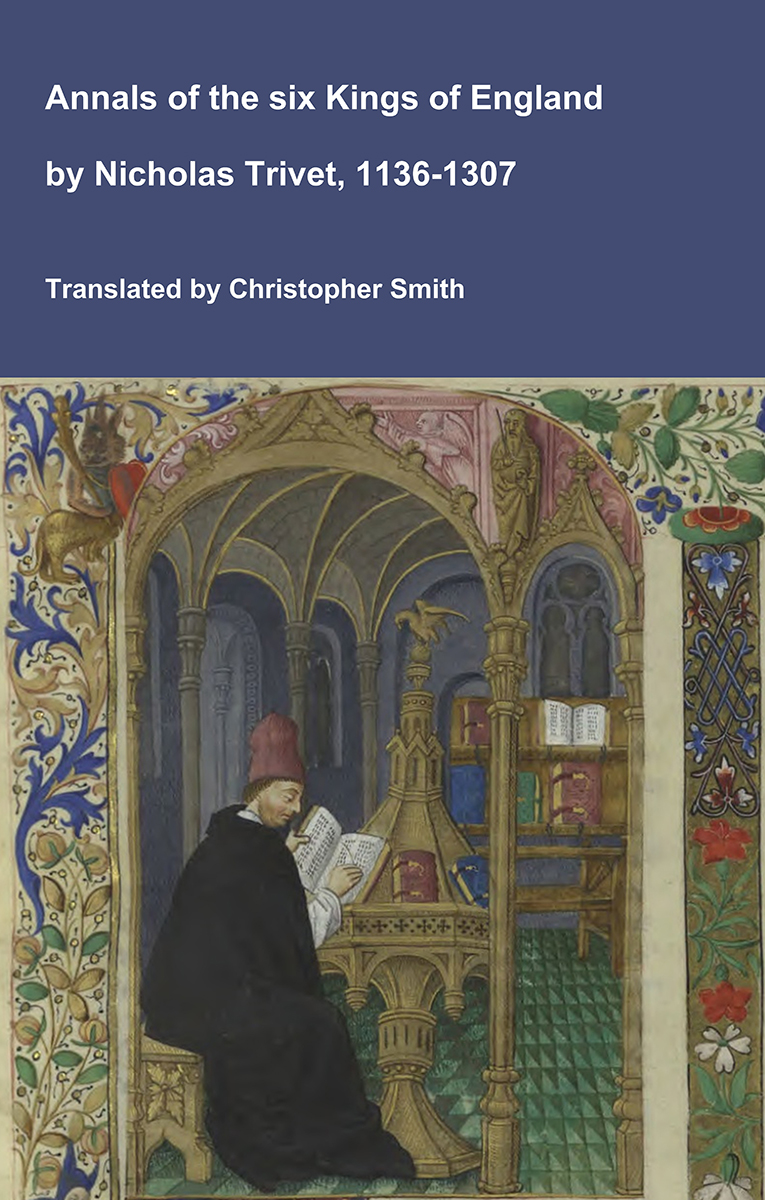
Annals of the six Kings of England by Nicholas Trivet
Translation of the Annals of the Six Kings of England by that traces the rise and rule of the Angevin aka Plantagenet dynasty from the mid-12th to early 14th century. Written by the Dominican scholar Nicholas Trivet, the work offers a vivid account of English history from the reign of King Stephen through to the death of King Edward I, blending political narrative with moral reflection. Covering the reigns of six monarchs—from Stephen to Edward I—the chronicle explores royal authority, rebellion, war, and the shifting balance between crown, church, and nobility. Trivet provides detailed insight into defining moments such as baronial conflicts, Anglo-French rivalry, and the consolidation of royal power under Edward I, whose reign he describes with particular immediacy. The Annals combines careful year-by-year reporting with thoughtful interpretation, presenting history not merely as a sequence of events but as a moral and political lesson. Ideal for readers interested in medieval history, kingship, and the origins of the English state, this chronicle remains a valuable and accessible window into the turbulent world of the Plantagenet kings.
Available at Amazon in eBook and Paperback format.
In 1548 William Cecil 1st Baron Burghley [aged 27] was appointed Master of Requests.


In 1550 John Cock [aged 44] was appointed Master of Requests which position he held until 1553.
Around 1551 John Mason [aged 48] was appointed Master of Requests which position he held until 1558.
In 1618 Ralph Freeman [aged 28] was appointed Master of Requests.

In 1622 John Coke [aged 58] was appointed Master of Requests.
John Evelyn's Diary. 28th February 1676. [Note. Date adjusted to 28 Feb since original entry stated 29 Feb when it isn't a leap year.] I dined with Mr. Povey [aged 62], one of the Masters of Requests, a nice contriver of all elegancies, and exceedingly formal. Supped with Sir J. Williamson, where were of our Society Mr. Robert Boyle [aged 49], Sir Christopher Wren [aged 52], Sir William Petty [aged 52], Dr. Holden, subdean of his Majesty's [aged 45] Chapel, Sir James Shaen, Dr. Whistler, and our Secretary, Mr. Oldenburg [aged 57].


John Stanhope 1st Baron Stanhope was appointed Master of The King's Posts.

The London Gazette 22106. Master of the Horse's Office, February 26, 1858. The Queen has been graciously pleased to appoint the Right Honourable John William [aged 46], Earl of Sandwich, to be Master of Her Majesty's Buck Hounds, in the room of the Right Honourable John George Brabazon [aged 48], Earl of Bessborough, resigned.
Adeline Horsey Recollections. The wicked Countess and her lover lived at Cliveden [Map] - "the bower of wanton Shrewsbury and of love" - and her spirit is supposed to haunt the beautiful riverside retreat, but I am thankful to say she has never appeared in the old home of her innocent girlhood. Her portrait by Sir Peter Lely hangs in the White Hall at Deene, and is a fine example of the artist's well-known very décolleté style of "robes loosely flowing, hair as free", with the usual mise en scène of a beauty of Charles II's time. The third Earl of Cardigan was Master of the Buckhounds to Queen Anne; he married a daughter of the Earl of Ailesbury, and their fourth son inherited the Ailesbury title and estates. Lord Cardigan's eldest son married the heiress of the Duke of Montagu in 17661. He was a friend of Horace Walpole, the influence of whose pseudo-Gothic tastes may still be seen in the south front of Deene [Map], built at this time, and which now incorporates the great ball-room built for me by my dear husband.
Note 1. Married on 7th July 1730. He was created Duke in 1766.
The London Gazette 25485. Master of thee Horse's Office, Royal Mews, Pimlico, June 27, 1885. Her Majesty has been graciously pleased to appoint the Right Honourable John Henry Delapoer [aged 41], Marquis of Waterford, K.P., to be Master of Her Majesty's Buckhounds, in the room of the Right Honourable Richard Edmund St. Lawrance [aged 56], Earl of Cork and Orrery, K.P., resigned.
The London Gazette 26321. Master of the Horse's Office, Royal Mews, Pimlico, August 25, 1892.
HER Majesty has been graciously pleased to appoint the Right Honourable Thomas, Baron Ribblesdale [aged 37], to be Master of Her Majesty's Buckhounds, in the room of the Right Honourable George William, Earl of Coventry [aged 54], resigned.
Jean de Waurin's Chronicle of England Volume 6 Books 3-6: The Wars of the Roses
Jean de Waurin was a French Chronicler, from the Artois region, who was born around 1400, and died around 1474. Waurin’s Chronicle of England, Volume 6, covering the period 1450 to 1471, from which we have selected and translated Chapters relating to the Wars of the Roses, provides a vivid, original, contemporary description of key events some of which he witnessed first-hand, some of which he was told by the key people involved with whom Waurin had a personal relationship.
Available at Amazon in eBook and Paperback format.
The London Gazette 27243. Master of the Horse's Office, Royal Mews, BucKingham Palace, November 1, 1900.
HER Majesty has been preciously pleased to appoint Honorary Colonel the Right Honourable Charles Compton William, Baron Chesham, to be the Master of Her Majesty's Buckhounds, in the room of the Right Honourable George William, Earl of Coventry [aged 62], resigned.
Her Majesty has also been graciously pleased to appoint, provisionally, the Right Honourable Victor Albert Francis Charles, Baron Churchill [aged 36], to act as Master of Her Majesty's Buckhounds during the absence in South Africa of Honorary Colonel the Right Honourable Baron Chesham.


In 1622 William Feilding 1st Earl Denbigh [aged 35] was appointed Master of the Great Wardrobe to King James I of England and Ireland and VI of Scotland [aged 55].


In 1726 Charles Beauclerk 2nd Duke St Albans [aged 29] was appointed Master of the Hawks.
In 1516 Edward Neville [aged 45] was appointed Master of the Hounds to King Henry VIII of England and Ireland [aged 24].
John Evelyn's Diary. 12th February 1683. He gave to the Trinity Corporation that land in Deptford [Map] on which are built those almshouses for twenty-four widows of emerited seamen. He was born the famous year of the Gunpowder Treason, in 1605, and being the last [male] of his family, left my wife [aged 48], his only daughter, heir. His grandfather, Sir Richard Browne, was the great instrument under the great Earl of Leicester (favorite to Queen Elizabeth) in his government of the Netherland. He was Master of the Household to King James, and Cofferer; I think was the first who regulated the compositions through England for the King's [aged 52] household, provisions, progresses,49 etc., which was so high a service, and so grateful to the whole nation, that he had acknowledgments and public thanks sent him from all the counties; he died by the rupture of a vein in a vehement speech he made about the compositions in a Parliament of King James. By his mother's side he was a Gunson, Treasurer of the Navy in the reigns of Henry VIII., Queen Mary, and Queen Elizabeth, and, as by his large pedigree appears, related to divers of the English nobility. Thus ended this honorable person, after so many changes and tossings to and fro, in the same house where he was born. "Lord teach us so to number our days, that we may apply our hearts unto wisdom!".


In 1712 William Pole 4th Baronet [aged 34] was appointed Master of the Household.
In April 1620 Henry Mildmay [aged 27] was appointed Master of the Jewel Office.
Patent Rolls. 7th May 1461. Middleham Castle [Map]. The like (Grant for life) to the said earl [aged 32], the office of Master of the King's Mews and Falcons and a messuage called 'le Mewehous' at Charryng by Westminster, co Middlesex, with all houses and other profits pertaining to the same, in the same manner as John, duke of Bedford, deceased; and appointment of him to take the king's right prises of falcons, goshawks, sakers, sakrets, lanners, lannerets and ger-falcons sold within the realm, paying the accustomed price viz 20s for each tercel of goshawk, saker, lanner or lanneret. By other latters patent.
In 1545 John Mason [aged 42] was appointed Master of the Posts.
John Evelyn's Diary. 23rd July 1678. Mr. Godolphin [aged 33] was made Master of the Robes to the King [aged 48].
In 1695 Arnold Keppel 1st Earl Albermarle [aged 24] was appointed Gentlemen of the Bedchamber and Master of the Robes.
In 1714 William Cadogan 1st Earl Cadogan [aged 42] was appointed Master of the Robes.
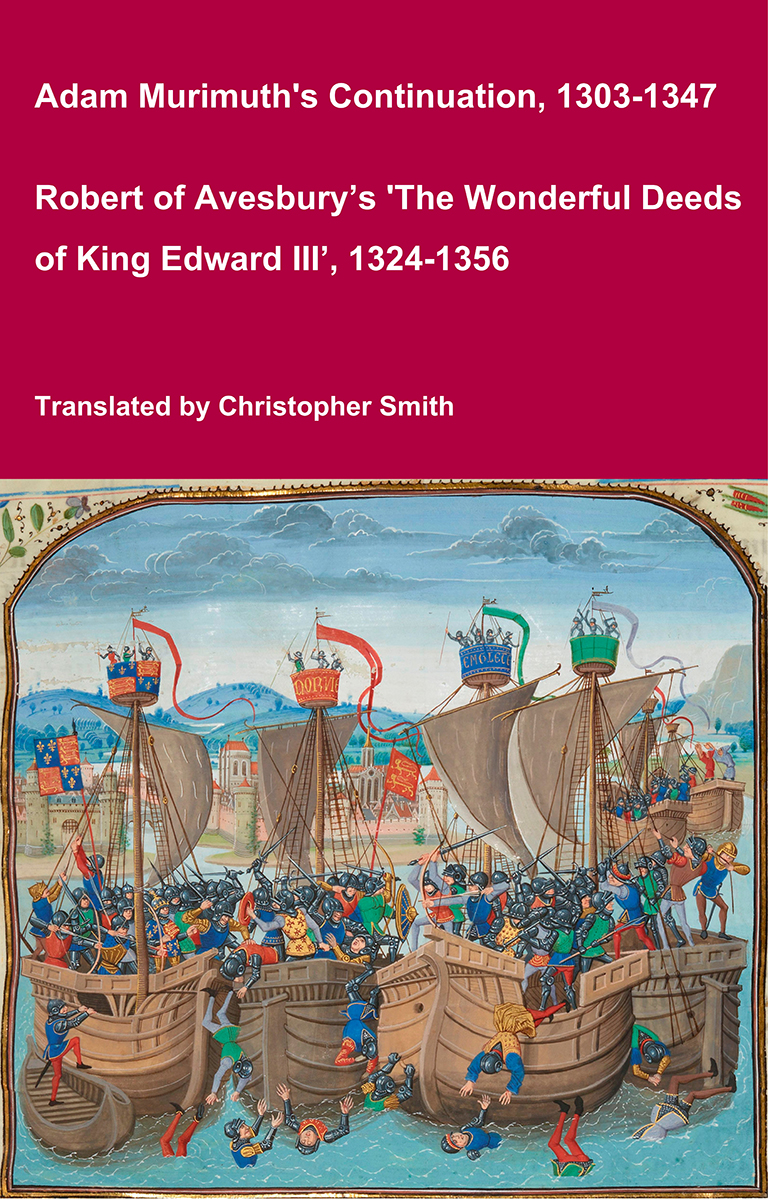
Adam Murimuth's Continuation and Robert of Avesbury’s 'The Wonderful Deeds of King Edward III'
This volume brings together two of the most important contemporary chronicles for the reign of Edward III and the opening phases of the Hundred Years’ War. Written in Latin by English clerical observers, these texts provide a vivid and authoritative window into the political, diplomatic, and military history of fourteenth-century England and its continental ambitions. Adam Murimuth Continuatio's Chronicarum continues an earlier chronicle into the mid-fourteenth century, offering concise but valuable notices on royal policy, foreign relations, and ecclesiastical affairs. Its annalistic structure makes it especially useful for establishing chronology and tracing the development of events year by year. Complementing it, Robert of Avesbury’s De gestis mirabilibus regis Edwardi tertii is a rich documentary chronicle preserving letters, treaties, and official records alongside narrative passages. It is an indispensable source for understanding Edward III’s claim to the French crown, the conduct of war, and the mechanisms of medieval diplomacy. Together, these works offer scholars, students, and enthusiasts a reliable and unembellished account of a transformative period in English and European history. Essential for anyone interested in medieval chronicles, the Hundred Years’ War, or the reign of Edward III.
Available at Amazon in eBook and Paperback format.
In 1758 James Brudenell 5th Earl Cardigan [aged 32] was appointed Master of the Robes.
In 1791 James Peachey 1st Baron Selsey [aged 67] was appointed Master of the Robes which position he held until his death.
Spencer Compton 2nd Earl of Northampton was appointed Master of the Robes to the Prince of Wales.


Christopher Villiers 1st Earl Anglesey was appointed Master of the Robes to King James I of England and Ireland and VI of Scotland.
From 1574 Richard Montpesson was appointed Master of the Royal Stables.
In 1738 Evelyn Pierrepont 2nd Duke Kingston upon Hull [aged 27] was appointed Master of the Staghounds.
In 1744 Robert Manners-Sutton [aged 21] was appointed Master of the Staghounds.
In 1763 William Byron 5th Baron Byron [aged 40] was appointed Master of the Staghounds.

In 1765 William Monckton aka Monckton-Arundell 2nd Viscount Galway [aged 40] was appointed Master of the Staghounds.
In 1770 William Anne Capell 4th Earl Essex [aged 37] was appointed Master of the Staghounds.
In 1782 position of Master of the Staghounds was abolished.
Samuel Pepys' Diary. 6th June 1660. My letters tell me, that Mr. Calamy1 had preached before the King in a surplice (this I heard afterwards to be false); that my Lord, Gen. Monk [aged 51], and three more Lords, are made Commissioners for the Treasury2; that my Lord had some great place conferred on him, and they say Master of the Wardrobe3; that the two Dukes [Duke of York and Duke of Gloucester.] do haunt the Park much, and that they were at a play, Madam Epicene,-["Epicene, or the Silent Woman", a comedy, by Ben Jonson.] the other day; that Sir. Ant. Cooper [aged 38], Mr. Hollis [aged 60], and Mr. Annesly [aged 45], & late President of the Council of State, are made Privy Councillors to the King. At night very busy sending Mr. Donne away to London, and wrote to my father for a coat to be made me against I come to London, which I think will not be long. At night Mr. Edward Montagu came on board and staid long up with my Lord. I to bed and about one in the morning,
Note 1. Edmund Calamy, D.D., the celebrated Nonconformist divine, born February, 1600, appointed Chaplain to Charles II., 1660. He refused the bishopric of Lichfield which was offered to him. Died October 29th, 1666.
Note 2. The names of the Commissioners were Sir Edward Hyde [aged 51], afterwards Earl of Clarendon, General Monk, Thomas, Earl of Southampton [aged 53], John, Lord Robartes [aged 54], Thomas, Lord Colepeper [aged 60], Sir Edward Montagu, with Sir Edward Nicholas [aged 67] and Sir William Morrice [aged 57] as principal Secretaries of State. The patents are dated June 19th, 1660.
Note 3. The duty of the Master of the Wardrobe was to provide "proper furniture for coronations, marriages, and funerals" of the sovereign and royal family, "cloaths of state, beds, hangings, and other necessaries for the houses of foreign ambassadors, cloaths of state for Lord Lieutenant of Ireland, Prince of Wales, and ambassadors abroad", as also to provide robes for Ministers of State, Knights of the Garter, &c. The last Master of the Wardrobe was Ralph, Duke of Montague [aged 21], who died 1709.


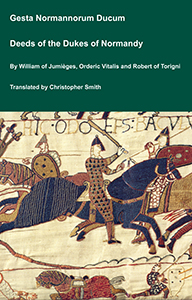
The Deeds of the Dukes of Normandy
The Gesta Normannorum Ducum [The Deeds of the Dukes of Normandy] is a landmark medieval chronicle tracing the rise and fall of the Norman dynasty from its early roots through the pivotal events surrounding the Norman Conquest of England. Originally penned in Latin by the monk William of Jumièges shortly before 1060 and later expanded at the behest of William the Conqueror, the work chronicles the deeds, politics, battles, and leadership of the Norman dukes, especially William’s own claim to the English throne. The narrative combines earlier historical sources with firsthand information and oral testimony to present an authoritative account of Normandy’s transformation from a Viking settlement into one of medieval Europe’s most powerful realms. William’s history emphasizes the legitimacy, military prowess, and governance of the Norman line, framing their expansion, including the conquest of England, as both divinely sanctioned and noble in purpose. Later chroniclers such as Orderic Vitalis and Robert of Torigni continued the history, extending the coverage into the 12th century, providing broader context on ducal rule and its impact. Today this classic work remains a foundational source for understanding Norman identity, medieval statesmanship, and the historical forces that reshaped England and Western Europe between 800AD and 1100AD.
Available at Amazon in eBook and Paperback format.
On 4th February 1600 John Leigh [aged 31] had a grant of the office of Keeper of Home Park in Kent and Master of the Wild Beasts.