Chronicle of Abbot Ralph of Coggeshall
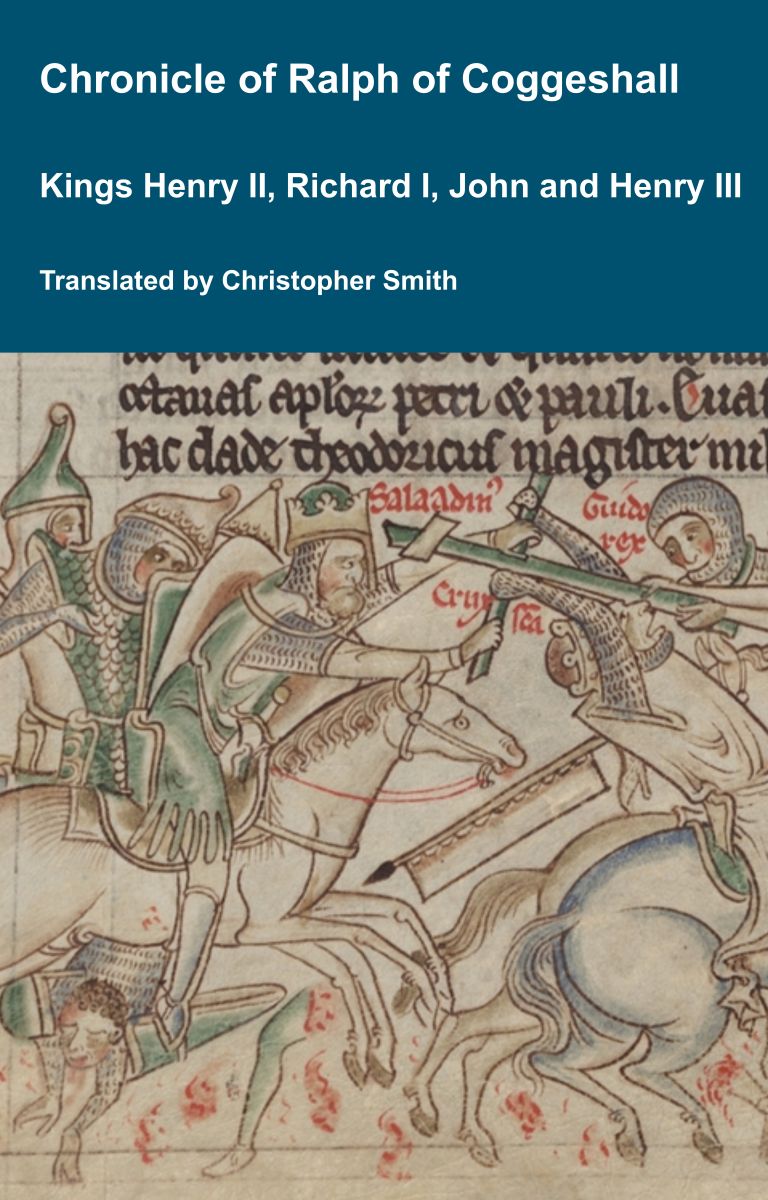
The Chronicle of Abbot Ralph of Coggeshall (Chronicon Anglicanum) is an indispensable medieval history that brings to life centuries of English and European affairs through the eyes of a learned Cistercian monk. Ralph of Coggeshall, abbot of the Abbey of Coggeshall in Essex in the early 13th century, continued and expanded his community’s chronicle, documenting events from the Norman Conquest of 1066 into the tumultuous reign of King Henry III. Blending eyewitness testimony, careful compilation, and the monastic commitment to record-keeping, this chronicle offers a rare narrative of political intrigue, royal power struggles, and social upheaval in England and beyond. Ralph’s work captures the reigns of pivotal figures such as Richard I and King John, providing invaluable insights into their characters, decisions, and the forces that shaped medieval rule. More than a simple annal, Chronicon Anglicanum conveys the texture of medieval life and governance, making it a rich source for scholars and readers fascinated by English history, monastic authorship, and the shaping of the medieval world.
Available at Amazon in eBook and Paperback format.
On 24th January 1287 Bishop Richard de Bury was born.
Around 1322 Bishop Richard de Bury [aged 34] was appointed tutor to the future King Edward III of England [aged 9].
In 1327 Bishop Richard de Bury [aged 39] was appointed Treasurer of the Wardrobe.
In 1327 Bishop Richard de Bury [aged 39] was appointed Lord Privy Seal.
In 1327 Bishop Richard de Bury [aged 39] was appointed Cofferer of the Household.
In 1330 and 1333 Bishop Richard de Bury [aged 42] was sent as ambassador to the papal court in exile at Avignon.
In February 1333 Bishop Richard de Bury [aged 46] was appointed Dean of Wells.
In September 1333 Bishop Richard de Bury [aged 46] was appointed Bishop of Durham.
Annales Paulini. In this year, shortly before the feast of St Michael, the see of Durham became vacant through the death of Sir Louis de Beaumont [on 24th September 1333]. Soon after the feast of St Michael, the chapter of Durham elected a monk of that church named [Robert of Graystones] who was confirmed by the Archbishop of York and solemnly consecrated by that archbishop in York Minster, notwithstanding the report spreading throughout England that the pope had conferred the bishopric upon Sir Richard de Bury [aged 46], a clerk of the lord king, at the king’s request. The outcome subsequently proved this report to be true. For the said Sir Richard, shortly after the feast of the Nativity of the Lord, having obtained apostolic letters concerning his provision, caused himself to be consecrated by the Bishop of Winchester at Chertsey Abbey by apostolic authority. He also obtained from the lord king full delivery of the temporalities of the bishopric, which the king had previously refused to grant to the aforesaid monk. After this, the said monk, though elected and consecrated, returned to the cloister a bishop without a bishopric, and died shortly afterwards.
Hoc anno, parum ante festum Sancti Michaelis, vacavit ecclesia Dunolmiæ per mortem domini Lodowici de Bellomonte. Et cito post festum Sancti Michaelis capitulum Dunolmiæ elegit unum monachuın ejusdem ecclesiæ nomine, [....] qui per archiepiscopum Eboracensem fuerat confirmatus et per ipsum archiepiscopum in ecclesia Eboracensi sollempniter consecratus, non obstante fama per totam Angliam volante, quod papa ipsum episcopatum domino Ricardo de Bury, clerico domini regis, ad preces ipsius regis contulerat; quod rei exitus postmodum comprobavit. Nam idem dominus Ricardus cito post festum Nativitatis Domini, optentis litteris apostolicis super sua provisione, auctoritate apostolica in monasterio de Cherteseye se fecit per dominum Wyntoniensem episcopum consecrari, et a domino rege optinuit sibi temporalia ipsius episcopatus integre liberari, quod prius dicto monacho facere denegavit. Quo facto idem monachus electus et consecratus ad claustrum sine episcopatu episcopus est reversus, et cito postea obiit.
In February 1334 Bishop Richard de Bury [aged 47] was appointed Lord High Treasurer.
After 1345. Chapel of the Nine Altars, Durham Cathedral [Map]. Memorial to Bishop Richard de Bury [aged 57].
On 14th May 1345 Bishop Richard de Bury [aged 58] died.
Adam Murimuth Continuation. In this year, on the 14th day of May, in the year of the Lord 1345, and in the nineteenth year of the reign of King Edward III after the Conquest, Richard de Bury [aged 58], bishop of Durham, died. He had acquired that bishopric and all his previous benefices through the influence of great men and the vice of ambition, and therefore throughout his whole life he suffered from want and was prodigal in his expenses, so that he ended his days in the greatest poverty. And when the end of his life was imminent, his servants carried off all his movable goods, so that, when he was dying, he had nothing with which he could cover his body except the over-tunic of a single groom who remained in the chamber. And although the same bishop had been only moderately learned, yet wishing to be thought a great scholar, he gathered for himself an innumerable quantity of books, both by gift, by borrowing from various monasteries, and by purchase, so that five large carts were not sufficient to carry his books.
Hoc anno, XIIIJ die Maii, anno Domini MCCCXLV, regni vero dicti regis Edwardi tertii a conquæstu decimo nono, obiit Ricardus de Bury, episcopus Dunelmensis, qui ipsum episcopatum et omnia sua beneficia prius habita per preces magnatum et ambitionis vitium adquisivit, et ideo toto tempore suo inopia laboravit et prodigus exstitit in expensis, unde dies suos in gravissima paupertate finivit. Eminente vero termino vitæ suæ, sui familiares omnia bona sua mobilia rapuerunt, adeo quod moriens unde corpus suum cooperire poterat non habebat, nisi supertunicam unius garcionis in camera remanentis. Et, licet idem episcopus fuisset mediocriter literatus, volens tamen magnus clericus reputari, recollegit sibi librorum numerum infinitum, tam de dono quam ex acommodato a diversis monasteriis et ex empto, adeo quod quinque magnæ carectæ non sufficiebant pro ipsius vectura librorum.