High Sheriff of Oxfordshire is in High Sheriff.
In 1538 John Williams 1st Baron Williams [aged 38] was appointed High Sheriff of Berkshire and High Sheriff of Oxfordshire which position he held until 1539.
In 1544 John Williams 1st Baron Williams [aged 44] was appointed High Sheriff of Berkshire and High Sheriff of Oxfordshire which position he held until 1545.
In 1553 John Williams 1st Baron Williams [aged 53] was appointed High Sheriff of Berkshire and High Sheriff of Oxfordshire which position he held until 1545.
Before 14th November 1559 Thomas Brydges [aged 63] was appointed High Sheriff of Gloucester, High Sheriff of Berkshire and High Sheriff of Oxfordshire.
In 1562 Henry Norreys [aged 37] was appointed High Sheriff of Berkshire and High Sheriff of Oxfordshire.
In 1580 Richard Huddlestone [aged 45] was appointed High Sheriff of Oxfordshire.
In 1581 Anthony Cope 1st Baronet [aged 33] was appointed High Sheriff of Oxfordshire.
In 1590 Anthony Cope 1st Baronet [aged 42] was appointed High Sheriff of Oxfordshire.
In 1603 Anthony Cope 1st Baronet [aged 55] was appointed High Sheriff of Oxfordshire.
Chronicle of a Bourgeois of Valenciennes
Récits d’un bourgeois de Valenciennes aka The Chronicle of a Bourgeois of Valenciennes is a vivid 14th-century vernacular chronicle written by an anonymous urban chronicler from Valenciennes in the County of Hainaut. It survives in a manuscript that describes local and regional history from about 1253 to 1366, blending chronology, narrative episodes, and eyewitness-style accounts of political, military, and social events in medieval France, Flanders, and the Low Countries. The work begins with a chronological framework of events affecting Valenciennes and its region under rulers such as King Philip VI of France and the shifting allegiances of local nobility. It includes accounts of conflicts, sieges, diplomatic manoeuvres, and the impact of broader struggles like the Hundred Years’ War on urban life in Hainaut. Written from the perspective of a burgher (bourgeois) rather than a monastery or royal court, the chronicle offers a rare lay viewpoint on high politics and warfare, reflecting how merchants, townspeople, and civic institutions experienced the turbulence of the 13th and 14th centuries. Its narrative style combines straightforward reporting of events with moral and civic observations, making it a valuable source for readers interested in medieval urban society, regional politics, and the lived experience of war and governance in pre-modern Europe.
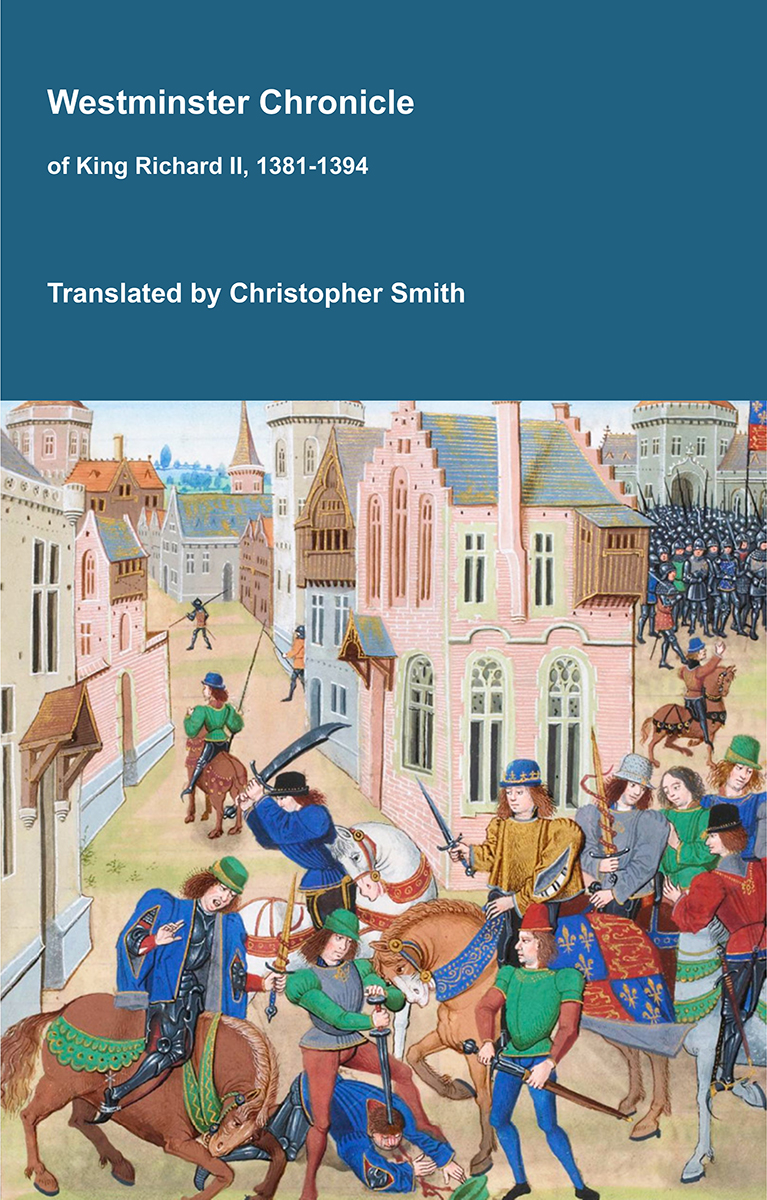
Available at Amazon in eBook and Paperback format.
In 1619 William Cope 2nd Baronet [aged 42] was appointed High Sheriff of Oxfordshire.
In 1635 Francis Rose [aged 26] was appointed High Sheriff of Oxfordshire.
In 1668 William Glynne 1st Baronet [aged 29] was appointed High Sheriff of Oxfordshire.
In 1685 Edward Reade 2nd Baronet [aged 25] was appointed High Sheriff of Oxfordshire.
In 1691 Thomas Rowney [aged 22] was appointed High Sheriff of Oxfordshire.
In 1700 James Reade 2nd Baronet [aged 44] was appointed High Sheriff of Oxfordshire.
In 1701 John Thornycroft 1st Baronet [aged 41] was appointed High Sheriff of Oxfordshire.
In 1706 William Glynne 2nd Baronet [aged 42] was appointed High Sheriff of Oxfordshire.
In 1715 Charles Crispe 5th Baronet [aged 35] was appointed High Sheriff of Oxfordshire.
In 1732 Edward Turner 1st Baronet [aged 41] was appointed High Sheriff of Oxfordshire.
In 1811 John Chandos Reade 7th Baronet [aged 25] was appointed High Sheriff of Oxfordshire.
Annals of Kings Richard II and Henry IV 1393-1406
The Annals of Kings Richard II and Henry IV offers a vivid contemporary account of one of the most turbulent periods in late medieval England. Covering the reigns of Richard II and Henry IV, the chronicle records royal ceremonies, political conflict, rebellion, war, taxation, religious controversy, executions, popular unrest and remarkable portents. Its pages include a detailed description of Richard II’s coronation, the fall and deposition of the king, Henry IV’s seizure of the throne, the Percy rebellion, the execution of Archbishop Richard Scrope, the campaigns of Owain Glyndŵr, and England’s relations with Scotland, France, Portugal and Scandinavia. Alongside affairs of state, the annalist preserves reports of miracles, eclipses, prophecies, supernatural events and the experiences of ordinary townspeople, clergy, soldiers and travellers. Written from a monastic perspective, the work combines political observation with moral judgement, presenting victories and disasters as evidence of divine favour or punishment. At once a historical record and a reflection of medieval belief, the Annals provides an invaluable window into the challenges, ceremonies and conflicts of England at the turn of the fifteenth century.
Available at Amazon in eBook and Paperback format.
In 1871 Algernon William Peyton 4th Baronet [aged 37] was appointed High Sheriff of Oxfordshire.
In 1881 Thomas Peyton 5th Baronet [aged 63] was appointed High Sheriff of Oxfordshire.
In 1896 Algernon Francis Peyton 6th Baronet [aged 40] was appointed High Sheriff of Oxfordshire.
In 1928 Algernon Peyton 7th Baronet [aged 39] was appointed High Sheriff of Oxfordshire.