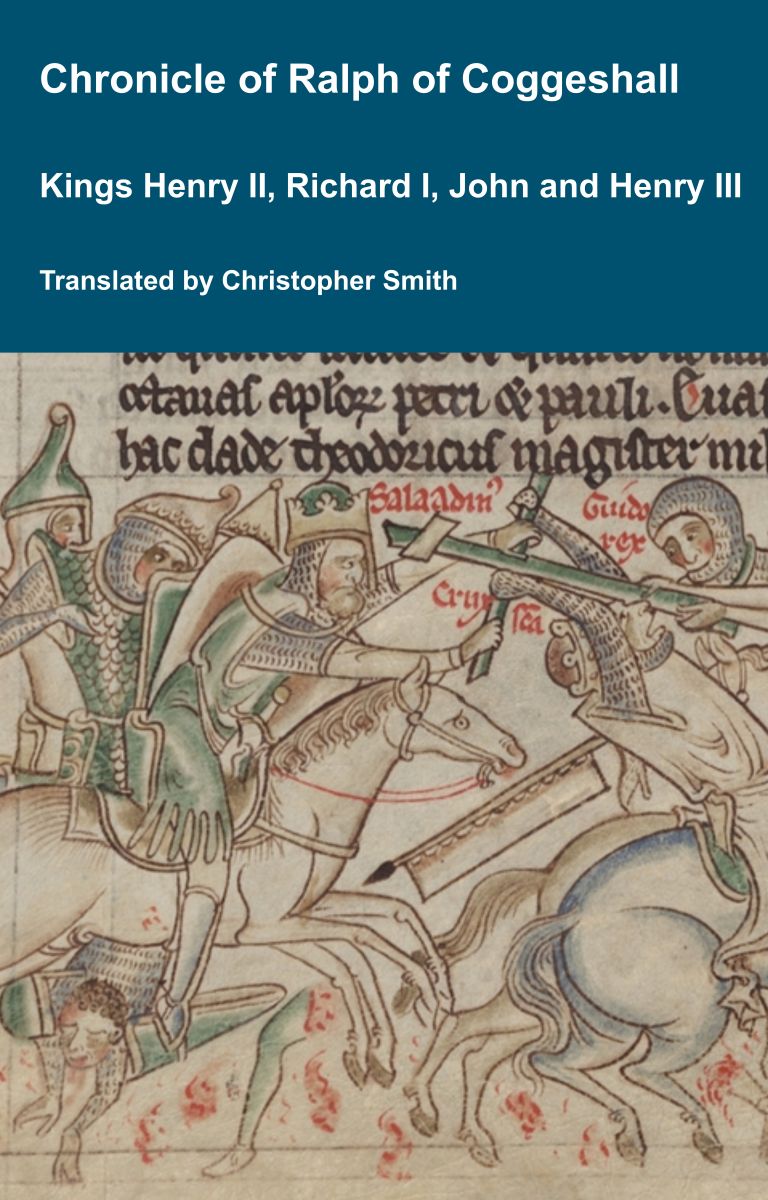
Chronicle of Abbot Ralph of Coggeshall
The Chronicle of Abbot Ralph of Coggeshall (Chronicon Anglicanum) is an indispensable medieval history that brings to life centuries of English and European affairs through the eyes of a learned Cistercian monk. Ralph of Coggeshall, abbot of the Abbey of Coggeshall in Essex in the early 13th century, continued and expanded his community’s chronicle, documenting events from the Norman Conquest of 1066 into the tumultuous reign of King Henry III. Blending eyewitness testimony, careful compilation, and the monastic commitment to record-keeping, this chronicle offers a rare narrative of political intrigue, royal power struggles, and social upheaval in England and beyond. Ralph’s work captures the reigns of pivotal figures such as Richard I and King John, providing invaluable insights into their characters, decisions, and the forces that shaped medieval rule. More than a simple annal, Chronicon Anglicanum conveys the texture of medieval life and governance, making it a rich source for scholars and readers fascinated by English history, monastic authorship, and the shaping of the medieval world.
Available at Amazon in eBook and Paperback format.
In 1611 Edward Walker was born.
In 1645 Edward Walker [aged 34] was appointed Garter King of Arms.
John Evelyn's Diary. 6th September 1662. Dined with me Sir Edward Walker [aged 51], Garter King-at-Arms, Mr. Slingsby [aged 41], master of the Mint, and several others.
John Evelyn's Diary. 17th September 1662. We now resolved that the Arms of the Society should be a field argent, with a canton of the arms of England; the supporters two talbots argent; crest, an eagle Or holding a shield with the like arms of England, viz, three lions. The words "Nullius in verbâ". It was presented to his Majesty [aged 32] for his approbation, and orders given to Garter King-at-Arms [aged 51] to pass the diploma of their office for it.
Samuel Pepys' Diary. 16th January 1667. Then all withdrew, and by and by the Council rose, and I spoke with the Duke of York [aged 33], and he told me my business was done, which I found accordingly in Sir Edward Walker's [aged 56] books. And so away, mightily satisfied, to Arundell House [Map], and there heard a little good discourse, and so home, and there to Sir W. Batten [aged 66], where I heard the examinations in two of our prizes, which do make but little for us, so that I do begin to doubt their proving prize, which troubled me.
John Evelyn's Diary. 18th August 1673. And I the rather am confident of it, remembering what Sir Edward Walker [aged 62] (Garter King at Arms) had likewise affirmed to me a long time before, even when he was first made a Lord; that carrying his pedigree to Lord Clifford [aged 43] on his being created a peer, and, finding him busy, he bade him go into his study and divert himself there till he was at leisure to discourse with him about some things relating to his family; there lay, said Sir Edward, on his table, his horoscope and nativity calculated, with some writing under it, where he read that he should be advanced to the highest degree in the state that could be conferred upon him, but that he should not long enjoy it, but should die, or expressions to that sense; and I think, (but cannot confidently say) a bloody death. This Sir Edward affirmed both to me and Sir Richard Browne; nor could I forbear to note this extraordinary passage in these memoirs.
In February 1677 Edward Walker [aged 66] died.