The True Chronicles of Jean le Bel Volume 1 Chapters 1-60 1307-1342

The True Chronicles of Jean le Bel offer one of the most vivid and immediate accounts of 14th-century Europe, written by a knight who lived through the events he describes, and experienced some of them first hand. Covering the early decades of the Hundred Years’ War, this remarkable chronicle follows the campaigns of Edward III of England, the politics of France and the Low Countries, and the shifting alliances that shaped medieval warfare. Unlike later historians, Jean le Bel writes with a strong sense of eyewitness authenticity, drawing on personal experience and the testimony of fellow soldiers. His narrative captures not only battles and sieges, but also the realities of military life, diplomacy, and the ideals of chivalry that governed noble society. A key source for Jean Froissart, Le Bel’s chronicle stands on its own as a compelling and insightful work, at once historical record and literary achievement. This translation builds on the 1905 edition published in French by Jules Viard, adding extensive translations from other sources Rymer's Fœdera, the Chronicles of Adam Murimuth, William Nangis, Walter of Guisborough, a Bourgeois of Valenciennes, Geoffrey le Baker of Swinbroke and Richard Lescot to enrich the original text and Viard's notes.

Available at Amazon in eBook and Paperback format.

Sarah Eliza Hackett 1832-

In 1832 Sarah Eliza Hackett was born to George Hackett [aged 44] and Phoebe Corden Thompson [aged 43]. Daughter of a farmer in Diseworth, Leicestershire, where she spent her formative years.

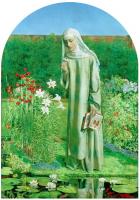
Around 1851 in an undated letter, Charles Allston Collins [aged 22] wrote to Holman Hunt: "I have been very much occupied lately having taken the trouble of persuading a young lady [Sarah Eliza Hackett [aged 19]] to sit, who struck both Millais and myself as having possessed a very beautiful head – she was a friend of a friend of mine so after some trouble I managed to secure her, but I have been obliged to hurry very much as her time was limited. I had to pursue her to her own house and take sittings there, getting up very early for this purpose."

In 1851 Sarah Eliza Hackett [aged 19] is recorded in the census as residing in Lambeth as a visitor. Her uncle, Dr. John Thompson, lived in the Marylebone district and he was not only the family doctor to the Collins household for over twenty years but he and his family were also close friends of the Collins family.

On 15th January 1851 Millais wrote to Mrs. Combe: "I saw Carlo last night, who has been very lucky in persuading a very beautiful young lady [Sarah Eliza Hackett [aged 19]] to sit for the head of 'The Nun'. She was at his house when I called, and I also endeavoured to obtain a sitting, but was unfortunate, as she leaves London next Saturday."

In or after June 1851. Charles Allston Collins [aged 23]. "Convent Thoughts". The passion flower symbolising the Passion of Christ. The missal in her left hand shows the Annunciation and Crucifixion. The model Sarah Eliza Hackett [aged 19]. The artist had borrowed the same costume fot the nun that William Holman Hunt [aged 24] has used for Claudio and Isabella. The flowers were all painted from nature in the garden of Thomas Combe's home in the quadrangle of the Clarendon Press in Oxford.

In or after 1852 Reverend Frederick Nash [aged 32] and Sarah Eliza Hackett [aged 20] were married.

On 21st August 1904 [her husband] Reverend Frederick Nash [aged 85] died. He left £3786 13s 6d. His executors were his son, Reverend Frederick Cordon Nash, clerk, and his son-in-law, Walter Chapman Burder, horticultural engineer.