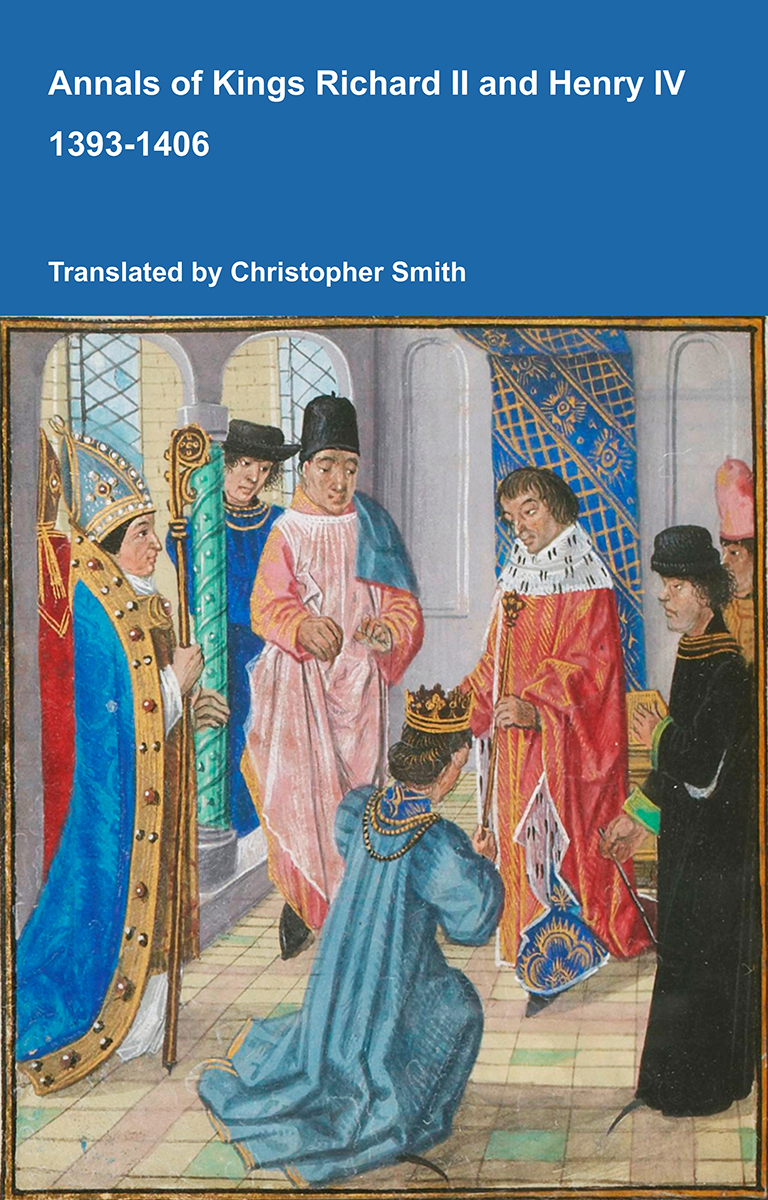
Annals of Kings Richard II and Henry IV 1393-1406

The Annals of Kings Richard II and Henry IV offers a vivid contemporary account of one of the most turbulent periods in late medieval England. Covering the reigns of Richard II and Henry IV, the chronicle records royal ceremonies, political conflict, rebellion, war, taxation, religious controversy, executions, popular unrest and remarkable portents. Its pages include a detailed description of Richard II’s coronation, the fall and deposition of the king, Henry IV’s seizure of the throne, the Percy rebellion, the execution of Archbishop Richard Scrope, the campaigns of Owain Glyndŵr, and England’s relations with Scotland, France, Portugal and Scandinavia. Alongside affairs of state, the annalist preserves reports of miracles, eclipses, prophecies, supernatural events and the experiences of ordinary townspeople, clergy, soldiers and travellers. Written from a monastic perspective, the work combines political observation with moral judgement, presenting victories and disasters as evidence of divine favour or punishment. At once a historical record and a reflection of medieval belief, the Annals provides an invaluable window into the challenges, ceremonies and conflicts of England at the turn of the fifteenth century.

Available at Amazon in eBook and Paperback format.

Winterbourne Stoke Barrow 15 G4, Winterbourne Stoke Barrows, Winterborne Stoke Barrows, Stonehenge Barrows, Stonehenge Landscape, Amesbury Hundred, Wiltshire, South-West England, British Isles [Map]

Winterbourne Stoke Barrow 15 G4 is in Winterbourne Stoke Barrows.

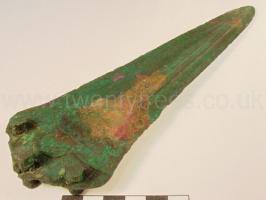
Colt Hoare 1812. No. 15 [Winterbourne Stoke Barrow 15 G4 [Map]]. On clearing the earth from our section in this beautiful bell-shaped tumulus, and after four days labour, we came to an interment differing from any we had yet met with; for instead of finding the burned bones of the deceased, enclosed within the native chalk, or in a sepulchral urn, we perceived they had been deposited in a box or coffin of wood, about three feet and a half long, by two feet wide, and placed upon the native turf; the whole was then covered with a coat of blueish clay, and the mound constructed. On removing the clay, and the mouldering fragments of the wood1, we first discovered small pieces of ivory, with rivets of brass through each, which I think appertained and afterwards a beautiful spear head of brass, the most co the tips of a bow; perfect and the largest we have as yet found; close to this was another lance head, which was unfortunately broken; it lay above a foot from the bones, near which was a long pin of ivory, not perforated, but neatly polished and pointed at the thinnest end; and another instrument of the same material, resembling the tweezers engraved in Tumuli Plate III. The human bones had been piled up in a heap, and intermixed with them were some rivets, and small strips of brass, which probably belonged originally to the box. In making the section of this barrow, the workmen found the remains of five or more skeletons, at a short depth beneath the surface of the sepulchral mound.

Note 1. This box was placed in a direction from north to south. The wood of which it was composed appeared be elm, yet we found also some pieces of oak.

Note 2. This fine spear-head, together with the two pieces of ivory, are engraved of their natural size in Tumili Plate XIV.

Wiltshire Museum. DZSWS:STHEAD.21. 1 bronze dagger (class 2) with three rivets and four grooves either side of a central ridge decorated with impressed dots, found with a primary cremation placed in a wooden box covered in clay in bell barrow Winterbourne Stoke G4 [Map], excavated by William Cunnington.

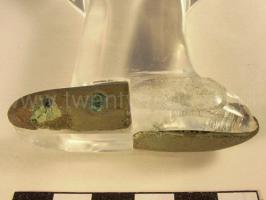
Wiltshire Museum. DZSWS:STHEAD.21a. 1 bone tweezers (broken) perforated at head for suspension, found with a primary cremation placed in a wooden box covered in clay in bell barrow Winterbourne Stoke G4 [Map], excavated by William Cunnington.

Wiltshire Museum. DZSWS:STHEAD.22. 2 fragments of a bone pommel with bronze rivets, found with a primary cremation placed in a wooden box covered in clay in bell barrow Winterbourne Stoke G4 [Map], excavated by William Cunnington.

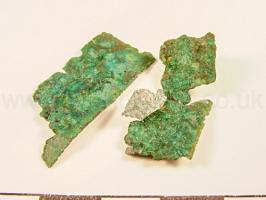
Wiltshire Museum. DZSWS:STHEAD.78a. 2 fragments of sheet bronze, found over a secondary inhumation in bell barrow Winterbourne Stoke G4 [Map], excavated by William Cunnington.

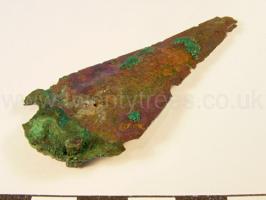
Wiltshire Museum. DZSWS:STHEAD.80. 1 bronze knife dagger with two rivet holes, one rivet and a broken point, found with a primary cremation placed in a wooden box covered in clay in bell barrow Winterbourne Stoke [Map] G4, excavated by William Cunnington.