

Around 1310 Jean I Le Maingre 'Boucicaut' was born.
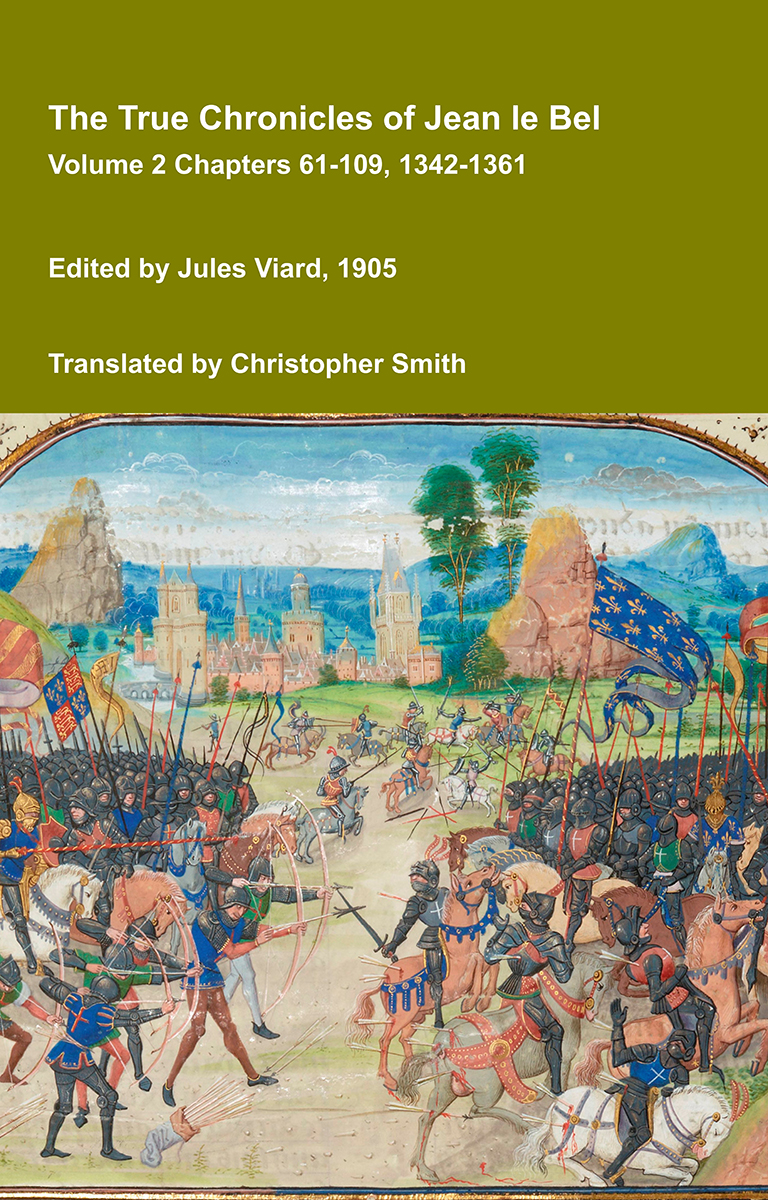 Chronicle of Jean le Bel Volume 2. Everywhere he had found the country burnt and laid waste, and a great many good towns and castles lost which had formerly belonged to his kingdom. Now the English held them, to his very great anger, and he complained of this to his barons and knights in order to take counsel on what might be done. It was decided that it would be good to besiege Saint-Jean-d’Angély. So he sent there to besiege it Sir Guy de Nesle1 and the valiant knight, the Lord of Boucicaut [aged 40], his two marshals, with a great many men-at-arms, Genoese, and foot soldiers. They besieged the town by means of two bastides which they found there, and set them up, as it were, about half a league from the town. This was around mid-Lent. They continually rode around the town so that no provisions could come in, but those inside defended themselves so valiantly that the army did them little harm.
Sy avoit partout trouvé le pays ars et gasté, et grande foison de bonnes villes et chasteaulx perdus qui soloient estre de son royaume. Or les tenoient les Angloys en moult grand despit, si s'en plaingny à ses barons et chevaliers pour avoir conscil que on en pourroit faire. Si fut avisé qu'il seroit bon qu'on assiegast Saint Jehan d'Angely; si envoya celle part pour l'assiegier messire Guy de Noyelle et le vaillant chevalier, le seigneur de Bcaugny, ses II mareschalz, avecques grand foison de gens d'armes, de Jennevois et de gens de pyé. Si assiegerrent la ville parmi deux bastides qu'ilz trouverrent, et aviserrent là ainsy que à demye liewe prez la ville. Ce fut ainsy que ou millieu de Karesme; et chevauchoient toudis à l'entour de la ville afin qu'il n'y pœut venir nulles pourveances, mais ceulx de dedens se deffendirent si vassaument que l'ost ne les dommage[at] gueres.
Note 1. Guy de Nesle, lord of Mello, Marshal of France, was the king’s lieutenant in Poitou, Limousin, Saintonge, Angoumois, and Périgord on this side of the Dordogne.
1 Gui de Nesle, sire de Melo, maréchal de France, était lieutenant du roi en Poitou, Limousin, Saintonge, Angoumois et Périgord par deçà Dordogne. (Froëssart, éd. Luce, t. IV, p xuu, n. 3.)
Issue of the Exchequer. 22nd May [1353]. To Ralph, Earl of Stafford [aged 51], by a tally raised this day from the fifteenths granted to the clergy in the twenty-fifth year, containing £1000, granted to the said Earl of the King's gift for lately capturing Burseald [aged 43], a French knight, in the war in Gascony. By writ of privy seal amongst the mandates of this term, £1000.
Chronicle of Jean le Bel Volume 2. The king at once called three of his knights and said to them: "I ask you to lead Sir Boucicaut [aged 45] through all our battles, so that he may see what men we have and tell his lord the king." Sir Boucicaut went, and then returned to the king and said to him: "Sire, you have fine men, but not so many as I had thought." The king had him remain with him all that night, and the next day he rode on beyond Hesdin, burning and wasting the country, and heard no news of King John.
Le roy appella tantost III de ses chevaliers et leur dit: "Je vous prye que vous menez messire Boucicaud par toutes nos batailles, sy verra quelles gens nous avons et le dira à son seigneur le roy." Messire Boucicaud y ala, et revint au roy et luy dit: "Sire, vous avez de belles gens, mais non pas tant comme je cuidoye." Le roy le fist demourer devers luy toute celle nuit, et lendemain il chevaucha oultre Hesdin ardant et gastant pays, et n'oyoit nulles nouvelles du roy Jehan.
Chronicle of Jean le Bel Volume 2. There came to him a valiant knight who was not free, for he was going on his pledged faith and was his prisoner. He was called Sir Boucicaut [aged 45], the most renowned for prowess in the kingdom of France. The noble king greeted him very courteously and asked him for news of the king, his lord. Sir Boucicaut answered that he thought he was at Amiens. "Saint Mary," said the king, "why does he wait for me there, when he has so great a force and sees his country being burnt and ravaged by so few men?" "By my faith," said Sir Boucicaut, "I do not know, sire; I am not of his private council."
Là vint à luy ung vaillant chevalier qui n'estoit point [libre], car il aloit sur sa foy et estoit son prisonnier, et l'appelloit on messire Boucicaud, le plus renommé de proesse qui fust ou royaume de France. Le noble roy le salua moult doucement, et luy demanda nouvelles du roy son seigneur. Messire Boucicaud respondi qu'il pensoit qu'il fust [à] Amiens. "Saincte Marie, dist le roy, pour quoy m'attent il là, qui a si grande poissance et voit son pays ardoir et exillier de si petit de gens?" — "Par ma foy, dit messire Boucicaud, je ne sçay, sire, je ne suys pas de son privé conseil."
Chronicle of Jean le Bel Volume 2. The next day he lodged in an abbey and called Sir Boucicaut [aged 45]. He said to him: "Sir Boucicaut, do you know what you shall do? I know well that I could have more than 6,000 écus from you, if I wished. You shall go and tell your lord that I have burnt his country as far as this, because I thought that he would come to extinguish the flames. And you shall tell him that I shall wait for him here for three days. He will find me, if he wishes to come. And if he does not come, I shall go away as I came, for I might remain so long that the crossings would become too narrow for me to pass. If you are willing to pledge me your faith to carry this message, just as I have told it to you, I shall release you from prison."
L'aultre jour il se loga en une abbaye et appella messire Boucicaud; si.luy dit: "Messire Boucicaud, sçavez vous que vous ferez? Je sçay bien que je avroye de vous plus de VIM escus, scje vouloye; vous irez dire à vostre seigneur que je ay ars son pais jusques icy, pour tant que je cuidoye qu'il venist estaindre les flamesches, et sy luy dirés que je l'attendray ci trois jours; si me trouvera s'il veult venir, et s'il ne vient, je m'en iray ainsy que je suys venu, car je pourroye bien tant demourer que les passages me seroient trop estroits à passer. Se vous me volez bailler la foy de faire ce message, ainsy que je le vous ay dit, je vous quitteray de prison."
On 28th August 1366 [his son] Jean II Le Maingre 'Boucicaut' was born to Jean I Le Maingre 'Boucicaut' [aged 56].
On 15th March 1367 Jean I Le Maingre 'Boucicaut' [aged 57] died.
Chronicle of Jean le Bel Volume 2. Sir Boucicaut left King Edward and went to Amiens to King John, and delivered his message1 well and properly. But King John did not wish to go on the day that King Edward had sent word to him.
Messire Boucicaud se parti du roy Edowart, et s'en ala à Amyens par devers le roy Jehan, et luy fit son message bien et souffisaument; mais le roy Jehan ne voult pas aler au jour que le roy Edowart luy avoit mandé.
Note 1. One may compare Jean le Bel’s account of Boucicaut’s message with that presented by Avesbury: 'Hearing of this, King John of France, who was at Saint-Omer with a very large army, sent a certain knight named Sire Boucicaut, who had once been captured in Gascony and had long remained a prisoner of the King of England, but had at that time been released from prison after paying a ransom, to speak with the King of England and to observe his army. This knight, coming to meet the King of England, was, by the king's permission, allowed to inspect the English forces, and he observed three divisions of the English army, nobly arrayed, composed of brave men, ready for battle, and remarkably courageous. He marvelled that the King of England had such great strength in the field, especially since his son, the Prince of Wales, was at the same time leading such a large army in Gascony. Returning to King John of France, he reported all he had seen.' According to Luce's Froissart John the Good, instead of withdrawing before the English, on the contrary never ceased advancing to meet them.
1. On peut rapprocher le récit du message de Boucicaut fait par Jean le Bel de celui que présente R. d'Avesbury (p. 428). D'après M. Luce, Froissart, &. IV, p. Lv, n. 3, Jean le Bon, au lieu de se retirer devant les Anglais, n'aurait cessé, au contraire, de s'avancer à leur rencontre.
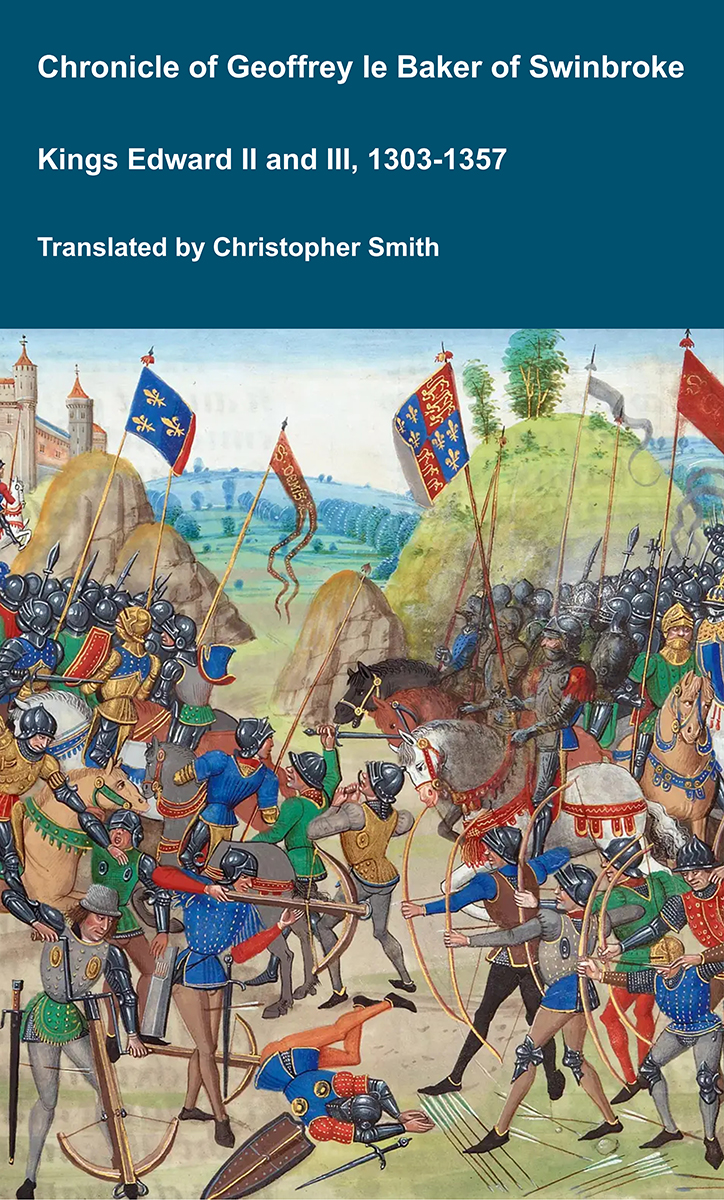 Chronicle of Geoffrey le Baker of Swinbroke. Likewise, the Earl of Stafford1 entered Gascony, where he encountered a large French army, which had come out from the fortress of Dax. He defeated, captured, and put them to flight, around the time of the Nativity of the Glorious Virgin [8th September 1352] Among those captured was the famous knight, a wise commander and a man of great arrogance, called Brusegaudus, along with seven knights of the Company of the Star. Not long afterward, by natural death, there died in the same place John d'Odingsells2 and Thomas Wale, knights of great valour.
Item, comes Staffordie Vasconiam intravit, ubi obvius Gallicorum magno exercitui, qui a municione Dagent fuerant egressi, hostes fudit, cepit et fugavit, circa Nativitatem Virginis gloriose. Ibi fuerunt capti famosus ille miles, ductor providus atque vir magne presumpcionis, vocatus Brusegaudus, et VIJ milites comitive de Stella. Nec multum postea communi morte obierunt ibidem Iohannes Dodianseles et Thomas Wale, milites magne probitatis.
Note 1. Stafford was appointed lieutenant of Aquitaine on the 6th March 1352. Rymer's Fœdera 3.239. Nothing is known of the battle here mentioned as fought early in September with French forces from Agen. 'Brusegaudus' is Jean le Meingre, called Boucicaut, whom Froissart includes among the prisoners taken at the battle of Saintes in the previous year. Froissart 4.106 and Froissart 332.
The earl of Stafford received on the 22nd May 1353, the sum of £1000 for his capture. Issues of the Exchequer, 159.
Note 2. Sir John de Odingsells, of Odingsells or Pirton Doddingsells, Hertforshire, had been outlawed in the previous year. He died seised of a moiety of the manor of Pirton, and of lands in Staffordshire, Suffolk, Warwickshire, and Oxfordshire. Clutterbuck, Hist. Herts, 3.122; Calendar Inquisitions Post Mortem, 2.182. Sir Thomas Wale, one of the Founders of the Garter, died 26th October 1352. Beltz, Memorials of the Order of the Garter, 63.
 Bourgeois de Valenciennes. After King John, the Cross was taken up by the King of Cyprus, the good Count of Eu, the Count of Dammartin, the Count of Tancarville, the Grand Prior of France, and the noble Boucicaut of Blois. The Holy Father gave and marked it to them in the name of sweet Jesus Christ, Son of the precious Virgin, His glorious and sacred mother. The Cardinal of Périgord, who at that time was head of the Church after the pope, also took up the Cross; but he too did not accomplish the holy journey, for he likewise died within that same year.
Et après le roy Jehan, l'encharga le roy de Chippre et le bon conte d'Eu, le conte de Dammartin, le conte de Tancarville, le grant pryeur de France et le beau Boucicault de Blois. Et leur donna et bailla et signa le Saint-Père ou nom du doulx Jhésu-Crist, fils de la Vierge prescieuse, digne et sacrée mère très-glorieuse. Et sy l'encharga ossy le cardinal de Pieregoth, qui estoit chief de l'Église, pour le tamps, après le pappe; mais il ne fit point le saint voiage, car il trespassa ossy en dedens ladite année.