

On 12th April 1396 Bishop John Burghill was elected Bishop of Llandaff.
Around 10th July 1396 Bishop John Burghill was consecrated Bishop of Llandaff.
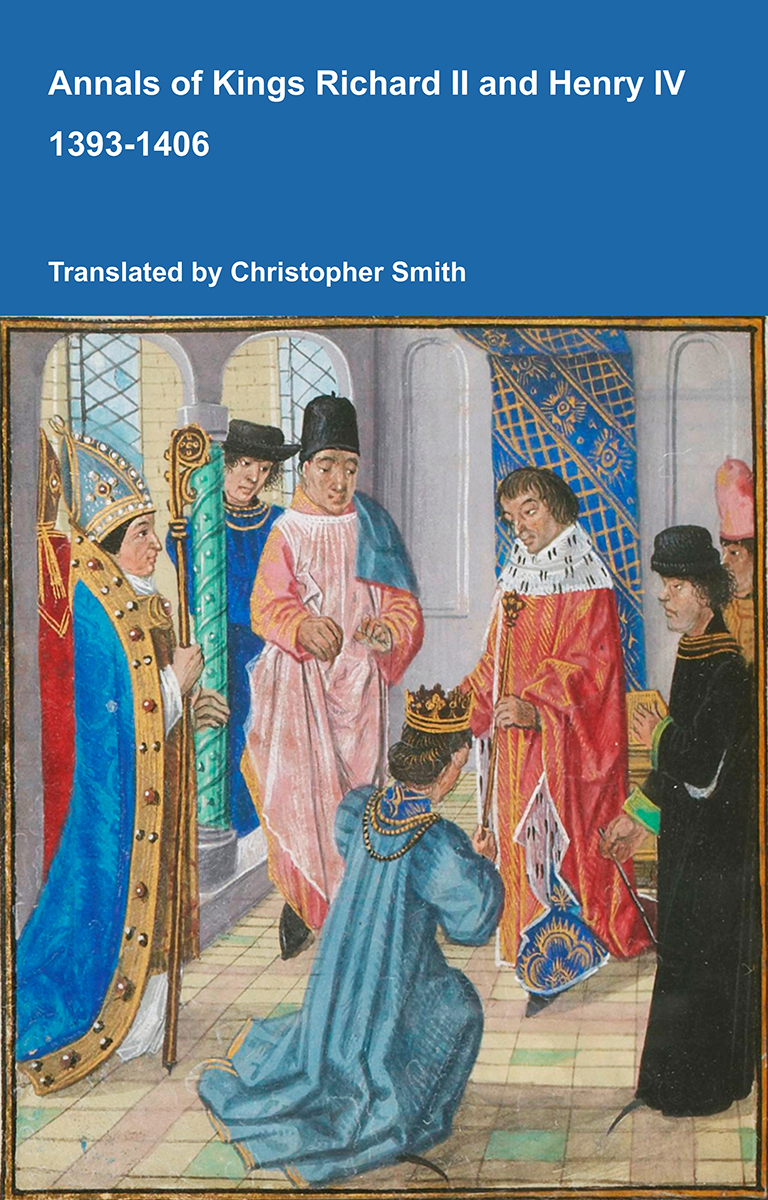 Annals of Kings Richard II and Henry IV. At the same time, the Pope, at the persuasion of certain persons, deprived John Buckingham, Bishop of Lincoln, of his bishopric, although he was now old and infirm, alleging his weakness and old age, by which he was rendered unable to govern so great a diocese and people. He nevertheless translated him to the bishopric of Chester, then vacant, not considering that, because of the character of that people, that bishopric was more difficult to govern than the one which he had previously ruled very well and discreetly. And he conferred the bishopric of Lincoln on Henry Beaufort [aged 23]1, one of the sons of Lord John, Duke of Lancaster, and Katherine Swynford, a mere boy, but out of reverence and love for the Duke. But the veteran Bishop of Lincoln refused to accept this translation. Spurning it, he betook himself to Canterbury, and in Christ Church, among the monks, laudably awaited the end of his life in contrition of heart. Therefore, at the King’s request, the King’s confessor2, a certain friar of the Order of Preachers, was translated from the bishopric of Llandaff to the bishopric of Chester.
Per idem tempus, Papa, quorundam persuasione, Johannem de Bukyngham, Lincolniensem Episcopum, cum jam senex esset, et valetudinarius, Episcopatu suo privavit, prætendens ejus imbecillitatem et senectutem, quibus reddebatur [impotens] ad regendum tantam Diœcesim atque plebem. Transtulit tamen eum ad Episcopatum Cestriæ, tunc vacantem, non attendens quod, propter mores illius gentis, Episcopatus ille fuit difficilior ad regendum, quam ille quem ante rexerat optime et discrete: contulitque Episcopatum Lincolniæ Henrico Beuforde, cuidam de filiis Domini Johannis, Ducis Lancastriæ, et Katerinæ de Swynford, admodum puero, sed ob Ducis reverentiam et amorem. Episcopus vero veteranus Lincolniæ noluit hanc translationem acceptare, sed, illa spreta, contulit se Cantuariam, et in Ecclesia Christi, inter monachos finem vitæ, in cordis contritione, laudabiliter expectavit. Regis ergo precatu, Confessor Regis, quidam Frater de Ordine Prædieatorum, de Episcopatu Landavensi translatus est ad Episcopatum Cestrensem.
Note 1. Henry Beaufort, 1375-1447, subsequently Cardinal, illegitimate, subsequently legitimated, son of John of Gaunt and Katherine Swynford. Henry was a first cousin of King Richard II both being grandsons of King Edward III. Henry was aged twenty-three when appointed Bishop of Lincoln on 27th February 1398. He was translated to Bishop of Winchester in 1404.
Note 2. John Burghill, died 1414.
On 2nd July 1398 Bishop John Burghill was translated to Bishop of Lichfield.
Around 27th May 1414 Bishop John Burghill died.
Parliament Rolls Richard II. 24. The Bishop of Llandaff submitted a petition in parliament, the tenor of which follows:
John Bishop of Llandaff shows, as well for our lord the king as for himself, in the present parliament that whereas the keeping of the temporalities of all the Archbishoprics and Bishoprics within the kingdom of England and land of Wales, in whichsoever lordships or franchises they may be, pertain during the vacancy of the same Archbishoprics and Bishoprics to our said lord the king and to none other, as by right of his crown and dignity. And whereas the Bishopric of Llandaff, through the death of Andrew lately bishop there, by whose death the keeping of all the temporalities of the said Bishopric ought by right to pertain to our said lord the king during the same vacancy Thomas Beauchamp, Earl of Warwick, after the death of the said bishop, entered the manor of Bishopston, part of the temporalities of the said Bishopric in the lordship and land of Gower in Wales, and continues his possession still, and has taken the profits thereof, claiming to have the keeping of the said manor in times of vacancy by reason of the said lordship and land of Gower, wrongfully and in contempt of our said lord the king and in derogation of his crown. Wherefor the said bishop prays, as well for our lord the king as for himself, that the said manor with its appurtenances be seized into the hands of our lord the king and delivered to the said bishop.
Which petition having been read aloud in parliament and heard by the king and lords, the said matter was announced to the said earl of Warwick being then present in parliament, which earl having deliberated upon it could not deny the entry or occupation of the said manor and the taking of the issues and profits of the same, and had no excuse to make, but that he and his ancestors had acted in the same manner. And because he could not justify his deed, he submitted himself to the king's grace. Wherefor it was adjudged by the king and lords in parliament that the said manor of Bishopston with all its appurtenances should be taken into the king's hands, and the king answered for the issues of the said manor taken by the said earl; and writs made thereon as appropriate; and that the said earl makes fine to the king for the contempt.


