

Paternal Family Tree: Beauchamp
Maternal Family Tree: Jeanne Fougères Countess Lusignan Countess La Marche and Angoulême
On 19th April 1319 Thomas Beauchamp 11th Earl Warwick [aged 6] and Katherine Mortimer Countess Warwick [aged 5] were married. She by marriage Countess Warwick. An arranged marriage although not clear who arranged it or whose ward Thomas Beauchamp 11th Earl Warwick was (his father Guy Beauchamp 10th Earl Warwick had died four years before) - possibly by King Edward II of England [aged 34] as a means of securing the Welsh March. The Beauchamp family established, the Mortimer family aspirational. The marriage took place after Roger Mortimer 1st Earl March [aged 31] had returned from his tenure as Lord Lieutenant of Ireland and before he rebelled against King Edward II of England in opposition to Hugh "Younger" Despencer 1st Baron Despencer [aged 33]. She the daughter of Roger Mortimer 1st Earl March and Joan Geneville Baroness Mortimer 2nd Baroness Geneville [aged 33]. He the son of Guy Beauchamp 10th Earl Warwick and Alice Tosny Countess Warwick [aged 34]. They were half second cousin once removed. She a great x 4 granddaughter of King John of England.
On 16th March 1338 Thomas Beauchamp 12th Earl Warwick was born to Thomas Beauchamp 11th Earl Warwick [aged 25] and Katherine Mortimer Countess Warwick [aged 24].
On 26th August 1346 the army of King Edward III of England [aged 33] defeated the French army at the Battle of Crécy. The English army was commanded by King Edward III of England, his son Edward "Black Prince" [aged 16], [his father] Thomas Beauchamp 11th Earl Warwick [aged 33], William Bohun 1st Earl of Northampton [aged 36] and [his uncle] John Beauchamp 1st Baron Beauchamp Warwick [aged 30].
The English army was included: Bishop Thomas of Hatfield [aged 36], Hugh Despencer 1st Baron Despencer [aged 38], Bernard Brocas [aged 16], Thomas Felton [aged 16], James Audley [aged 28], Robert Bourchier 1st Baron Bourchier, Bartholomew "The Elder" Burghesh 1st Baron Burghesh [aged 59], Bartholomew "The Younger" Burghesh 2nd Baron Burghesh [aged 18], Reginald Cobham 1st Baron Cobham [aged 51], John Darcy 1st Baron Darcy of Knayth [aged 66], Robert Ferrers 3rd Baron Ferrers of Chartley [aged 37], Richard Scrope 1st Baron Scrope of Bolton [aged 19], William Scrope [aged 21], Stephen Scrope [aged 21], William Latimer 4th Baron Latimer of Corby [aged 16], John Lisle 2nd Baron Lisle [aged 28], Gerard Lisle 1st Baron Lisle [aged 42], Nicholas Longford [aged 61], Edward Montagu 1st Baron Montagu, Walter Paveley 4th Baron Burghesh [aged 27], Michael Poynings 1st Baron Poynings [aged 28], Robert Ufford 1st Earl Suffolk [aged 48], John de Vere 7th Earl of Oxford [aged 34], Thomas West [aged 34], John Willoughby 2nd Baron Willoughby [aged 43], John Wingfield [aged 26], Henry Percy 11th and 3rd Baron Percy [aged 25], Hugh Courtenay 2nd or 10th Earl Devon [aged 43] (possibly), Walter "Elder" Devereux [aged 37], John Devereux [aged 44], Enion Sais Brecon, John Chandos [aged 26], Richard Pembridge [aged 26] and John Sully [aged 63].
The French army suffered significant casualties. King Philip "Fortunate" VI of France [aged 52] was wounded. William de Coucy [aged 60] and his son Enguerrand 6th Lord de Coucy [aged 33] and were killed.
Charles II Count Alençon [aged 49] was killed. His son Charles [aged 9] succeeded Count Alençon.
Louis Chatillon II Count Blois I Count Chatillon was killed. His son Louis succeeded III Count Blois.
Louis Dampierre II Count Nevers I Count Flanders [aged 42] was killed. His son Louis [aged 15] succeeded III Count Nevers, II Count Flanders.
King John I of Bohemia [aged 50] was killed. His son Charles [aged 30] succeeded IV King Bohemia, Holy Roman Emperor Luxemburg. Blanche Valois Holy Roman Empress Luxembourg [aged 29] by marriage Holy Roman Empress Luxemburg.
Rudolph "Valiant" Metz I Duke Lorraine [aged 26] was killed. His son John succeeded I Duke Lorraine.
Jean IV de Harcourt [aged 39] was killed.
On 13th April 1360 a freak weather event known as Black Monday Hailstorm occurred as the army of King Edward III of England [aged 47] were camped outside Chartres [Map]. [his father] Thomas Beauchamp 11th Earl Warwick [aged 47], William Bohun 1st Earl of Northampton [aged 50], Henry of Grosmont 1st Duke Lancaster [aged 50], Edward "Black Prince" [aged 29] and Walter Mauny were present. Around one thousand English were killed, with up to six thousand horses. King Edward III of England believed the event to be an Act of God and proceeded to negotiate with the French resulting in the Treaty of Brétigny.
On 28th April 1360 [his brother] Guy Beauchamp died from injuries received during the Black Monday Hailstorm.
In or before 8th October 1361 [his brother-in-law] John Beauchamp 3rd Baron Beauchamp Somerset [aged 31] and [his sister] Alice Beauchamp Baroness Beauchamp Somerset were married. She by marriage Baroness Beauchamp Somerset. She the daughter of [his father] Thomas Beauchamp 11th Earl Warwick [aged 48] and [his mother] Katherine Mortimer Countess Warwick [aged 47]. They were fourth cousin once removed. She a great x 5 granddaughter of King John of England.
After 8th October 1361, the date of her first husband's death, [his brother-in-law] Matthew Gurney and [his sister] Alice Beauchamp Baroness Beauchamp Somerset were married. She the daughter of [his father] Thomas Beauchamp 11th Earl Warwick [aged 48] and [his mother] Katherine Mortimer Countess Warwick [aged 47].
Before 1363 [his brother-in-law] Roger Clifford 5th Baron Clifford [aged 29] and [his sister] Maud Beauchamp Baroness Clifford [aged 27] were married. She by marriage Baroness de Clifford. She the daughter of [his father] Thomas Beauchamp 11th Earl Warwick [aged 49] and [his mother] Katherine Mortimer Countess Warwick [aged 48]. They were third cousin once removed. He a great x 4 grandson of King John of England. She a great x 5 granddaughter of King John of England.
In 1369 [his mother] Katherine Mortimer Countess Warwick [aged 55] died.
On 13th November 1369 [his father] Thomas Beauchamp 11th Earl Warwick [aged 56] died of plague. His son Thomas [aged 31] succeeded 12th Earl Warwick. [his future wife] Margaret Ferrers Countess Warwick [aged 22] by marriage Countess Warwick.
In 1373 King Edward III of England [aged 60] created two new Garter Knights:
52nd Alan Buxhull [aged 50].
53rd Thomas Beauchamp 12th Earl Warwick [aged 34].
Before 1374 Thomas Beauchamp 12th Earl Warwick [aged 35] and Margaret Ferrers Countess Warwick [aged 26] were married. She by marriage Countess Warwick. He the son of Thomas Beauchamp 11th Earl Warwick and Katherine Mortimer Countess Warwick. They were third cousin twice removed. He a great x 5 grandson of King John of England. She a great x 3 granddaughter of King Edward I of England.
Around 1374 [his daughter] Katherine Beauchamp was born to Thomas Beauchamp 12th Earl Warwick [aged 35] and [his wife] Margaret Ferrers Countess Warwick [aged 27]. She a great x 4 granddaughter of King Edward I of England.
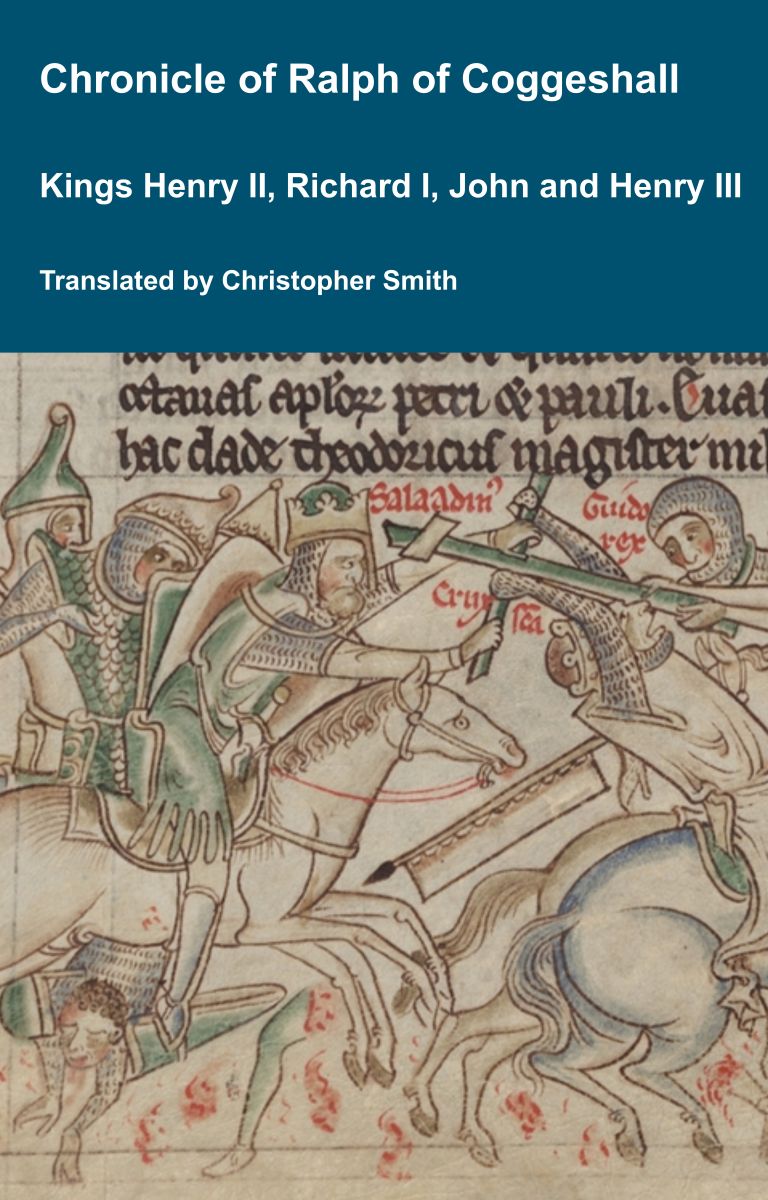
Chronicle of Abbot Ralph of Coggeshall
The Chronicle of Abbot Ralph of Coggeshall (Chronicon Anglicanum) is an indispensable medieval history that brings to life centuries of English and European affairs through the eyes of a learned Cistercian monk. Ralph of Coggeshall, abbot of the Abbey of Coggeshall in Essex in the early 13th century, continued and expanded his community’s chronicle, documenting events from the Norman Conquest of 1066 into the tumultuous reign of King Henry III. Blending eyewitness testimony, careful compilation, and the monastic commitment to record-keeping, this chronicle offers a rare narrative of political intrigue, royal power struggles, and social upheaval in England and beyond. Ralph’s work captures the reigns of pivotal figures such as Richard I and King John, providing invaluable insights into their characters, decisions, and the forces that shaped medieval rule. More than a simple annal, Chronicon Anglicanum conveys the texture of medieval life and governance, making it a rich source for scholars and readers fascinated by English history, monastic authorship, and the shaping of the medieval world.
Available at Amazon in eBook and Paperback format.
Around 1376 [his daughter] Margaret Beauchamp was born to Thomas Beauchamp 12th Earl Warwick [aged 37] and [his wife] Margaret Ferrers Countess Warwick [aged 29] at Warwick Castle [Map]. She a great x 4 granddaughter of King Edward I of England. She married before 1403 Giles Daubeney and had issue.
On 12th June 1376 [his brother-in-law] William Ufford 2nd Earl Suffolk [aged 38] and [his sister] Isabella Beauchamp Countess Suffolk were married. She by marriage Countess Suffolk. She the daughter of [his father] Thomas Beauchamp 11th Earl Warwick and [his mother] Katherine Mortimer Countess Warwick. He the son of Robert Ufford 1st Earl Suffolk and Margaret Norwich Countess Suffolk.
On 11th June 1381 King Richard II of England [aged 14] held council with his mother Joan "Fair Maid of Kent" Princess Wales [aged 52], Thomas Beauchamp 12th Earl Warwick [aged 43], William Montagu 2nd Earl Salisbury [aged 52], Richard Fitzalan 9th Earl of Surrey 4th or 11th Earl of Arundel [aged 35], Archbishop Simon Sudbury [aged 65] and Robert Hales [aged 56] at the Tower of London [Map].


In or before 1382 [his brother-in-law] John Strange 5th Baron Strange Blackmere [aged 28] and [his sister] Isabella Beauchamp Countess Suffolk were married. She by marriage Baroness Strange Blackmere. She the daughter of [his father] Thomas Beauchamp 11th Earl Warwick and [his mother] Katherine Mortimer Countess Warwick. They were third cousin once removed. He a great x 5 grandson of King John of England. She a great x 5 granddaughter of King John of England.
On 28th January 1382 [his son] Richard Beauchamp 13th Earl Warwick was born to Thomas Beauchamp 12th Earl Warwick [aged 43] and [his wife] Margaret Ferrers Countess Warwick [aged 35] at Salwarpe, Worcestershire. King Richard II of England [aged 15] and Archbishop Richard Scrope [aged 32] were his godfathers. He a great x 4 grandson of King Edward I of England. He married 1. before 5th October 1397 his second cousin once removed Elizabeth Berkeley Countess Warwick, daughter of Thomas Berkeley 10th and 5th Baron Berkeley, Baron Lisle and Margaret Lisle Baroness Berkeley 3rd Baroness Lisle, and had issue 2. before 1425 his third cousin Isabel Despencer Countess Warwick and Worcester, daughter of Thomas Despencer 1st Earl Gloucester and Constance York Countess Gloucester, and had issue.
On 26th October 1383 [his sister] Alice Beauchamp Baroness Beauchamp Somerset died.

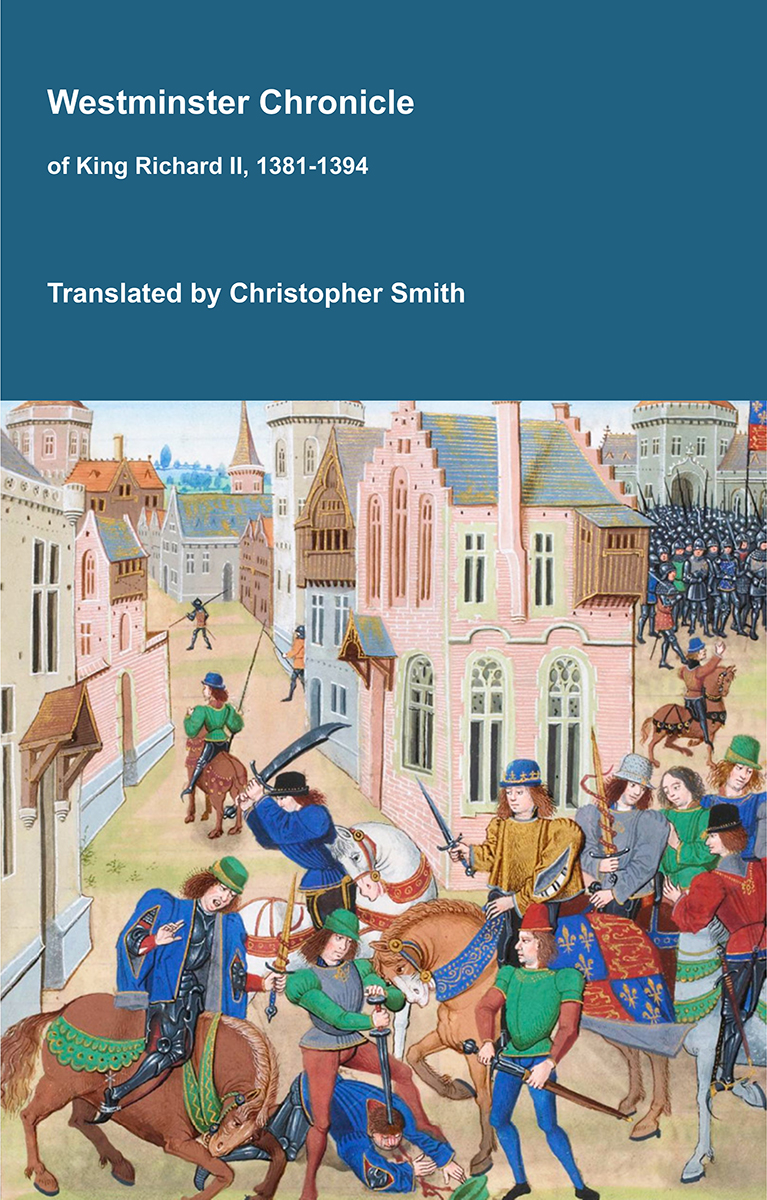 Westminster Chronicle. On the following day [29th October 1387], the king sent for the duke of Gloucester [aged 32] and the earl of Arundel, asking that they come to him. But they excused themselves, asserting that they had their mortal enemies beside him, and therefore did not dare approach him. Therefore, by the king’s command, on the twelfth day of November it was proclaimed in London, under forfeiture of all goods, that no one of the city should sell anything to the earl of Arundel, or provide him with necessities in any way. This deed displeased many, because he was one of the more powerful nobles of the whole land. Also, Michael de la Pole [aged 57], earl of Suffolk, wickedly and repeatedly advised the king, always, that, leaving the others aside, before all else the earl of Warwick [aged 49] should be killed, for this reason: that it was due to him that those lords, ordered to come to the king, did not come at all because of his wicked persuasion, but wickedly prepared to resist him as rebels. Thus, he said, it was clear that Warwick adhered more to the said lords rebelling in this way than to his king, to whom he ought to render help and support him with all his strength, setting aside all others whatsoever. Also, this earl, together with other lords, namely the duke of Gloucester, the earl of Arundel, the earl of Derby [aged 20], and the earl of Nottingham [aged 19], had treacherously conspired for the king’s death or for his deposition, and therefore was plainly proved worthy of death. And indeed, once he had been destroyed, the other lords would not dare raise their horns against the king, because up to this point they had been led, and likewise strengthened, by his judgement, diligence, and counsel.
Sequenti vero die misit rex pro duce Gloucestriæ et comite Arundell ut venirent ad illum. Illi autem excusabant se asserentes eos inimicos capitales juxta latus suum habere et ideo non audebant sibi appropinquare. Igitur præcepto regis xii die Novembris fuit proclamatum Londoniis sub forisfactura omnium bonorum quod nullus de civitate comiti Arundelliæ aliquid venderet seu illi in aliquo necessaria ministraret. Quodque factum multis displieuit eoquod erat unus de valentioribus optimatibus totius terræ. Item Michael de la Pole comes Suffolkiæ nequiter et sæpius semper suasit regi quatinus utcæteris prætermissis ante omnia comes Warwyk oceideretur ista ratione quia per eum stetit quominus illi domini jussi venire ad regem ejus suasu nefario nequaquam venerunt sed ei resistere tanquam rebelles nequiter paraverunt, sicque patet magis illum dictis dominis ita rebellantibus adhærere quam suo regi cui juvamen impenderet et illum pro viribus sustineret cæteris postpositis quibuseunque. Item comes iste cum aliis dominis, scilicet duce Gloucestriæ, comite Arundelliæ, comite Derbeye et comite Notyngham in mortem regis sive in ejus depositionem proditorie conspiravit, igitur dignus morte manifeste probatur. Et profecto eo extincto cæteri domini contra regem erigere cornua non audebant quia ejus sensu et industria atque consilio hucusque sunt ducti pariterque fortificati.
Westminster Chronicle. Meanwhile it became known to these lords how Sir Thomas Trivet [aged 56] had advised the king to go out into the open field and unfurl his banner against these lords who had thus risen, and this counsel greatly displeased them. Nevertheless, at the urging of reverend men, on the seventeenth day of November they came to the king with two hundred horses, in the great hall at Westminster, where he was seated on the royal throne. Entering the hall, these three, namely the duke of Gloucester [aged 32], the earl of Arundel, and the earl of Warwick [aged 49], on seeing the king at once fell prostrate to the ground, and did this three times before they reached him. At length, by the king’s command, they rose and stood, and said to him that he should not wonder that they had come to him late, nor now be astonished at their arrival in such array, because, as they had learned from others, their mortal enemies were continually residing beside him. Therefore it was no wonder if they had been slow in coming to him, since, saving always their allegiance, they wished to preserve their lives as long as they could, setting aside all other considerations.
Interim innotuit istis dominis quomodo dominus Thomas Tryvet consuluit regem exire in latum campum et suum vexillum expandere contra istos dominos sic levatos quodque consilium valde eis displicuit. Nihilominus tamen ad instantiam reverendorum virorum xvii die Novembris et cum cce. equis venerunt ad regem in magna aula apud Westmonasterium in sede regia collocatum et intrantes aulam hi tres, sceilicet dux Gloucestriæ, comes Arundelliæ et comes Warwykiæ, videntesque regem protinus corruerunt proni in terram sicque tribus vicibus fecerunt antequam pervenerunt ad eum. Demum jussu regis erexerunt se stantes dixeruntque ei quod non miraretur quamvis tarde venerunt ad eum, nec jam propter corum adventum sub tali apparatu obstupesceret quia, prout didicerant ab aliis, eorum capitales inimici juxta latus suum continue residebant. Unde mirum non esset licet fuissent morosi in veniendo ad eum quia vitam eorum quamdiu possent salvis semper eorum ligeanciis vellent cæteris postpositis conservare.
On 23rd July 1392 [his brother] William Beauchamp 1st Baron Abergavenny [aged 49] was created 1st Baron Abergavenny by writ of summons.
On 23rd July 1392 [his brother] William Beauchamp 1st Baron Abergavenny [aged 49] and [his sister-in-law] Joan Fitzalan Baroness Bergavenny were married. She by marriage Baroness Abergavenny. She the daughter of Richard Fitzalan 9th Earl of Surrey 4th or 11th Earl of Arundel [aged 46] and Elizabeth Bohun Countess Arundel and Surrey. He the son of [his father] Thomas Beauchamp 11th Earl Warwick and [his mother] Katherine Mortimer Countess Warwick. They were second cousin twice removed. He a great x 5 grandson of King John of England. She a great x 2 granddaughter of King Edward I of England.
In 1397 Thomas Beauchamp 12th Earl Warwick [aged 58] was imprisoned at Beauchamp Tower, Tower of London [Map] during the Lords Appellant.
Annals of King Richard II. For on the sixth day before the Ides of July [10th July 1397], he resolved to hold a feast, which would have been more infamous for its infamies, if his malice had answered his wishes, than once was the gathering of Herod. Indeed, he caused the Duke of Gloucester, the Earls of Arundel and Warwick, and several others whom he hated, to be invited to it, so that, on such an occasion, he might seize so many nobles gathered together without disturbance or uproar. But the Duke, being gravely ill, excused himself. The Earl of Arundel, to whom the King’s malice was better known because of the very experiences he had suffered, refrained from coming to the feast, waiting instead in his castle of Reigate, well fortified. Only the Earl of Warwick came to the feast out of all those invited. On that same day, before dinner, the King, being a most cunning dissembler, showed him so fair a countenance and spoke such fair words that the Earl suspected nothing of the King’s treachery. For the King, taking the Earl by the hand, urged him to be of good courage and not to be saddened by the loss of the lands of Gower, swearing that even if he had lost them, the King himself would provide him with lands of equal value. Yet when the feast had ended, he caused the Earl to be arrested. Shortly afterwards he sent him to be kept in custody until the time of the Parliament which he had resolved to hold, to the destruction of many.
Sexto nempe Idus Julii, statuit celebrare convivium, quod suis infamiis fuisset famosius, si malitia respondisset votis suis, quam fuit olim Herodis conventiculum. Revera fecit ad illud invitari Ducem Glowcestriæ, Comites Arundeliæ et Warwici, et plures alios quos odivit, ut occasione tali tot proceres adunatos, sine turba vel strepitu, capere potuisset ; sed Dux, graviter infirmatus, se excusavit. Comes Arundeliæ, cui melius fuit nota Regis malitia propter ipsa experimenta quæ senserat, venire ad convivium supersedit, expectans in castro suo de Reygate, bene munito. Solus Comes Warwici venit ad convivium ex invitatis omnibus. [Cui] ipso die, ante prandium, Rex, ut erat simulator callidissimus, tam bonum vultum exhibuit, tam bona verba fecit, quod Comes nihil minus quam de Regis infidelitate dubitabat. Monuit nempe Rex, apprehensa manu Comitis, ut esset bono animo, et non tristaretur pro terrarum de Gower amissione ; jurans quod etsi perdidisset cas, ipse sibi terras ad tantum valorem provideret. Sed tamen cum finitum fuisset convivium, fecit Comitem arestari ; quem cito postea misit ad ; custodiendum usque ad tempus Parliamenti, quod statuit, in multorum perniciem, celebrare.
Chronicle of a Bourgeois of Valenciennes
Récits d’un bourgeois de Valenciennes aka The Chronicle of a Bourgeois of Valenciennes is a vivid 14th-century vernacular chronicle written by an anonymous urban chronicler from Valenciennes in the County of Hainaut. It survives in a manuscript that describes local and regional history from about 1253 to 1366, blending chronology, narrative episodes, and eyewitness-style accounts of political, military, and social events in medieval France, Flanders, and the Low Countries. The work begins with a chronological framework of events affecting Valenciennes and its region under rulers such as King Philip VI of France and the shifting allegiances of local nobility. It includes accounts of conflicts, sieges, diplomatic manoeuvres, and the impact of broader struggles like the Hundred Years’ War on urban life in Hainaut. Written from the perspective of a burgher (bourgeois) rather than a monastery or royal court, the chronicle offers a rare lay viewpoint on high politics and warfare, reflecting how merchants, townspeople, and civic institutions experienced the turbulence of the 13th and 14th centuries. Its narrative style combines straightforward reporting of events with moral and civic observations, making it a valuable source for readers interested in medieval urban society, regional politics, and the lived experience of war and governance in pre-modern Europe.
Available at Amazon in eBook and Paperback format.
Froissart Book 4 Chapter 92. After 12th July 1397. The earl of Salisbury [aged 47] was very earnest in his supplications for the earl of Warwick [aged 59]. They had been brothers in arms ever since their youth; and he excused him on account of his great age, and of his being deceived by the fair speeches of the duke of Gloucester [aged 42] and the earl of Arundel [aged 51]: that what had been done was not from his instigation, but solely by that of others; and the house of Beauchamp, of which the earl of Warwick was the head, never imagined treason against the crown of England. The earl of Warwick was, therefore, through pity, respited from death, but banished to the Isle of Wight [Map], which is a dependency on England. He was told, - "Earl of Warwick, this sentence is very favourable, for you have deserved to die as much as the earl of Arundel, but the handsome services you have done in times past, to king Edward of happy memory, and the prince of Wales his son, as well on this as on the other side of the sea, have secured your life; but it is ordered that you banish yourself to the Isle of Wight, taking with you a sufficiency of wealth to support your state as long as you shall live, and that you never quit the island." The earl of Warwick was not displeased with this sentence, since his life was spared, and, having thanked the king and council for their lenity, made no delay in his preparations to surrender himself in the Isle of Wight on the appointed day, which he did with part of his household. The Isle of Wight is situated opposite the coast of Normandy, and has space enough for the residence of a great lord, but he must provide himself with all that he may want from the circumjacent countries, or he will be badly supplied with provision and other things.
Betrayal and Death of King Richard II. [Around 25th July 1397] Afterwards he [Thomas of Woodstock 1st Duke of Gloucester [aged 42]] sent to the Earl Marshal,1 who was captain of Calais, to the Earl of Warwick, and to the Archbishop of Canterbury [aged 44],2 and desired that they would come to Arundel on a certain day; and he also sent to the Earl of Arundel to say that he would come to dine there with him, and that he would bring with him all the other lords. The Earl of Arundel [aged 51] returned him answer, that he would be right welcome, and all the lords it would please him to bring with him in his company. It is true that the Duke of Gloucester arrived at Arundel the eighth day before the month of August in the year thirteen hundred fourscore and sixteen,3 as well as the Earl of Derby, the Earl Marshal, the Archbishop of Canterbury, the Abbot of St. Albans, and the Prior of Westminster. As these lords were seated at dinner, there arrived the Earl of Warwick [aged 59];4 and when he joined the company of the lords, the Duke of Gloucester said to him, 'My brave man, you must take the same oath as we have taken:' and the Earl replied, 'My lord, what do you wish me to swear?' The Duke said, 'You will swear as we have done, if you please, to be true and faithful to the realm, and also to be true and faithful to each other.'
Note 1. Thomas of Mowbray [aged 29], Earl of Nottingham, the first hereditary Earl Marshal, shortly afterwards created Duke of Norfolk. He was then absent from Calais on furlough. His leave of absence is dated Oct, 3, 1396, extending for one year. The assigned reason is, that he might travel into Picardy for matters relating to the safe custody of the city. (Rymer, Fœdera,) Chastelnin's version calls him 'fustre cappitaine de Calleys.' I have not been able to obtain a satisfactory explanation of this word, The Earl could boast of royal descent by his mother Elizabeth, daughter and heiress of John Lord Segrave by Margaret Plantagenet, daughter and heiress of Thomas de Brotherton, Earl of Norfolk and Marshal of England, youngest son of Edward the First by his second consort, Margaret of France, (Dugdale, Baronage.)
Note 2. Thomas Fitzalan, third son of the Iate Earl of Arundel, he had been Bishop of Ely, and Chancellor, during the prosecution of Richard's favourites. He was afterwards translated to York, and succeeded Archbishop Courtenay in the see of Canterbury in August 1397, according to the Monk of Evesham, but in 1395 according to Spelman, (Concilia).
Note 3. As Brest was not given up till June 1397, this is undoubtedly a wrong date. It should have been August 1397, and I think it very probable that it was so in the original MS. The Monk of St. Denys in his chronicles corrects the error, 'At the head of the factions (anno 1397) was the King's uncle, the Duke of Gloucester, the Earl Arundel, and the Earl Warwick, who, as we have related, conspired the preceding year against the King.' (Chronicles of the Monk of St. Denys, chap. v. b. xviii.) (It must never be forgotten that the year commenced at Easter.) The London Chronicle places Gloucester's arrest on the 21st of July. The conspiracy was revealed before the middle of the month, and probably before the meeting at Arundel; for, on the 13th of July 1397, an order wns made out for the arrest of Gloucester, Arundel, and Warwick, (Rymer, Fœdera.) This order, agreed upon at Windsor, does not appear to have been issued, as a second order was made and published from Westminster on the 28th of the month, (Fœdera.)
Note 4. Thomas, son of Thomas Beauchamp, Earl of Warwick, by Catherine, daughter of Roger Mortemer, first Earl of March. Perhaps the Earl was the more readily induced to join the conspirators, as he would naturally be incensed at the loss of the honour of Gower, recovered at this time by the Earl Marshal. See Otterbourne, Scriptores Veleres, p. 189.
Annals of King Richard II. After the death of the Earl of Arundel, the Earl of Warwick, Lord Thomas Beauchamp, was brought forward to stand before the judgement of Parliament. When he had been placed in the position of the accused, and had heard the appeal read against him, in which he was marked as guilty of treason, he answered that it had never been in his mind to act treasonably against the King, nor had he thought that those ridings and assemblies could be regarded as treason. When he was therefore asked what he now wished to say, after the lawyers had interpreted that deed as treason by evident arguments, he begged mercy from the King for what he had committed. The King then asked him whether he wished to deny that he had ridden in that way, etc., with the Duke of Gloucester and the Earl of Arundel, as he had heard read in the aforesaid appeal. The Earl said that he could not deny that he had ridden with them: "Would that I had never seen their eyes." Then the King said: "Do you therefore acknowledge yourself guilty of treason?" "I acknowledge it," said the Earl; and with weeping and pitiable sobs he humbly begged all those present there to intercede for him with the royal majesty. Then the King himself, the Duke of Lancaster, all those sitting around, and even his own appellants, were moved to tears. After a little while, the King, wiping his face, said: "By Saint John the Baptist, Thomas of Warwick, this confession of yours is dearer to me than the value of all the lands of the Duke of Gloucester and the Earl of Arundel." The Earl therefore, persisting in his prayers, moved everyone to pray for him; and it came about that, after sentence had been given against him, the King granted him life and pardon, and sent him to the Isle of Man, which belonged to Lord William le Scrope. There he appointed him to be kept in perpetual imprisonment, promising both him and his wife honourable sustenance from the lands or revenues formerly belonging to them, but now forfeited. But afterwards he did not fulfil this sentence with regard to the Earl and Countess, but allowed both of them to drag out their lives in great misery.
Post mortem Comitis Arundeliæ, Comes Warwici, Dominus Thomas de Bellà Campo, productus est ad astandum Parliamentali judicio Qui, constitutus in loco reorum, cum audisset appellationem lectam contra eum, in qua notatus fuit de proditione, respondit quod nunquam fuit in mente sua proditiose facere contra Regem, nec putabat illas equitationes et congregationes potuisse referri ad proditionem. Requisitus igitur quid nune vellet dicere, postquam jurisperiti factum illud proditionem interpretati sunt, evidentibus argumentis, ille vero petiit misericordiam de Rege pro commissis: Rex autem quæsivit ab illo, nunquid vellet diffiteri se sic equitasse ete, cum Duce Gloverniæ et Comite Arundeliæ, ut audiverat legi in appellatione præfata. Comes dixit se inficiari non posse quod equitaverit cum eisdem, — "Qui utinam, inquit, nunquam vidissem oculos eorundem." Tunc Rex; — "Nunquid ergo te recognoscis proditionis reum?" "Recognosco," ait, Comes; et cum fletu et singultibus miserandis humiliter rogavit omnes ibidem existentes, ut intercederent pro eodem apud regiam majestatem. Tunc Rex ipse, Duxque Lancastriæ, cuneti cireumsedentes, et ipsi etiam appellatores sui, ad lacrymas sunt commoti. Post pusillum, Rex, detersa facie — "Per Sanctum Johannem Baptistam," ait, "Thoma de Warwico, ista tua confessio carior est mihi quam valor omnium terrarum Ducis Gloverniæ et Comitis Arundeliæ." Comes igitur, instans precibus, commovit omnes ad orandum pro eo; factumque est, ut post datam in eum sententiam, Rex daret sibi vitam et veniam, et mitteret eum [in] insulam de Man, quæ pertinebat Domino Willelmo le Scrop: ibi constituit eum in carcere perpetuo conservari, promisso, tam sibi quam uxori suæ, victu honorifico de terris vel redditibus quondam eisdem pertinentibus, modo tamen forisfactis. Sed hanc sententiam postea non implevit penes Comitem et Comitissam, sed in magna protrahere miseria vitam permisit utrumque.
On 29th September 1397 King Richard II [aged 30] rewarded his relations with Dukedoms, possibly for their part in downfall of Thomas of Woodstock 1st Duke of Gloucester [deceased], Thomas Beauchamp 12th Earl Warwick [aged 59] and Richard Fitzalan 9th Earl of Surrey 4th or 11th Earl of Arundel [deceased]...
His older half-brother John Holland 1st Duke Exeter [aged 45] was created 1st Duke Exeter. Elizabeth Lancaster Duchess Exeter [aged 34] by marriage Duchess Exeter.
His nephew Thomas Holland 1st Duke Surrey [aged 23] was created 1st Duke Surrey.
His first cousin once-removed Margaret [aged 77] was created 1st Duchess Norfolk - for life only. On the same day her grandson Thomas [aged 29] was also created Duke of Norfolk - see below.
His second cousin once removed Thomas Mowbray 1st Duke of Norfolk was created 1st Duke Norfolk. Elizabeth Fitzalan Duchess Norfolk [aged 31] by marriage Duchess Norfolk.
His first cousin Edward 2nd Duke of York 1st Duke Albemarle [aged 24] was created 1st Duke Albemarle. Beatrice Burgundy Countess Rutland and Cork [aged 24] by marriage Duchess Albemarle.
His illegitimate first cousin John Beaufort 1st Marquess Somerset and Dorset [aged 24] was created 1st Marquess Somerset, 1st Marquess Dorset. Margaret Holland Duchess Clarence [aged 12] by marriage Marchioness Somerset, Marchioness Dorset.
Ralph Neville 1st Earl of Westmoreland [aged 33] was created 1st Earl of Westmoreland. Joan Beaufort Countess of Westmoreland [aged 18] by marriage Countess of Westmoreland.
Before 5th October 1397 Richard Beauchamp 13th Earl Warwick [aged 15] and Elizabeth Berkeley Countess Warwick [aged 11] were married. He the son of Thomas Beauchamp 12th Earl Warwick [aged 59] and Margaret Ferrers Countess Warwick [aged 50]. They were second cousin once removed. He a great x 4 grandson of King Edward I of England. She a great x 3 granddaughter of King Edward I of England.
In August 1399 Thomas Beauchamp 12th Earl Warwick [aged 61] was released.
On 13th October 1399 King Henry IV of England [aged 32] was crowned IV King of England at Westminster Abbey [Map]. Archbishop Thomas Fitzalan aka Arundel [aged 46] officiated. Bishop Robert Braybrooke carried the sacraments and said mass.
The future King Henry V of England [aged 13] carried the Sword Curtana. Thomas Beauchamp 12th Earl Warwick [aged 61] and/or John Beaufort 1st Marquess Somerset and Dorset [aged 26] carried a sword wrapped in red and bound with golden straps symbolising two-fold mercy. Henry Percy 1st Earl of Northumberland [aged 57] carried the Lancaster Sword.
Thomas Percy 1st Earl of Worcester [aged 56] carried the Steward's baton. Thomas Erpingham [aged 44] carried a Sword.
[his nephew] Edmund Stafford 5th Earl Stafford [aged 21] was appointed Knight of the Bath. John Lancaster 1st Duke Bedford [aged 10], John Arundell [aged 33] and [his son] Richard Beauchamp 13th Earl Warwick [aged 17] were knighted.
Archbishop Richard Scrope [aged 49] attended.
On 8th April 1401 Thomas Beauchamp 12th Earl Warwick [aged 63] died. His son Richard [aged 19] succeeded 13th Earl Warwick. Elizabeth Berkeley Countess Warwick [aged 15] by marriage Countess Warwick.
Holinshed's Chronicle [1525-1582]. This yeare, the eight day of Aprill [1402] deceassed the lord Thomas Beauchampe earle of Warwike.
On 22nd January 1407 [his former wife] Margaret Ferrers Countess Warwick [aged 60] died.
Duo Rerum Anglicarum Scriptores Veteres. Thomas Nottingham recovered the lands of Gower.
In this year Thomas Nottingham, by a bill of error which he brought against Thomas, Earl of Warwick, recovered the lands of Gower.
Tho. Nottingham recuperavit terras de Gower.
Hoc anno Tho. Nottingham per billam erroris, quam tulit contra Tho. comitem Warwici, recuperavit terras de Gower.
This is a translation of the 'Memoires of Jacques du Clercq', published in 1823 in two volumes, edited by Frederic, Baron de Reissenberg. In his introduction Reissenberg writes: 'Jacques du Clercq tells us that he was born in 1424, and that he was a licentiate in law and a counsellor to Philip the Good, Duke of Burgundy, in the castellany of Douai, Lille, and Orchies. It appears that he established his residence at Arras. In 1446, he married the daughter of Baldwin de la Lacherie, a gentleman who lived in Lille. We read in the fifth book of his Memoirs that his father, also named Jacques du Clercq, had married a lady of the Le Camelin family, from Compiègne. His ancestors, always attached to the counts of Flanders, had constantly served them, whether in their councils or in their armies.' The Memoires cover a period of nineteen years beginning in in 1448, ending in in 1467. It appears that the author had intended to extend the Memoirs beyond that date; no doubt illness or death prevented him from carrying out this plan. As Reissenberg writes the 'merit of this work lies in the simplicity of its narrative, in its tone of good faith, and in a certain air of frankness which naturally wins the reader’s confidence.' Du Clercq ranges from events of national and international importance, including events of the Wars of the Roses in England, to simple, everyday local events such as marriages, robberies, murders, trials and deaths, including that of his own father in Book 5; one of his last entries.
Available at Amazon in eBook and Paperback format.
Parliament Rolls Richard II. 31. Whereupon the said Sir John was brought before the king in parliament between two earls, namely Huntingdon and the marshal, dressed in a cloth as a dress of honour, and his sword carried before him, the hilt uppermost. And then the king's charter of the said creation was read aloud before the king, lords, and commons in parliament. And afterwards the king himself girded the said earl with his sword and took his homage, and caused him to sit in his place in parliament, that is to say, between the earls marshal and Warwick. The tenor of which charter follows:
Parliament Rolls Richard II. 5. The following are assigned to be triers of petitions from England, Ireland, Wales, and Scotland:
The duke of Guyenne and duke of Lancaster.
The Earl of Warwick.
William Thirning.
William Rickhill.
John Wadham.
to act all together, or at least six of the aforesaid prelates and lords; consulting with the chancellor, treasurer, steward, and chamberlain, and also the king's serjeants when necessary. And they shall hold their session in the chamberlain's room near the Painted Chamber [Map].
Kings Wessex: Great x 10 Grand Son of King Edmund "Ironside" I of England
Kings Gwynedd: Great x 6 Grand Son of Owain "Great" King Gwynedd
Kings Seisyllwg: Great x 12 Grand Son of Hywel "Dda aka Good" King Seisyllwg King Deheubarth
Kings Powys: Great x 7 Grand Son of Maredudd ap Bleddyn King Powys
Kings England: Great x 5 Grand Son of King John of England
Kings Scotland: Great x 7 Grand Son of King David I of Scotland
Kings France: Great x 10 Grand Son of Hugh I King of the Franks
Kings Duke Aquitaine: Great x 14 Grand Son of Ranulf I Duke Aquitaine
Kings Spain: Great x 7 Grand Son of Alfonso VII King Castile VII King Leon
Great x 4 Grandfather: William Beauchamp  6 x Great Grandson of Maredudd ab Owain King Deheubarth King Powys King Gwynedd
Great x 3 Grandfather: Walter Beauchamp 7 x Great Grandson of Maredudd ab Owain King Deheubarth King Powys King Gwynedd
Great x 4 Grandmother: Jeanne de Saint Valéry
Great x 2 Grandfather: William Beauchamp 8 x Great Grandson of Maredudd ab Owain King Deheubarth King Powys King Gwynedd
Great x 4 Grandfather: Roger Mortimer 
Great x 3 Grandmother: Joan Mortimer
Great x 4 Grandmother: Isabel Ferrers 
Great x 1 Grandfather: William Beauchamp 9th Earl Warwick 7 x Great Grandson of Hugh I King of the Franks
Great x 3 Grandfather: William Maudit
Great x 2 Grandmother: Isabel Maudit 6 x Great Granddaughter of Hugh I King of the Franks
Great x 4 Grandfather: Waleran Beaumont 4th Earl Warwick  4 x Great Grandson of Hugh I King of the Franks
Great x 3 Grandmother: Alice Beaumont 5 x Great Granddaughter of Hugh I King of the Franks
Great x 4 Grandmother: Alice Harcourt Countess Warwick 
Grandfather: Guy Beauchamp 10th Earl Warwick 8 x Great Grandson of Hugh I King of the Franks
Great x 3 Grandfather: Geoffrey Fitzpeter 1st Earl Essex
Great x 2 Grandfather: John Fitzgeoffrey
Great x 4 Grandfather: Roger Clare 2nd Earl Hertford 
Great x 3 Grandmother: Aveline Clare Countess Essex
Great x 4 Grandmother: Maud St Hilary Countess Hertford
Great x 1 Grandmother: Maud Fitzjohn Countess Warwick 8 x Great Granddaughter of Hugh I King of the Franks
Great x 4 Grandfather: Roger Bigod 2nd Earl Norfolk 
Great x 3 Grandfather: Hugh Bigod 3rd Earl Norfolk 6 x Great Grandson of Hugh I King of the Franks
Great x 4 Grandmother: Ida Tosny Countess Norfolk  5 x Great Granddaughter of Hugh I King of the Franks
Great x 2 Grandmother: Isabel Bigod 7 x Great Granddaughter of Hugh I King of the Franks
Great x 4 Grandfather: William Marshal 1st Earl Pembroke 
Great x 3 Grandmother: Maud Marshal Countess Norfolk and Surrey 6 x Great Granddaughter of Hugh I King of the Franks
Great x 4 Grandmother: Isabel Clare Countess Pembroke 5 x Great Granddaughter of Hugh I King of the Franks
Father: Thomas Beauchamp 11th Earl Warwick 6 x Great Grandson of King Henry I "Beauclerc" England
Great x 4 Grandfather: Roger Tosny IV Lord Flamstead 5 x Great Grandson of Hugh I King of the Franks
Great x 3 Grandfather: Ralph Tosny VI Lord Flamstead 2 x Great Grandson of King Henry I "Beauclerc" England
Great x 4 Grandmother: Constance Beaumont Sarthe Great Granddaughter of King Henry I "Beauclerc" England
Great x 2 Grandfather: Roger Tosny 3 x Great Grandson of King Henry I "Beauclerc" England
Great x 4 Grandfather: Walter Lacy Lord Meath 
Great x 3 Grandmother: Petronilla Lacy 7 x Great Granddaughter of Maredudd ab Owain King Deheubarth King Powys King Gwynedd
Great x 4 Grandmother: Margaret de Braose  6 x Great Granddaughter of Maredudd ab Owain King Deheubarth King Powys King Gwynedd
Great x 1 Grandfather: Ralph Tosny 4 x Great Grandson of King Henry I "Beauclerc" England
Great x 4 Grandfather: Henry Bohun 1st Earl Hereford  Great Grandson of King David I of Scotland
Great x 3 Grandfather: Humphrey Bohun 2nd Earl Hereford 1st Earl Essex 2 x Great Grandson of King David I of Scotland
Great x 4 Grandmother: Maud Mandeville Countess Hereford 
Great x 2 Grandmother: Alice Bohun 3 x Great Granddaughter of King David I of Scotland
Great x 4 Grandfather: Raoul Lusignan Count of Eu 
Great x 3 Grandmother: Matilda Lusignan Countess Hereford and Essex
Great x 4 Grandmother: Alix Eu
Grandmother: Alice Tosny Countess Warwick 5 x Great Granddaughter of King Henry I "Beauclerc" England
Thomas Beauchamp 12th Earl Warwick 5 x Great Grandson of King John of England
Great x 4 Grandfather: Roger Mortimer
Great x 3 Grandfather: Ralph Mortimer
Great x 4 Grandmother: Isabel Ferrers
Great x 2 Grandfather: Roger Mortimer 1st Baron Mortimer of Wigmore Great Grandson of King John of England
Great x 4 Grandfather: Llewellyn "The Great" Aberffraw Grandson of Owain "Great" King Gwynedd
Great x 3 Grandmother: Gwladus verch Llewelyn "Dark Eyed" Aberffraw Granddaughter of King John of England
Great x 4 Grandmother: Joan Plantagenet  daughter of King John of England
Great x 1 Grandfather: Edmund Mortimer 2nd Baron Mortimer of Wigmore 2 x Great Grandson of King John of England
Great x 4 Grandfather: Reginald de Braose 8th Baron Abergavenny 6th Baron Bramber 6 x Great Grandson of Maredudd ab Owain King Deheubarth King Powys King Gwynedd
Great x 3 Grandfather: William de Braose 9th Baron Abergavenny 7th Baron Bramber 7 x Great Grandson of Maredudd ab Owain King Deheubarth King Powys King Gwynedd
Great x 4 Grandmother: Graecia Briwere
Great x 2 Grandmother: Maud de Braose 7 x Great Granddaughter of Hugh I King of the Franks
Great x 4 Grandfather: William Marshal 1st Earl Pembroke
Great x 3 Grandmother: Eva Marshal 6 x Great Granddaughter of Hugh I King of the Franks
Great x 4 Grandmother: Isabel Clare Countess Pembroke 5 x Great Granddaughter of Hugh I King of the Franks
Grandfather: Roger Mortimer 1st Earl March 3 x Great Grandson of King John of England
Great x 4 Grandfather: William Fiennes  8 x Great Grandson of King Edward "Elder" of the Anglo Saxons
Great x 3 Grandfather: Enguerrand Ingleram Fiennes 9 x Great Grandson of King Edward "Elder" of the Anglo Saxons
Great x 4 Grandmother: Agnes Dammartin 10 x Great Granddaughter of Charles "Charlemagne aka Great" King of the Franks King Lombardy Holy Roman Emperor
Great x 2 Grandfather: William Fiennes 10 x Great Grandson of King Edward "Elder" of the Anglo Saxons
Great x 3 Grandmother: Isabel Provence 
Great x 1 Grandmother: Margaret Fiennes 4 x Great Granddaughter of King Henry "Curtmantle" II of England
Great x 4 Grandfather: John de Brienne I King Jerusalem
Great x 3 Grandfather: John Beaumont 2 x Great Grandson of King Henry "Curtmantle" II of England
Great x 4 Grandmother: Beregaria Ivrea  Great Granddaughter of Alfonso VII King Castile VII King Leon
Great x 2 Grandmother: Blanche Beaumont 3 x Great Granddaughter of King Henry "Curtmantle" II of England
Great x 4 Grandfather: Geoffrey Chateaudun VI Viscount Châteaudun
Great x 3 Grandmother: Jeanne Chateaudun
Great x 4 Grandmother: Clemence Roches Countess Blois
Mother: Katherine Mortimer Countess Warwick 4 x Great Granddaughter of King John of England
Great x 4 Grandfather: Geoffrey IV de Joinville
Great x 3 Grandfather: Simon de Joinville
Great x 4 Grandmother: Héluis aka Helvide Dampierre 
Great x 2 Grandfather: Geoffrey Geneville 1st Baron Geneville 8 x Great Grandson of Hugh I King of the Franks
Great x 4 Grandfather: Stephen III Count of Auxonne 6 x Great Grandson of Hugh I King of the Franks
Great x 3 Grandmother: Bearice of Auxonne 7 x Great Granddaughter of Hugh I King of the Franks
Great x 1 Grandfather: Piers Geneville 9 x Great Grandson of Hugh I King of the Franks
Great x 4 Grandfather: Walter Lacy Lord Meath
Great x 3 Grandfather: Gilbert Lacy 7 x Great Grandson of Maredudd ab Owain King Deheubarth King Powys King Gwynedd
Great x 4 Grandmother: Margaret de Braose 6 x Great Granddaughter of Maredudd ab Owain King Deheubarth King Powys King Gwynedd
Great x 2 Grandmother: Maud Lacy Baroness Geneville 8 x Great Granddaughter of Maredudd ab Owain King Deheubarth King Powys King Gwynedd
Great x 4 Grandfather: Hugh Bigod 3rd Earl Norfolk 6 x Great Grandson of Hugh I King of the Franks
Great x 3 Grandmother: Isabel Bigod 7 x Great Granddaughter of Hugh I King of the Franks
Great x 4 Grandmother: Maud Marshal Countess Norfolk and Surrey 6 x Great Granddaughter of Hugh I King of the Franks
Grandmother: Joan Geneville Baroness Mortimer 2nd Baroness Geneville 6 x Great Granddaughter of King David I of Scotland
Great x 4 Grandfather: Hugh X of Lusignan V Count La Marche
Great x 3 Grandfather: Hugh XI of Lusignan VI Count of La Marche II Count Angoulême 6 x Great Grandson of Hugh I King of the Franks
Great x 4 Grandmother: Isabella of Angoulême Queen Consort England 5 x Great Granddaughter of Hugh I King of the Franks
Great x 2 Grandfather: Hugh XII of Lusignan VII Count of La Marche III Count Angoulême 4 x Great Grandson of King David I of Scotland
Great x 4 Grandfather: Peter of Dreux aka Mauclerc Duke Brittany  5 x Great Grandson of Hugh I King of the Franks
Great x 3 Grandmother: Yolande Capet Countess Lusignan, La Marche and Angoulême 3 x Great Granddaughter of King David I of Scotland
Great x 4 Grandmother: Alix Thouars Duchess of Brittany 2 x Great Granddaughter of King David I of Scotland
Great x 1 Grandmother: Jeanne Lusignan 5 x Great Granddaughter of King David I of Scotland
Great x 3 Grandfather: Raoul Fougères
Great x 2 Grandmother: Jeanne Fougères Countess Lusignan Countess La Marche and Angoulême