Paternal Family Tree: Audley
Maternal Family Tree: Eva Chaworth 1252-1300
In 1318 James Audley was born to James Audley [aged 29] and Eve Clavering [aged 13]. He a great x 4 grandson of King Henry "Curtmantle" II of England.
Before 1st November 1319 [his father] James Audley [aged 30] and [his mother] Eve Clavering [aged 14] were married. They were sixth cousins. He a great x 3 grandson of King Henry "Curtmantle" II of England.
Before 1st March 1334 [his father] James Audley [aged 45] died. He was buried at
On 23rd April 1344 King Edward III of England [aged 31] created the Order of the Garter. The date nominal as there are different accounts; some sources say 1348.
2 Henry of Grosmont 1st Duke Lancaster.
3 Thomas Beauchamp 11th Earl Warwick.
4 Jean Grailly.
5 Ralph Stafford 1st Earl Stafford.
6 William Montagu 2nd Earl Salisbury.
7 Roger Mortimer 2nd Earl March.
9 Bartholomew "The Younger" Burghesh 2nd Baron Burghesh.
10 John Beauchamp 1st Baron Beauchamp Warwick.
11 John Mohun 2nd Baron Mohun of Dunster.
12 Hugh Courtenay.
13 Thomas Holland 1st Earl Kent.
15 Richard Fitzsimon.
16 Miles Stapleton.
17 Thomas Wale.
18 Hugh Wrottesley.
19 Neil Loring.
20 John Chandos.
21 James Audley.
22 Otho Holland.
23 Henry Eam.
24 Sanchet Abrichecourt.
On 26th August 1346 the army of King Edward III of England [aged 33] defeated the French army at the Battle of Crécy. The English army was commanded by King Edward III of England, his son Edward "Black Prince" [aged 16], Thomas Beauchamp 11th Earl Warwick [aged 33], William Bohun 1st Earl of Northampton [aged 36] and John Beauchamp 1st Baron Beauchamp Warwick [aged 30].
The English army was included: Bishop Thomas of Hatfield [aged 36], Hugh Despencer 1st Baron Despencer [aged 38], Bernard Brocas [aged 16], Thomas Felton [aged 16], James Audley [aged 28], Robert Bourchier 1st Baron Bourchier, Bartholomew "The Elder" Burghesh 1st Baron Burghesh [aged 59], Bartholomew "The Younger" Burghesh 2nd Baron Burghesh [aged 18], Reginald Cobham 1st Baron Cobham [aged 51], John Darcy 1st Baron Darcy of Knayth [aged 66], Robert Ferrers 3rd Baron Ferrers of Chartley [aged 37], Richard Scrope 1st Baron Scrope of Bolton [aged 19], William Scrope [aged 21], Stephen Scrope [aged 21], William Latimer 4th Baron Latimer of Corby [aged 16], John Lisle 2nd Baron Lisle [aged 28], Gerard Lisle 1st Baron Lisle [aged 42], Nicholas Longford [aged 61], Edward Montagu 1st Baron Montagu, Walter Paveley 4th Baron Burghesh [aged 27], Michael Poynings 1st Baron Poynings [aged 28], Robert Ufford 1st Earl Suffolk [aged 48], John de Vere 7th Earl of Oxford [aged 34], Thomas West [aged 34], John Willoughby 2nd Baron Willoughby [aged 43], John Wingfield [aged 26], Henry Percy 11th and 3rd Baron Percy [aged 25], Hugh Courtenay 2nd or 10th Earl Devon [aged 43] (possibly), Walter "Elder" Devereux [aged 37], John Devereux [aged 44], Enion Sais Brecon, John Chandos [aged 26], Richard Pembridge [aged 26] and John Sully [aged 63].
The French army suffered significant casualties. King Philip "Fortunate" VI of France [aged 52] was wounded. William de Coucy [aged 60] and his son Enguerrand 6th Lord de Coucy [aged 33] and were killed.
Charles II Count Alençon [aged 49] was killed. His son Charles [aged 9] succeeded Count Alençon.
Louis Chatillon II Count Blois I Count Chatillon was killed. His son Louis succeeded III Count Blois.
Louis Dampierre II Count Nevers I Count Flanders [aged 42] was killed. His son Louis [aged 15] succeeded III Count Nevers, II Count Flanders.
King John I of Bohemia [aged 50] was killed. His son Charles [aged 30] succeeded IV King Bohemia, Holy Roman Emperor Luxemburg. Blanche Valois Holy Roman Empress Luxembourg [aged 29] by marriage Holy Roman Empress Luxemburg.
Rudolph "Valiant" Metz I Duke Lorraine [aged 26] was killed. His son John succeeded I Duke Lorraine.
Jean IV de Harcourt [aged 39] was killed.
Annales of England by John Stow. This yeere, on Saint Georges day [23rd April 1350], the king held a great and solemne feast at his castle of Windsor, where he had augmented the chappel which Henry the first and other his progenitors, kings of England, had before erected, of eight chanons. He added to those eight chanons a deane and fifteene chanons more, and 24 poore and impotent knights, with other ministers and servants, as appeareth in his charter dated the two and twentieth of his reigne. Besides the king, there were other also that were contributors to the foundation of this colledge, as followeth: i. The sovereigne king Edward the third, 2. Edward, his eldest sonne, prince of Wales, 3. Henry, duke of Lancaster, 4. the earle of Warwicke [aged 37], 5. Captaine de Bouch [aged 19], 6. Ralph, earle of Stafford [aged 48], 7. William Montacute [aged 21], earle of Salisburie, 8. Roger, lorde Mortimer [aged 21], earle of March, 9. sir John de Lisle [aged 31], 10. sir Bartholomew Burwash [aged 22], 11. sir John Beauchampe [aged 34], 12. sir John Mahune [aged 30], 13. sir Hugh Courtney, 14. sir Thomas Holland [aged 36], 15. sir John Grey [aged 49], 16. sir Richard Fitz Simon, 17. sir Miles Stapleton [aged 30], 18. sir Thomas Walle [aged 47], 19. sir Hugh Wrothesley [aged 16], 20. sir Nele Loring [aged 30], 21. sir John Chandos [aged 30], 22. sir James de Audley [aged 32], 23. sir Othes Holland [aged 34], 24. sir Henry Eme, 25. sir Sechet Dabridgecourt [aged 20], 26. sir Wiliam Panell [aged 31]. All these, together with the king, were clothed in gownes of russet, poudered with garters blew, wearing the like garters also on their right legges, and mantels of blew with scutcheons of S. George. In this sort of apparell they, being bare-headed, heard masse, which was celebrated by Simon Islip, archbishop of Canterbury, and the bishops of Winchester and Excester, and afterwards they went to the feast, setting themselves orderly at the table, for the honor of the feast, which they named to be of S. George the martyr and the choosing of the knights of the Garter.
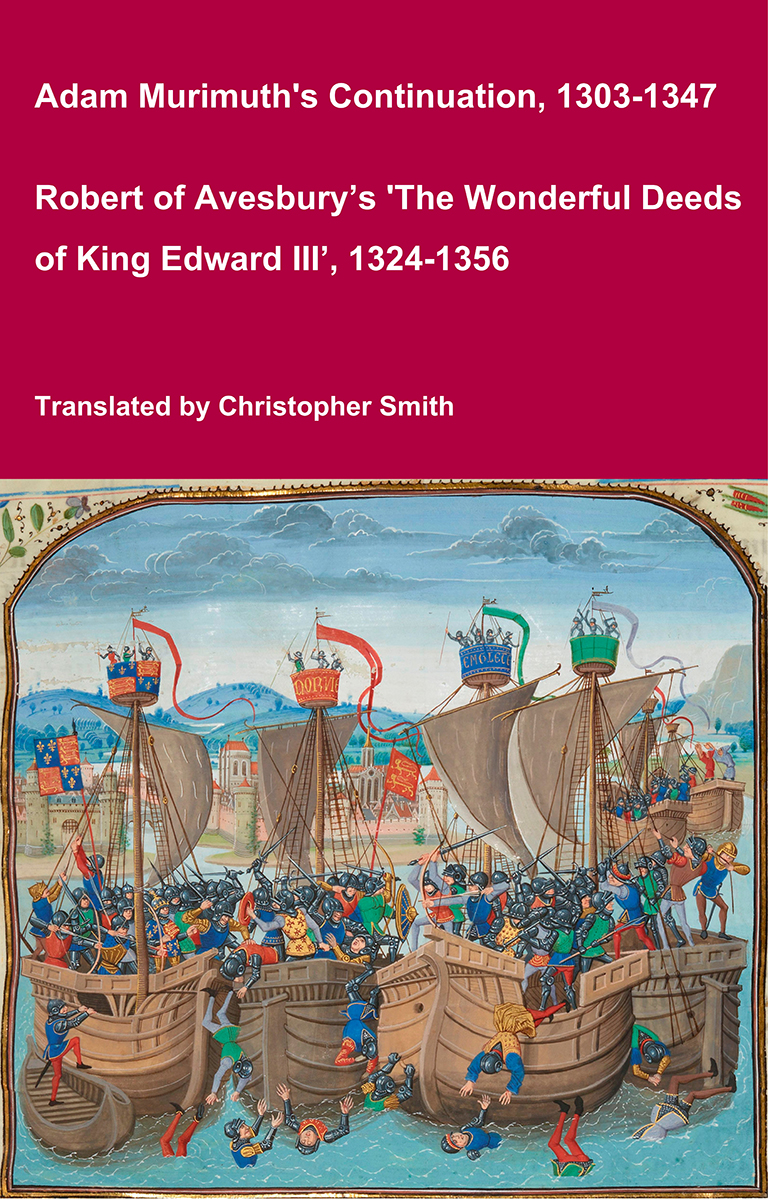
On 29th August 1350 the English fleet defeated a Castilian fleet at Winchelsea [Map] during the Battle of Winchelsea. Around twenty Castilian ships were captured; several were sunk. For the English King Edward III of England [aged 37] and his son Edward "Black Prince" [aged 20], James Audley [aged 32], Henry Scrope 1st Baron Scrope of Masham [aged 37], Henry of Grosmont 1st Duke Lancaster [aged 40] and John Sully [aged 67] fought.
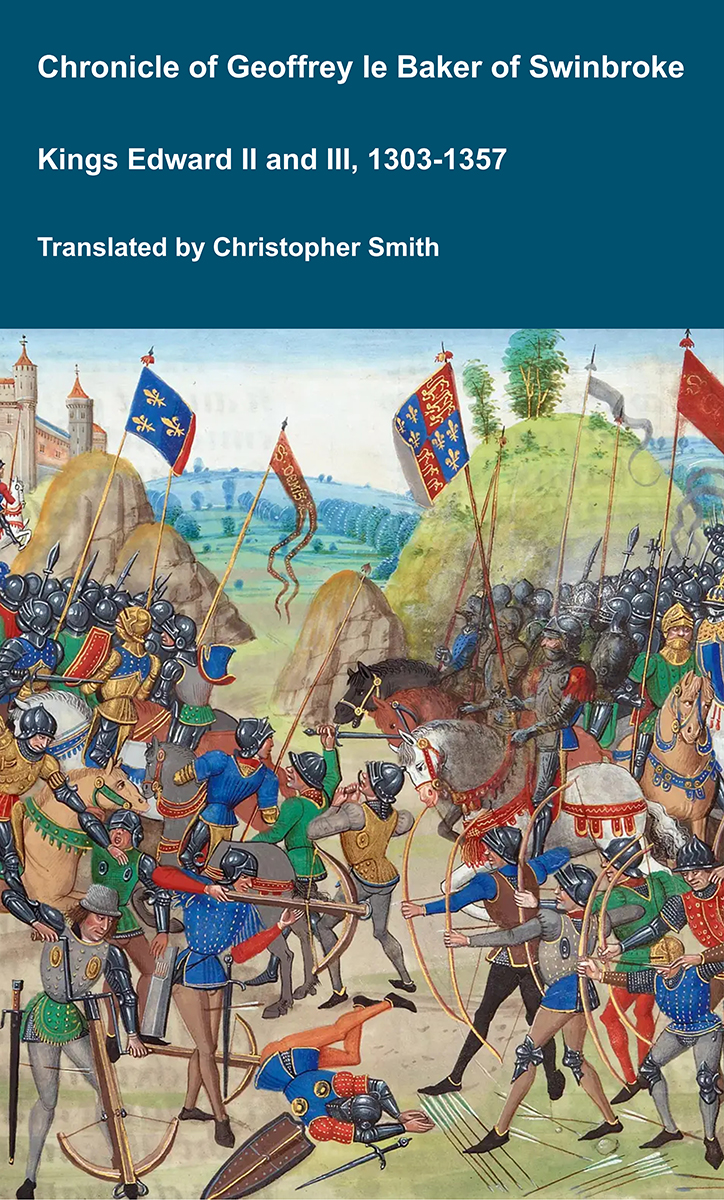
Chronicle of Geoffrey le Baker of Swinbroke. On Friday [20th November 1355], having been informed that the French were nearby and had formed themselves into five large battles, our forces advanced about one mile from their lodging and drew themselves up in a suitable field, prepared for battle. Thus, with the army arrayed, someone cried out that a hare had been roused; hearing this, the enemy sent out forty lancers, who, upon seeing the army drawn up in full order and quickly returning with this report, caused all the French to flee in great panic, as was reported by those captured in the pursuit. That day, Bartholomew de Burghersh [aged 27],1 John Chandos [aged 35], and James Audley [aged 37], leading a force of eighty lancers, attacked the rear of the French host, capturing thirty-two knights and squires, among them the Count of Roumania,2 and killing many baggage handlers, destroying their supplies. Later, the prince lodged at the town of Muwos, where four French men-at-arms who had fled into the church were captured by the English; they lost only their horses and arms. On Saturday, in rainy weather, they took a difficult and narrow road to the castle of Oradrie, where the prince spent the night, and the next morning had it burned.
Die Veneris, certificato quod Gallici in acies quinque magnas fuerant divisi de prope existentes, progressi nostri ad spacium unius miliaris de ospicio seipsos in campo apto ordinarunt ad preliandum. Itaque exercitu ordinato, quidam suscitatum leporem exclamarunt; quod audientes inimici emiserunt xl. lanceatos, per quos viso exercitu ordinato reversosque celeriter hec nunciantes, omnes fugerunt cum magno pavore, sicud retulerunt capti ex eiis in persecucione. Illo die Bartholomeus de Burghasche, Iohannes Chandos, et Iacobus Daudeleye, ad summam quater viginti lanceatorum ordinati discooperatores, accedentes ad caudam exercitus Gallicorum, captivarunt triginta duos milites et domicellos, et inter eos dominum comitem de Romenie; item, multos bigarios occiderunt, destruentes eorum victualia. Sero principe ospitato in villa de Muwos, quatuor Gallici armorum, Anglicos fugitivi in ecclesiam illius ville, equos et arma dumtaxat perdiderunt. Sabbato pluvioso carpserunt malum iter et strictum ad castrum de Oradrie, in quo princeps pernoctavit, et mane id combussit.
Note 1. The prince of Wales's letter to the bishop of Winchester (Deeds of King Edward III by Robert of Avesbury The two famous comrades of the Black Prince, sir John Chandos and sir James Audley, were both founders of the Garter. Chandos was mortally wounded in a skirmish near Lussac in Poitou, 31st December 1369.
Note 2. There was a seigneur de Romeny, but no count with that title.
Chronicle of Geoffrey le Baker of Swinbroke. Therefore, a rumour filled with terror struck the ears of the common people of France, and when it reached the hearing of the lord prince, who was staying at La Réole, it stirred the heart of that most compassionate prince deeply, he, as one who could not at all bear that the safety of his father should be entangled in the hazards of war, unless he were present and able to share in the toil and the burdens of uncertain fortune, whether hard or favourable. Accordingly, gathering the forces1 he had with him in the duchy, with the intention of crossing France and presenting himself to his father with eager filial affection, he came to Bergerac. There, having been informed that the Count of Armagnac had attempted to ravage the region after his departure, and had been well-provided with a sizeable military force for this purpose, he sent back to safeguard the territory the seneschal of Gascony, and Lord Bernard de Libreto, along with the mayor of Bordeaux and other Gascons, as well as a large company of foot soldiers.
Igitur fama plena terroris populares aures Gallie perculsit, que ad auditum domini principis apud Regulam demorantis erat ventilata et viscera piissimi principis commovit egre, ceu nullatenus potentis sufferre sui patris salutem Martis amfractibus implicari, dummodo non esset presens et posset communicati laboris et ambigue fortune duras seu molles sarcinas conferre. Proinde, congestis copiis quas habuit secum in ducatu, cum intencione trans Franciam cupitis osculis paternis se presentare, venit ad Brugeracum, ubi, certificatus comitem Arminiaci voluisse post eius recessum patriam depopulasse et ad hoc milicia copiosa stipatum nec inparatum fuisse, remisit ad patrie tutelam senescallum Vasconie et dominum Bernardum de Libreto, maiorem quoque Burdegalensem, simulque cum eis alios Vascones et magnam classem togatorum.
Note 1. There are four contemporary documents which provide valuable particulars concerning the campaign of the prince of Wales, which culminated in the battle of Poitiers. They are:
1. Letter of the Prince of Wales to the Corporation of London.
2. Letter of the Prince of Wales to the Bishop of Worcester.
3. Letter of Bartholomew, lord Burghersh, to sir John Montagu (printed by Francisque Michel in his edition of Chandos Herald's Black Prince, 1883, p. 336-338.
And, above all, the itinerary of the campaign which is embodied in the Eulogium, a chronicle attributed to a monk of Malmesbury (ed. F. S. Haydon, Rolls Series, 3.215): "As the prince set out toward the land of France from Brigerac on Thursday, that is, on the fourth day of the month of August [1356], riding into French territory, on the following Saturday he arrived in the region of Périgord. There, Lord Bartholomew de Burghersh with his men had captured two large walled towns, which Lord de Marsan held in the prince's name. These same towns, to the great detriment of the enemy, he valiantly and vigorously held until the prince's arrival. On the following Sunday, namely the seventh day of the month of August [1356], the lord prince moved his army to a certain town which had belonged to the bishop of Périgord. Because a cathedral see was located there, a sentence of excommunication had been pronounced upon all marauders raging in that place against the will of the bishop. However, after the prince and the bishop had conferred together, that sentence had no effect. This discussion took place on the following Monday as they travelled along the road, and the lord prince spent the entire night near a very strong castle called Rammesforde. On the following Tuesday, the lord prince, with his battle, proceeded to a certain town called Bremptoun and there he spent the night. On Wednesday, that is, on the feast day of Saint Lawrence [10th August 1356], the prince crossed a large ford near a mill, above which there had once stood a very strong castle and a town called Quisser, where he remained throughout the night. On the following Thursday, the prince came to a town called Merdan; for there he found an abundance of fish for sale and purchase, and therefore he remained there peacefully throughout the night. On Friday, he came to the town of Rochewar. On Saturday, he came by the abbey of Peruche, where the nobles and magnates were lodged along the bank of the Wigan, beneath which flows the river so named. On Sunday, that is, the 14th day of August [1356], the prince crossed the aforementioned river and immediately unfurled his banners and came to a certain town called Litherp. There was a very strong abbey there, which resisted the prince for a long part of the day; at length, however, it surrendered to the will of the prince, with the people, the church, and its belongings being spared. The prince remained there through Monday, which was then the Feast of the Assumption of the Blessed Virgin Mary. On the following Tuesday, the prince came to the town of Belelak, which belonged to the Countess of Pembroke. Out of love for her, the town was spared from being set on fire. On Wednesday, the prince came to a certain town with a very strong castle, both of which belonged to Lord James of Bourbon, whose wife was residing there. The church of that town resisted the prince for a large part of the day, but eventually submitted to his will. On that same day, the first division of the army captured two very strong castles by assault, where the prince remained for the following Thursday night. On Friday, the prince came to a town called Luchank, where he found a great abundance of fish; he spent the night there, and on the following day, he burned the town. On Saturday, he journeyed toward the town of Saint-Benoît-de-Sault, which was a very beautiful town. In it was an abbey where two nephews of the Lord de la Brette held a large sum of gold, amounting to 13,000 gold florins. On Sunday, namely the 21st day of the month of August [1356], the prince came to the town called Argenton, where there was a strong castle beneath the town; there he remained on Monday. On that same day, while on the march, a very strong castle was captured by some from that company. On Tuesday, the prince came to a certain town called in French Citerauf, which was a most beautiful town. On the same day, he came to another town called Saint Yman, where the rearguard encamped for that whole night. Afterwards, he came to another moated town where there was a noble and strong abbey called Burgo Dei ("Bourg-Dieu"). There indeed is a great pilgrimage to the relics of Saints Cosmas and Damian, which lie there in great veneration. There, the vanguard remained for the whole of Wednesday, because that day was the feast of Saint Bartholomew. On Thursday, the prince came to a great castle of the king of France, which is called Isoldoun; and there he remained on Friday and Saturday. On Sunday, that is, the 28th day of August, the prince came to a strong castle called le Feerte, which belonged to the Viscount of Thouars, where Lords Berkeley and la Ware remained until the baggage train passed ahead of them. Afterwards, he passed through an old walled town, though broken, called Lury, for there used to be the boundary of the Duchy of Guyenne on that side. He then crossed a river, called the Cher, which divides the Duchy from the Kingdom of France, and spent the night in the town of Virizon. Three days earlier, the captain of La Buche had already ravaged the whole countryside. There had been a noble abbey, which was burned. That same day, Sir John Chandos [aged 36] and Sir James Audley [aged 38] launched an assault on the town of Daubene, took it by force of arms, and laid it waste with fire and flame. Also on that day, these two knights conducted a raid with 200 men, and encountered a Frenchman named Gris Motoun, who had with him eighty lances; all were routed and killed, although 18 knights and squires were taken prisoner. The English had only 10 lances, and Gris Motoun was the first to flee. On Monday, the feast of the Beheading of Saint John the Baptist [29th August 1356], the prince arrived at a town called Frank', situated upon the river that divides the Kingdom of France from the Duchy [of Aquitaine]. That same day, the men of Lord de Camont captured eight knights and squires belonging to Lord de Crone and Lord de Bursigaud. Also on that day, news came to the prince that the King of France wished to engage him in battle, at which he rejoiced greatly. When the prince had ridden about 16 leagues from the city of Orléans, he heard that Lord de Crone and Lord de Bursigaud were advancing against him with sixty lances and a large company. The prince then boldly led his forces to meet them, until he arrived at a walled town called Romorantin, where the aforementioned enemies had taken refuge. There he pitched his tents and remained for three days beside a ford near the town, on a river called the Soudre. This likely occurred on Tuesday. On the following Wednesday, the prince ordered an assault to be made on the town, and so it was done; a very fierce one. Those inside resisted bravely, since there were many armed men within the castle. There was another fortress near the main one, very strong and within bowshot, which was called le Donjon. This inflicted considerable damage on the prince's men. At last, when the town was taken, the Donjon still resisted fiercely; it had been built in the form of a tower. There, a noble knight, though young, surnamed de la Brette, was killed, along with a noble squire who had served with the captain of la Buche. On the following Thursday, they constructed three wooden shelters (hurdesia) to attack and dismantle the tower. Of these: The Earl of Suffolk built one, Bartholomew Burghersh built another, and a great man of Gascony constructed the third. On Friday and Saturday, fire was set beneath the tower, such that those inside were unable to extinguish it effectively, having only a small quantity of wine and water within. Then, they began to negotiate peace and the surrender of the tower throughout that entire day, and in the end, they submitted themselves entirely to the prince's mercy, and the tower was surrendered. On the following Sunday, which was the fourth day of September [1356], the prince rested, and ordered his men to prepare their equipment. On the following Monday, the prince came to the land that belonged to the domain of the Count of Bisser and Burgilloun. On Tuesday, the prince came to a castle belonging to the county of Blois, which is situated on the river Cher. On Wednesday, the prince came to Amboise on the Loire near Tours, in the region of Touraine, a noble and very beautiful city; there he remained through Thursday, Friday, and Saturday, during which the prince's men made good progress. On Sunday, which was the 11th day of the month of September [1356], the prince moved his army and very early crossed a very dangerous river, which is called the Indre; and advancing, he came to the town of Montbazon and there spent the night near a strong castle. On the following Monday, the Cardinal of Périgord came to the prince along with an archbishop, several bishops, and other magnates, preaching about piety and mercy. At that time it was said that the Dauphin was at Tours in Touraine with a thousand men-at-arms, not counting attendants and footmen. And it was said that the King of France, with his host, would come forth to engage with the prince on the following Wednesday. On the following Tuesday, the prince passed through the town of Saint-Omer, where Lord de Croon holds dominion; and that day he spent the night at a town called La Haye, which is situated on the bank of the Creuse River. At that town, news came to the prince that the King of France wished to get ahead of us, for he greatly feared that perhaps the prince would flee upon seeing the French army. On the following Wednesday, the prince came to the castle called Chastel Heraud, which is a beautiful and large town situated on the river Vienne; and he remained there through Thursday and Friday. There he received news that the King of France had lodged on Saturday night on the same river at a small town called Chanigny. Therefore, the prince ordered a proclamation that all pack animals, wagons, and those carrying provisions should cross the bridge that same night, lest on the following day they hinder the army while crossing the bridge and hastening toward their enemies and so it was done. .
In his letter to the bishop of Worcester the prince says that he began the campaign on the eve of the Translation of saint Thomas of Canterbury, that is, on the 6th July. Baker begins with the prince's arrival at Bergerac, which he entered on the 4th August. Marching almost due north, his object being to join hands with the duke of Lancaster, who commanded in Brittany, he reached Argenton on the 21st, Chateauroux on the 23rd, and Vierzon on the 28th of the month. The combat with Philippe (called Grismouton) de Chambly took place on the latter day [Eulogium, 218].
On 19th September 1356 the army of Edward "Black Prince" [aged 26] defeated the French and Scottish army led by King John "The Good" II of France [aged 37] at the Battle of Poitiers
King John "The Good" II of France was captured by three captains including Ivon aka John Fane.
The the English army included: Bernard Brocas [aged 26], Thomas Felton [aged 26], James Audley [aged 38], Thomas Beauchamp 11th Earl Warwick [aged 43], Bartholomew "The Younger" Burghesh 2nd Baron Burghesh [aged 28], Reginald Cobham 1st Baron Cobham [aged 61], Edward Despencer 1st Baron Despencer, Baron Burghesh [aged 21], Ralph Ferrers [aged 27], William Scrope [aged 31], William Montagu 2nd Earl Salisbury [aged 28], Walter Paveley 4th Baron Burghesh [aged 37], Robert Ufford 1st Earl Suffolk [aged 58], William Ufford 2nd Earl Suffolk [aged 18], John de Vere 7th Earl of Oxford [aged 44], John Willoughby 3rd Baron Willoughby [aged 33], Thomas Arderne [aged 19], Enion Sais Brecon, John Chandos [aged 36], Richard Pembridge [aged 36], Jean Grailly [aged 25], Robert de Fouleshurst [aged 26] and John Sully [aged 73]
John Savile of Shelley and Golcar [aged 31] probably fought having received letters of protection to travel overseas.
Hugh Courtenay 2nd or 10th Earl Devon [aged 53] protected the baggage train.
The French and Scottish army included: King John "The Good" II of France, Philip "Bold" Valois II Duke Burgundy [aged 14], Jean Bourbon I Count La Marche [aged 12], Archibald "Grim" Douglas 3rd Earl Douglas [aged 26], John "Sans Terre" Artois 1st Count of Eu [aged 35]; all captured.
Guichard d'Angle 1st Earl Huntingdon and William Douglas 1st Earl Douglas [aged 33] fought.
Peter Bourbon Duke Bourbon [aged 45] was killed. His son Louis [aged 19] succeeded II Duke Bourbon.
Gauthier VI Comte de Brienne [aged 54] was killed.
In 1369 James Audley [aged 51] died at Fontenay le Comte. He was buried in Poitiers [Map].
Kings Wessex: Great x 9 Grand Son of King Edmund "Ironside" I of England
Kings Gwynedd: Great x 6 Grand Son of Owain "Great" King Gwynedd
Kings Seisyllwg: Great x 12 Grand Son of Hywel "Dda aka Good" King Seisyllwg King Deheubarth
Kings Powys: Great x 7 Grand Son of Maredudd ap Bleddyn King Powys
Kings England: Great x 4 Grand Son of King Henry "Curtmantle" II of England
Kings Scotland: Great x 7 Grand Son of King Malcolm III of Scotland
Kings France: Great x 10 Grand Son of Hugh I King of the Franks
Kings Duke Aquitaine: Great x 14 Grand Son of Ranulf I Duke Aquitaine
Kings Spain: Great x 7 Grand Son of Alfonso VII King Castile VII King Leon
Great x 4 Grandfather: Liulf Audley
Great x 3 Grandfather: Adam Audley
Great x 2 Grandfather: Henry Audley
Great x 3 Grandmother: Emma Fitzorm
Great x 1 Grandfather: James Audley
Great x 3 Grandfather: Ralph Mainwaring
Great x 2 Grandmother: Bertrade Mainwaring
Grandfather: Hugh Audley 1st Baron Audley of Stratton Audley
2 x Great Grandson of King Henry "Curtmantle" II of England
Great x 4 Grandfather: King Henry "Curtmantle" II of England
Grandson of King Henry I "Beauclerc" England
Great x 3 Grandfather: William Longespée Earl Salisbury
son of King Henry "Curtmantle" II of England
Great x 4 Grandmother: Ida Tosny Countess Norfolk
5 x Great Granddaughter of Hugh I King of the Franks
Great x 2 Grandfather: William Longespée
Grandson of King Henry "Curtmantle" II of England
Great x 4 Grandfather: William of Salisbury 2nd Earl Salisbury 5 x Great Grandson of Hugh I King of the Franks
Great x 3 Grandmother: Ela of Salisbury 3rd Countess of Salisbury 6 x Great Granddaughter of Hugh I King of the Franks
Great x 4 Grandmother: Eleanor Vitre Countess of Salisbury
Great x 1 Grandmother: Ela Longespée
Great Granddaughter of King Henry "Curtmantle" II of England
Great x 4 Grandfather: Gerard Canville
Great x 3 Grandfather: Richard Camville
Great x 4 Grandmother: Nichola de la Haie
Great x 2 Grandmother: Idoine Camville 8 x Great Granddaughter of Hugh I King of the Franks
Great x 4 Grandfather: Gilbert Basset
Great x 3 Grandmother: Eustachia Basset
7 x Great Granddaughter of Hugh I King of the Franks
Great x 4 Grandmother: Egelina Courtenay
6 x Great Granddaughter of Hugh I King of the Franks
Father: James Audley
3 x Great Grandson of King Henry "Curtmantle" II of England
Great x 4 Grandfather: Roger Mortimer
Great x 3 Grandfather: Ralph Mortimer
Great x 4 Grandmother: Isabel Ferrers
Great x 2 Grandfather: Roger Mortimer 1st Baron Mortimer of Wigmore
Great Grandson of King John of England
Great x 4 Grandfather: Llewellyn "The Great" Aberffraw Grandson of Owain "Great" King Gwynedd
Great x 3 Grandmother: Gwladus verch Llewelyn "Dark Eyed" Aberffraw Granddaughter of King John of England
Great x 4 Grandmother: Joan Plantagenet
daughter of King John of England
Great x 1 Grandfather: Edmund Mortimer 2nd Baron Mortimer of Wigmore
2 x Great Grandson of King John of England
Great x 4 Grandfather: Reginald de Braose 8th Baron Abergavenny 6th Baron Bramber
6 x Great Grandson of Maredudd ab Owain King Deheubarth King Powys King Gwynedd
Great x 3 Grandfather: William de Braose 9th Baron Abergavenny 7th Baron Bramber
7 x Great Grandson of Maredudd ab Owain King Deheubarth King Powys King Gwynedd
Great x 4 Grandmother: Graecia Briwere
Great x 2 Grandmother: Maud de Braose
7 x Great Granddaughter of Hugh I King of the Franks
Great x 4 Grandfather: William Marshal 1st Earl Pembroke
Great x 3 Grandmother: Eva Marshal
6 x Great Granddaughter of Hugh I King of the Franks
Great x 4 Grandmother: Isabel Clare Countess Pembroke
5 x Great Granddaughter of Hugh I King of the Franks
Grandmother: Iseult Mortimer
3 x Great Granddaughter of King John of England
Great x 4 Grandfather: William Fiennes
8 x Great Grandson of King Edward "Elder" of the Anglo Saxons
Great x 3 Grandfather: Enguerrand Ingleram Fiennes
9 x Great Grandson of King Edward "Elder" of the Anglo Saxons
Great x 4 Grandmother: Agnes Dammartin 10 x Great Granddaughter of Charles "Charlemagne aka Great" King of the Franks King Lombardy Holy Roman Emperor
Great x 2 Grandfather: William Fiennes
10 x Great Grandson of King Edward "Elder" of the Anglo Saxons
Great x 1 Grandmother: Margaret Fiennes
4 x Great Granddaughter of King Henry "Curtmantle" II of England
Great x 4 Grandfather: John de Brienne I King Jerusalem
Great x 3 Grandfather: John Beaumont
2 x Great Grandson of King Henry "Curtmantle" II of England
Great x 4 Grandmother: Beregaria Ivrea
Great Granddaughter of Alfonso VII King Castile VII King Leon
Great x 2 Grandmother: Blanche Beaumont
3 x Great Granddaughter of King Henry "Curtmantle" II of England
Great x 4 Grandfather: Geoffrey Chateaudun VI Viscount Châteaudun
Great x 3 Grandmother: Jeanne Chateaudun
Great x 4 Grandmother: Clemence Roches Countess Blois
James Audley
4 x Great Grandson of King Henry "Curtmantle" II of England
Great x 4 Grandfather: Robert Fitzroger 2nd Baron Warkworth
9 x Great Grandson of King Edward "Elder" of the Anglo Saxons
Great x 3 Grandfather: John Fitzrobert 3rd Baron Warkworth
10 x Great Grandson of King Edward "Elder" of the Anglo Saxons
Great x 4 Grandmother: Margaret Chesney Baroness Warkworth
Great x 2 Grandfather: Roger Fitzjohn 4th Baron Warkworth
11 x Great Grandson of King Edward "Elder" of the Anglo Saxons
Great x 3 Grandmother: Ada Balliol Baroness Warkworth
Great x 1 Grandfather: Robert Fitzroger 5th Baron Warkworth
12 x Great Grandson of King Edward "Elder" of the Anglo Saxons
Grandfather: John Clavering
5 x Great Grandson of King David I of Scotland
Great x 4 Grandfather: Alain Zouche
Great x 3 Grandfather: Roger Zouche
Great x 4 Grandmother: Adelicia Belmeis
Great x 2 Grandfather: Alan Zouche
Great x 3 Grandmother: Margaret Bisset
Great x 1 Grandmother: Margaret Zouche Baroness Warkworth
4 x Great Granddaughter of King David I of Scotland
Great x 4 Grandfather: Saer Quincy 1st Earl Winchester 9 x Great Grandson of King Edward "Elder" of the Anglo Saxons
Great x 3 Grandfather: Roger de Quincy 2nd Earl Winchester 6 x Great Grandson of Hugh I King of the Franks
Great x 4 Grandmother: Margaret Beaumont Countess Winchester
5 x Great Granddaughter of Hugh I King of the Franks
Great x 2 Grandmother: Helen or Ela Quincy 3 x Great Granddaughter of King David I of Scotland
Great x 4 Grandfather: Alan Lord of Galloway
Great x 3 Grandmother: Helen Galloway Countess Winchester 2 x Great Granddaughter of King David I of Scotland
Great x 4 Grandmother: Margaret Dunkeld
Great Granddaughter of King David I of Scotland
Mother: Eve Clavering
6 x Great Granddaughter of King David I of Scotland
Great x 1 Grandfather: Robert Tiptoft
Grandmother: Hawise Tiptoft