

Paternal Family Tree: Beauchamp
Maternal Family Tree: Alice Tosny Countess Warwick 1284-1325
In 1309 [his father] Guy Beauchamp 10th Earl Warwick [aged 37] and [his mother] Alice Tosny Countess Warwick [aged 24] were married. She by marriage Countess Warwick. He the son of [his grandfather] William Beauchamp 9th Earl Warwick and [his grandmother] Maud Fitzjohn Countess Warwick. They were second cousin twice removed. She a great x 5 granddaughter of King Henry I "Beauclerc" England.
On 12th August 1315 [his father] Guy Beauchamp 10th Earl Warwick [aged 43] died. Possibly poisoned - see Thomas Walsingham. He was buried at Bordesley Abbey, Worcestershire [Map]. His son [his brother] Thomas [aged 2] succeeded 11th Earl Warwick. Given his young age Thomas Beauchamp 11th Earl Warwick became a ward of King Edward II of England [aged 31] until 1326.
Around 1316 John Beauchamp 1st Baron Beauchamp Warwick was born to Guy Beauchamp 10th Earl Warwick and Alice Tosny Countess Warwick [aged 31].
After 1316 [his brother-in-law] Thomas Astley 3rd Baron Astley [aged 8] and [his sister] Elizabeth Beauchamp Baroness Astley were married. She by marriage Baroness Astley. She the daughter of [his father] Guy Beauchamp 10th Earl Warwick and [his mother] Alice Tosny Countess Warwick [aged 31]. They were sixth cousins.
Before 15th September 1317 [his step-father] William Zouche 1st Baron Zouche Mortimer [aged 52] and [his mother] Alice Tosny Countess Warwick [aged 33] were married. They were sixth cousins. She a great x 5 granddaughter of King Henry I "Beauclerc" England.
On 19th April 1319 [his brother] Thomas Beauchamp 11th Earl Warwick [aged 6] and [his sister-in-law] Katherine Mortimer Countess Warwick [aged 5] were married. She by marriage Countess Warwick. An arranged marriage although not clear who arranged it or whose ward Thomas Beauchamp 11th Earl Warwick was (his father Guy Beauchamp 10th Earl Warwick had died four years before) - possibly by King Edward II of England [aged 34] as a means of securing the Welsh March. The Beauchamp family established, the Mortimer family aspirational. The marriage took place after Roger Mortimer 1st Earl March [aged 31] had returned from his tenure as Lord Lieutenant of Ireland and before he rebelled against King Edward II of England in opposition to Hugh "Younger" Despencer 1st Baron Despencer [aged 33]. She the daughter of Roger Mortimer 1st Earl March and Joan Geneville Baroness Mortimer 2nd Baroness Geneville [aged 33]. He the son of Guy Beauchamp 10th Earl Warwick and Alice Tosny Countess Warwick [aged 34]. They were half second cousin once removed. She a great x 4 granddaughter of King John of England.
In or before 1325 [his brother-in-law] Geoffrey Saye 2nd Baron Say [aged 15] and [his sister] Maud Beauchamp Baroness Say [aged 14] were married. She by marriage Baroness Say. She the daughter of [his father] Guy Beauchamp 10th Earl Warwick and [his mother] Alice Tosny Countess Warwick [aged 40]. They were fifth cousins.
On 1st January 1325 [his mother] Alice Tosny Countess Warwick [aged 40] died at Warwick, Warwickshire [Map].
On 28th February 1336 [his step-father] William Zouche 1st Baron Zouche Mortimer [aged 71] died at Tewkesbury Abbey [Map]. He was buried at Tewkesbury Abbey [Map]. His son [his half-brother] Alan [aged 18] succeeded 2nd Baron Zouche Mortimer. Eleanor Damory Baroness Zouche Mortimer [aged 17] by marriage Baroness Zouche Mortimer.
On 24th June 1340 King Edward III of England [aged 27] attacked the French fleet at anchor during the Battle of Sluys capturing more than 200 ships, killing around 18000 French. The English force included John Beauchamp 1st Baron Beauchamp Warwick [aged 24], William Bohun 1st Earl of Northampton [aged 30], Henry Scrope 1st Baron Scrope of Masham [aged 27], William Latimer 4th Baron Latimer of Corby [aged 10], John Lisle 2nd Baron Lisle [aged 22], Ralph Stafford 1st Earl Stafford [aged 38], Henry of Grosmont 1st Duke Lancaster [aged 30], Walter Manny 1st Baron Manny [aged 30], Hugh Despencer 1st Baron Despencer [aged 32] and Richard Pembridge [aged 20].
Thomas Monthermer 2nd Baron Monthermer [aged 38] died from wounds. His daughter Margaret succeeded 3rd Baroness Monthermer.
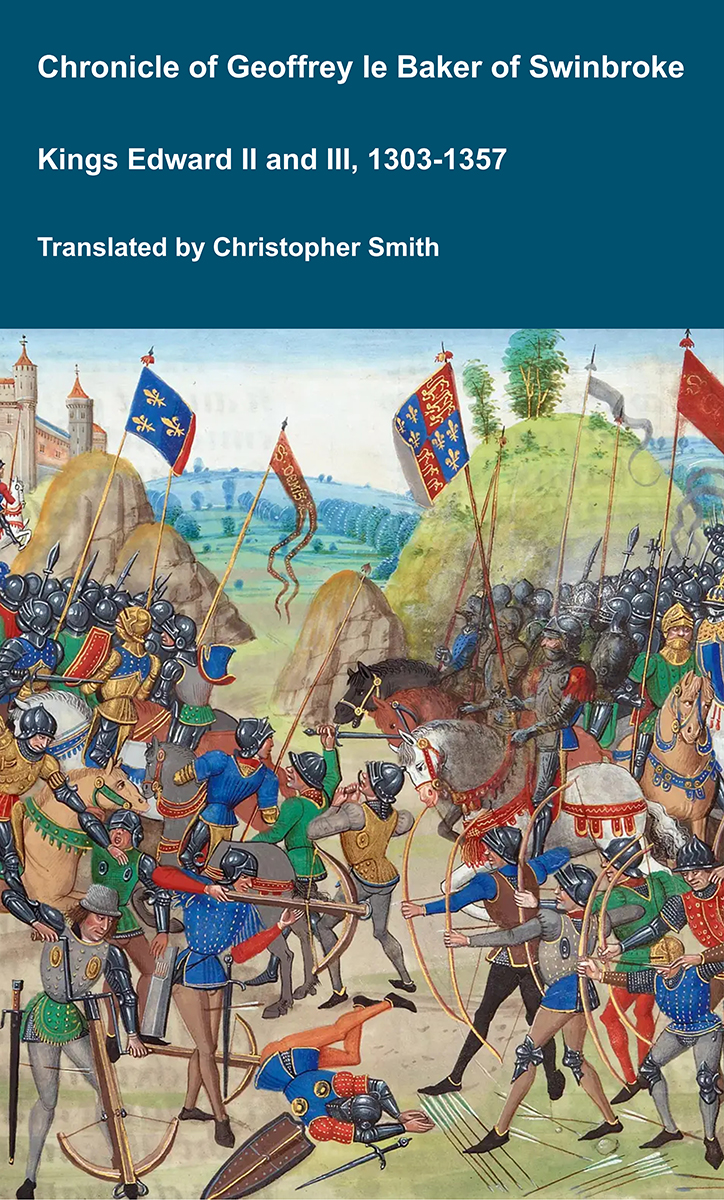 Chronicle of Geoffrey le Baker of Swinbroke. The king then, having returned to Flanders, came to Ghent for the feast of Saint Michael [29th September 1340], where he waited a long time for the confirmation of the truce and the arrival of money, which never came. Later, when all the English who were waiting in Ghent with the king thought that he would remain there until the feast of the Nativity of Christ, the king one day, pretending he wanted to go for a ride, secretly rode off with eight of his men, without informing any of his household. He came to Zeeland, where he found a ship.1 After sailing for three days and nights, on the night of Saint Andrew's day, around cockcrow, he entered the Tower of London by water. He was accompanied by the Earl of Northampton, Sir Nicholas de Cantilupe, Sir Reginald de Cobham [aged 45], Sir Giles de Beauchamp [aged 57], Sir John de Beauchamp [aged 24], and the clerks William de Kyllesby and Philip de Weston.
Rex igitur ad Flandriam reversus venit Gandavum ad festum sancti Michaelis, ubi diu expectavit treuge confirmacionem et pecuniam adfuturam, que non venit. Postea, putantibus omnibus Anglicis expectantibus in Gandavo cum rege ipsum ibidem ad festum Nativitatis Christi expectaturum, una dierum rex cum octo de suis, fingens se velle spaciari, equitans secreto, nullisque familiaribus premunitis, venit Selandiam, ubi nacto navigio, post trium dierum et totidem noctium havigacionem, in nocte sancti Andree circa gallicantum turrim Londoniarum per aquam intravit, ipsum comitantibus comite Norhamptonie et domino Nicholao de Cantilupo, Reginaldo de Cobham, Egidio de Bello campo, Iohanne de Bello campo, militibus, et Willelmo de Kyllesby et Philippo de Westone, clericis.
Note 1. The Brute Chronicle [Egerton MS. 650].
On 23rd April 1344 King Edward III of England [aged 31] created the Order of the Garter. The date nominal as there are different accounts; some sources say 1348.
2 Henry of Grosmont 1st Duke Lancaster.
3 [his brother] Thomas Beauchamp 11th Earl Warwick.
4 Jean Grailly.
5 Ralph Stafford 1st Earl Stafford.
6 William Montagu 2nd Earl Salisbury.
7 Roger Mortimer 2nd Earl March.
9 Bartholomew "The Younger" Burghesh 2nd Baron Burghesh.
10 John Beauchamp 1st Baron Beauchamp Warwick.
11 John Mohun 2nd Baron Mohun of Dunster.
12 Hugh Courtenay.
13 Thomas Holland 1st Earl Kent.
15 Richard Fitzsimon.
16 Miles Stapleton.
17 Thomas Wale.
18 Hugh Wrottesley.
19 Neil Loring.
20 John Chandos.
21 James Audley.
22 Otho Holland.
23 Henry Eam.
24 Sanchet Abrichecourt.
On 26th August 1346 the army of King Edward III of England [aged 33] defeated the French army at the Battle of Crécy. The English army was commanded by King Edward III of England, his son Edward "Black Prince" [aged 16], [his brother] Thomas Beauchamp 11th Earl Warwick [aged 33], William Bohun 1st Earl of Northampton [aged 36] and John Beauchamp 1st Baron Beauchamp Warwick [aged 30].
The English army was included: Bishop Thomas of Hatfield [aged 36], Hugh Despencer 1st Baron Despencer [aged 38], Bernard Brocas [aged 16], Thomas Felton [aged 16], James Audley [aged 28], Robert Bourchier 1st Baron Bourchier, Bartholomew "The Elder" Burghesh 1st Baron Burghesh [aged 59], Bartholomew "The Younger" Burghesh 2nd Baron Burghesh [aged 18], Reginald Cobham 1st Baron Cobham [aged 51], John Darcy 1st Baron Darcy of Knayth [aged 66], Robert Ferrers 3rd Baron Ferrers of Chartley [aged 37], Richard Scrope 1st Baron Scrope of Bolton [aged 19], William Scrope [aged 21], Stephen Scrope [aged 21], William Latimer 4th Baron Latimer of Corby [aged 16], John Lisle 2nd Baron Lisle [aged 28], Gerard Lisle 1st Baron Lisle [aged 42], Nicholas Longford [aged 61], Edward Montagu 1st Baron Montagu, Walter Paveley 4th Baron Burghesh [aged 27], Michael Poynings 1st Baron Poynings [aged 28], Robert Ufford 1st Earl Suffolk [aged 48], John de Vere 7th Earl of Oxford [aged 34], Thomas West [aged 34], John Willoughby 2nd Baron Willoughby [aged 43], John Wingfield [aged 26], Henry Percy 11th and 3rd Baron Percy [aged 25], Hugh Courtenay 2nd or 10th Earl Devon [aged 43] (possibly), Walter "Elder" Devereux [aged 37], John Devereux [aged 44], Enion Sais Brecon, John Chandos [aged 26], Richard Pembridge [aged 26] and John Sully [aged 63].
The French army suffered significant casualties. King Philip "Fortunate" VI of France [aged 52] was wounded. William de Coucy [aged 60] and his son Enguerrand 6th Lord de Coucy [aged 33] and were killed.
Charles II Count Alençon [aged 49] was killed. His son Charles [aged 9] succeeded Count Alençon.
Louis Chatillon II Count Blois I Count Chatillon was killed. His son Louis succeeded III Count Blois.
Louis Dampierre II Count Nevers I Count Flanders [aged 42] was killed. His son Louis [aged 15] succeeded III Count Nevers, II Count Flanders.
King John I of Bohemia [aged 50] was killed. His son Charles [aged 30] succeeded IV King Bohemia, Holy Roman Emperor Luxemburg. Blanche Valois Holy Roman Empress Luxembourg [aged 29] by marriage Holy Roman Empress Luxemburg.
Rudolph "Valiant" Metz I Duke Lorraine [aged 26] was killed. His son John succeeded I Duke Lorraine.
Jean IV de Harcourt [aged 39] was killed.
On 12th November 1346 [his half-brother] [his nephew] Alan Zouche 2nd Baron Zouche Mortimer [aged 29] died. His son Hugh [aged 8] succeeded 3rd Baron Zouche Mortimer.
In 1348 John Beauchamp 1st Baron Beauchamp Warwick [aged 32] was appointed Captain of Calais.
In 1350 John Beauchamp 1st Baron Beauchamp Warwick [aged 34] was created 1st Baron Beauchamp Warwick.
Annales of England by John Stow. This yeere, on Saint Georges day [23rd April 1350], the king held a great and solemne feast at his castle of Windsor, where he had augmented the chappel which Henry the first and other his progenitors, kings of England, had before erected, of eight chanons. He added to those eight chanons a deane and fifteene chanons more, and 24 poore and impotent knights, with other ministers and servants, as appeareth in his charter dated the two and twentieth of his reigne. Besides the king, there were other also that were contributors to the foundation of this colledge, as followeth: i. The sovereigne king Edward the third, 2. Edward, his eldest sonne, prince of Wales, 3. Henry, duke of Lancaster, 4. the [his brother] earle of Warwicke [aged 37], 5. Captaine de Bouch [aged 19], 6. Ralph, earle of Stafford [aged 48], 7. William Montacute [aged 21], earle of Salisburie, 8. Roger, lorde Mortimer [aged 21], earle of March, 9. sir John de Lisle [aged 31], 10. sir Bartholomew Burwash [aged 22], 11. sir John Beauchampe [aged 34], 12. sir John Mahune [aged 30], 13. sir Hugh Courtney, 14. sir Thomas Holland [aged 36], 15. sir John Grey [aged 49], 16. sir Richard Fitz Simon, 17. sir Miles Stapleton [aged 30], 18. sir Thomas Walle [aged 47], 19. sir Hugh Wrothesley [aged 16], 20. sir Nele Loring [aged 30], 21. sir John Chandos [aged 30], 22. sir James de Audley [aged 32], 23. sir Othes Holland [aged 34], 24. sir Henry Eme, 25. sir Sechet Dabridgecourt [aged 20], 26. sir Wiliam Panell [aged 31]. All these, together with the king, were clothed in gownes of russet, poudered with garters blew, wearing the like garters also on their right legges, and mantels of blew with scutcheons of S. George. In this sort of apparell they, being bare-headed, heard masse, which was celebrated by Simon Islip, archbishop of Canterbury, and the bishops of Winchester and Excester, and afterwards they went to the feast, setting themselves orderly at the table, for the honor of the feast, which they named to be of S. George the martyr and the choosing of the knights of the Garter.
 Bourgeois de Valenciennes. It happened on a Wednesday [6th June] at Pentecost in the year 1351 that Sir John de Beauchamp [aged 35] and his company, about six hundred men, set out from Calais. They advanced so swiftly that at dawn they were near Saint-Omer, and they rode up to the Boulogne gate, seized livestock and plunder, and drove it off. The alarm was raised in Saint-Omer, and when the Marshal of France heard the news, he armed himself quickly and had all those with him at Saint-Omer arm themselves as well. He mounted his horse, and with a fine company rode out of the town. With him were the Viscount of Narbonne, Sir Guy of Poitiers, Sir Guichard of Beaujeu and his brother, the Bastard of Bourbon, Sir Oudart of Renty, Sir Baudart of Cuvillier, and many others. They pursued the English and overtook them near Ardres. The English drew up in battle array, but they sent the plunder on ahead to Calais with two hundred men. The French approached, and there was a ditch between the two forces. Then Edward of Beaujeu [aged 35], in great eagerness, took his spear and attempted to leap across the ditch. As he was leaping, an Englishman thrust a spear upward from below and struck him in the body, casting him down mortally wounded. At this his men, greatly angered, leapt across the ditch one after another and charged into the English ranks, and fierce fighting began. The English fought so stoutly that they captured five French knights and held them as prisoners, and would have defeated the rest. But foot soldiers from Saint-Omer who had followed the pursuit, about eight hundred in number, arrived on the field and attacked the English. Those who had been captured broke free and rejoined the fight. A fierce and remarkable battle followed. Sir Guichard of Beaujeu, brother of the slain marshal, was grievously wounded, as was Sir Baudart of Cuvillier. In the end the English were defeated, and Sir John de Beauchamp and the best of his company were taken prisoner and brought to Saint-Omer. Sir Guichard of Beaujeu was carried back on a litter and arranged for his brother’s body to be taken to their homeland in Burgundy, which was done. He was buried at Belleville in the abbey called Saint-Martin. The lands around Belleville belonged to the lord of Beaujeu who was slain near Ardres, Marshal of France, while defending the realm for King John of Valois.
Sy avint que par ung merquedy de le Pentecouste, l'an mil CCCLI, que monseigneur Jehan de Beauchamp et sa routte, environ VIc hommes, se partirent de la ville de Calais, et esploitèrent tant que droit au point du jour de ce merquedy, ils furent environ Saint-Omer et coururent jusques à la porte de BouUongne et eslevèrent la proye et l'emmenè rent. Lors s'esleva la voix et le cry en Saint-Omer; et quant le mareschal de France entendy les nouvelles, il s'arma moult hastivement et fist armer tous ceulx qui avoec luy estoient à Saint-Omer, comme saudoyers, pour le tamps d'adont. Sy monta à cheval et fist monter ses hommes, et yssit de la ville à belle compaignie. Et avoec luy estoient le visconte de Nerbonne, monseigneur Guy de Poitiers, monseigneur Guichart de Beaugeu et son frère, le bastart de Bourbon, monseigneur Oudart de Renty, monseigneur Baudart de Cuvillier et moult d'aultres. Sy siévyrent tant les Englecqs et leur routte, qu'ils les rataindirent assez près d'Ardre; et se misrent les Englecqs en bataille, mais ils envolèrent la proye par CC compaignons à Calais. Et les François les approchèrent, et y avoit ung fosset entre deux. Adont Edouart de Beaugeu, par grant ayr, print son glave et s'esquoella au sallir oultre le fosset; et ainsy qu'il salloit, ung Englès luy puisa ung glave par dessoubs et luy boutta au corps; sy l'abaty là navret à mort. Et alors ses gens moult courouchiës sallirent le fosset, qui mieulx mieulx, et entrèrent ens es Englecqs, et se comba tirent entre eulx. Et se portèrent les Englecqs sy bien qu'ils retinrent V de leurs chevaliers, et les tenoient comme prisonniers, et eussent desconfi les aultres; mais les brigans qui s'estoient partis de Saint-Omer en siévant les gens, vinrent là, et estoient bien VIIIc. Sy assallirent les Englecqs; et ceulx qui prins estoient, rompirent leur prison et se misrent à deffence. Lors comraencha la bataille forte et mervilleuse, et y fut fort navrés monseigneur Guichart de Beaugeu, frère au seigneur de Beaugeu, qui tués estoit, et monseigneur Baudart de Cuviller durement navrés ossy; mais en la fin les Englecqs furent desconfis, et y fut prins monseigneur Jehan de Beauchamp et les milleurs de sa routte et amenés à Saint-Omer. Et fut raportés monseigneur Guichart de Beaugeu en une litière, lequel ordonna de reporter le corps de son frère en son pays en Bourgongne, ainsy comme on fist; et fut ensevely en Belleville en une abbaye qu'on appelloit Saint-Martin. La terre d'environ Belleville estoit au seigneur de Beaugeu qui trespassa dalez Ardre, mareschal de France, en deffendant le royalme pour le roy Jehan de Valois.
Chronicle of Geoffrey le Baker of Swinbroke. In the same year,1 the course of war took a disastrous turn under the command of John de Beauchamp, brother of the Earl of Warwick. At that time he was captain of Calais, and having led out nearly his entire garrison, that is, 300 men-at-arms and the same number of archers. He raided the surrounding countryside for three days and brought back an immense amount of plunder. But on their return to Calais, the Lords of Bailleul and Fiennes, with 1,500 men-at-arms, set ambushes for them in three locations. Though the English defeated the first and second ambushes, they then came near the paved causeway leading to Calais, where fresh enemy forces met them. Then the valiant knight Sir John, a man of great courage and noble spirit, disdained to retreat to that nearby paved road, where, had they reached it, the enemy would not have been able to encircle them, at least according to those who were there. Instead, he chose to stand and fight in open ground, even though his men were exhausted from two earlier battles that day, many were seriously wounded, and the archers had expended their arrows. Still, with great bravery, though not with prudence, they faced the enemy again. So a fierce new battle was begun. In it, the enemy leader, the Lord of Bailleul, was killed. But even so, the French forces prevailed, and they captured nearly all the English, except a few who had been wounded in earlier skirmishes, or who had already returned to Calais with the loot before the third engagement, though those were very few. No Englishman was killed, that is, if he chose to surrender, and almost all were later released either through ransom or exchange.
Eodem anno eventus bellicus sub ducatu Iohannis de Bello campo, germani comitis Warewici, in perversum fuerat mutatus, Ipse nempe, capitaneus tunc Calesii, educta fere tota sua custodia, scilicet trecentis viris armorum atque totidem sagittariis, patriam vicinam triduo vastavit et reduxit predam innumeratam; set in reditu versus Kalesiam domini de Bealgin et de Fienes cum mille et quingentis viris armorum illis insidias in tribus locis imboscarunt, qui, devictis prima et secunda imboscacionibus, venerunt prope pavimentum quod est iter ad Calesiam, ubi hostes recentes ipsis occurrerunt. Predictus igitur Iohannes, miles strenuissimus et mire magnanimitatis, indignatus quasi fugiendo in locum tutum et aptum defensioni suos contrahere, sprevit pavimentum eiis vicinum pro refugio captare, quo si devenissent, hostes in illos non prevaluissent, si fuerit credendum illis qui fuerunt ibidem; tunc enim illos non potuissent circumvallasse. Igitur in plano campo illis restiterunt et quantumcunque lassati ex dupplici in eodem die habito conflictu, et multi ex eiis periculose fuissent sauciati, sagittarii eciam suas sagittas expendissent, animose tamen, licet non sapienter, suos hostes receperunt. Sic innovatur acer conflictus, in quo dux adversariorum, prefatus dominus de Bealgin, cecidit peremtus; quo non obstante, sui constanter nostros expugnarunt, atque omnes ceperunt preter paucos, qui, in aliis conflictibus graviter wlnerati, cum illis qui predam ad villam abigebant ante tercium conflictum fuerant Calesiam, set pauci, regressi. Nullus Anglicus fuit ibi occisus, scilicet qui se voluit alicui reddere; unde fere omnes postea fuerunt aut per redempcionem aut commutacionem aliorum pro illis liberati .
Note 1. This combat was fought, according to Froissart near Ardres, on Whitsun Monday, 1352. He is obviously wrong in the year; but he is probably right in the day, which would be the 6th June. The French leaders here named were Edouard, sire de Beaujeu, marshal of France, who was slain, and Robert, called Moreau, de Fiennes, at this time captain of Saint-Omer. The French won the day by the arrival of reinforcements from the garrison of that place, probably led by Fiennes. The English leader, lord Beauchamp, captain of Calais, was made prisoner. He was a younger son of Guy, 9th earl of Warwick, and was a famous soldier in his day; he carried the royal standard at Crecy. He was summoned to parliament as lord Beauchamp in 1350; was afterwards constable of Dover castle; and died in 1360.
In 1359 [his sister] Elizabeth Beauchamp Baroness Astley [aged 43] died at Bordesley Abbey, Worcestershire [Map]. She was buried at St Paul's Cathedral [Map].
On 13th April 1360 a freak weather event known as Black Monday Hailstorm occurred as the army of King Edward III of England [aged 47] were camped outside Chartres [Map]. [his brother] Thomas Beauchamp 11th Earl Warwick [aged 47], William Bohun 1st Earl of Northampton [aged 50], Henry of Grosmont 1st Duke Lancaster [aged 50], Edward "Black Prince" [aged 29] and Walter Mauny were present. Around one thousand English were killed, with up to six thousand horses. King Edward III of England believed the event to be an Act of God and proceeded to negotiate with the French resulting in the Treaty of Brétigny.
On 28th April 1360 [his nephew] Guy Beauchamp died from injuries received during the Black Monday Hailstorm.
On 2nd December 1360 John Beauchamp 1st Baron Beauchamp Warwick [aged 44] died. Baron Beauchamp Warwick extinct.
Kings Wessex: Great x 9 Grand Son of King Edmund "Ironside" I of England
Kings Gwynedd: Great x 11 Grand Son of Maredudd ab Owain King Deheubarth King Powys King Gwynedd
Kings Seisyllwg: Great x 13 Grand Son of Hywel "Dda aka Good" King Seisyllwg King Deheubarth
Kings Powys: Great x 11 Grand Son of Maredudd ab Owain King Deheubarth King Powys King Gwynedd
Kings England: Great x 6 Grand Son of King Henry I "Beauclerc" England
Kings Scotland: Great x 6 Grand Son of King David I of Scotland
Kings France: Great x 9 Grand Son of Hugh I King of the Franks
Kings Duke Aquitaine: Great x 13 Grand Son of Ranulf I Duke Aquitaine
Great x 4 Grandfather: William Beauchamp 1st Baron Beauchamp 
Great x 3 Grandfather: William Beauchamp 6 x Great Grandson of Maredudd ab Owain King Deheubarth King Powys King Gwynedd
Great x 4 Grandmother: Bertha de Braose Baroness Beauchamp  5 x Great Granddaughter of Maredudd ab Owain King Deheubarth King Powys King Gwynedd
Great x 2 Grandfather: Walter Beauchamp 7 x Great Grandson of Maredudd ab Owain King Deheubarth King Powys King Gwynedd
Great x 3 Grandmother: Jeanne de Saint Valéry
Great x 1 Grandfather: William Beauchamp 8 x Great Grandson of Maredudd ab Owain King Deheubarth King Powys King Gwynedd
Great x 4 Grandfather: Hugh Mortimer 
Great x 3 Grandfather: Roger Mortimer
Great x 4 Grandmother: Matilda Gernon
Great x 2 Grandmother: Joan Mortimer
Great x 4 Grandfather: Walchelin Ferrers 
Great x 3 Grandmother: Isabel Ferrers
Grandfather: William Beauchamp 9th Earl Warwick 7 x Great Grandson of Hugh I King of the Franks
Great x 2 Grandfather: William Maudit
Great x 1 Grandmother: Isabel Maudit 6 x Great Granddaughter of Hugh I King of the Franks
Great x 4 Grandfather: Roger Beaumont 2nd Earl Warwick 
Great x 3 Grandfather: Waleran Beaumont 4th Earl Warwick 4 x Great Grandson of Hugh I King of the Franks
Great x 4 Grandmother: Gundred Warenne Countess Warwick  3 x Great Granddaughter of Hugh I King of the Franks
Great x 2 Grandmother: Alice Beaumont 5 x Great Granddaughter of Hugh I King of the Franks
Great x 4 Grandfather: Robert de Harcourt 
Great x 3 Grandmother: Alice Harcourt Countess Warwick
Great x 4 Grandmother: Isabel Camville
Father: Guy Beauchamp 10th Earl Warwick 8 x Great Grandson of Hugh I King of the Franks
Great x 2 Grandfather: Geoffrey Fitzpeter 1st Earl Essex
Great x 1 Grandfather: John Fitzgeoffrey
Great x 4 Grandfather: Richard de Clare 
Great x 3 Grandfather: Roger Clare 2nd Earl Hertford
Great x 4 Grandmother: Alice Gernon
Great x 2 Grandmother: Aveline Clare Countess Essex
Great x 3 Grandmother: Maud St Hilary Countess Hertford
Grandmother: Maud Fitzjohn Countess Warwick 8 x Great Granddaughter of Hugh I King of the Franks
Great x 4 Grandfather: Hugh Bigod 1st Earl Norfolk 
Great x 3 Grandfather: Roger Bigod 2nd Earl Norfolk
Great x 4 Grandmother: Juliana de Vere 
Great x 2 Grandfather: Hugh Bigod 3rd Earl Norfolk 6 x Great Grandson of Hugh I King of the Franks
Great x 4 Grandfather: Ralph Tosny  8 x Great Grandson of King Edward "Elder" of the Anglo Saxons
Great x 3 Grandmother: Ida Tosny Countess Norfolk 5 x Great Granddaughter of Hugh I King of the Franks
Great x 4 Grandmother: Margaret Beaumont 4 x Great Granddaughter of Hugh I King of the Franks
Great x 1 Grandmother: Isabel Bigod 7 x Great Granddaughter of Hugh I King of the Franks
Great x 4 Grandfather: John Fitzgilbert 
Great x 3 Grandfather: William Marshal 1st Earl Pembroke
Great x 4 Grandmother: Sybil of Salisbury
Great x 2 Grandmother: Maud Marshal Countess Norfolk and Surrey 6 x Great Granddaughter of Hugh I King of the Franks
Great x 4 Grandfather: Richard "Strongbow" Clare 2nd Earl Pembroke 4 x Great Grandson of Hugh I King of the Franks
Great x 3 Grandmother: Isabel Clare Countess Pembroke 5 x Great Granddaughter of Hugh I King of the Franks
Great x 4 Grandmother: Aoife ni Diarmait Macmurrough Countess Pembroke and Buckingham
John Beauchamp 1st Baron Beauchamp Warwick 6 x Great Grandson of King Henry I "Beauclerc" England
Great x 4 Grandfather: Ralph Tosny 8 x Great Grandson of King Edward "Elder" of the Anglo Saxons
Great x 3 Grandfather: Roger Tosny IV Lord Flamstead 5 x Great Grandson of Hugh I King of the Franks
Great x 4 Grandmother: Margaret Beaumont 4 x Great Granddaughter of Hugh I King of the Franks
Great x 2 Grandfather: Ralph Tosny VI Lord Flamstead 2 x Great Grandson of King Henry I "Beauclerc" England
Great x 4 Grandfather: Richard Beaumont Sarthe I Viscount Grandson of King Henry I "Beauclerc" England
Great x 3 Grandmother: Constance Beaumont Sarthe Great Granddaughter of King Henry I "Beauclerc" England
Great x 4 Grandmother: Lucie Aigle Viscountess
Great x 1 Grandfather: Roger Tosny 3 x Great Grandson of King Henry I "Beauclerc" England
Great x 4 Grandfather: Hugh Lacy 
Great x 3 Grandfather: Walter Lacy Lord Meath
Great x 4 Grandmother: Rohese Monmouth Baroness Lacy
Great x 2 Grandmother: Petronilla Lacy 7 x Great Granddaughter of Maredudd ab Owain King Deheubarth King Powys King Gwynedd
Great x 4 Grandfather: William de Braose 4th Baron Bramber 5 x Great Grandson of Maredudd ab Owain King Deheubarth King Powys King Gwynedd
Great x 3 Grandmother: Margaret de Braose 6 x Great Granddaughter of Maredudd ab Owain King Deheubarth King Powys King Gwynedd
Great x 4 Grandmother: Maud "Lady of Hay" St Valery Baroness Bramber
Grandfather: Ralph Tosny 4 x Great Grandson of King Henry I "Beauclerc" England
Great x 4 Grandfather: Humphrey Bohun  5 x Great Grandson of Maredudd ab Owain King Deheubarth King Powys King Gwynedd
Great x 3 Grandfather: Henry Bohun 1st Earl Hereford Great Grandson of King David I of Scotland
Great x 4 Grandmother: Margaret Dunkeld Duchess Brittany  Granddaughter of King David I of Scotland
Great x 2 Grandfather: Humphrey Bohun 2nd Earl Hereford 1st Earl Essex 2 x Great Grandson of King David I of Scotland
Great x 4 Grandfather: Geoffrey Fitzpeter 1st Earl Essex
Great x 3 Grandmother: Maud Mandeville Countess Hereford 
Great x 4 Grandmother: Beatrice Saye 
Great x 1 Grandmother: Alice Bohun 3 x Great Granddaughter of King David I of Scotland
Great x 4 Grandfather: Hugh Lusignan 
Great x 3 Grandfather: Raoul Lusignan Count of Eu
Great x 2 Grandmother: Matilda Lusignan Countess Hereford and Essex
Great x 3 Grandmother: Alix Eu
Mother: Alice Tosny Countess Warwick 5 x Great Granddaughter of King Henry I "Beauclerc" England