

Paternal Family Tree: Lisle
On 9th July 1301 [his father] Robert Lisle 1st Baron Lisle [aged 13] and [his mother] Margaret Beauchamp Baroness Lisle [aged 6] were married. They were fourth cousin twice removed. She a great x 4 granddaughter of King Henry I "Beauclerc" England.
Around 3rd May 1318 John Lisle 2nd Baron Lisle was born to Robert Lisle 1st Baron Lisle [aged 30] and Margaret Beauchamp Baroness Lisle [aged 23].
Before 6th May 1336 John Lisle 2nd Baron Lisle [aged 18] and Maud Grey Baroness Lisle [aged 18] were married.
On 6th May 1336 [his son] Robert Lisle 3rd Baron Lisle was born to John Lisle 2nd Baron Lisle [aged 18] and [his wife] Maud Grey Baroness Lisle [aged 18]. He married 1. after 6th May 1336 Agnes Unknown Baroness Lisle 2. before 1399 Margaret Unknown Baroness Lisle.
After 6th May 1336 [his son] Robert Lisle 3rd Baron Lisle and [his daughter-in-law] Agnes Unknown Baroness Lisle were married. She by marriage Baroness Lisle of Rougemont.
In 1339 [his mother] Margaret Beauchamp Baroness Lisle [aged 44] died at Woodburn.
In 1339 [his son] John Lisle was born to John Lisle 2nd Baron Lisle [aged 20] and [his wife] Maud Grey Baroness Lisle [aged 21].
In 1340 [his daughter] Elizabeth Lisle Baroness Ferrers Harewood was born to John Lisle 2nd Baron Lisle [aged 21] and [his wife] Maud Grey Baroness Lisle [aged 22] at Kingston Lisle, Sparsholt. She married William Aldeburgh 1st Baron Aldeburgh Harewood and had issue.
On 24th June 1340 King Edward III of England [aged 27] attacked the French fleet at anchor during the Battle of Sluys capturing more than 200 ships, killing around 18000 French. The English force included John Beauchamp 1st Baron Beauchamp Warwick [aged 24], William Bohun 1st Earl of Northampton [aged 30], Henry Scrope 1st Baron Scrope of Masham [aged 27], William Latimer 4th Baron Latimer of Corby [aged 10], John Lisle 2nd Baron Lisle [aged 22], Ralph Stafford 1st Earl Stafford [aged 38], Henry of Grosmont 1st Duke Lancaster [aged 30], Walter Manny 1st Baron Manny [aged 30], Hugh Despencer 1st Baron Despencer [aged 32] and Richard Pembridge [aged 20].
Thomas Monthermer 2nd Baron Monthermer [aged 38] died from wounds. His daughter Margaret succeeded 3rd Baroness Monthermer.
On 4th January 1344 [his father] Robert Lisle 1st Baron Lisle [aged 55] died. He was buried at Greyfriars Church Farringdon Within [Map]. His son John [aged 25] succeeded 2nd Baron Lisle of Rougemont. [his wife] Maud Grey Baroness Lisle [aged 26] by marriage Baroness Lisle of Rougemont.
On 23rd April 1344 King Edward III of England [aged 31] created the Order of the Garter. The date nominal as there are different accounts; some sources say 1348.
2 Henry of Grosmont 1st Duke Lancaster.
3 Thomas Beauchamp 11th Earl Warwick.
4 Jean Grailly.
5 Ralph Stafford 1st Earl Stafford.
6 William Montagu 2nd Earl Salisbury.
7 Roger Mortimer 2nd Earl March.
8 John Lisle 2nd Baron Lisle.
9 Bartholomew "The Younger" Burghesh 2nd Baron Burghesh.
10 John Beauchamp 1st Baron Beauchamp Warwick.
11 John Mohun 2nd Baron Mohun of Dunster.
12 Hugh Courtenay.
13 Thomas Holland 1st Earl Kent.
15 Richard Fitzsimon.
16 Miles Stapleton.
17 Thomas Wale.
18 Hugh Wrottesley.
19 Neil Loring.
20 John Chandos.
21 James Audley.
22 Otho Holland.
23 Henry Eam.
24 Sanchet Abrichecourt.
On 12th July 1346 King Edward III of England [aged 33] landed at La Hogue [Map] with army of around 10,000 men including John Lisle 2nd Baron Lisle [aged 28].
On 26th August 1346 the army of King Edward III of England [aged 33] defeated the French army at the Battle of Crécy. The English army was commanded by King Edward III of England, his son Edward "Black Prince" [aged 16], Thomas Beauchamp 11th Earl Warwick [aged 33], William Bohun 1st Earl of Northampton [aged 36] and John Beauchamp 1st Baron Beauchamp Warwick [aged 30].
The English army was included: Bishop Thomas of Hatfield [aged 36], Hugh Despencer 1st Baron Despencer [aged 38], Bernard Brocas [aged 16], Thomas Felton [aged 16], James Audley [aged 28], Robert Bourchier 1st Baron Bourchier, Bartholomew "The Elder" Burghesh 1st Baron Burghesh [aged 59], Bartholomew "The Younger" Burghesh 2nd Baron Burghesh [aged 18], Reginald Cobham 1st Baron Cobham [aged 51], John Darcy 1st Baron Darcy of Knayth [aged 66], Robert Ferrers 3rd Baron Ferrers of Chartley [aged 37], Richard Scrope 1st Baron Scrope of Bolton [aged 19], William Scrope [aged 21], Stephen Scrope [aged 21], William Latimer 4th Baron Latimer of Corby [aged 16], John Lisle 2nd Baron Lisle [aged 28], Gerard Lisle 1st Baron Lisle [aged 42], Nicholas Longford [aged 61], Edward Montagu 1st Baron Montagu, Walter Paveley 4th Baron Burghesh [aged 27], Michael Poynings 1st Baron Poynings [aged 28], Robert Ufford 1st Earl Suffolk [aged 48], John de Vere 7th Earl of Oxford [aged 34], Thomas West [aged 34], John Willoughby 2nd Baron Willoughby [aged 43], John Wingfield [aged 26], Henry Percy 11th and 3rd Baron Percy [aged 25], Hugh Courtenay 2nd or 10th Earl Devon [aged 43] (possibly), Walter "Elder" Devereux [aged 37], John Devereux [aged 44], Enion Sais Brecon, John Chandos [aged 26], Richard Pembridge [aged 26] and John Sully [aged 63].
The French army suffered significant casualties. King Philip "Fortunate" VI of France [aged 52] was wounded. William de Coucy [aged 60] and his son Enguerrand 6th Lord de Coucy [aged 33] and were killed.
Charles II Count Alençon [aged 49] was killed. His son Charles [aged 9] succeeded Count Alençon.
Louis Chatillon II Count Blois I Count Chatillon was killed. His son Louis succeeded III Count Blois.
Louis Dampierre II Count Nevers I Count Flanders [aged 42] was killed. His son Louis [aged 15] succeeded III Count Nevers, II Count Flanders.
King John I of Bohemia [aged 50] was killed. His son Charles [aged 30] succeeded IV King Bohemia, Holy Roman Emperor Luxemburg. Blanche Valois Holy Roman Empress Luxembourg [aged 29] by marriage Holy Roman Empress Luxemburg.
Rudolph "Valiant" Metz I Duke Lorraine [aged 26] was killed. His son John succeeded I Duke Lorraine.
Jean IV de Harcourt [aged 39] was killed.
On 26th August 1346 John Lisle 2nd Baron Lisle [aged 28] was appointed Knight Banneret.
On 9th April 1347 Edward "Black Prince" [aged 16] attended a Tournament at Lichfield. John Lisle 2nd Baron Lisle [aged 28], Hugh Courtenay 2nd or 10th Earl Devon [aged 43] (or possibly his son also Hugh Courtenay [aged 20] ) and Robert Ferrers 3rd Baron Ferrers of Chartley [aged 38] took part in the Tournament.
On 3rd August 1347 the English captured Calais [Map] providing England with a French port for the next two hundred years. Thomas Beauchamp 11th Earl Warwick [aged 34] commanded, John Lisle 2nd Baron Lisle [aged 29], Richard Vache and Henry of Grosmont 1st Duke Lancaster [aged 37] fought during the year long siege.
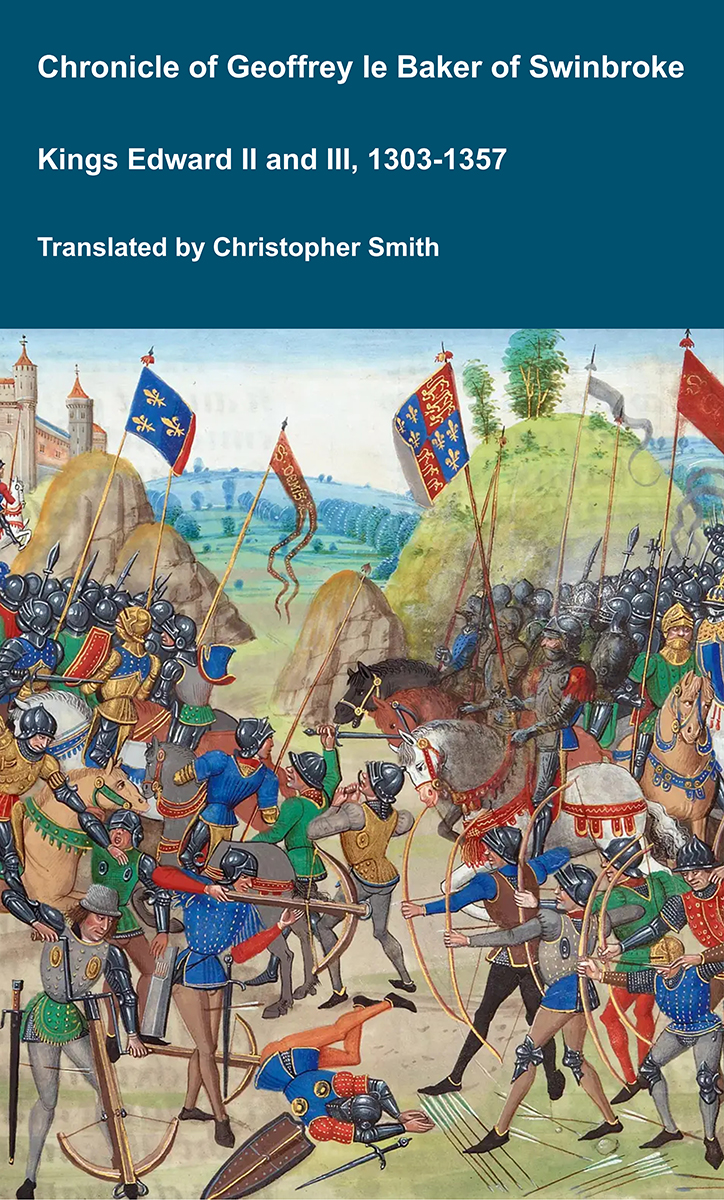 Chronicle of Geoffrey le Baker of Swinbroke. In this year,1 on the feast day of Saint George [23rd April 1350], the king held a great banquet at Windsor Castle [Map], where he established a chantry of twelve priests, and founded a hospital, in which impoverished knights, whose means were insufficient, could, in the service of the Lord, receive suitable support from the perpetual alms of the founders of that college. Besides the king, other nobles contributed to the foundation of this hospital, namely: the king's eldest son, the Earl of Northampton [aged 40], the Earl of Warwick [aged 37], the Earl of Suffolk [aged 51], the Earl of Salisbury [aged 21], and other barons. Also included were simple knights, such as: Roger de Mortimer [aged 21], now Earl of March, Lord Walter de Mauny [aged 40], Lord William FitzWarin [aged 34], John de Lisle [aged 14], John de Mohun [aged 30], John de Beauchamp [aged 31], Walter de Pavely [aged 31], Thomas Wale [aged 47] and Hugh de Wrottesley [aged 16]. Men whose proven virtue ranked them among the wealthiest earls. Together with the king, all these men were clothed in robes of powdered russet, with garters of Indian colour, also wearing garters on their right legs, and mantles of blue, adorned with the shield of Saint George. In such attire, bareheaded, they devoutly attended a solemn Mass, sung by the bishops of Canterbury, Winchester, and Exeter. They then sat together at a common table, in honour of the holy martyr, to whom they dedicated this noble brotherhood, calling their company "The Knights of Saint George of the Garter."
Isto anno, in die sancti Georgii, rex celebravit grande convivium apud Wyndesore in castro, ubi instituit cantariam xij. sacerdotum, et fundavit zenodochium, in quo milites depauperati, quibus sua non sufficerent, possent in Domini servitute de perpetuis elemosinis fundatorum illius collegii sustentacionem competentem habere. Preter regem fuerunt alii compromittentes in fundacionem istius zenodochii, scilicet regis primogenitus, comes Norhamptonie, comes Warewici, comes Suthfolchie, comes Salisbiriensis, et alii barones; simplices quoque milites, scilicet Rogerus de Mortuo mari, nunc comes Marchie, dominus Walterus de Magne, dominus Willelmus filius Garini, Iohannes de Insula, Iohannes de Mohun, Iohannes de Bealchampe, Walterus de Pavely, Thomas Wale, et Hughe de Wrotesley, quos probitas experta ditissimis comitibus associavit. Una cum rege fuerunt omnes isti vestiti togis de russeto pulverizato cum garteriis Indie coloris, habentes eciam tales garterias in tibiis dextris, et mantella de blueto cum scutulis armorum sancti Georgii. Tali apparatu nudi capita audierunt devote missam celebrem per antistites Cantuariensem, Wintoniensem, et Exoniensem decantatam, et conformiter sederunt in mensa communi ob honourem sancti martiris, cui tam nobilem fraternitatem specialiter intitularunt, appellantes istorum comitivam sancti Georgii de la gartiere.
Note 1. Stow Annales 390: "This yeere, on Saint Georges day [23rd April 1350], the king held a great and solemne feast at his castle of Windsor, where he had augmented the chappel which Henry the first and other his progenitors, kings of England, had before erected, of eight chanons. He added to those eight chanons a deane and fifteene chanons more, and 24 poore and impotent knights, with other ministers and servants, as appeareth in his charter dated the two and twentieth of his reigne. Besides the king, there were other also that were contributors to the foundation of this colledge, as followeth: i. The sovereigne king Edward the third, 2. Edward, his eldest sonne, prince of Wales, 3. Henry, duke of Lancaster, 4. the earle of Warwicke, 5. Captaine de Bouch [aged 19], 6. Ralph, earle of Stafford [aged 48], 7. William Montacute, earle of Salisburie, 8. Roger, lorde Mortimer, earle of March, 9. sir John de Lisle [aged 31], 10. sir .
It will be seen that Stow here alters the names to tally with the list of the original knights or First Founders of the order of the Garter. Baker seems to be anticipating. William Bohun, 1st earl of Northampton, and Robert Ufford, 1st earl of Suffolk, and sir William Fitz-Warine became knights of the order at an early date; but Roger Mortimer, here styled 'now Earl of March,' did not have that title before 1352, and sir Walter Manny did not receive the garter till the end of 1359.
The date of the foundation of the order of the Garter has never been exactly determined. Froissart 203.
The Brute chronicle (Egerton MS. 650) has this description, although under a wrong year: "And in the XIX yere of his regne, anone aftre, in Jannuere, before Lenten, the same kyng Edward lete make fulle noble iustice and grete festes in the place of hys byrth, at Wyndsore, that ther were never none suche seyne before that tyme, ne I trowe sythene. At whech iustice, festis and ryalte weryn II kinges, II quenys, and the prince of Wales and the duke of Cornewale, ten erles, nine countesse, many barons, knyghttes, and worthy burgesse, the whech myght not lyghtly be nombrede; and also of dyverse londes as byyonde the see were many strangers. And at that tyme, whene the iustes had done, the kyng Edward made a grete souper, in the wheche he begone fyrst hys round table, and ordayned stedfastly the day of the forsayd table to be holde ther at Wyndessore in the Whytesonwyke evermore yerely."
Relying on the date given in the statutes of the order and on this passage in Baker, writers on the subject have adopted 1349 or 1350 as the year of foundation. But an entry in the household-book of the Black Prince affords a reason for dating the event a year earlier, payment having been made on the 18th November 1348, for twenty-four garters which were given by the prince "militibus de societate garterias" i.e. "garters [were given] to the knights of the society"; Beltz, Memorials of the Order of the Garter, pp. XXXII, 385. Proof however is not conclusive, as the ministers' accounts in the household-book were rendered between 1352 and 1365, and there is therefore room for error; moreover, the garters in question may have been prepared in anticipation. The date of 1349, which is given in the preamble to the earliest copies of the statutes, although it is true that those copies are not contemporary, is not to be lightly set aside. It is, indeed, most probable that the order was never solemnly instituted at an early period, but that it was gradually taking shape during the years following the foundation of the Round Table. Edward's patent, bearing date of 22nd August 1348, whereby he instituted a chapel at Windsor, with a fraternity of eight secular canons and a warden, fifteen other canons, and four-and-twenty poor knights, appears to be the first formal document which can be quoted as a foundation-deed of the order. After this there is no direct reference to it until 1350, when robes were issued for the King against the coming Feast of St. George, together with a Garter containing the King's motto, "Hony soyt qui mal y pense!" Nicolas, History of Orders of Knighthood, 1.24.
Annales of England by John Stow. This yeere, on Saint Georges day [23rd April 1350], the king held a great and solemne feast at his castle of Windsor, where he had augmented the chappel which Henry the first and other his progenitors, kings of England, had before erected, of eight chanons. He added to those eight chanons a deane and fifteene chanons more, and 24 poore and impotent knights, with other ministers and servants, as appeareth in his charter dated the two and twentieth of his reigne. Besides the king, there were other also that were contributors to the foundation of this colledge, as followeth: i. The sovereigne king Edward the third, 2. Edward, his eldest sonne, prince of Wales, 3. Henry, duke of Lancaster, 4. the earle of Warwicke [aged 37], 5. Captaine de Bouch [aged 19], 6. Ralph, earle of Stafford [aged 48], 7. William Montacute [aged 21], earle of Salisburie, 8. Roger, lorde Mortimer [aged 21], earle of March, 9. sir John de Lisle [aged 31], 10. sir Bartholomew Burwash [aged 22], 11. sir John Beauchampe [aged 34], 12. sir John Mahune [aged 30], 13. sir Hugh Courtney, 14. sir Thomas Holland [aged 36], 15. sir John Grey [aged 49], 16. sir Richard Fitz Simon, 17. sir Miles Stapleton [aged 30], 18. sir Thomas Walle [aged 47], 19. sir Hugh Wrothesley [aged 16], 20. sir Nele Loring [aged 30], 21. sir John Chandos [aged 30], 22. sir James de Audley [aged 32], 23. sir Othes Holland [aged 34], 24. sir Henry Eme, 25. sir Sechet Dabridgecourt [aged 20], 26. sir Wiliam Panell [aged 31]. All these, together with the king, were clothed in gownes of russet, poudered with garters blew, wearing the like garters also on their right legges, and mantels of blew with scutcheons of S. George. In this sort of apparell they, being bare-headed, heard masse, which was celebrated by Simon Islip, archbishop of Canterbury, and the bishops of Winchester and Excester, and afterwards they went to the feast, setting themselves orderly at the table, for the honor of the feast, which they named to be of S. George the martyr and the choosing of the knights of the Garter.
On 14th October 1355 John Lisle 2nd Baron Lisle [aged 37] died. His son Robert [aged 19] succeeded 3rd Baron Lisle of Rougemont.
After 3rd January 1377 [his former wife] Maud Grey Baroness Lisle [deceased] died.
[his daughter] Alice Lisle was born to John Lisle 2nd Baron Lisle and Maud Grey Baroness Lisle.
[his son] William Lisle 4th Baron Lisle was born to John Lisle 2nd Baron Lisle and Maud Grey Baroness Lisle.
Kings Wessex: Great x 13 Grand Son of King Alfred "The Great" of Wessex
Kings Gwynedd: Great x 10 Grand Son of Maredudd ab Owain King Deheubarth King Powys King Gwynedd
Kings Seisyllwg: Great x 12 Grand Son of Hywel "Dda aka Good" King Seisyllwg King Deheubarth
Kings Powys: Great x 10 Grand Son of Maredudd ab Owain King Deheubarth King Powys King Gwynedd
Kings England: Great x 5 Grand Son of King Henry I "Beauclerc" England
Kings France: Great x 9 Grand Son of Hugh I King of the Franks
Kings Duke Aquitaine: Great x 13 Grand Son of Ranulf I Duke Aquitaine
Great x 2 Grandfather: Robert Lisle 
Great x 1 Grandfather: Robert Lisle 9 x Great Grandson of Maredudd ab Owain King Deheubarth King Powys King Gwynedd
Great x 3 Grandfather: Henry Fitzgerald 
Great x 2 Grandmother: Alice Fitzgerald 8 x Great Granddaughter of Maredudd ab Owain King Deheubarth King Powys King Gwynedd
Great x 4 Grandfather: Robert Ferrers  6 x Great Grandson of Maredudd ab Owain King Deheubarth King Powys King Gwynedd
Great x 3 Grandmother: Ermentrude Ferrers 7 x Great Granddaughter of Maredudd ab Owain King Deheubarth King Powys King Gwynedd
Great x 4 Grandmother: Joan Boclande
Grandfather: Warin Lisle 10 x Great Grandson of Maredudd ab Owain King Deheubarth King Powys King Gwynedd
Great x 2 Grandfather: Robert Muscgros
Great x 1 Grandmother: Mabel Muscgros
Father: Robert Lisle 1st Baron Lisle 9 x Great Grandson of Hugh I King of the Franks
Great x 4 Grandfather: Thurstan Montfort 4 x Great Grandson of Hugh I King of the Franks
Great x 3 Grandfather: Henry Montfort 5 x Great Grandson of Hugh I King of the Franks
Great x 2 Grandfather: Thurstan Montfort 6 x Great Grandson of Hugh I King of the Franks
Great x 1 Grandfather: Peter Montfort 7 x Great Grandson of Hugh I King of the Franks
Great x 4 Grandfather: Walter Cantilupe 
Great x 3 Grandfather: William Cantilupe Baron
Great x 2 Grandmother: Mabel Cantilupe
Grandmother: Alice Montfort Baroness Fitzwalter 8 x Great Granddaughter of Hugh I King of the Franks
Great x 4 Grandfather: Liulf Audley 
Great x 3 Grandfather: Adam Audley
Great x 4 Grandmother: Mabella Stanley 
Great x 2 Grandfather: Henry Audley
Great x 3 Grandmother: Emma Fitzorm
Great x 1 Grandmother: Alice Audley
Great x 3 Grandfather: Ralph Mainwaring
Great x 2 Grandmother: Bertrade Mainwaring
John Lisle 2nd Baron Lisle 5 x Great Grandson of King Henry I "Beauclerc" England
Great x 4 Grandfather: William Beauchamp 1st Baron Beauchamp 
Great x 3 Grandfather: William Beauchamp 6 x Great Grandson of Maredudd ab Owain King Deheubarth King Powys King Gwynedd
Great x 4 Grandmother: Bertha de Braose Baroness Beauchamp  5 x Great Granddaughter of Maredudd ab Owain King Deheubarth King Powys King Gwynedd
Great x 2 Grandfather: Walter Beauchamp 7 x Great Grandson of Maredudd ab Owain King Deheubarth King Powys King Gwynedd
Great x 3 Grandmother: Jeanne de Saint Valéry
Great x 1 Grandfather: William Beauchamp 8 x Great Grandson of Maredudd ab Owain King Deheubarth King Powys King Gwynedd
Great x 4 Grandfather: Hugh Mortimer 
Great x 3 Grandfather: Roger Mortimer
Great x 4 Grandmother: Matilda Gernon
Great x 2 Grandmother: Joan Mortimer
Great x 4 Grandfather: Walchelin Ferrers
Great x 3 Grandmother: Isabel Ferrers
Grandfather: Walter Beauchamp 7 x Great Grandson of Hugh I King of the Franks
Great x 2 Grandfather: William Maudit
Great x 1 Grandmother: Isabel Maudit 6 x Great Granddaughter of Hugh I King of the Franks
Great x 4 Grandfather: Roger Beaumont 2nd Earl Warwick 
Great x 3 Grandfather: Waleran Beaumont 4th Earl Warwick 4 x Great Grandson of Hugh I King of the Franks
Great x 4 Grandmother: Gundred Warenne Countess Warwick  3 x Great Granddaughter of Hugh I King of the Franks
Great x 2 Grandmother: Alice Beaumont 5 x Great Granddaughter of Hugh I King of the Franks
Great x 4 Grandfather: Robert de Harcourt 
Great x 3 Grandmother: Alice Harcourt Countess Warwick
Great x 4 Grandmother: Isabel Camville
Mother: Margaret Beauchamp Baroness Lisle 4 x Great Granddaughter of King Henry I "Beauclerc" England
Great x 4 Grandfather: Roger Tosny  7 x Great Grandson of King Edward "Elder" of the Anglo Saxons
Great x 3 Grandfather: Ralph Tosny 8 x Great Grandson of King Edward "Elder" of the Anglo Saxons
Great x 4 Grandmother: Ida aka Gertrude Hainaut 
Great x 2 Grandfather: Roger Tosny IV Lord Flamstead 5 x Great Grandson of Hugh I King of the Franks
Great x 4 Grandfather: Robert Beaumont 2nd Earl of Leicester 3 x Great Grandson of Hugh I King of the Franks
Great x 3 Grandmother: Margaret Beaumont 4 x Great Granddaughter of Hugh I King of the Franks
Great x 4 Grandmother: Amice Gael Countess Leicester
Great x 1 Grandfather: Ralph Tosny VI Lord Flamstead 2 x Great Grandson of King Henry I "Beauclerc" England
Great x 4 Grandfather: Roscelin Beaumont Sarthe 7th Viscount Beaumont
Great x 3 Grandfather: Richard Beaumont Sarthe I Viscount Grandson of King Henry I "Beauclerc" England
Great x 4 Grandmother: Constance Fitzroy Viscountess Beaumont  daughter of King Henry I "Beauclerc" England
Great x 2 Grandmother: Constance Beaumont Sarthe Great Granddaughter of King Henry I "Beauclerc" England
Great x 3 Grandmother: Lucie Aigle Viscountess
Grandmother: Alice Tosny 3 x Great Granddaughter of King Henry I "Beauclerc" England
Great x 4 Grandfather: Gilbert de Lacy 
Great x 3 Grandfather: Hugh Lacy
Great x 2 Grandfather: Walter Lacy Lord Meath
Great x 4 Grandfather: Baderon Monmouth Lord Monmouth
Great x 3 Grandmother: Rohese Monmouth Baroness Lacy
Great x 4 Grandmother: Rohese de Clare
Great x 1 Grandmother: Petronilla Lacy 7 x Great Granddaughter of Maredudd ab Owain King Deheubarth King Powys King Gwynedd
Great x 4 Grandfather: William de Braose 3rd Baron Bramber
Great x 3 Grandfather: William de Braose 4th Baron Bramber 5 x Great Grandson of Maredudd ab Owain King Deheubarth King Powys King Gwynedd
Great x 4 Grandmother: Bertha Gloucester Baroness Bramber 4 x Great Granddaughter of Maredudd ab Owain King Deheubarth King Powys King Gwynedd
Great x 2 Grandmother: Margaret de Braose 6 x Great Granddaughter of Maredudd ab Owain King Deheubarth King Powys King Gwynedd
Great x 4 Grandfather: Bernard St Valery
Great x 3 Grandmother: Maud "Lady of Hay" St Valery Baroness Bramber
Great x 4 Grandmother: Matilda Unknown