

Paternal Family Tree: Beauchamp
Around 1319 John Beauchamp 1st Baron Beauchamp was born to Richard de Beauchamp of Holt.
In 1327 [his father] Richard de Beauchamp of Holt died.
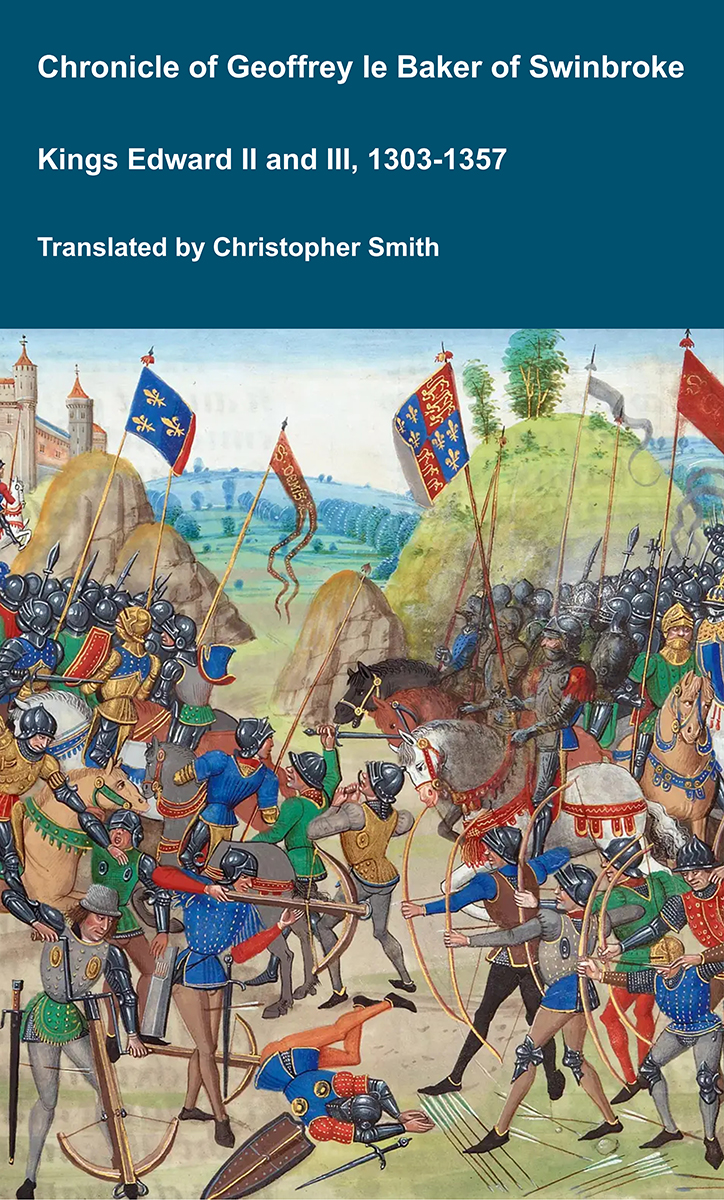 Chronicle of Geoffrey le Baker of Swinbroke. In this year,1 on the feast day of Saint George [23rd April 1350], the king held a great banquet at Windsor Castle [Map], where he established a chantry of twelve priests, and founded a hospital, in which impoverished knights, whose means were insufficient, could, in the service of the Lord, receive suitable support from the perpetual alms of the founders of that college. Besides the king, other nobles contributed to the foundation of this hospital, namely: the king's eldest son, the Earl of Northampton [aged 40], the Earl of Warwick [aged 37], the Earl of Suffolk [aged 51], the Earl of Salisbury [aged 21], and other barons. Also included were simple knights, such as: Roger de Mortimer [aged 21], now Earl of March, Lord Walter de Mauny [aged 40], Lord William FitzWarin [aged 34], John de Lisle [aged 14], John de Mohun [aged 30], John de Beauchamp [aged 31], Walter de Pavely [aged 31], Thomas Wale [aged 47] and Hugh de Wrottesley [aged 16]. Men whose proven virtue ranked them among the wealthiest earls. Together with the king, all these men were clothed in robes of powdered russet, with garters of Indian colour, also wearing garters on their right legs, and mantles of blue, adorned with the shield of Saint George. In such attire, bareheaded, they devoutly attended a solemn Mass, sung by the bishops of Canterbury, Winchester, and Exeter. They then sat together at a common table, in honour of the holy martyr, to whom they dedicated this noble brotherhood, calling their company "The Knights of Saint George of the Garter."
Isto anno, in die sancti Georgii, rex celebravit grande convivium apud Wyndesore in castro, ubi instituit cantariam xij. sacerdotum, et fundavit zenodochium, in quo milites depauperati, quibus sua non sufficerent, possent in Domini servitute de perpetuis elemosinis fundatorum illius collegii sustentacionem competentem habere. Preter regem fuerunt alii compromittentes in fundacionem istius zenodochii, scilicet regis primogenitus, comes Norhamptonie, comes Warewici, comes Suthfolchie, comes Salisbiriensis, et alii barones; simplices quoque milites, scilicet Rogerus de Mortuo mari, nunc comes Marchie, dominus Walterus de Magne, dominus Willelmus filius Garini, Iohannes de Insula, Iohannes de Mohun, Iohannes de Bealchampe, Walterus de Pavely, Thomas Wale, et Hughe de Wrotesley, quos probitas experta ditissimis comitibus associavit. Una cum rege fuerunt omnes isti vestiti togis de russeto pulverizato cum garteriis Indie coloris, habentes eciam tales garterias in tibiis dextris, et mantella de blueto cum scutulis armorum sancti Georgii. Tali apparatu nudi capita audierunt devote missam celebrem per antistites Cantuariensem, Wintoniensem, et Exoniensem decantatam, et conformiter sederunt in mensa communi ob honourem sancti martiris, cui tam nobilem fraternitatem specialiter intitularunt, appellantes istorum comitivam sancti Georgii de la gartiere.
Note 1. Stow Annales 390: "This yeere, on Saint Georges day [23rd April 1350], the king held a great and solemne feast at his castle of Windsor, where he had augmented the chappel which Henry the first and other his progenitors, kings of England, had before erected, of eight chanons. He added to those eight chanons a deane and fifteene chanons more, and 24 poore and impotent knights, with other ministers and servants, as appeareth in his charter dated the two and twentieth of his reigne. Besides the king, there were other also that were contributors to the foundation of this colledge, as followeth: i. The sovereigne king Edward the third, 2. Edward, his eldest sonne, prince of Wales, 3. Henry, duke of Lancaster, 4. the earle of Warwicke, 5. Captaine de Bouch [aged 19], 6. Ralph, earle of Stafford [aged 48], 7. William Montacute, earle of Salisburie, 8. Roger, lorde Mortimer, earle of March, 9. sir John de Lisle [aged 31], 10. sir .
It will be seen that Stow here alters the names to tally with the list of the original knights or First Founders of the order of the Garter. Baker seems to be anticipating. William Bohun, 1st earl of Northampton, and Robert Ufford, 1st earl of Suffolk, and sir William Fitz-Warine became knights of the order at an early date; but Roger Mortimer, here styled 'now Earl of March,' did not have that title before 1352, and sir Walter Manny did not receive the garter till the end of 1359.
The date of the foundation of the order of the Garter has never been exactly determined. Froissart 203.
The Brute chronicle (Egerton MS. 650) has this description, although under a wrong year: "And in the XIX yere of his regne, anone aftre, in Jannuere, before Lenten, the same kyng Edward lete make fulle noble iustice and grete festes in the place of hys byrth, at Wyndsore, that ther were never none suche seyne before that tyme, ne I trowe sythene. At whech iustice, festis and ryalte weryn II kinges, II quenys, and the prince of Wales and the duke of Cornewale, ten erles, nine countesse, many barons, knyghttes, and worthy burgesse, the whech myght not lyghtly be nombrede; and also of dyverse londes as byyonde the see were many strangers. And at that tyme, whene the iustes had done, the kyng Edward made a grete souper, in the wheche he begone fyrst hys round table, and ordayned stedfastly the day of the forsayd table to be holde ther at Wyndessore in the Whytesonwyke evermore yerely."
Relying on the date given in the statutes of the order and on this passage in Baker, writers on the subject have adopted 1349 or 1350 as the year of foundation. But an entry in the household-book of the Black Prince affords a reason for dating the event a year earlier, payment having been made on the 18th November 1348, for twenty-four garters which were given by the prince "militibus de societate garterias" i.e. "garters [were given] to the knights of the society"; Beltz, Memorials of the Order of the Garter, pp. XXXII, 385. Proof however is not conclusive, as the ministers' accounts in the household-book were rendered between 1352 and 1365, and there is therefore room for error; moreover, the garters in question may have been prepared in anticipation. The date of 1349, which is given in the preamble to the earliest copies of the statutes, although it is true that those copies are not contemporary, is not to be lightly set aside. It is, indeed, most probable that the order was never solemnly instituted at an early period, but that it was gradually taking shape during the years following the foundation of the Round Table. Edward's patent, bearing date of 22nd August 1348, whereby he instituted a chapel at Windsor, with a fraternity of eight secular canons and a warden, fifteen other canons, and four-and-twenty poor knights, appears to be the first formal document which can be quoted as a foundation-deed of the order. After this there is no direct reference to it until 1350, when robes were issued for the King against the coming Feast of St. George, together with a Garter containing the King's motto, "Hony soyt qui mal y pense!" Nicolas, History of Orders of Knighthood, 1.24.
In 1378 [his son] John Beauchamp 2nd Baron Beauchamp was born to John Beauchamp 1st Baron Beauchamp [aged 59].
On 10th October 1387 John Beauchamp 1st Baron Beauchamp [aged 68] was created 1st Baron Beauchamp of Kidderminster. The first peerage to be created by letters patent.
Patent Rolls. 11th October 1387. Inspeximus and confirmation to John de Beauchamp of Holt [aged 68] of a writing of even date, of Robert de Veer [aged 25], duke of Ireland, granting, with the king's consent and licence, to the said John, for life, a yearly rent of £100 from the manors of Bovytracy and Holdesworthy, co. Devon, and Blakedon and Ludeford, co. Somerset, and all other his lands in the last named county. Witnessed by Alexander [aged 46], archbishop of York, Michael de la Pole [aged 57], Earl of Suffolk, Nicholas Slake, Richard Clifford, and Richard Felde. And further grant that in case the said Robert die in the lifetìme of the said John, the latter shall receive the said yearly rent for the term of his life, and if the said manors and lands are recovered out of the king's hand, he shall receive it at the Exchequer. By p.s.
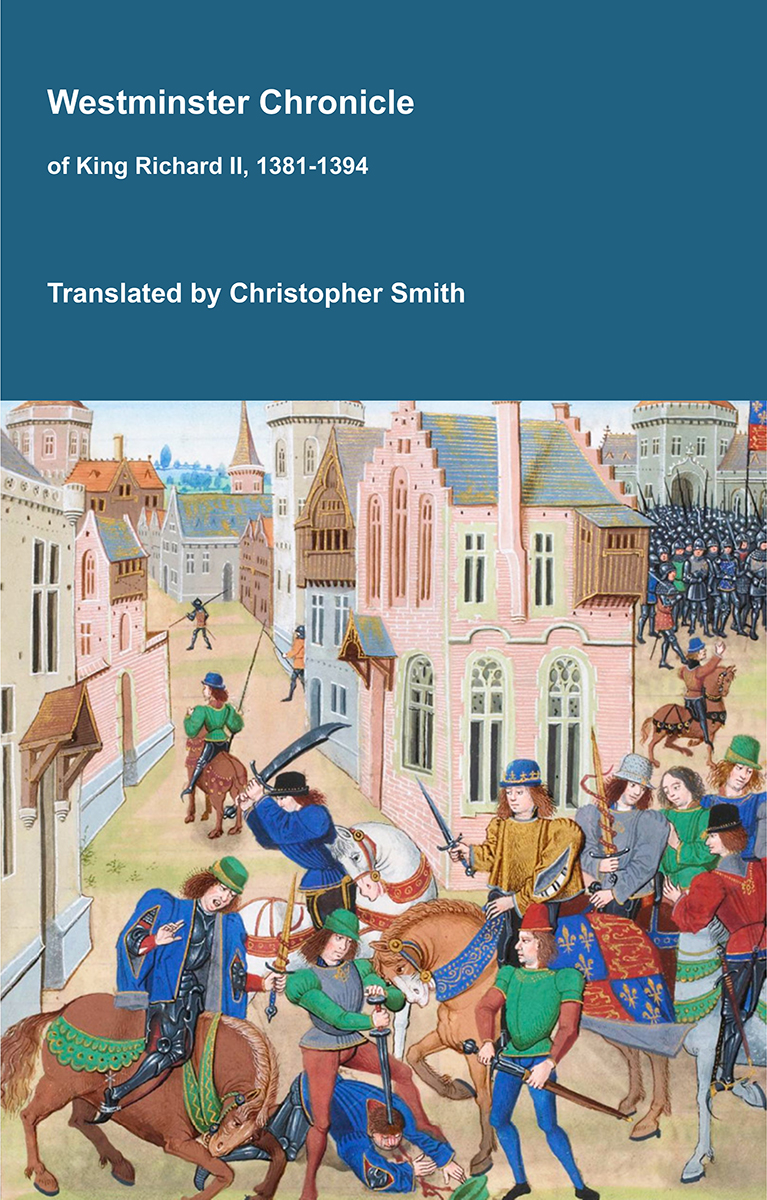 Westminster Chronicle. At this the king, astonished, said that he wished to obey them, as was fitting, in lawful matters, and to be governed by their wholesome counsel, saving his crown and also his royal dignity. And this he affirmed by his own oath. When this had been done, the lords said that he should in no way deceive them in these promises, nor henceforth change his will by force or craft concerning the aforesaid matters, if in future he wished to enjoy his royalty and crown. Therefore, on the last day of December, they came to Westminster, where they discussed those who had stood about the king, whether they were worthy to stand further with the king or not. They also made enquiry into the multitude of officers existing in each office, and in the office of the buttery there were found to be one hundred officers. Likewise in the office of the kitchen, and in all the other offices, they found superfluous men. Therefore, having cut down their excessive number, they still left men sufficient enough in the said offices. Also, they deprived Sir Simon Burley [aged 47] of the custody of Dover Castle, and removed Lord John Beauchamp [aged 68], then steward of the lord king’s household, from that office.
Ad hæc stupefactus rex ait se velle ipsis prout decuit in licitis obtemperare et eorum salubri consilio gubernari, salva corona sua ac etiam regia dignitate, et hoc juramento proprio affirmavit. Quo facto dixerunt domini quod nullo modo ipsos in istis promissionibus falleret neque de cætero suam voluntatem vi aut arte circa præmissa mutaret prout in posterum sua regalitate et corona vellet gaudere, Igitur ultimo die Decembris venerunt Westmonasterium ubi tractarunt de illis qui steterunt circa regom an digni forent stare ulterius cum rege velnon. Et de multitudine officiariorum in unoquoque officio existentium sunt scrutati, et inventi sunt in officio bottelariæ c officiarii. Sicque in officio coquinæ ac in omnibus aliis officiis superfluos invenerunt; unde defalcata illorum numerositate satis competentes adhue in dictis officiis relinquerunt. Item dominum Simonem de Burlee custodia castri de Dover privarunt ac dominum Johannem Beauchamp tunc senescallum hospitii domini regis ab illo officio amoverunt.
Westminster Chronicle. On the first day of January [1388], after council had been held at Westminster, they caused several men to be arrested, namely Sir Thomas Trivet [aged 57], Sir Simon Burley [aged 48], Lord John Beauchamp [aged 69], Sir Nicholas Dagworth, Sir William Elmham [aged 52], Sir James Berners, Sir John Salisbury, and Sir Nicholas Brembre, knights. Also Sir Richard Medford, Sir Richard Clifford, and Sir John Lincoln, clerks. All these, for the sake of custody, were sent by the aforesaid lords to various strongholds until the next Parliament. Also, these lords compelled several others to abjure the court, especially those named below: the bishop of Durham, the bishop of Chichester, Sir Baldwin Bereford, Sir Richard Abberbury, Sir John Worth, the son of Lord Clifford, Sir John Lovell, Sir Zouche, Sir Beaumont, Sir Burnell, Sir Aubrey de Vere [aged 50], Lord Thomas Camoys [aged 37], and Sir Thomas Blount [aged 36]. All these were sworn not to enter the king’s court at all. At that time they were called knights and famous men, distinguished by many virtues. Three ladies also abjured the lord king’s court at that time, namely Lady Poynings [aged 26]1, Lady Mohun [aged 69]2, and Lady Moleyns [aged 52]3. John Blake, however, remained in the custody of the lords.
Primo namque die Januarii celebrato apud Westmonasterium consilio plures arestari fecerunt, videlicet dominum Thomam Tryvet, dominum Simonem Burle, dominum Johannem Beauchamp, dominum Nicholaum Daggeworthe, dominum Willelmum Elmham, dominum Jacobum Berneres, dominum Johannem Salisbury et dominum Nicholaum Brembre milites. Item dominum Ricardum Medford, dominum Ricardum Clifford et dominum Johannem Lincoln clericos, qui omnes causa custodiæ ad diversa fortalitia erant per dominos prædietos transmissi usque ad proximum parliamentum. Item isti domini cogerunt curiam abjurare inter alios specialiter infrascriptos. Episcopum Dunelmensem, episcopum Cicestrensem, dominum Paldewinn de Bereford, dominum Ricarduam de Abberisbury, dominum Johannem Worthe, fillum domini de Clyfford, dominum Johannem Lovell, dominum de la Souche, dominum de Beaumond, dominum de Burnell, dominum Aubrey de Veer, dominum Thomam Caymos, dominum Thomam Blount; omnes isti fuerunt jurati ne omnino in curiam regis intrarent, qui illo in tempore erant milites nominati et viri famosi multisque virtutibus insigniti. Abjurarunt etiam curiam domini regis tunc temporis tres dominæ scilicet domina de Ponyngg, domina de Mohon, et domina de Molyns. Johannes vero Blake remansit in custodia dominorum.
Note 1. Richard Poynings, 3rd Baron, died in 1387. His son Robert Poynings 4th Baron Poynings [aged 5] succeeded at the age of five. He didn't marry until 1397 so this Lady Poynings is probably Richard's widow Isabella Grey, 1362-1394, daughter of Robert Grey [aged 67], Baron Fitzpayne.
Note 2. Joan Burghesh, 1319-1404, daughter of Bartholemew 'the Elder', 1st Baron Burghesh, widow of John Mohun, 2nd Baron Mohun of Dunster, who died in 1375.
Note 3. Margery Bacon, 1336-1399, daughter Edmund Bacon, widow of William de Moleyns.
On 3rd February 1388 the Merciless Parliament commenced. It ended on 4th June 1388. Its primary function was to prosecute members of the Court of King Richard II of England [aged 21]. The term "Merciless" is contemporary having been coined by the chronicler Henry Knighton.
Michael de la Pole 1st Earl Suffolk [aged 58] was sentenced to be hanged, drawn and quartered in his absence. He had escaped to France. Earl Suffolk and Baron Pole forfeit.
Archbishop Alexander Neville [aged 47] was found guilty of treason and it was determined to imprison him for life in Rochester Castle, Kent [Map]. He fled to Louvain [Map] where he became a parish priest for the remainder of his life.
On 19th February 1388 Robert Tresilian was hanged naked and his throat cut. See Chronicle of Adam of Usk.
On 25th March 1388 Nicholas Brembre was hanged. He was buried at Christ Church, Greyfriars [Map].
On 5th May 1388 Simon Burley [aged 48] was executed despite the protestations of his friend Edmund of Langley 1st Duke of York [aged 46]. See Chronicle of Adam of Usk.
On 12th May 1388 John Beauchamp 1st Baron Beauchamp [aged 69] was beheaded at Tower Hill [Map]. He was buried at Worcester Cathedral [Map]. Baron Beauchamp of Kidderminster forfeit.
Robert de Vere 1st Duke Ireland [aged 26] was attainted.


Westminster Chronicle. When, therefore, the appointed day came, the aforesaid lords, together with other peers of the realm and the lords spiritual and temporal, standing before the king in full parliament, produced their appeals in writing against the aforesaid persons named above, protesting that they wished to prosecute, maintain and declare them for the profit and advantage of the king and kingdom, as faithful liegemen are bound by fealty, until death should release them from this present life. Thereupon they most urgently requested that right and justice might proceed upon such appeals in this parliament, without regard to any person whatsoever, but solely to justice and truth brought before them. Then the king, wishing to hear the articles or points on which the said lords chiefly appealed the five persons, caused them to be read before him. For they had been written in the French tongue, thirty-nine in number altogether. There were also other articles put forward against Sir Simon Burley [aged 48], Sir John Beauchamp [aged 69], Sir James Berners, and Sir John Salisbury, sixteen in number, all of which had likewise been drawn up in the French language. But now, leaving the rest aside for the present, one must first speak of the five principal persons: how the aforesaid lords proceeded against them.
Veniente ergo die statuto prædicti domini cum aliis regni proceribus ac dominis spiritualibus et temporalibus coram rege in pleno parliamento assistentibus ; suas appellationes protulerunt in scriptis contra præfatas personas superius nominatas protestando cas velle prosequi manutenere et declarare ad profectum et commodum regis et regni, prout fideles ligii fido astringuntur, usque mors eos absolvat de vita præsenti. Unde instantius rogabant quod jus cum justitia super hujusmodi appellationibus posset procedere in isto parliamento non habendo respectum ad qualemeunque personam nisi solummodo ad justitiam et veritatem coram eis prolatas tunc rex volens audire hoc articulos sive punctus de quibus dicti domini quinque personas principaliter appellarunt, fecit legi coram se Gallico enim sermone fuerant conscripti numero xxxix in toto. Fuerunt etiam alii articuli contra dominum Simonem Burle, dominum Johannem Beauchamp, dominum Jacobum Berneres, et dominum Johannem Salesbury propositi numero xvi qui omnes etiam Gallico idiomate fuerunt exarati. Nunc vero cæteris omissis ad præsens de quinque personis principalibus primitus est loquendum quomodo prædicti domini processerunt.
Kings Gwynedd: Great x 12 Grand Son of Maredudd ab Owain King Deheubarth King Powys King Gwynedd
Kings Seisyllwg: Great x 14 Grand Son of Hywel "Dda aka Good" King Seisyllwg King Deheubarth
Kings Powys: Great x 12 Grand Son of Maredudd ab Owain King Deheubarth King Powys King Gwynedd
Kings France: Great x 10 Grand Son of Hugh I King of the Franks
Kings Duke Aquitaine: Great x 14 Grand Son of Ranulf I Duke Aquitaine
Great x 4 Grandfather: William Beauchamp  6 x Great Grandson of Maredudd ab Owain King Deheubarth King Powys King Gwynedd
Great x 3 Grandfather: Walter Beauchamp 7 x Great Grandson of Maredudd ab Owain King Deheubarth King Powys King Gwynedd
Great x 4 Grandmother: Jeanne de Saint Valéry
Great x 2 Grandfather: William Beauchamp 8 x Great Grandson of Maredudd ab Owain King Deheubarth King Powys King Gwynedd
Great x 4 Grandfather: Roger Mortimer 
Great x 3 Grandmother: Joan Mortimer
Great x 4 Grandmother: Isabel Ferrers 
Great x 1 Grandfather: John de Beauchamp of Holt 7 x Great Grandson of Hugh I King of the Franks
Great x 3 Grandfather: William Maudit
Great x 2 Grandmother: Isabel Maudit 6 x Great Granddaughter of Hugh I King of the Franks
Great x 4 Grandfather: Waleran Beaumont 4th Earl Warwick  4 x Great Grandson of Hugh I King of the Franks
Great x 3 Grandmother: Alice Beaumont 5 x Great Granddaughter of Hugh I King of the Franks
Great x 4 Grandmother: Alice Harcourt Countess Warwick 
Grandfather: John de Beauchamp of Holt 8 x Great Grandson of Hugh I King of the Franks
Father: Richard de Beauchamp of Holt 9 x Great Grandson of Hugh I King of the Franks
John Beauchamp 1st Baron Beauchamp 10 x Great Grandson of Hugh I King of the Franks