

Paternal Family Tree: Vere
Maternal Family Tree: Aoife ni Diarmait Macmurrough Countess Pembroke and Buckingham 1145-1188
Before 16th January 1362 [his father] Thomas de Vere 8th Earl of Oxford [aged 26] and [his mother] Maud Ufford Countess of Oxford [aged 17] were married. She by marriage Countess of Oxford. She the daughter of [his grandfather] Ralph Ufford and [his grandmother] Maud Plantagenet Countess Ulster [aged 52]. He the son of John de Vere 7th Earl of Oxford and Maud Badlesmere Countess of Oxford [aged 53]. They were half fifth cousin once removed. He a great x 5 grandson of King Henry "Curtmantle" II of England. She a great x 2 granddaughter of King Henry III of England.
On 16th January 1362 Robert de Vere 1st Duke Ireland was born to Thomas de Vere 8th Earl of Oxford [aged 26] and Maud Ufford Countess of Oxford [aged 17]. He a great x 3 grandson of King Henry III of England.
In September 1371 [his father] Thomas de Vere 8th Earl of Oxford [aged 35] died. His son Robert [aged 9] succeeded 9th Earl of Oxford.
On 5th October 1376 Robert de Vere 1st Duke Ireland [aged 14] and Philippa de Coucy Duchess Ireland [aged 9] were married. She by marriage Countess of Oxford. She the daughter of Enguerrand de Coucy 1st Earl Bedford 1st Count Soissons [aged 36] and Isabella Countess Bedford and Soissons [aged 44]. He the son of Thomas de Vere 8th Earl of Oxford and Maud Ufford Countess of Oxford [aged 31]. They were half third cousin once removed. He a great x 3 grandson of King Henry III of England. She a granddaughter of King Edward III of England.
In 1382 Lyonshall Castle, Herefordshire [Map] became the property of Simon Burley [aged 42]; a gift from Robert de Vere 1st Duke Ireland [aged 19].
In November 1384 Henry of Bar [aged 20] and [his sister-in-law] Marie de Coucy Countess Soissons [aged 18] were married. She the daughter of [his father-in-law] Enguerrand de Coucy 1st Earl Bedford 1st Count Soissons [aged 44] and [his mother-in-law] Isabella Countess Bedford and Soissons. He the son of Robert of Bar 1st Duke of Bar [aged 39] and Marie Valois Duchess Bar [aged 40]. They were third cousins. He a great x 3 grandson of King Edward I of England. She a granddaughter of King Edward III of England.
In 1385 Robert de Vere 1st Duke Ireland [aged 22] was appointed 73rd Knight of the Garter by King Richard II of England [aged 17].
Patent Rolls. 12th February 1385. Commission to W. Bishop of Winchester [aged 65], Thomas, Bishop of Exeter, Richard, Earl of Arundel [aged 39], Robert, Earl of Oxford [aged 23], Thomas, Earl of Nottingham [aged 16], Hugh de Segrave [aged 89], treasurer of England, Simon de Burley [aged 45], under-chamberlain, Nicholas Brembre, mayor of London, John Clanvowe [aged 44] and Robert Plesyngton, knights, Master Walter Skirlawe, keeper of the privy seal, John Waltham, keeper of the rolls of Chancery, John Appelby, dean of St. Paul's, London, Richard Rounhale and Thomas Bacton, clerks,
On 1st December 1385 Robert de Vere 1st Duke Ireland [aged 23] was created 1st Marquis Dublin. [his wife] Philippa de Coucy Duchess Ireland [aged 18] by marriage Marchioness Dublin.
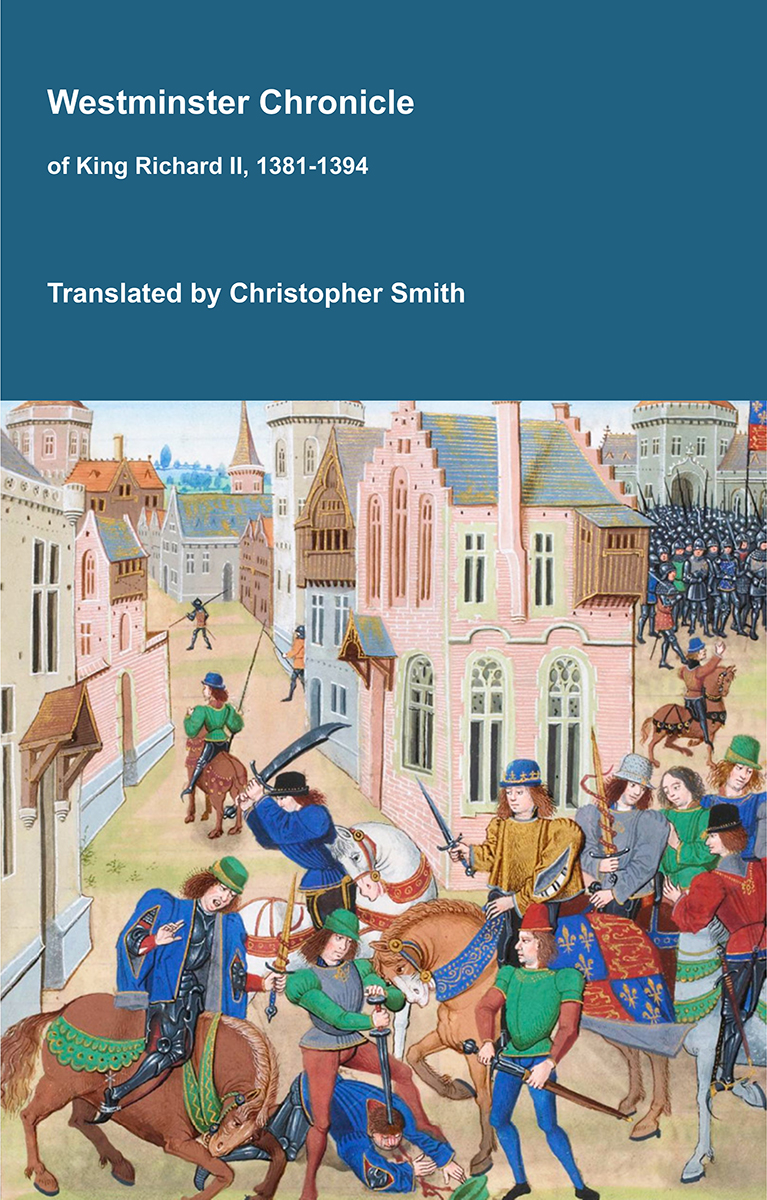 Westminster Chronicle. On the first day of December, the king granted the lordship of Ireland, to be held from him, to the earl of Oxford [aged 23], who at once did homage to the king for it. He appointed him to be called Marquis of Dublin1, for a marquis is greater than an earl and less than a duke. Therefore the king made him sit above the earls in parliament.
Primo die Decembris rex contulit dominium Hiberniæ de eo tenendum comiti Oxoniæ, qui pro illa confestim fecit regi homagium et statuit eum appellari Marchionem Dubliniæ ; marchio enim est major comite et minor duce. Unde rex in parliamento supra comites fecit eum sedere. Item quinto die Decembris, reconciliatus est major Londoniæ duci Lancastriæ et cum eo ea nocte cœnavit. Fruit etiam ibi rex et regina.
Note 1. Robert de Vere, 1362-1392, Earl of Oxford, a close personal friend of King Richard II. He was the first person the be created a Marquis. He was created Duke of Ireland in 1386. Walsingham, St Albans Chronicle: The Chronica Maiora: "In this Parliament a new dignity was created, unfamiliar to the English, namely, the earl of Oxford, Lord Robert de Vere, was called and made Marquis of Dublin in Ireland. The other earls took this ill, because they saw that, by the king’s gift, he had received a rank higher than their own, and especially because he did not seem to be superior to the others either in wisdom or in arms." and later, Walsingham, Historia Anglicana writes in 1386: "Where the lord king, lest he should seem to have done too little, made Lord Robert de Vere, formerly earl of Oxford, but recently, in the last Parliament, created marquis of Dublin, duke of Ireland, intending afterwards to make the duke a king, if fortune favoured him. So greatly was he attached to him, so greatly did he honour and love him, not without the stain, as is said, of obscene intimacy. The other nobles and barons murmured against this and bore it indignantly, that there should be a desire for so great a promotion in a man so mediocre, whom neither the loftiness of his birth nor the gifts of other virtues commended above the rest."
In 1386 Robert de Vere 1st Duke Ireland [aged 23] was created 1st Duke Ireland. [his wife] Philippa de Coucy Duchess Ireland [aged 18] by marriage Duchess Ireland.
In 1387 Robert de Vere 1st Duke Ireland [aged 24] and Philippa de Coucy Duchess Ireland [aged 19] were divorced.
Jean de Waurin's Chronicle of England Volume 6 Books 3-6: The Wars of the Roses
Jean de Waurin was a French Chronicler, from the Artois region, who was born around 1400, and died around 1474. Waurin’s Chronicle of England, Volume 6, covering the period 1450 to 1471, from which we have selected and translated Chapters relating to the Wars of the Roses, provides a vivid, original, contemporary description of key events some of which he witnessed first-hand, some of which he was told by the key people involved with whom Waurin had a personal relationship.
Available at Amazon in eBook and Paperback format.
In 1387 Robert de Vere 1st Duke Ireland [aged 24] and Agnes Launcekrona Duchess Ireland were married. She by marriage Duchess Ireland, Marchioness Dublin, Countess of Oxford. He the son of Thomas de Vere 8th Earl of Oxford and Maud Ufford Countess of Oxford [aged 42].
Westminster Chronicle. Also, while the king was at Windsor on the feast of Saint George [23rd April 1387], certain wicked and very evil men stirred up the king against Lord Thomas, duke of Gloucester [aged 32], his uncle, to such an extent that, if he had waited there until the next day, he would undoubtedly not have escaped the noose of death. When he learned this, and after dinner had been held, he asked leave of the king and immediately departed. Also, on the twenty-fourth day of April, fifteen fishermen from Normandy were captured by the men of Calais. Also, on the twenty-seventh day of April, at the instance of the duke of Ireland [aged 25], the king granted John Northampton a full charter concerning all his forfeitures, and that he should have again all his goods, movable and immovable. This profited him little.
Item existente rege apud Wyndeshoram in festo sancti Georgii quidam iniqui et pessimi excitarunt regem contra dominum Thomam ducem Gloucestriæ avuneulum suum in tantum si ibidem diem crastinum expectasset indubie mortis laqueum minime evasisset; quo comperto et prandio celebrato petita a rege licentia confestim recessit. Item xxiiii die Aprilis capti sunt per Calesienses de Normannia quindecim piscatores. Item xxvii die Aprilis ad instantiam ducis Hiberniæ rex concessit Johanni Northampton unam cartam plenariam super omnibus forisfactis suis et quod rehaberet omnia bona sua mobilia et immobilia Cui modicum sibi profecit.
Westminster Chronicle. Also, in this summer the king appointed the duke of Ireland [aged 25] as justiciar of Chester, and granted him the castle of Flint [Map]1 in Wales. He also gave him certain lands to the value of one thousand marks a year from the lordship of Lord Audley. He also granted him John, son and heir of Charles of Blois, who had once fought against the duke of Brittany for that duchy, which he claimed for himself, and who fell in the open field near Auray. Two of his sons, among others, had been captured and sent into England, and kept there for a long time, lest they should ever rise against the aforesaid duke, harassing him over the said duchy. One of them had now been removed from the midst, but this one, at the request of the duke of Ireland, was released from chains for the payment to him of twenty thousand pounds, and sent to the French. The aforesaid duke of Brittany had offered greater and more ample sums for him, but did not obtain what he sought. For this Robert de Vere, duke of Ireland, had taken as wife the daughter of Lord Enguerrand de Coucy and Lady Isabella, daughter of King Edward. Having come to hate her, he sent John Ripon, clerk, to the Roman Curia to procure a divorce from the marriage between them. Ripon laboured there so greatly for this that, through false witnesses hired for that purpose, he obtained a sentence of divorce. This deed greatly displeased the dukes of Lancaster, York, and Gloucester, the uncles of the aforesaid woman. When she had at last been repudiated in this way, the said Robert de Vere, duke of Ireland, wickedly joined to himself in marriage a certain Bohemian woman from the chamber of the lady queen, called Launcecrona, while the queen always protested against it, to his own scandal and everlasting disgrace. The mother of the said Robert de Vere, however, loved this noble woman, thus repudiated, so much that she held her dearer than if she had been her own daughter, and truly strove with all the strength of her mind to please her, so that she did not spare even to curse her own son because of his repudiation of her. The king also granted the aforesaid Robert de Vere many other things, some of which had belonged to the Crown from ancient times, as will plainly appear in what follows.
Item rex in ista æstate præfecit ducem Hyberniæ in justiciarium Cestriæ contulitque sibi castrum de Flynt in Wallia. Dedit etiam sibi quasdam terras ad valorem mille marcarum per annum de dominio domini de Audeleye ; contulitque sibi Johannem filium et heredem Caroli de Bloys, qui olim contra ducem Britanniæ est congressus pro illius ducatu, quem sibi vindicavit, occubuit in plano campo juxta Orreye, cujus filii duo inter cæteros erant capti et in Angliam missi ac inibi longo tempore custoditi ne aliquando contra ducem prædictum insurgerent illum infestando pro ducatu prædicto. Altero quidem nunce sublato de medio iste vero jam ad petitionem ducis Hiberniæ pro viginti millia librarum sibi solvendis est a vinculis relaxatus et ad Francos transmissus. Majora tamen et ampliora pro ipso obtulit dux Britanniæ prædictus sed non obtinuit quod petebat. Duxerat namque iste Robertus de Veer, dux Hiberniæ, filiam domini Ingelrami de Coucy et dominæ Isabellæ filiæ regis Edwardi in uxorem quam habens exosam misit Johannem Ripon clerieum ad curiam Romanam ad divortiandum matrimonium inter eos, qui ad hoc in tantum laboravit ibidem quod per falsos testes ea de causa conductos sententiam divortii prolatam recepit. Quod quidem factum multum displicuit ducibus Lancastriæ, Everwyk et Gloucestriæ avunculis mulieris prædictæ. Qua tandem sie repudiata dictus Robertus de Veer, dux Hyberniæ, quamdam mulierem Boemicam de camera dominæ reginæ Lancecronam vocatam, regina semper reclamante, sibi in conjugem nefarie copulavit in sui ipsius scandalum et opprobrium sempiternum. Mater vero dicti Roberti de Veer in tantum dilexit istam nobilem mulierem sic repudiatam quod cariorem eam habuit quam si fuisset filia propria, cui revera tota animi virtute studuit perplacere, sic quod proprio filio propter ejus repudium maledicere non pepercit. Contulit quoque rex prædicto Roberto de Veer plura alia quorum quædam ab antiquo pertinuerunt ad coronam prout in sequentibus manifeste liquebit.
Note 1. Flint Castle, on the Welsh side of the estuary of the River Dee, at a traditional crossing point. Building work began in 1277 and ended in 1284.
Westminster Chronicle. Also, they were asked whether the judgement rendered against the earl of Suffolk [aged 57] in the last Parliament held at Westminster was erroneous and revocable, or not. To this question they unanimously answered that, if that judgement were now to be rendered, the aforesaid justices and serjeant would not wish to render it, because it seemed to them that that judgement was revocable, and erroneous in every part of it. In testimony of all these things, the aforesaid justices and serjeant set their seals to the present document, with these witnesses: the reverend fathers Alexander [aged 46], archbishop of York, Robert [aged 67], archbishop of Dublin, John, bishop of Durham, Thomas, bishop of Chichester, John, bishop of Bangor, Robert [aged 25], duke of Ireland, Michael, earl of Suffolk, John Ripon, clerk, and John Blake, esquire. Given at the place, day, month, and year aforesaid [25th August 1387].
Ilem quæsitum erat ab eis an judicium in ultimo Parliamento apud Westmonasterium celebrato redditum contra comitem Suffolkiæ fuit erroneum et revocabile, an non. Ad quam quidem quæstionem unanimiter responderunt quod si illud judicium esset modo reddendum illi justiciarii et serviens prædicti illud reddere nollent quia videtur illis quod judicium illud revocabile est et tanquam erroneum in omni sui parte. In quorum omnium testimonium justiciarii et serviens prædicti sigilla sua præsentibus apposuerunt, his testibus reverendis patribus Alexandro archiepiscopo Eboracensi, Roberto archiepiscopo Dublinensi, Johanne episcopo Dunelmensi, Thomas Cicestrensi episcopo, Johanne Bangorensi episcopo, Roberto duce Hiberniæ et Michaele comite Suffolkiæ et Johanne Ripon clerico et Johanne Blake seutifero. Datum loco die mense et anno prædictis.
Patent Rolls. 11th October 1387. Inspeximus and confirmation to John de Beauchamp of Holt [aged 68] of a writing of even date, of Robert de Veer [aged 25], duke of Ireland, granting, with the king's consent and licence, to the said John, for life, a yearly rent of £100 from the manors of Bovytracy and Holdesworthy, co. Devon, and Blakedon and Ludeford, co. Somerset, and all other his lands in the last named county. Witnessed by Alexander [aged 46], archbishop of York, Michael de la Pole [aged 57], Earl of Suffolk, Nicholas Slake, Richard Clifford, and Richard Felde. And further grant that in case the said Robert die in the lifetìme of the said John, the latter shall receive the said yearly rent for the term of his life, and if the said manors and lands are recovered out of the king's hand, he shall receive it at the Exchequer. By p.s.
Westminster Chronicle. Also, on the twenty-eighth day of October, the king sent the archbishop of York [aged 46] and Michael de la Pole [aged 57], earl of Suffolk, to the mayor and citizens of London, to ask them whether they were of one mind among themselves in the city of London, and whether they wished to stand with the king, if need required it, or not. To these things answer was made to them that they were unanimous, and that they wished to obey their king in all things, as his royal majesty demands and requires, and to hold with him, setting aside all others whatsoever. Having received this answer, they returned to the king with joy. The king, gladdened by this answer, entered the city of London on the tenth day of November. The mayor and the other citizens of the said city honourably came out to meet him, dressed in one livery, namely white and red, and rode in procession before him through the middle of the city as far as the Mews at Charing. There the king took off his shoes, and the archbishop of York, Robert de Vere [aged 25], duke of Ireland, and Michael de la Pole, earl of Suffolk, with him, likewise barefoot, proceeded to the church of Saint Peter at Westminster. The abbot and convent of the said monastery also came solemnly to meet him in copes as far as the royal gate, and led him from that place into the church over carpets laid out for him. When he had performed his devotions according to custom, he returned to his palace.
Item xxviii die Octobris misit rex archiepiscopum Eboracensem et Michaelum de la Pole comitem Suffolkiæ ad majorem et cives Londoniarum ad inquirendum ab eis, an essent inter se unanimes in civitate Londoniarum, et an ipsi vellent stare cum rege, si opus exposceret, aut non. Ad ista fuit eis responsum, quod illi forent unanimes et suo regi vellent obedire in omnibus prout sua regia majestas exigit et requirit ac secum tenere aliis postpositis quibuseunque. Accepto vero responso ad regem cum gaudio redierunt. Rex autem super hujusmodi responso exhilaratus x die Novembris civitatem Londoniarum intravit contra quem major et cæteri cives dictæ civitatis in una secta alba scilicet et rubea honorifice exierunt et ante eum per medium civitatis usque Le Muwes apud Charryngg processionaliter equitarunt. Ubi rex discalciavit se et ‘archiepiscopus Eboracensis, Robertus de Veer Dux Hiberniæ et Michael de la Pole, comes Suffolkiæ, cum eo pariter nudipedes ad ecclesiam sancti Petri Westmonasterii processerunt contra quem etiam abbas et conventus dicti monasterii in capis usque portam regiam ei obviam modo solemni venerunt et illum super tapetis ab illo loco stratis usque in ecclesiam deduxerunt. Factisque suis devotionibus ex more ad suum palatium remeavit.

On 19th December 1387 an army of the Lords Appellant led by the future King Henry IV of England [aged 20] prevented the forces of King Richard II of England [aged 20] commanded by Robert de Vere 1st Duke Ireland [aged 25] from crossing the bridge [Map] over the River Thames at Radcot in Oxfordshire. When Thomas of Woodstock 1st Duke of Gloucester [aged 32] arrived with further Lord Appellant's men the King's men were encircled. The King's men attempted to force the crossing of the bridge at which time the only casualties occurred including Thomas Molyneux [aged 49] who was killed by Thomas Mortimer [aged 37]. Around 800 men drowned in the marshes whilst trying to escape. Robert de Vere 1st Duke Ireland narrowly escaped to France.
Walsingham Chronica Majora. 19th December 1387. Meanwhile, the Duke of Ireland [aged 25], fleeing, came to a river. When he wished to cross by a bridge, he found it broken. Reaching another bridge, he encountered archers who blocked his passage. Thus, turning away from them and searching for a ford, he urged his horse into the river. There, soon transformed from a rider into a swimmer, he reached the other bank. Since it was night, the servants of the lords did not pursue the fugitive, particularly because they were unfamiliar with the paths of the region. However, his horse, along with his helmet, gauntlets, and breastplate, fell into the possession of the lords. As a result, it was later believed for a long time that he had drowned. Additionally, the lords intercepted his cart and saddlebags, discovering many items, most notably letters from the king addressed to him. These letters instructed him to hasten to London with great force, assuring him that the king was prepared and committed to live and die by his side. These documents provided the lords with strong evidence of the king's inconsistency and fickleness.
Interea, Dux Hiberniæ, fugiens pervenit ad flumen, sed cum transire ad pontem vellet, confractum reperit. Ad alium vero pontem dum pervenisset, arcitenentes invenit, qui ejus transitum prohiberent. Igitur divertens ab eis, et vadum quærens, equum compulit intrare flumen; in quo mox, ex equite natator factus, ad aliam ripam venit. Nox autem erat, ct ideo non sunt secuti fugientem servi procerum, eo maxime, quod diverticula patriæ nesciebant. Equus tamen ejus, cum casside, et, cum cbirotliecis, pectorale, in sortem pervenit Dominorum. Unde expost magno tempore submersus fuisse putabatur. Quadrigam ejus insuper, cum clitellis, proceres interceperunt; in quibus plurima repererunt, et præcipue Regis ad ipsum litteras, in quibus continebatur, ut venire festinaret ad eum Londonias, cum potestate magna, et Rex paratus esset, et cor apponeret, ad vivendum ct moriendum cum eo. Qui apices magnam fidem fecerunt Dominis de Regis inconstantia et mutabilitate.
Westminster Chronicle. Therefore, on the twentieth day of December, the aforesaid duke [aged 25], making his journey with his Cheshiremen and Welshmen, numbering five thousand, towards Witney, was first met in a broad field by the earl of Arundel with his men. Seeing them, the aforesaid duke encouraged his men to battle, drew them up for the fight in distinct battle-lines, and raised the banners of the king and of Saint George. When the earl of Arundel and the other lords who were then present learned this, they sent to them, saying that they held with the king as his liege men, and that they did not wish to fight against them in any way unless they meant wholly to stand with the traitors of the king and kingdom, who had been lawfully appealed on certain charges of treason. But they answered and said that they had by no means come for the sake of fighting, but that, by the king’s command, for the protection of the person of the duke of Ireland, "know that we have ridden together with him. But we do not wish to give aid to the traitors of the king or kingdom, nor to provide them with help in anything." Therefore they immediately showed signs of peace, lowering their bows and their other arms. The lords then ordered them to return to their homes, and not to proceed any further with the aforesaid duke in any way, if they wished to save their lives. Sir Thomas Mortimer [aged 37]1, however, notwithstanding the negotiation, rushed upon a certain man called Molyneux [deceased], the chief counsellor of the aforesaid duke, and immediately killed him.
Then the other lords came to the said place with their companies of armed men, those who had been farther away from that place than the rest, arranging themselves as though they were about to enter into mortal combat. The duke, therefore, astonished at this sight, and perceiving that his men had been defeated, took flight and came to the bridge called Radcot Bridge, which he found broken. Therefore, on horseback, he entered the River Thames, and having swum across the channel, vanished from their sight. In that deep water some of his men were drowned, and very many there, near the river-bed, were also trampled down in the marshes by those pursuing the aforesaid duke. The rest, having lost their arms and their horses, returned sorrowfully to their own homes. All the baggage and equipment of the aforesaid duke was brought to the lords. The duke of Ireland, having thus escaped from the hands of the lords, went to the king in the clothing of a groom or servant. After having such conversation with him as he could, he quickly went to the castle of Queenborough. There, having at once secured a ship, he withdrew to the lands beyond the sea.
Igitur xx die Decembris dux prædictus iter faciens eum suis Cestrensibus et Walensibus numero quinque millia versus Wytteneyam ubi in lato campo primo cum suis comes Arundelliæ occurrebat quos videns dux prædietus animavit suos ad bellum distinetis aciebus ad pugnam erexitque vexilla regis et sancti Georgii. Quod comperiens comes Arundelliæ et cæteri domini qui tunc aderant miserunt ad illos dicentes se tenere cum rege sicuti suos ligios homines, nec velle contra illos ullatenus dimicare nisi voluerint omnino stare cum regis et regni proditoribus qui sunt super certis proditionibus legitime appellati. At illi respondentes dixerunt se nullatenus causa pugnæ venisse sed jussu regis gratia tuitionis personæ ducis Hiberniæ noverint nos seeum pariter cequitasse, proditoribus vero regis seu regni opem impendere nolle nec in aliquc juvamen præstare. Unde protinus ostenderunt signa pacis erectis areubus et eorum cæteris armamentis. Quos tunc jusserunt domini ad eorum larves redire nec cum duce prædicto debere ulterius procedere ullo modo si voluerint eorum vitam salvare. Dominus vero Thomas de Mortuo Mari non obstante tractatu irruit in quendam vocatam Molineres præcipuum consiliarium ducis prædicti et ipsum protinus interfecit.
Tunc vero venerunt ad dictum locum cæteri domini cum eorum cuneis armatorum qui ab eo loco cæteris remotiores fuerunt disponendo se tanquam inirent certamen mortale. Dux itaque ad hujusmodi spectaculum stupefactus perpendensque suos fore devictos fugam arripuit venitque ad pontem vocatum Rodecotebrygg, quem fractum invenit ; igitur eques flumen Thamysiæ intravit transnatatoque alveo ab oculis eorum evanuit. In illo enim gurgite quidam de suis erant submersi et quamplures ibi prope alveum in paludibus ab insequentibus ducem prædictum fuerant etiam conculcati. Cæteris vero armis amissis atque eorum equis dolentes ad propria redierunt. Supellectilia itaque omnia præfati ducis ad dominos sunt adducta. Dux itaque Hibernicus taliter a manibus dominorum evasus in habitu garcionis ad regem accessit, habitoque colloquio tali quali cum eo celeriter adiit castrum de Queneborgh. Ubi confestim navigio perquisito in partes transmarinas secessit.
Note 1. Thomas Mortimer, around 1350-1399, killed Thomas Molyneux, around 13380-1387. Walsingham, St Albans Chronicle: The Chronica Maiora: "At that time, there was a certain Thomas Molyneux, who prepared himself for battle, as not all the lords had yet gathered at that place, but only one, Henry, the Earl of Derby, son of the Duke of Lancaster. After fighting for some time, Henry, exhausted and despairing, entered the nearby river. Among the many present, Thomas de Mortimer, a knight, urged him either to come ashore or be pierced with arrows in the river without a doubt. 'If I come ashore,' said Thomas, 'will you spare my life?' 'I make no such promise,' replied the knight, 'but either come ashore or you will soon perish.' To this, Thomas responded, 'If that is the case, allow me to come ashore and fight you or any one of you, so that I may die as a man.' As he began to ascend, the knight grabbed him by the helmet and pulled it off his head. Immediately, drawing a dagger, the knight pierced Thomas."
Westminster Chronicle. Thereupon they steadfastly requested that Alexander [aged 47], Archbishop of York; Robert de Vere [aged 26], Duke of Ireland; Michael de la Pole [aged 58], Earl of Suffolk; Robert Tresilian, Justice; and Nicholas Brembre, knight of London, should be brought before the whole parliament and should answer vigorously to the articles set out in their appeal. But because the time of Shrovetide was now approaching, the king prorogued the business until the Thursday [12th February] immediately after Ash Wednesday.
Unde illi constanter petierunt Alexandrum archiepiscopum Eboracensem, Robertum de Veer ducem Hiberniæ, Michaelem de la Poole comitem Suffolchiæ, Robertum Tresilyan justiciarium et Nicholaum Brembre militem Londoniensem coram toto parliamento adduci et ad articulos in eorum appellatione positos vivaciter respondere. Verum quia tempus Carniprivii jam instabat rex negotium prorogabat usque diem Jovis proximum post diem cinerum.
On 3rd February 1388 the Merciless Parliament commenced. It ended on 4th June 1388. Its primary function was to prosecute members of the Court of King Richard II of England [aged 21]. The term "Merciless" is contemporary having been coined by the chronicler Henry Knighton.
Michael de la Pole 1st Earl Suffolk [aged 58] was sentenced to be hanged, drawn and quartered in his absence. He had escaped to France. Earl Suffolk and Baron Pole forfeit.
Archbishop Alexander Neville [aged 47] was found guilty of treason and it was determined to imprison him for life in Rochester Castle, Kent [Map]. He fled to Louvain [Map] where he became a parish priest for the remainder of his life.
On 19th February 1388 Robert Tresilian was hanged naked and his throat cut. See Chronicle of Adam of Usk.
On 25th March 1388 Nicholas Brembre was hanged. He was buried at Christ Church, Greyfriars [Map].
On 5th May 1388 Simon Burley [aged 48] was executed despite the protestations of his friend Edmund of Langley 1st Duke of York [aged 46]. See Chronicle of Adam of Usk.
On 12th May 1388 John Beauchamp 1st Baron Beauchamp [aged 69] was beheaded at Tower Hill [Map]. He was buried at Worcester Cathedral [Map]. Baron Beauchamp of Kidderminster forfeit.
Robert de Vere 1st Duke Ireland [aged 26] was attainted.


Westminster Chronicle. And on the following Tuesday they were called another time in full parliament, and afterwards, on the Thursday, the eleventh day of February then next following, the king sitting in full parliament, with all his earls, barons and peers of the realm around him, and also all the commons of the realm standing before him, in the presence of the said Duke of Gloucester, Earl of Derby, Earl of Arundel, Earl of Warwick and Earl Marshal, Sir John Devereux, steward of the king’s household, by command of the king, gave judgement in this manner, that is to say, that the said Duke of Ireland [aged 26], Earl of Suffolk [aged 58] and Robert Tresilian should be drawn and hanged as traitors to the king and to the realm, and that they and their heirs should be disinherited for ever. And that the temporalities of the said archbishop should be seized into the king’s hand to the king’s use. From the giving of which judgement all the prelates of parliament withdrew, to save their regularity.
Et le Mardy prochein furent autre foith demaundez en plein parlement et puis apres le Joefdy le xi jour de Feverer lors prochein, le roy seant en plein parlement et toutz ces countes et barons et piers du roiaume entour ly, et auxi toutz les comunes du roiaume esteantz devant luy en presence des ditz duc de Gloucestre, conte de Derby, conte d’Arundell, conte de Warrewyk, et conte marschall, monseignur Johan Deverose seneschall del hostell de roy par comandement du roy dona juggement en tiele manere, cest assavoir, que les ditz duc d’Irland, conte de Suffolk et Robert Tresilyan soient traignez et penduz come traitours du roy et du roiaume et ils et lour heires desheritez pur toutz jours. Et que les temporaltees des dit ercevesque soient seises en le mayn le roy al oeps du roy. A rendre de quell juggement toutz les prelatz du parlement soi retraihent pur saver lour regularite.
Westminster Chronicle. Also, on the 17th day of October, papal bulls were fixed to the doors of the church of St Paul, declaring how the divorce made in the Roman court by Master John Ripon, clerk, between Robert de Vere [aged 27], Duke of Ireland, and the [his former wife] daughter [aged 22] [Philippa] of [his former father-in-law] Lord Enguerrand de Coucy [aged 49], and [his former mother-in-law] Isabel, the king’s kinswoman, was invalid and null. Also, on the 2nd day of November, Boniface IX was elected pope. At that time the lord king carried out that very severe inquiry against the usurpers of his crown, called trailbaston, in Essex, Kent, and elsewhere; as a result, very many were indicted and some were committed to bonds. For those men of the king’s bench went to various counties, always inquiring, as they said, for the profit and advantage of the lord king. Yet in some counties they brought in no profit, because the men of those counties refused to burden their neighbours. The ministers of the aforesaid bench, for that reason, called them unfaithful to the lord king; but when the coming of the Duke of Lancaster was heard of, they immediately ceased from such unusual proceedings.
Item xvii Octobris in valvis ecclesiæ sancti Pauli bullæ papales erant affixæ declarantes quomodo illud divortium factum in curia Romana per dominum Johannem Ripon clericum inter Robertum de Veer ducem Hiberniæ et fillam domini Ingelramy domini de Coucy et Ysabell amitæ dominæ regis fuit invalidum et nullum. Secundo quoque die Novembris Bonifacius ix. electus est in papam. Quo in tempore dominus rex exsecutus est ilam gravissmam inquisitionem contra usurpatores coronæ suæ vocatam traillebastoun in Estsex, Cantia et alibi; unde quam plures fuerant indictati et quidam vinculis mancipati Nam isti de banco domini regis ad diversos comitatus perrexerunt semper inquirendo pro utilitate et commodo domini regis ut dixerunt. Attamen in quibusdam comitatibus nihil commodi attulerunt quia homines illorum comitatuum noluerunt eorum vicinos gravare. Ministri vero de banco prædicto ea de causa vocarunt eos infideles domino regi, sed audito adventu domini ducis Lancastriæ ab hujusmodi insolitis continuo quieverunt.
Chronicle of a Bourgeois of Valenciennes
Récits d’un bourgeois de Valenciennes aka The Chronicle of a Bourgeois of Valenciennes is a vivid 14th-century vernacular chronicle written by an anonymous urban chronicler from Valenciennes in the County of Hainaut. It survives in a manuscript that describes local and regional history from about 1253 to 1366, blending chronology, narrative episodes, and eyewitness-style accounts of political, military, and social events in medieval France, Flanders, and the Low Countries. The work begins with a chronological framework of events affecting Valenciennes and its region under rulers such as King Philip VI of France and the shifting allegiances of local nobility. It includes accounts of conflicts, sieges, diplomatic manoeuvres, and the impact of broader struggles like the Hundred Years’ War on urban life in Hainaut. Written from the perspective of a burgher (bourgeois) rather than a monastery or royal court, the chronicle offers a rare lay viewpoint on high politics and warfare, reflecting how merchants, townspeople, and civic institutions experienced the turbulence of the 13th and 14th centuries. Its narrative style combines straightforward reporting of events with moral and civic observations, making it a valuable source for readers interested in medieval urban society, regional politics, and the lived experience of war and governance in pre-modern Europe.
Available at Amazon in eBook and Paperback format.
Westminster Chronicle. Around these days, Sir John Paule died overseas, a knight indeed vigorous and worthy, young and handsome, who had conducted himself splendidly in the land of the barbarians. Sir Robert de Vere [aged 30], formerly Duke of Ireland and Earl of Oxford, also died in Brabant at Louvain1. Since he had no heir begotten from his own body, that earldom passed to his uncle, Sir Aubrey de Vere. At the end of the month of November a great quantity of snow fell, and again around the feast of Saint Thomas the Apostle there was a great storm both at sea and on land, so horrible that it struck fear into people.
Circa hos dies obiit dominus Johannes Paule in partibus transmarinis miles utique strenuus et valens juvenis et formosus qui egregie se habuit in terra barbarorum. Obiit etiam in Brabantia apud Lovayn dominus Robertus de Veer quondam dux Hyberniæ et comes Oxoniæ, et quia non habuit heredem de corpore suo progenitum transivit comitatus ille ad patruum suum dominum Alberieum de Veer. In fine mensis Novembris cecidit magna copia nivis et itidem circa festum sancti Thomæ Apostoli fuit magna tempestas tam in mari quam in terra tamque horribilis quod hominibus incussit timorem.
Note 1. Robert de Vere died on 22nd November 1392 as a consequence of injuries sustained during a boar hunt. Annals of Kings Richard II and Henry IV describes how three years later King Richard II had his remains returned to England and honourably buried: "In this year, in the month of September, the King of England had brought from Louvain the body of his former beloved, Robert de Vere, Earl of Oxford, a man who would indeed have been fortunate if he had resolved to keep within his proper bounds, but who through over-great advancement was overcome by misfortune. At the Priory of Colne in Essex, the King caused solemn obsequies to be performed, attending there in person and magnifying the funeral office in whatever ways he could. He had the cypress-wood coffin, in which the body lay embalmed with balsam, opened; he looked upon the face and touched the fingers, which, as is said, were enriched with precious gold rings that were to be buried with the body. And he publicly showed to the dead man the affection which he had formerly bestowed upon him while alive. There were present there, with the King and the mother of the deceased, the Archbishop and several other bishops, together with abbots and priors and other religious men. But few nobles attended, because the hatred which they had conceived against him had not yet been digested."
On 22nd November 1392 Robert de Vere 1st Duke Ireland [aged 30] was killed whilst hunting at Louvain [Map]. His uncle Aubrey [aged 54] succeeded 10th Earl of Oxford.
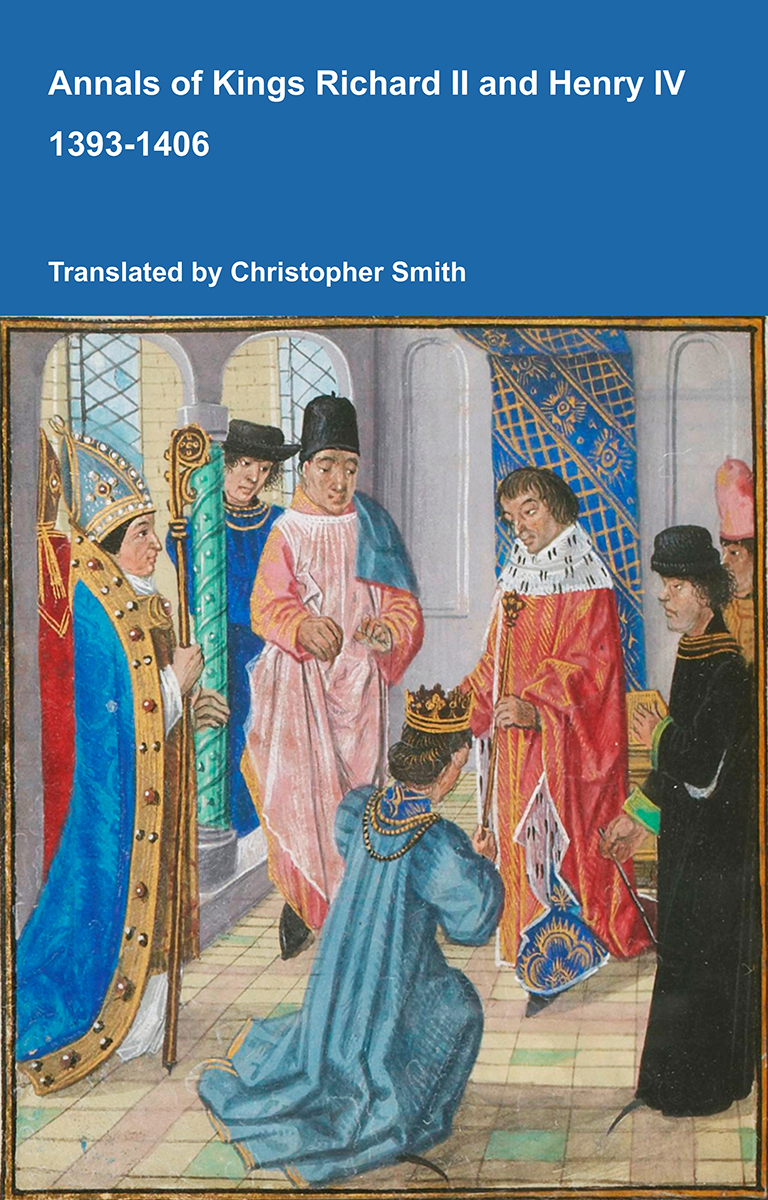 Annals of Kings Richard II and Henry IV. At the same time, Sir Aubrey de Vere [aged 54] was made Earl of Oxford, since he was the nearest in blood to Robert de Vere [aged 30]1, who had died at Louvain.
Eodem tempore, Dominus Albredus De Veer factus est Comes Oxoniæ, quippe qui fuit proximus in consanguinitate Roberto De Veer, qui in Lovania desiit superesse.
Note 1. Robert de Vere, 1362-1392, 1st Duke of Ireland, favourite of King Richard II. He had fled into exile after the Battle of Radcot Bridge in 1387, and attainted and sentenced to death in his absence. He died on 22nd November 1392 in Louvain. He was succeeded as Earl of Oxford by his uncle Aubrey de Vere, 1338-1400.
Annals of Kings Richard II and Henry IV. In this year, in the month of September, the King of England [aged 28] had brought from Louvain the body of his former beloved, Robert de Vere, Earl of Oxford, a man who would indeed have been fortunate if he had resolved to keep within his proper bounds, but who through over-great advancement was overcome by misfortune. At the Priory of Colne in Essex [Map], the King caused solemn obsequies to be performed, attending there in person and magnifying the funeral office in whatever ways he could. He had the cypress-wood coffin, in which the body lay embalmed with balsam, opened; he looked upon the face and touched the fingers, which, as is said, were enriched with precious gold rings that were to be buried with the body. And he publicly showed to the dead man the affection which he had formerly bestowed upon him while alive.
There were present there, with the King and the mother [aged 50] of the deceased, the Archbishop and several other bishops, together with abbots and priors and other religious men. But few nobles attended, because the hatred which they had conceived against him had not yet been digested.
Hoc anno, mense Septembrio, Rex Angliæ, apportato corpore de Lovania quondam dilecti sui Roberti de Veer, Oxoniensis Comitis, (felicis quidem si se inter se continuisse statuisset, sed propter excellentiam infelicitate subactus,) fecit apud Prioratum de Colne in Estsexia solemnes exequias, exhibens ibidem suam præsentiam, et modis quibus potuit magnificans officium funerale; curavitque thecam cypressinam, in qua corpus, balsamo delibutum, jacuit, aperire, faciem considerare, digitos contrectare; qui, ut fertur, ditati fuerunt annulis aureis pretiosis cum corpore terræ tradendis. Demonstravitque dilectionem defuncto publice, quam impenderat prius vivo.
Erant ibi, cum Rege et matre defuncti, Archiepiscopus et alii plures Episcopi, cum Abbatibus et Prioribus, aliisque viris religiosis. Sed pauci interfuerunt proceres; quiæ nondum digestum fuerat odium quod conceperant contra illum.
After 22nd November 1395 Robert de Vere 1st Duke Ireland was buried at Colne Priory, Essex [Map]. King Richard II of England [aged 28] had the coffin opened to kiss his friend's hand and to gaze on his face one last time.
Froissart Book 4 Chapter 92. 1397. News of this event was sooner known in France and Flanders than in England. The French rejoiced much at it; for it was commonly reported that there would never be any solid peace between France and England as long as the duke of Gloucester [aged 41] lived; and it was well remembered, that in the negotiations for peace he was more obstinate in his opinions than either of his brothers; and, for this reason, his death was no loss to France. In like manner, many knights and squires of the king of England's household, who were afraid of him, for his severe and rough manners, were pleased at his death. They recounted how he had driven the duke of Ireland to banishment, and had ignominiously beheaded that prudent and gallant knight sir Simon Burley, who had been so much beloved by the prince of Wales, and had done essential services to his country. The deaths of sir Robert Trevilian, sir Nicholas Bramber, sir John Standwich, and others, were not forgotten, so that the duke of Gloucester was but little lamented in England, except by those who were of his party and manner of thinking.
In October 1411 [his former wife] Philippa de Coucy Duchess Ireland [aged 44] died.
Westminster Chronicle. At that time the king gave in marriage, at his own expense, certain women of the lady queen’s country to noble men1. For this king, in the beginning of his reign, was so liberal that if anyone rightly asked anything of him, he immediately granted it to him. Indeed, sometimes he anticipated the wishes of those asking, and often used to confer more than had been requested. Yet he gave away his possessions so lavishly that almost everything belonging to his Crown he distributed piecemeal to various persons asking for this and that, together with other profits belonging to the king’s treasury. Thus, after giving away his own resources to others, he was compelled by necessity to oppress the commons. Therefore the poor complain bitterly about this, saying that they cannot long sustain such a burden. Would that the king might arrange to relieve them in some measure, and indeed, as I think, he would gain no small advantage from it.
Quo in tempore rex quasdam mulieres dominæ reginæ compatriotas viris nobilibus suis sumptibus nuptui tradidit. Erat namque rex iste in sui primordio tam liberalis ut si quis ab eo quiequid rite petiisset illico sibi concederet. Immo quandoque petentium voluntates ipse prævenit et ultra petita sæpe conferre solebat ; verum tamen tam profuse est sua largitus quod omnia quæ suæ coronæ pertinuerunt diversis personis hæc et illa postulantibus particulatim cum aliis emolumentis fisco regis pertinentibus fère distribuit; sic enim suis aliis erogatis communitatem de necessitate opprimere est compulsus, Unde pauperes super hoc graviter conqueruntur, asserentes se tale onus diu sustinere non posse. Utinam rex disponeret eosdem in aliquo alleviare et profecto commodum inde non modicum, ut æstimo, reportaret.
Note 1. For example, Simon Felbrigge, died 1442, King Richard II’s standard-bearer, and in 1398 Knight Garter, married Margaret who, as the inscription on the brass over his grave in Black Friars Priory, Norwich, states, was 'of the nation and noble blood of Bohemia and once maid of honour to the most noble Lady Anne, formerly Queen of England.' And Nicholas Sarnesfield, died 1397, who married a Margaret, also one of the Queen's maids of honour. And Robert de Vere, who was, or soon would be, Duke of Ireland, who married Agnes de Launcecrona, Lady of the Bedchamber to Queen Anne, having divorced his first wife Philippa, first cousin to King Richard, who he had married ten years before, causing a scandal, as described by Walsingham, St Albans Chronicle: The Chronica Maiora: "It happened in these days that Robert de Vere, puffed up by the honours which the king was bestowing on him, continually repudiated his wife, a young noblewoman both noble and beautiful, born of Isabella, daughter of the illustrious King Edward [the Third], and married another woman, who had come from Bohemia with Queen Anne, as is said, the daughter of a certain saddler, altogether low-born and ugly. Because of this, a great occasion for scandals crept in. Her name, in the common tongue, was 'Launcecrona.' In all these matters the king himself favoured him, unwilling to distress him in anything, or rather, as is said, unable in any way to oppose his wishes, because, hindered by the sorceries of a certain friar who was with the said Robert, the king was in no way able to discern or pursue what was good and honourable. The nobles were therefore indignant, but especially the duke of Gloucester, the uncle of the aforesaid young woman [Philippa]. Although he was not at that time able to avenge such great injuries inflicted upon his niece, nevertheless he kept all these things in his heart until the time of future retribution. The duke of Ireland, however, was not unaware of the aforesaid matters. For that reason he resolved to take precautions for himself, and considered removing from the midst the duke of Gloucester, together with all those who favoured him."
Kings Wessex: Great x 10 Grand Son of King Edmund "Ironside" I of England
Kings Gwynedd: Great x 11 Grand Son of Maredudd ab Owain King Deheubarth King Powys King Gwynedd
Kings Seisyllwg: Great x 13 Grand Son of Hywel "Dda aka Good" King Seisyllwg King Deheubarth
Kings Powys: Great x 11 Grand Son of Maredudd ab Owain King Deheubarth King Powys King Gwynedd
Kings England: Great x 3 Grand Son of King Henry III of England
Kings Scotland: Great x 8 Grand Son of King Malcolm III of Scotland
Kings France: Great x 4 Grand Son of King Louis VIII of France
Kings Duke Aquitaine: Great x 14 Grand Son of Ranulf I Duke Aquitaine
Kings Spain: Great x 6 Grand Son of Alfonso II King Aragon
Great x 4 Grandfather: Robert de Vere 3rd Earl of Oxford 
Great x 3 Grandfather: Hugh de Vere 4th Earl of Oxford
Great x 4 Grandmother: Isabel de Bolebec Countess of Oxford
Great x 2 Grandfather: Robert de Vere 5th Earl of Oxford 7 x Great Grandson of Hugh I King of the Franks
Great x 4 Grandfather: Saer Quincy 1st Earl Winchester 9 x Great Grandson of King Edward "Elder" of the Anglo Saxons
Great x 3 Grandmother: Hawise Quincy Countess Oxford 6 x Great Granddaughter of Hugh I King of the Franks
Great x 4 Grandmother: Margaret Beaumont Countess Winchester  5 x Great Granddaughter of Hugh I King of the Franks
Great x 1 Grandfather: Alphonse Vere 8 x Great Grandson of Hugh I King of the Franks
Great x 2 Grandmother: Alice Sanford Countess of Oxford
Grandfather: John de Vere 7th Earl of Oxford 9 x Great Grandson of Maredudd ab Owain King Deheubarth King Powys King Gwynedd
Great x 3 Grandfather: Richard Foliot
Great x 2 Grandfather: Jordan Foliot 7 x Great Grandson of Maredudd ab Owain King Deheubarth King Powys King Gwynedd
Great x 4 Grandfather: William Stuteville
Great x 3 Grandmother: Margery Stuteville 6 x Great Granddaughter of Maredudd ab Owain King Deheubarth King Powys King Gwynedd
Great x 4 Grandmother: Margaret Say 6th Baroness Burford  5 x Great Granddaughter of Maredudd ab Owain King Deheubarth King Powys King Gwynedd
Great x 1 Grandmother: Jane Foliot 8 x Great Granddaughter of Maredudd ab Owain King Deheubarth King Powys King Gwynedd
Father: Thomas de Vere 8th Earl of Oxford 5 x Great Grandson of King Henry "Curtmantle" II of England
Great x 2 Grandfather: Gunselin Badlesmere 
Great x 1 Grandfather: Bartholomew Badlesmere 1st Baron Badlesmere
Great x 2 Grandmother: Joan Fitzbernard
Grandmother: Maud Badlesmere Countess of Oxford 4 x Great Granddaughter of King Henry "Curtmantle" II of England
Great x 4 Grandfather: Gilbert Clare 5th Earl Gloucester 4th Earl Hertford  2 x Great Grandson of King Henry I "Beauclerc" England
Great x 3 Grandfather: Richard de Clare 6th Earl Gloucester 5th Earl Hertford 3 x Great Grandson of King Henry I "Beauclerc" England
Great x 4 Grandmother: Isabel Marshal Countess Cornwall, Gloucester and Hertford  6 x Great Granddaughter of Hugh I King of the Franks
Great x 2 Grandfather: Thomas de Clare 4 x Great Grandson of King Henry I "Beauclerc" England
Great x 4 Grandfather: John Lacy Earl Lincoln  10 x Great Grandson of King Edward "Elder" of the Anglo Saxons
Great x 3 Grandmother: Maud Lacy Countess Gloucester and Hertford 4 x Great Granddaughter of King Henry I "Beauclerc" England
Great x 4 Grandmother: Margaret Quincy 3rd Countess Lincoln and Pembroke 3 x Great Granddaughter of King Henry I "Beauclerc" England
Great x 1 Grandmother: Margaret Clare Baroness Badlesmere 3 x Great Granddaughter of King Henry "Curtmantle" II of England
Great x 4 Grandfather: Maurice Fitzgerald 2nd Lord Offaly  5 x Great Grandson of Maredudd ab Owain King Deheubarth King Powys King Gwynedd
Great x 3 Grandfather: Maurice Fitzgerald 4th Lord Offaly 6 x Great Grandson of Maredudd ab Owain King Deheubarth King Powys King Gwynedd
Great x 4 Grandmother: Juliana Granville Baroness Offaly 
Great x 2 Grandmother: Juliana Fitzgerald 2 x Great Granddaughter of King Henry "Curtmantle" II of England
Great x 4 Grandfather: Stephen Longespée  Grandson of King Henry "Curtmantle" II of England
Great x 3 Grandmother: Emmeline Longespée Baroness Offaly Great Granddaughter of King Henry "Curtmantle" II of England
Great x 4 Grandmother: Emmeline Riddlesford
Robert de Vere 1st Duke Ireland 3 x Great Grandson of King Henry III of England
Great x 1 Grandfather: Robert Ufford 1st Baron Ufford 
Grandfather: Ralph Ufford
Great x 2 Grandfather: Robert Valoignes 
Great x 1 Grandmother: Cecily Valoignes Baroness Ufford
Mother: Maud Ufford Countess of Oxford 2 x Great Granddaughter of King Henry III of England
Great x 4 Grandfather: King John of England son of King Henry "Curtmantle" II of England
Great x 3 Grandfather: King Henry III of England son of King John of England
Great x 4 Grandmother: Isabella of Angoulême Queen Consort England 5 x Great Granddaughter of Hugh I King of the Franks
Great x 2 Grandfather: Edmund "Crouchback" Plantagenet 1st Earl of Leicester 1st Earl Lancaster son of King Henry III of England
Great x 4 Grandfather: Raymond IV Count Provence  Grandson of Alfonso II King Aragon
Great x 3 Grandmother: Eleanor of Provence Queen Consort England Great Granddaughter of Alfonso II King Aragon
Great x 4 Grandmother: Beatrice Savoy Countess Provence 13 x Great Granddaughter of Charles "Charlemagne aka Great" King of the Franks King Lombardy Holy Roman Emperor
Great x 1 Grandfather: Henry Plantagenet 3rd Earl of Leicester 3rd Earl Lancaster Grandson of King Henry III of England
Great x 4 Grandfather: King Louis VIII of France  son of King Philip II of France
Great x 3 Grandfather: Robert Capet Count of Artois son of King Louis VIII of France
Great x 4 Grandmother: Blanche Ivrea Queen Consort France  Granddaughter of King Henry "Curtmantle" II of England
Great x 2 Grandmother: Blanche Capet Queen Navarre Granddaughter of King Louis VIII of France
Great x 4 Grandfather: Henry Reginar II Duke Brabant Great Grandson of King Stephen I England
Great x 3 Grandmother: Matilda Reginar Countess Saint Pol 2 x Great Granddaughter of King Stephen I England
Great x 4 Grandmother: Marie Swabia Duchess Brabant
Grandmother: Maud Plantagenet Countess Ulster  Great Granddaughter of King Henry III of England
Great x 3 Grandfather: Patrick Chaworth 
Great x 2 Grandfather: Patrick Chaworth
Great x 1 Grandmother: Maud Chaworth 9 x Great Granddaughter of Hugh I King of the Franks
Great x 4 Grandfather: William Beauchamp  8 x Great Grandson of Maredudd ab Owain King Deheubarth King Powys King Gwynedd
Great x 3 Grandfather: William Beauchamp 9th Earl Warwick 7 x Great Grandson of Hugh I King of the Franks
Great x 4 Grandmother: Isabel Maudit 6 x Great Granddaughter of Hugh I King of the Franks
Great x 2 Grandmother: Isabella Beauchamp 8 x Great Granddaughter of Hugh I King of the Franks
Great x 4 Grandfather: John Fitzgeoffrey
Great x 3 Grandmother: Maud Fitzjohn Countess Warwick 8 x Great Granddaughter of Hugh I King of the Franks
Great x 4 Grandmother: Isabel Bigod  7 x Great Granddaughter of Hugh I King of the Franks