

From 27th June 1369 to 1371 Bishop Thomas de Brantingham was appointed Lord High Treasurer to King Edward III of England [aged 56].
On 5th March 1370 Bishop Thomas de Brantingham was appointed Bishop of Exeter.
On 12th May 1370 Bishop Thomas de Brantingham was consecrated Bishop of Exeter.
From 1377 to 1381 Bishop Thomas de Brantingham was appointed Lord High Treasurer to King Richard II of England [aged 9].
Patent Rolls. 12th February 1385. Commission to W. Bishop of Winchester [aged 65], Thomas, Bishop of Exeter, Richard, Earl of Arundel [aged 39], Robert, Earl of Oxford [aged 23], Thomas, Earl of Nottingham [aged 16], Hugh de Segrave [aged 89], treasurer of England, Simon de Burley [aged 45], under-chamberlain, Nicholas Brembre, mayor of London, John Clanvowe [aged 44] and Robert Plesyngton, knights, Master Walter Skirlawe, keeper of the privy seal, John Waltham, keeper of the rolls of Chancery, John Appelby, dean of St. Paul's, London, Richard Rounhale and Thomas Bacton, clerks,
Chronicle of Adam of Usk [~1352-1430]. September 1386. Owing to the many ill-starred crises of king Richard's [aged 19] reign, which were caused by his youth, a solemn parliament was holden at Westminster, wherein twelve of the chief men of the land were advanced, by full provision of parliament, to the government of the king and the kingdom, in order to bridle the wantonness and extravagance of his servants and flatterers, and, in short, to reform the business of the realm; but alas! only to lead to the weary deeds which are hereinafter written1.
Note 1. The actual number of the commissioners appointed by the Wonderful Parliament of 1386 was eleven, or fourteen if the three principal officers of state be included. The eleven were: the archbishops of Canterbury [aged 44] and York [aged 45], the dukes of York [aged 45] and Gloucester [aged 31], the bishops of Winchester [aged 66] and Exeter, the abbot of Waltham, the earl of Arundel, John de Cobham, Richard le Scrope, and John Devereux. Thomas Arundel [aged 33], bishop of Ely, had replaced Michael de la Pole [aged 25], earl of Suffolk, as chancellor; John Gilbert, bishop of Hereford, was treasurer; and John de Waltham, keeper of the privy seal. It will be remembered that John of Gaunt [aged 46] was at this time in Spain, as a reason for his name not appearing on the commission.
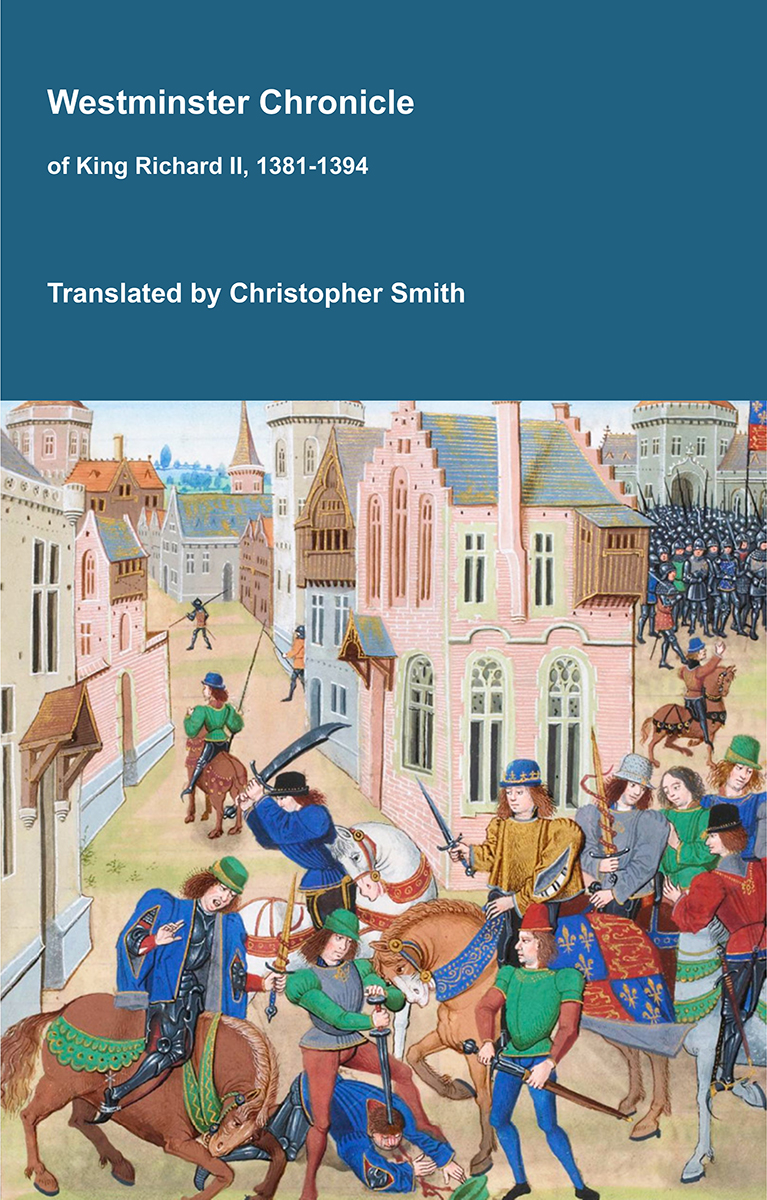 Westminster Chronicle. Therefore, on the eighteenth day of January, at the Guildhall of London, there assembled the Archbishop of Canterbury [aged 46], the Bishops of Winchester [aged 68], Bath, Ely [aged 35]1, Hereford and Exeter, and the aforesaid lords, together with the clerk of the lord king’s privy seal and other noble, prudent and discreet men. First of all, since the Londoners were bound by unlawful oaths, the said archbishop absolved them from such oaths. Then the Bishop of Ely2, Treasurer of England, said to them that no one should speak any ill of the aforesaid lords on account of the bad governance of the king and kingdom which had now been set in motion. Since they, and we all too for the greater part, have been wickedly and most falsely indicted, and since there are among you certain men who have also been indicted, whether justly or unjustly we do not know at all. It will, however, appear in the end when it has been declared by parliament. But now, if there are any grievances or complaints amongst you, bring them forward before us. Now is the time for hearing them, for it is clear to all of us that you are by no means of one mind on either side, since it appears that one craft of this city wishes to destroy another, which is absurd, especially to endure such discord among citizens of this kind. Indeed, if you are willing to foster peace and concord amongst yourselves, you may hope that no adversity will gain mastery over you. Yet little was brought forward in response to these things, because it seemed to them that the lords did not stand equally with all men, as was proper. Therefore perhaps they were unwilling to accept them as judges, nor to allege anything before them.
Igitur xviii die Januarii apud Gyldam Aulam Londoniensem occurrerunt archiepiscopus Cantuariensis, Wyntoniensis, Bathoniensis, Eliensis, Herefordiensis, Exoniensis episcopi et prædicti domini cum clerico de privato sigillo domini regis et aliis nobilibus providis et discretis. Primo quidem ante omnia quia Londonienses erant illicitis juramentis astricti dictus archiepiscopus ab hujusmodi eosdem absolvit. Tunc dixit eis episcopus Elyensis, thesaurarius Angliæ, quod nullus obloqueretur aliquod sinistrum de prædictis dominis propter malam gubernationem regis et regni jam motis. Cum ipsi etiam et nos omnes pro majore parte simus nequiter et falsissime indictati ac inter vos sunt quidam etiam indictati si vero juste sive injuste penitus ignoramus. Apparebit quoque in fine cum per parliamentum fuerit declaratum. Nunc autem si quæ gravamina sive querimoniæ inter vos versantur producite in medium coram nobis ; jam est tempus audiendi, nam constat omnibus nobis vos nullatenus esse unanimes utrobique quia ut apparet una ars istius civitatis aliam delere affectat, quod est absurdum, præsertim inter cives tales inter illos discordias sustinere. Immo si pacem et concordiam inter vos fovere volueritis nullam adversitatem vobis dominari sperare poteritis. Pauca vero ad ista erant prolata quia videbatur cis non æqualiter cos stare cum omnibus prout decet. Ideo forte noluerint eos tanquam judices acceptare nec coram illis aliquid allegare.
Note 1. Archbishop Thomas Fitzalan aka Arundel, a younger brother of Richard, Earl of Arundel and Surrey.
Note 2. The Latin text has the 'Bishop of Ely' but the Lord Treasurer at the time was John Gilbert, Bishop of Hereford.
In 1389 Bishop Thomas de Brantingham was appointed Lord High Treasurer to King Richard II of England [aged 21].
Westminster Chronicle. At the beginning of the month of May [1389], the king held his council at Westminster. In it he put forward and declared on his own behalf, affirming that he was of full and perfect age, in the manner of an heir claiming his inheritance when he has reached his 21st year. Therefore he asked all the lords whether he could rightly take upon himself alone the government of the realm, or not. They all answered and said that he could well do so, and that he ought to assume such a burden upon himself. Then he said to them: "You know very well how, for these twelve years since I was made king, I have been governed by others, and so too has the whole realm. And I have well observed that my people have always, from year to year, been troubled by various impositions, and yet we have not seen our realm strengthened in any way on account of this. Therefore, since we have taken up the burden, we judge it fitting also to take up the rule, since we are of such mature age that, all negligence being removed, with the Lord’s help, we intend henceforth to labour continually for the safety and profit of our people and realm, so that our subjects may be able to live more quietly hereafter, and our realm may prosper more abundantly and be reformed for the better in future." And so, consequently, he removed the Chancellor and Treasurer from their offices. He also removed all other officers, both greater and lesser, including those overseas, some for a time and some permanently, from their offices with due discretion, especially those who had recently been appointed to various offices by the said lords who had been governing the realm and the king. Also, he expelled from his household about four hundred persons, especially those who had been brought into his court by the aforesaid lords, or who were joined to them by some bond of friendship. He appointed the Bishop of Winchester [aged 69]1 as his Chancellor, the Bishop of Exeter2 as his Treasurer, and Master Edmund Stafford [aged 45]3 as Keeper of his Privy Seal.
In principio mensis Maii rex tenuit suum consilium apud Westmonasterium. In quo proposuit et declaravit pro se ipso affirmans ipse fore plenæ et perfectæ ætatis ad modum heredis petentis hereditatem cum ipse pervenit ad vicesimum primum annum. Unde quæsivit a dominis universis an posset super se rite suscipere solum regni gubernaculum aut non. Qui respondentes dixerunt omnes quod bene potuit et debere super se tale onus assumere, Quibus ipse ait, "Optime scitis quomodo per istos duodecim annos ex quo factus sum rex fui per alios gubernatus ac etiam totum regnum ; et bene perpendi populum meum semper de anno in annum diversis impositionibus fore vexatum et in nullo propter hoc regnum nostrum vidimus roboratum, Igitur ex quo suscepimus onus dignum arbitramur etiam accipere et regimen cum simus tam profectæ ætatis quatinus negligentia quacunque remota, Domino auxiliante, circa salutem et commodum populi nostri et regni intendimus de cætero assidue laborare ut subditi nostri deinceps quietius vivere valeant et regnum nostrum uberius prosperetur ac in posterum in melius reformetur." Sicque consequenter cancellarium et thesaurarium de officiis eorum amovit, necnon et omnes alios officiarios tam majores quam minores etiam illos de ultra mare, quosdam ad tempus et quosdam pro perpetuo, ab eorum officiis prævia discretione removit et præsertim illos qui nuper per dictos dominos regnum et regem regentes fuerant in quibusvis officiis constituti. Item ejecit de familia sua circiter quadringentos et præcipue illos qui per prædictos dominos in suam curiam fuerant introducti aut eis aliquo amicitiæ fœdere copulati, Cancellarium suum constituit episcopum Wyntonensem, et suum thesaurarium episcopum Oxoniensem ac portitorem sui privati sigilll magistrum Edmundum de Stafford.
Note 1. William of Wykeham was consecrated Bishop of Winchester on 10th October 1367 in which year he was also appointed Chancellor resigning in 1371. In May 1389 he was re-appointed Chancellor which office he held until 1391.
Note 2. Thomas de Brantingham was consecrated Bishop of Exeter on 12th May 1371. He was Treasurer to King Edward III 1369-1371, and King Richard II, 1377-1381 and in 1389.
Note 3. Edmund Stafford, appointed Keeper of the Privy Seal 4th May 1389 which office he held until 1396. Consecrated Bishop of Exeter on 20th June 1395 following the death of Thomas de Brantingham.
Westminster Chronicle. After this, the king came to his manor of Sheen, where, on the 15th day of August, having held a council, he released the Bishop of Exeter from the office of Treasurer, and took back Brother Gilbert, now Bishop of St Davids, as his Treasurer. And afterwards he held many councils in several places, namely at Windsor, Salisbury, and elsewhere, wherever he happened to turn.
Post hæc venit rex ad manerium suum de Shene ubi xv, die Augusti celebrato consilio episcopum Exoniensem ab officio thesaurariæ absolvit et fratrem Gilbertum jam episcopum Menevensem in suum thesaurarium reassumpsit. Et ex post in pluribus locis multa consilia celebravit, videlicet apud Wyndesoram, Sarum et alibi, ubi sibi contigerat declinare.
Around 23rd December 1394 Bishop Thomas de Brantingham died. He was buried in the nave in Exeter Cathedral [Map].
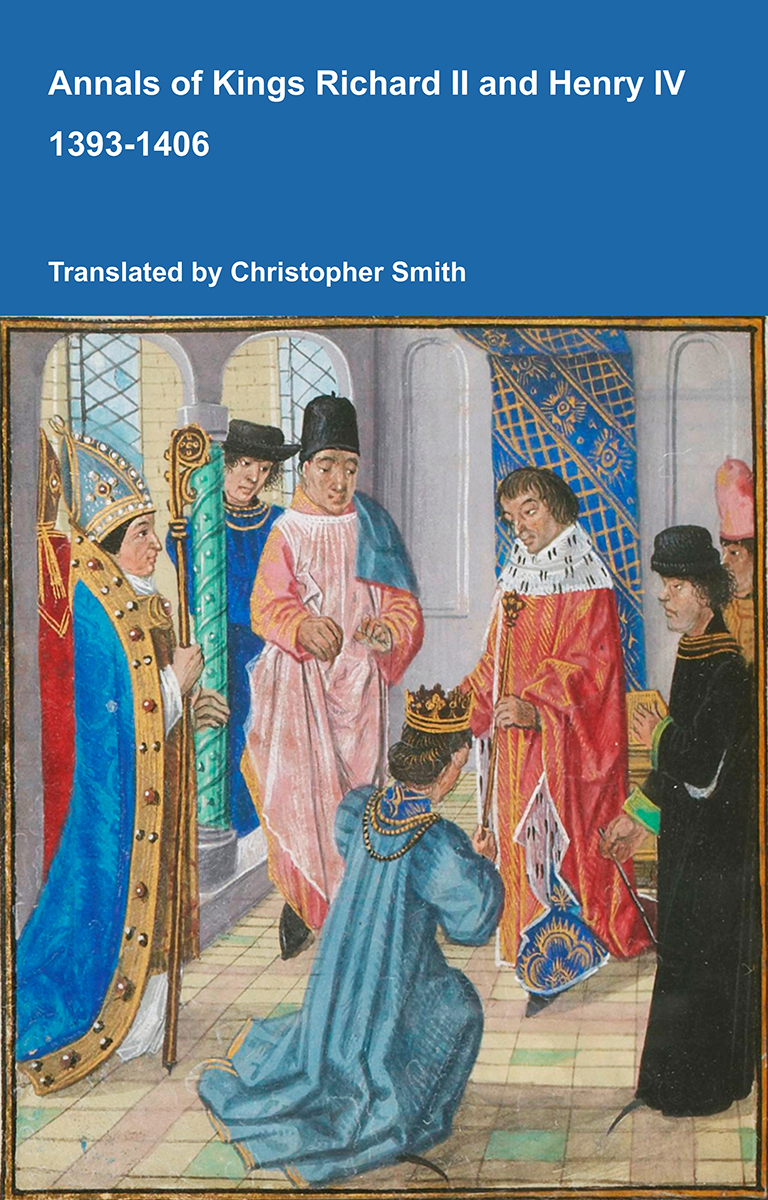 Annals of Kings Richard II and Henry IV. In this year John Waltham, Bishop of Salisbury and Treasurer of the realm, died. He had so pleased the King that, although many murmured at it, by the King’s command he received burial at Westminster among the kings. He was succeeded in the office of Treasurer by Sir Roger Walden, formerly the King’s Secretary and Treasurer of Calais. In the bishopric, however, he was succeeded by Sir John [Richard] Mitford, Bishop of Chichester. To Mitford’s bishopric the Archbishop of Dublin [Robert Waldby] was translated, because the greater bishopric was lesser in secular substance. Thomas Brantingham, Bishop of Exeter, also died. By the King’s insistence, he was succeeded by Master Edmund Stafford [aged 51], Keeper of the Privy Seal.
Hoc anno obiit J[ohannes] Waltham, Sarisburiensis Episcopus, regni Thesaurarius; qui tantum Regi complacuerat, ut, licet multis murmurantibus, Rege jubente, apud Westmonasterium inter Reges acciperet sepulturam. Huic successit, in officio Thesaurarii, Dominus Rogerus Waldene, prius Regis Secretarius, et Calesiæ Thesaurarius: in Episcopatu vero Dominus J[ohannes] Mytford, Cicestrensis; ad cujus Episcopatum Dublinensis Archiepiscopus est translatus, quia major pontificatus in sæculari substantia minor erat. Obiit etiam Thomas Brantyngham, Exoniensis Episcopus; cui successit, Regis instantia, Magister Edmundus de Staffor[d], Portitor Privati Sigilli.

Chronicle of a Bourgeois of Valenciennes
Récits d’un bourgeois de Valenciennes aka The Chronicle of a Bourgeois of Valenciennes is a vivid 14th-century vernacular chronicle written by an anonymous urban chronicler from Valenciennes in the County of Hainaut. It survives in a manuscript that describes local and regional history from about 1253 to 1366, blending chronology, narrative episodes, and eyewitness-style accounts of political, military, and social events in medieval France, Flanders, and the Low Countries. The work begins with a chronological framework of events affecting Valenciennes and its region under rulers such as King Philip VI of France and the shifting allegiances of local nobility. It includes accounts of conflicts, sieges, diplomatic manoeuvres, and the impact of broader struggles like the Hundred Years’ War on urban life in Hainaut. Written from the perspective of a burgher (bourgeois) rather than a monastery or royal court, the chronicle offers a rare lay viewpoint on high politics and warfare, reflecting how merchants, townspeople, and civic institutions experienced the turbulence of the 13th and 14th centuries. Its narrative style combines straightforward reporting of events with moral and civic observations, making it a valuable source for readers interested in medieval urban society, regional politics, and the lived experience of war and governance in pre-modern Europe.
Available at Amazon in eBook and Paperback format.
Westminster Chronicle. At that time a serious matter of dissension arose between the archbishop of Canterbury and the bishop of Exeter1, in this way. The aforesaid archbishop had resolved to visit his province, and first began his visitation in Devon. He came to the cathedral church of Exeter. The canons of that same church were making certain accusations against their bishop. Therefore the archbishop sent for the aforesaid bishop, that he should come to him, answer the charges, and in other matters undergo his visitation as was fitting. But before the archbishop’s messenger reached the bishop, the bishop’s servants intercepted him. When they learnt the reason for which he had come, they made the messenger himself swallow the letters which the archbishop had directed to the aforesaid bishop. The archbishop, seeing his messenger so contemptibly dishonoured, became wholly inflamed with anger, and pronounced grave censures against the aforesaid bishop. Certain members of the archbishop’s household, with some others, entered a certain fair, and there found one of the aforesaid bishop’s esquires. They forced him to chew and swallow the points or tips of his shoes, [though he did not eat them, although he had been forced to eat them]2. After these ridiculous acts had thus been wickedly performed on both sides, they quickly stirred up the fuel of greater hatred between them [....] whereupon the often-mentioned bishop, feeling himself aggrieved, went to Salisbury and there addressed the bishops gathered for the sake of parliament, explaining to them how, in certain matters, the said archbishop had exceeded due measure in his visitation, and that, if he ought to resist in such matters, he wished to use their counsel. The bishops said to him: "We consider you to be as powerful in your diocese as the archbishop is. Therefore defend yourself against him in the best way you can. As for us, when the aforesaid archbishop happens to turn aside to our churches for the purpose of visitation, we shall do as seems best and most expedient to us on our side." After the said bishop had learnt their will, he sent to the archbishop men of clear judgement and illustrious birth. Through their mediation and industry peace was restored between them, and the archbishop, having obtained what he wished, proceeded further in his visitation.
Quo in tempore inter archiepiscopum Cantuariensem et episcopum Exoniensem grave dissensionis materia hoc modo fuit exorta. Disposuit enim præfatus archiepiscopus suam provinciam visitare et primo in Devonia suam visitationem incepit, venitque ad ecclesiam cathedralem Exoniensem. Canonici vero ejusdem ecclesi; contra suum episcopum aliqua objieiebant. Quare archiepiscopus misit pro memorato episcopo ut veniret ad eum et ad objecta responderet ac in aliis prout decet suam visitationem subiret. Sed antequam archiepiscopi nuntius prevenit ad episcopum, ejus ministri ipsum interceperunt; cognita vero causa pro qua venerat literas quas archiepiscopus prwdieto episcopo direxerat per eundem ipsum deglutire fecerunt. Archiepiscopus namque videns suum nuntium ita contemptabiliter dehonestatum totus ira incaluit ac in episcopum prelibatum graves censuras dictavit. Familiares quidam dicti archiepiscopi eum quibusdam aliis in quasdam nundinas ingressi quendam sceutiferorum prefati episcopi ibidem inventum summitates sive aculeos sotularium suorum masticare et deglutire coegerunt, [sed non comedit licet comedere fuisset coactus] Istis ridieclis sic ex utraque parte nequiter peractis majoris odii fomitem inter illos citius [....]. Suscitavit unde ssepe dietus episcopus sentiens se gravatum perrexit Sarum et illie episcopos parliamenti causa congregatos alloquitur exponens eis qualiter in aliquibus dietus archiepiscopus in sua visitatione modum excessit; et si in hujusmodi debuerit resistere eorum consilio uti vellet. Cui episcopi dixerunt: "Nos reputamus te ita potentem in tua diocesi sicut archiepiscopum, igitur defende te ab eo meliori modo quo poteris. Nos vero cum præfatus archiepiscopus gratia visitandi ad ecclesias nostras contigerit declinare, faciemus prout nobis melius nostra parte videbitur expedire." Postquam vero dictus episcopus cognovit voluntatem eorum misit archiepiscopo viros perspicuos et genere przclaros quorum mediatione et industria pax inter illos reformata est archiepiscopus voti compos effectus ulterius in visitatione sua processit.
Note 1. Thomas Brantingham, died 1394. Appointed Bishop of Exeter in 1370, Lord Treasurer from 1377 to 1381, and again in 1389.
Note 2. The words in [ ] are on the margin.