

On 17th March 1372 Bishop John Gilbert was elected Bishop of Bangor.
On 12th March 1375 Bishop John Gilbert was translated to Bishop of Hereford.
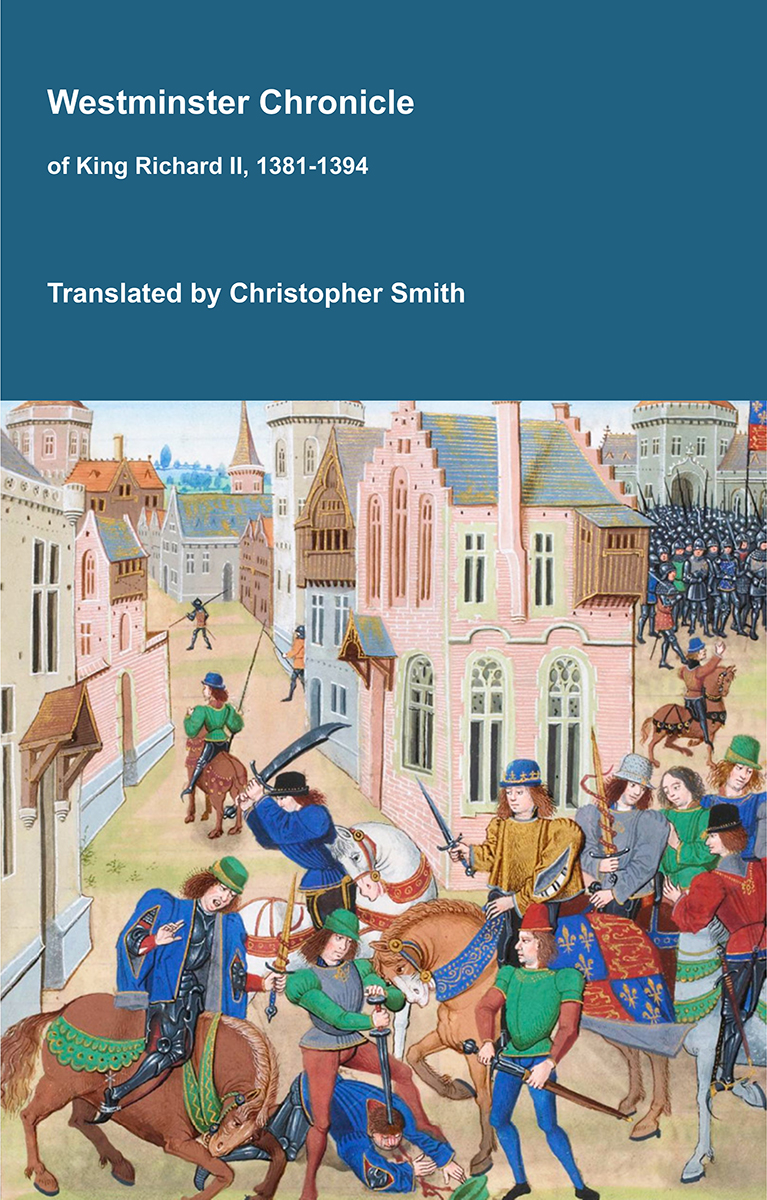 Westminster Chronicle. On the feast of the virgin Milburga [23rd February 1382], the council of London, together with the mayor of the same city and some men from every craft, came to the king, who was then staying at the manor of Kennington, concerning the charter of their liberty. Their number was about six hundred. They begged the royal majesty to ratify the liberties and privileges which had previously been granted to them. They further requested that they should have one king only, declaring that they wished to be subject to one alone. For this reason the duke of Lancaster [John of Gaunt], taking fright, fled from the city on the following day, namely on the feast of Saint Matthias the Apostle [24th February 1382], around the ninth hour, with the greatest haste, having first obtained permission from the king. Around this time ambassadors came from Calais, namely Lord John Cobham [aged 61] and the bishop of Hereford [John Gilbert], bringing with them a certain conditional agreement between the English and the French. Having received answers, they returned. At the same time ten ships laden with various provisions, which had been sent towards the castle of Cherbourg by the Normans, were captured, along with two other ships near Calais, laden with wool. The aforesaid ambassadors came and made known the brief answers of the French in a council held at Westminster on the morrow [26th March 1382] of the Annunciation of the Blessed Mary. To this council the abbot of Westminster and other priors of London had been summoned by royal letters.
In festo Milburgæ virginis senatus Londoniensis una cum majore ejusdem civitatis et aliquibus de quocunque artificio pro carta suæ libertatis venerunt ad regem in manerio de Kenyngton tunc moram trahentem. Numerus corum erat quasi sexcenti. Regiam majestatem deprecabantur quatinus libertates et privilegia quæ antea sibi concessa fuerant ipse ratificaret. Postulantes insuper ut unum solum haberent regem, asserentes se sub uno tantum subesse velle. Quare dux Lancastriæ pavescens in crastino, videlicet in die sancti Mathiæ apostoli, circa horam nonam a civitate summa cum festinatione diffugit, primitus a rege obtenta licentia. Circa ista tempora venerunt de Calesia ambassiatores, id est, dominus Johannes Cobham et episcopus Herefordensis quandam conditionalem concordiam secum afferentes inter Anglos et Francos, habitisque responsis redierunt. Eodem tempore captæ fuerunt decem naves diversis victualibus onustæ quæ directæ fuerant versus castrum de Chirebourgh per Normannos et aliæ duæ naves juxta Calesiam lanis onustæ. Venerunt ambassiatores præfati et succincta Gallorum responsa manifestaverunt in ‘concilio celebrato apud Westmonasterium in crastino Annunciationis beatæ Mariæ, ad quod vocati fuerunt per regias literas abbas Westmonasterii et alii priores de London.
In 1386 Bishop John Gilbert was appointed Lord High Treasurer.
Chronicle of Adam of Usk [~1352-1430]. September 1386. Owing to the many ill-starred crises of king Richard's [aged 19] reign, which were caused by his youth, a solemn parliament was holden at Westminster, wherein twelve of the chief men of the land were advanced, by full provision of parliament, to the government of the king and the kingdom, in order to bridle the wantonness and extravagance of his servants and flatterers, and, in short, to reform the business of the realm; but alas! only to lead to the weary deeds which are hereinafter written1.
Note 1. The actual number of the commissioners appointed by the Wonderful Parliament of 1386 was eleven, or fourteen if the three principal officers of state be included. The eleven were: the archbishops of Canterbury [aged 44] and York [aged 45], the dukes of York [aged 45] and Gloucester [aged 31], the bishops of Winchester [aged 66] and Exeter, the abbot of Waltham, the earl of Arundel, John de Cobham, Richard le Scrope, and John Devereux. Thomas Arundel [aged 33], bishop of Ely, had replaced Michael de la Pole [aged 25], earl of Suffolk, as chancellor; John Gilbert, bishop of Hereford, was treasurer; and John de Waltham, keeper of the privy seal. It will be remembered that John of Gaunt [aged 46] was at this time in Spain, as a reason for his name not appearing on the commission.
Westminster Chronicle. Therefore, on the eighteenth day of January, at the Guildhall of London, there assembled the Archbishop of Canterbury [aged 46], the Bishops of Winchester [aged 68], Bath, Ely [aged 35]1, Hereford and Exeter, and the aforesaid lords, together with the clerk of the lord king’s privy seal and other noble, prudent and discreet men. First of all, since the Londoners were bound by unlawful oaths, the said archbishop absolved them from such oaths. Then the Bishop of Ely2, Treasurer of England, said to them that no one should speak any ill of the aforesaid lords on account of the bad governance of the king and kingdom which had now been set in motion. Since they, and we all too for the greater part, have been wickedly and most falsely indicted, and since there are among you certain men who have also been indicted, whether justly or unjustly we do not know at all. It will, however, appear in the end when it has been declared by parliament. But now, if there are any grievances or complaints amongst you, bring them forward before us. Now is the time for hearing them, for it is clear to all of us that you are by no means of one mind on either side, since it appears that one craft of this city wishes to destroy another, which is absurd, especially to endure such discord among citizens of this kind. Indeed, if you are willing to foster peace and concord amongst yourselves, you may hope that no adversity will gain mastery over you. Yet little was brought forward in response to these things, because it seemed to them that the lords did not stand equally with all men, as was proper. Therefore perhaps they were unwilling to accept them as judges, nor to allege anything before them.
Igitur xviii die Januarii apud Gyldam Aulam Londoniensem occurrerunt archiepiscopus Cantuariensis, Wyntoniensis, Bathoniensis, Eliensis, Herefordiensis, Exoniensis episcopi et prædicti domini cum clerico de privato sigillo domini regis et aliis nobilibus providis et discretis. Primo quidem ante omnia quia Londonienses erant illicitis juramentis astricti dictus archiepiscopus ab hujusmodi eosdem absolvit. Tunc dixit eis episcopus Elyensis, thesaurarius Angliæ, quod nullus obloqueretur aliquod sinistrum de prædictis dominis propter malam gubernationem regis et regni jam motis. Cum ipsi etiam et nos omnes pro majore parte simus nequiter et falsissime indictati ac inter vos sunt quidam etiam indictati si vero juste sive injuste penitus ignoramus. Apparebit quoque in fine cum per parliamentum fuerit declaratum. Nunc autem si quæ gravamina sive querimoniæ inter vos versantur producite in medium coram nobis ; jam est tempus audiendi, nam constat omnibus nobis vos nullatenus esse unanimes utrobique quia ut apparet una ars istius civitatis aliam delere affectat, quod est absurdum, præsertim inter cives tales inter illos discordias sustinere. Immo si pacem et concordiam inter vos fovere volueritis nullam adversitatem vobis dominari sperare poteritis. Pauca vero ad ista erant prolata quia videbatur cis non æqualiter cos stare cum omnibus prout decet. Ideo forte noluerint eos tanquam judices acceptare nec coram illis aliquid allegare.
Note 1. Archbishop Thomas Fitzalan aka Arundel, a younger brother of Richard, Earl of Arundel and Surrey.
Note 2. The Latin text has the 'Bishop of Ely' but the Lord Treasurer at the time was John Gilbert, Bishop of Hereford.
Westminster Chronicle. Also, on the 13th day of February, Master Adam Houghton1, Bishop of St Davids, died. To that see, by favour of the lord king, Lord Richard Metford was elected; but the Pope quashed the election and caused Brother Gilbert, Bishop of Hereford, to be translated to the aforesaid church, and confirmed Master John Trevenant as Bishop of Hereford.
Item xiii die Februarii obiit magister Adam Houton, episcopus Menevensis, ad quam favore domini regis electus est dominus Ricardus Metford, sed papa electionem cassavit et fratrem Gilbertum episcopum Herefordensem ad ecclesam præfatam transferre curavit, ac magistrum Johannem Trevenant in Herefordensem episcopum confirmavit.
Note 1. Bishop Adam de Houghton.
On 5th May 1389 Bishop John Gilbert was translated to Bishop of St David's.
On 5th May 1389 Bishop John Gilbert died.
Westminster Chronicle. After this, the king came to his manor of Sheen, where, on the 15th day of August, having held a council, he released the Bishop of Exeter from the office of Treasurer, and took back Brother Gilbert, now Bishop of St Davids, as his Treasurer. And afterwards he held many councils in several places, namely at Windsor, Salisbury, and elsewhere, wherever he happened to turn.
Post hæc venit rex ad manerium suum de Shene ubi xv, die Augusti celebrato consilio episcopum Exoniensem ab officio thesaurariæ absolvit et fratrem Gilbertum jam episcopum Menevensem in suum thesaurarium reassumpsit. Et ex post in pluribus locis multa consilia celebravit, videlicet apud Wyndesoram, Sarum et alibi, ubi sibi contigerat declinare.