John Cobham 3rd Baron Cobham 1321-1408

Paternal Family Tree: Cobham

Around 1321 John Cobham 3rd Baron Cobham was born to John Cobham 2nd Baron Cobham [aged 36] and Joan Beauchamp [aged 16] at Cobham, Kent.

Around 1332 John Cobham 3rd Baron Cobham [aged 11] and Margaret Courtenay Baroness Cobham were married. She the daughter of Hugh Courtenay 2nd or 10th Earl Devon [aged 28] and Margaret Bohun Countess Devon [aged 20]. They were fifth cousin once removed. She a great granddaughter of King Edward I of England.

Around 1337 [his daughter] Joan Cobham was born to John Cobham 3rd Baron Cobham [aged 16] and [his wife] Margaret Courtenay Baroness Cobham at Cobham, Kent. Date adjusted from 1316 since her father was born around 1321 and her future husband in 1339. She a great x 2 granddaughter of King Edward I of England. She married John Pole and had issue.

On 25th August 1339 [his grandfather] Henry Cobham 1st Baron Cobham [aged 79] died at Hache, Somerset. His son [his father] John [aged 54] succeeded 2nd Baron Cobham. Agnes Stone Baroness Cobham by marriage Baroness Cobham.

In 1343 [his mother] Joan Beauchamp [aged 38] died.

On 25th February 1355 [his father] John Cobham 2nd Baron Cobham [aged 70] died at Cobham, Kent. His son John [aged 34] succeeded 3rd Baron Cobham. [his wife] Margaret Courtenay Baroness Cobham by marriage Baroness Cobham.

Around 1357 [his daughter] Joan Cobham [aged 20] died at Chrishall, Essex.

On 17th March 1360 [his brother-in-law] Archbishop William Courtenay [aged 18] was consecrated Bishop of Hereford.

In 1381 John Cobham 3rd Baron Cobham [aged 60] was licensed to crenellate Cooling Castle [Map].

Deeds of King Henry V

Henrici Quinti, Angliæ Regis, Gesta, is a first-hand account of the Agincourt Campaign, and subsequent events to his death in 1422. The author of the first part was a Chaplain in King Henry's retinue who was present from King Henry's departure at Southampton in 1415, at the siege of Harfleur, the battle of Agincourt, and the celebrations on King Henry's return to London. The second part, by another writer, relates the events that took place including the negotiations at Troye, Henry's marriage and his death in 1422.

Available at Amazon in eBook and Paperback format.

On 30th July 1381 [his brother-in-law] Archbishop William Courtenay [aged 39] was appointed Archbishop of Canterbury.

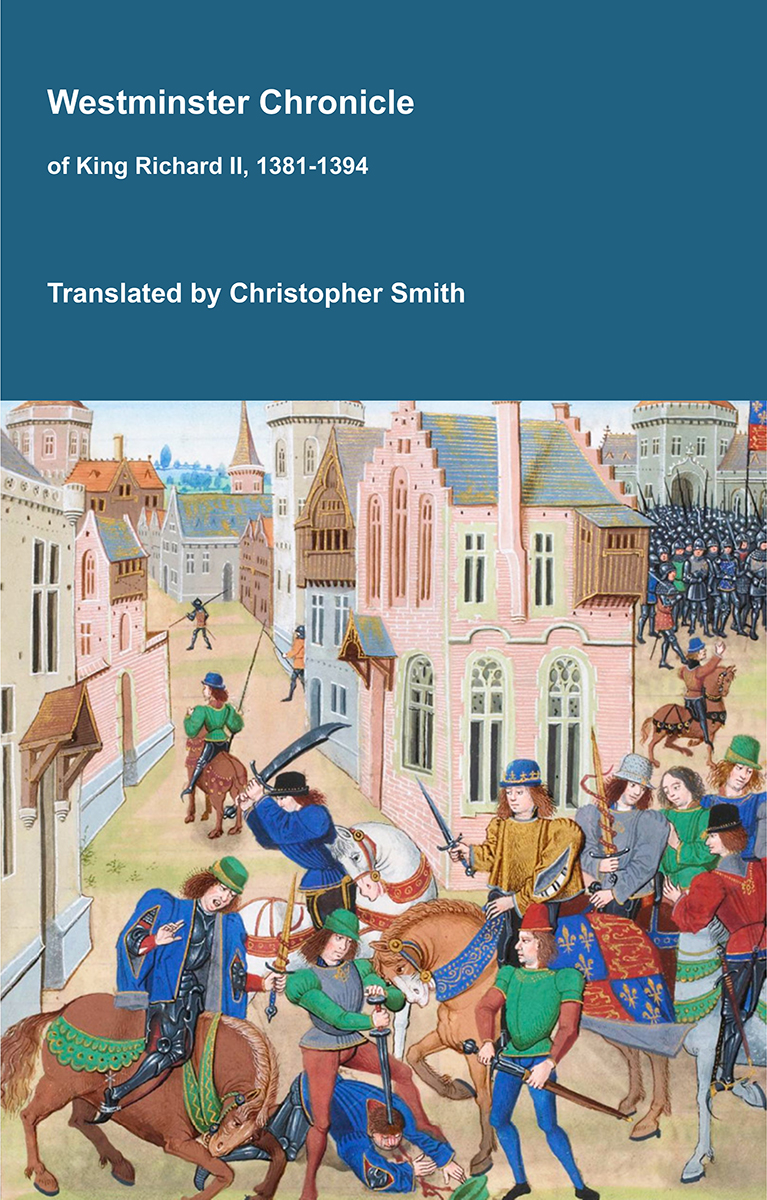
Westminster Chronicle. On the feast of the virgin Milburga [23rd February 1382], the council of London, together with the mayor of the same city and some men from every craft, came to the king, who was then staying at the manor of Kennington, concerning the charter of their liberty. Their number was about six hundred. They begged the royal majesty to ratify the liberties and privileges which had previously been granted to them. They further requested that they should have one king only, declaring that they wished to be subject to one alone. For this reason the duke of Lancaster [John of Gaunt], taking fright, fled from the city on the following day, namely on the feast of Saint Matthias the Apostle [24th February 1382], around the ninth hour, with the greatest haste, having first obtained permission from the king. Around this time ambassadors came from Calais, namely Lord John Cobham [aged 61] and the bishop of Hereford [John Gilbert], bringing with them a certain conditional agreement between the English and the French. Having received answers, they returned. At the same time ten ships laden with various provisions, which had been sent towards the castle of Cherbourg by the Normans, were captured, along with two other ships near Calais, laden with wool. The aforesaid ambassadors came and made known the brief answers of the French in a council held at Westminster on the morrow [26th March 1382] of the Annunciation of the Blessed Mary. To this council the abbot of Westminster and other priors of London had been summoned by royal letters.

In festo Milburgæ virginis senatus Londoniensis una cum majore ejusdem civitatis et aliquibus de quocunque artificio pro carta suæ libertatis venerunt ad regem in manerio de Kenyngton tunc moram trahentem. Numerus corum erat quasi sexcenti. Regiam majestatem deprecabantur quatinus libertates et privilegia quæ antea sibi concessa fuerant ipse ratificaret. Postulantes insuper ut unum solum haberent regem, asserentes se sub uno tantum subesse velle. Quare dux Lancastriæ pavescens in crastino, videlicet in die sancti Mathiæ apostoli, circa horam nonam a civitate summa cum festinatione diffugit, primitus a rege obtenta licentia. Circa ista tempora venerunt de Calesia ambassiatores, id est, dominus Johannes Cobham et episcopus Herefordensis quandam conditionalem concordiam secum afferentes inter Anglos et Francos, habitisque responsis redierunt. Eodem tempore captæ fuerunt decem naves diversis victualibus onustæ quæ directæ fuerant versus castrum de Chirebourgh per Normannos et aliæ duæ naves juxta Calesiam lanis onustæ. Venerunt ambassiatores præfati et succincta Gallorum responsa manifestaverunt in ‘concilio celebrato apud Westmonasterium in crastino Annunciationis beatæ Mariæ, ad quod vocati fuerunt per regias literas abbas Westmonasterii et alii priores de London.

On 2nd August 1385 [his wife] Margaret Courtenay Baroness Cobham died.

In 1398 John Cobham 3rd Baron Cobham [aged 77] exiled at Guernsey [Map].

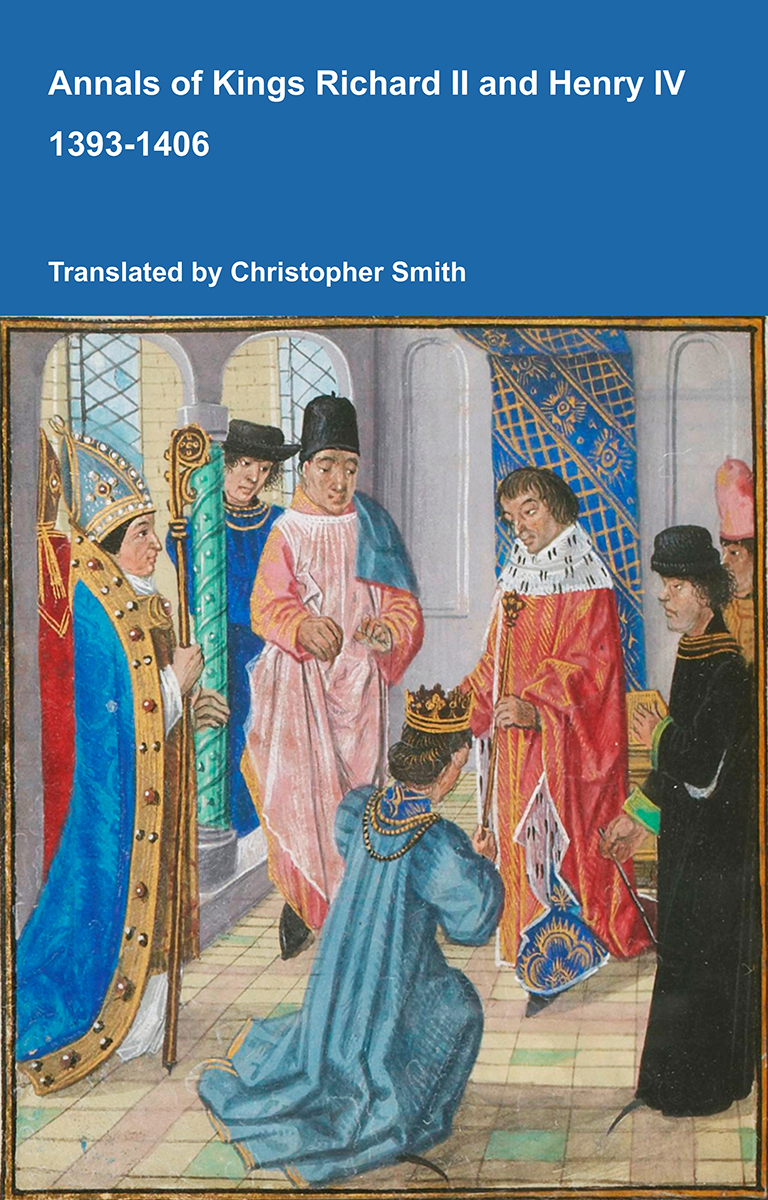
Annals of King Richard II. In the year of grace 1398, and the twenty-second year of the reign of King Richard, the same King kept Christmas solemnly at Lichfield. When this was over, he moved to Shrewsbury, where the interrupted Parliament was begun again. Lord Cobham1 was brought forward to answer, and was condemned, but by indulgence his life was granted to him, against his will, because he gladly wished to have died in the cause laid against him, declaring that he would then have been most happy if it had happened that he ended his life by the sword for justice or innocence. For it was objected against him that, after the Parliament held in the eleventh year of the present King, he had undertaken, with others, the charge of governing the King, who at that time, and a little before, had had the worst governors. And because the King had now declared that deed to have been against his will, by his unreasonable little arguments he wished to prove the said lord a traitor. He was condemned to perpetual imprisonment and sent to the island of Guernsey, with a very meagre allowance assigned to him by the King, just as had previously been assigned to the Earl of Warwick. Yet afterwards the King fulfilled his promise to neither of them.

Anno gratiæ millesimo trecentesimo nonagesimo octavo, et regni Regis Ricardi vicesimo secundo, tenuit idem Rex Natale solemniter apud Lichefeld; quo peracto, transtulit se Solopiam, ubi Parliamentum interruptum reincipitur. Dominus Cobham responsis adducitur, et damnatur, sed indulgentia vita sibi donatur; invito, quia libenter voluit in causa sibi objecta fuisse mortuus, affirmans se tunc futurum felicissimum, si pro justitia vel innocentia contigerit eum [gladio] vitam finisse. Objiciebatur nempe sibi, quod post Parliamentum tentum anno Regis nune undecimo, cepisset curam, cum aliis, ad regendum Regem, qui pro tunc, et parum ante, habuerat pessimos gubernatores. Et quia jam declaraverat illud factum contra voluntatem suam, suis irrationabilibus ratiuneulis probare voluit dictum dominum proditorem. Condemnatus est perpetuo carceri, et missus ad insulam de Gerneseye, assignato sibi per Regem victu exilissimo, sicut prius assignatus [fuit] Comiti de Warwico; sed tamen Rex neutri eorum postes satisfecit in promisso.

Note 1. John Cobham, 1321-1408, 3rd Baron Cobham. 'the Parliament held in the eleventh year of the present King' refers to 1387-88, the period of the Lord's Appellant.

On 10th January 1408 John Cobham 3rd Baron Cobham [aged 87] died at Cooling Castle [Map]. His granddaughter Joan succeeded 4th Baroness Cobham.

[his father] John Cobham 2nd Baron Cobham and Agnes Stone Baroness Cobham were married.

[his father] John Cobham 2nd Baron Cobham and [his mother] Joan Beauchamp were married. The difference in their ages was 20 years.

John Cobham 3rd Baron Cobham appears on the following Descendants Family Trees:

Royal Ancestors of John Cobham 3rd Baron Cobham 1321-1408

Kings Wessex: Great x 14 Grand Son of King Edward "Elder" of the Anglo Saxons

Kings England: Great x 8 Grand Son of King Henry I "Beauclerc" England

Kings Scotland: Great x 7 Grand Son of King Duncan II of Scotland

Kings France: Great x 12 Grand Son of Hugh I King of the Franks

Kings Duke Aquitaine: Great x 16 Grand Son of Ranulf I Duke Aquitaine

Royal Descendants of John Cobham 3rd Baron Cobham 1321-1408
Number after indicates the number of unique routes of descent. Descendants of Kings and Queens not included.

Queen Elizabeth II of the United Kingdom [2]

Diana Spencer Princess Wales [3]

Ancestors of John Cobham 3rd Baron Cobham 1321-1408

Great x 2 Grandfather: John Cobham

Great x 1 Grandfather: John Cobham

Great x 2 Grandmother: Maude Joan Fitzbenedict

Grandfather: Henry Cobham 1st Baron Cobham

Great x 2 Grandfather: Robert Septvans

Great x 1 Grandmother: Joan Septvans

Father: John Cobham 2nd Baron Cobham

Great x 1 Grandfather: Eudes Moreville

Grandmother: Maud Moreville

John Cobham 3rd Baron Cobham 7 x Great Grandson of King Duncan II of Scotland

Great x 4 Grandfather: Simon Valletort

Great x 3 Grandfather: Robert IV Beauchamp

Great x 2 Grandfather: Robert V Beauchamp

Great x 3 Grandmother: Juliana Brett

Great x 1 Grandfather: John Beauchamp 1st Baron Beauchamp

Great x 4 Grandfather: Reginald Mohun

Great x 3 Grandfather: Reginald Mohun

Great x 4 Grandmother: Alice Brewer

Great x 2 Grandmother: Alice Mohun

Great x 4 Grandfather: Geoffrey Fitzpeter 1st Earl Essex

Great x 3 Grandmother: Hawise Fitzpeter

Great x 4 Grandmother: Aveline Clare Countess Essex

Grandfather: John Beauchamp 1st Baron Beauchamp Somerset 5 x Great Grandson of King Duncan II of Scotland

Great x 4 Grandfather: William Forz 2nd Earl Albemarle

Great x 3 Grandfather: William Forz 3rd Earl Albemarle 2 x Great Grandson of King Duncan II of Scotland

Great x 4 Grandmother: Hawise Blois 2nd Countess Albemarle and Essex Great Granddaughter of King Duncan II of Scotland

Great x 2 Grandfather: William Forz 4th Earl Albemarle 3 x Great Grandson of King Duncan II of Scotland

Great x 4 Grandfather: Richard Montfichet

Great x 3 Grandmother: Aveline Montfichet 9 x Great Granddaughter of King Edward "Elder" of the Anglo Saxons

Great x 4 Grandmother: Aveline Lucy 8 x Great Granddaughter of King Edward "Elder" of the Anglo Saxons

Great x 1 Grandmother: Cicely Vivonne Forz Baroness Beauchamp 4 x Great Granddaughter of King Duncan II of Scotland

Great x 4 Grandfather: Baldwin Redvers 2 x Great Grandson of King Henry I "Beauclerc" England

Great x 3 Grandfather: Baldwin Redvers 6th Earl Devon 3 x Great Grandson of King Henry I "Beauclerc" England

Great x 2 Grandmother: Isabella Redvers 8th Countess Devon and Albemarle 4 x Great Granddaughter of King Henry I "Beauclerc" England

Great x 4 Grandfather: Gilbert Clare 5th Earl Gloucester 4th Earl Hertford 2 x Great Grandson of King Henry I "Beauclerc" England

Great x 3 Grandmother: Amice Clare Countess Devon 3 x Great Granddaughter of King Henry I "Beauclerc" England

Great x 4 Grandmother: Isabel Marshal Countess Cornwall, Gloucester and Hertford 6 x Great Granddaughter of Hugh I King of the Franks

Mother: Joan Beauchamp 6 x Great Granddaughter of King Duncan II of Scotland

Grandmother: Joan Cheduit Baroness Beauchamp Somerset