

Paternal Family Tree: Anjou aka Plantagenet
Maternal Family Tree: Elizabeth Cuman
On 24th January 1328 King Edward III of England [aged 15] and Philippa of Hainaut [aged 17] were married at York Minster [Map] by Archbishop William Melton [aged 53]. She by marriage Queen Consort England. She was crowned the same day. She the daughter of William of Avesnes I Count Hainaut III Count Avesnes III Count Holland II Count Zeeland [aged 42] and Joan Valois Countess Zeeland Holland Avesnes and Hainaut [aged 34]. He the son of King Edward II of England and Isabella of France Queen Consort England [aged 33]. They were second cousins. She a great x 5 granddaughter of King Stephen I England.
The marriage was the quid pro quo for her father William of Avesnes I Count Hainaut III Count Avesnes III Count Holland II Count Zeeland having supported his mother Isabella of France Queen Consort England and Roger Mortimer 1st Earl March [aged 40] returning to England to usurp the throne of Edward's father King Edward II of England.
On 7th January 1355 Thomas of Woodstock 1st Duke of Gloucester was born to King Edward III of England [aged 42] and Philippa of Hainaut Queen Consort England [aged 44] at Woodstock Palace, Oxfordshire [Map]. Coefficient of inbreeding 3.00%.
On 19th September 1356 the army of [his brother] Edward "Black Prince" [aged 26] defeated the French and Scottish army led by King John "The Good" II of France [aged 37] at the Battle of Poitiers
King John "The Good" II of France was captured by three captains including Ivon aka John Fane.
The the English army included: Bernard Brocas [aged 26], Thomas Felton [aged 26], James Audley [aged 38], Thomas Beauchamp 11th Earl Warwick [aged 43], Bartholomew "The Younger" Burghesh 2nd Baron Burghesh [aged 28], Reginald Cobham 1st Baron Cobham [aged 61], Edward Despencer 1st Baron Despencer, Baron Burghesh [aged 21], Ralph Ferrers [aged 27], William Scrope [aged 31], William Montagu 2nd Earl Salisbury [aged 28], Walter Paveley 4th Baron Burghesh [aged 37], Robert Ufford 1st Earl Suffolk [aged 58], William Ufford 2nd Earl Suffolk [aged 18], John de Vere 7th Earl of Oxford [aged 44], John Willoughby 3rd Baron Willoughby [aged 33], Thomas Arderne [aged 19], Enion Sais Brecon, John Chandos [aged 36], Richard Pembridge [aged 36], Jean Grailly [aged 25], Robert de Fouleshurst [aged 26] and John Sully [aged 73]
John Savile of Shelley and Golcar [aged 31] probably fought having received letters of protection to travel overseas.
Hugh Courtenay 2nd or 10th Earl Devon [aged 53] protected the baggage train.
The French and Scottish army included: King John "The Good" II of France, Philip "Bold" Valois II Duke Burgundy [aged 14], [his uncle] Jean Bourbon I Count La Marche [aged 12], Archibald "Grim" Douglas 3rd Earl Douglas [aged 26], John "Sans Terre" Artois 1st Count of Eu [aged 35]; all captured.
Guichard d'Angle 1st Earl Huntingdon and William Douglas 1st Earl Douglas [aged 33] fought.
Peter Bourbon Duke Bourbon [aged 45] was killed. His son Louis [aged 19] succeeded II Duke Bourbon.
Gauthier VI Comte de Brienne [aged 54] was killed.
On 19th May 1359, or thereabouts, a double-royal wedding celebration took place at Reading Abbey, Berkshire [Map] whereby two children of [his father] King Edward III of England [aged 46] were married:
[his brother] John of Gaunt 1st Duke Lancaster [aged 19] and [his sister-in-law] Blanche Duchess of Lancaster [aged 17] were married. She by marriage Countess Richmond. She the daughter of Henry of Grosmont 1st Duke Lancaster [aged 49] and Isabel Beaumont Duchess Lancaster [aged 39]. He the son of King Edward III of England and Philippa of Hainaut Queen Consort England [aged 48]. They were half second cousin once removed. She a great x 2 granddaughter of King Henry III of England.
John Hastings 2nd Earl Pembroke [aged 11] and Margaret Plantagenet Countess of Pembroke [aged 12] were married. At the time John Hastings 2nd Earl Pembroke was a ward of King Edward III of England who would enjoy the benefit of the substantial revenue of the Earldom of Pembroke until John came of age nine years later in 1368. She died two or so years later probably of plague. She the daughter of King Edward III of England and Philippa of Hainaut Queen Consort England. He the son of Laurence Hastings 1st Earl Pembroke and Agnes Mortimer Countess of Pembroke [aged 42]. They were half fourth cousins. He a great x 5 grandson of King John of England.
On 13th April 1360 a freak weather event known as Black Monday Hailstorm occurred as the army of [his father] King Edward III of England [aged 47] were camped outside Chartres [Map]. Thomas Beauchamp 11th Earl Warwick [aged 47], William Bohun 1st Earl of Northampton [aged 50], Henry of Grosmont 1st Duke Lancaster [aged 50], [his brother] Edward "Black Prince" [aged 29] and Walter Mauny were present. Around one thousand English were killed, with up to six thousand horses. King Edward III of England believed the event to be an Act of God and proceeded to negotiate with the French resulting in the Treaty of Brétigny.
On 28th April 1360 Guy Beauchamp died from injuries received during the Black Monday Hailstorm.
On 10th October 1361 [his brother] Edward "Black Prince" [aged 31] and [his sister-in-law] Joan "Fair Maid of Kent" Princess Wales [aged 33] were married at Windsor Castle [Map]. She by marriage Princess of Wales. His first wife, her second (or third depending on how you count them) husband. She had four children already. They had known each other since childhood. Thirty-one and thirty-three respectively. A curious choice for the heir to the throne; foreign princesses were usual. They were married nearly fifteen years and had two children. She the daughter of Edmund of Woodstock 1st Earl Kent and Margaret Wake Countess Kent. He the son of [his father] King Edward III of England [aged 48] and [his mother] Philippa of Hainaut Queen Consort England [aged 51]. They were half first cousin once removed. She a granddaughter of King Edward I of England.
On 10th April 1362 Maud Plantagenet Duchess Lower Bavaria [aged 22] died. Her sister [his sister-in-law] Blanche [aged 20] succeeded 6th Countess of Leicester. [his brother] John of Gaunt 1st Duke Lancaster [aged 22] by marriage Earl of Leicester adding a fourth Earldom to the ones he already held: Earl Richmond, Earl Lancaster and Earl Derby.
On 13th November 1362, his fiftieth birthday, [his father] King Edward III of England [aged 50] created two sons as Dukes...
[his brother] Lionel of Antwerp 1st Duke of Clarence [aged 23] was created 1st Duke Clarence. [his sister-in-law] Elizabeth Burgh Duchess of Clarence [aged 30] by marriage Duchess Clarence.
John of Gaunt 1st Duke Lancaster [aged 22] was created 1st Duke Lancaster. Blanche Duchess of Lancaster [aged 20] by marriage Duchess Lancaster.
On 28th May 1363 John Harrington 2nd Baron Harington [aged 35] died at Gleaston Castle [Map]. His son Robert [aged 7] succeeded 3rd Baron Harington. Given his young age Robert Harrington 3rd Baron Harington became a ward of [his father] King Edward III of England [aged 50] who granted his wardship to his daughter [his sister] Isabella Countess Bedford and Soissons [aged 30] and her husband [his future brother-in-law] Enguerrand de Coucy 1st Earl Bedford 1st Count Soissons [aged 23].
On 27th July 1365 [his brother-in-law] Enguerrand de Coucy 1st Earl Bedford 1st Count Soissons [aged 25] and [his sister] Isabella Countess Bedford and Soissons [aged 33] were married at Windsor Castle [Map]. She the daughter of [his father] King Edward III of England [aged 52] and [his mother] Philippa of Hainaut Queen Consort England [aged 55]. They were fourth cousin once removed.
In 1366 [his brother-in-law] Enguerrand de Coucy 1st Earl Bedford 1st Count Soissons [aged 26] was created 1st Earl Bedford. [his sister] Isabella Countess Bedford and Soissons [aged 33] by marriage Countess Bedford.
On 3rd April 1367 the forces of Peter "Cruel" I King Castile [aged 32] commanded by [his brother] Edward "Black Prince" [aged 36] defeated the army of Henry "Fratricide" II King Castile [aged 33] at the Battle of Nájera at Nájera [Map]. The English forces included John of Gaunt 1st Duke Lancaster [aged 27], William Scrope, Peter Courtenay [aged 21], John Devereux 1st Baron Devereux [aged 30], John Savile of Shelley and Golcar [aged 42], Bernard Brocas [aged 37] and Thomas Banastre [aged 33].
The forces of Henry "Fratricide" II King Castile included Bertrand Geusclin [aged 47]. The battle achieved little since Bertrand Geusclin escaped.
John Ferrers 4th Baron Ferrers of Chartley [aged 36] was killed. His son Robert [aged 9] succeeded 5th Baron Ferrers of Chartley. Margaret Despencer Baroness Ferrers of Chartley by marriage Baroness Ferrers of Chartley.
Edward "Black Prince" thereafter returned home, taking Peter's daughters Constance [aged 13] and Isabella [aged 12] as hostages to ensure Peter would pay the money owed to Edward. Constance married John of Gaunt 1st Duke Lancaster, Isabella married Edmund of Langley 1st Duke of York [aged 25].
In June 1368 [his brother] Lionel of Antwerp 1st Duke of Clarence [aged 29] and [his sister-in-law] Violante Visconti [aged 14] were married in the Church of Santa Maria Maggiore, Milan [Map]. The wedding festivities were lavish and ostentatious. The banquet, held outside, included 30 courses of meat and fish presented fully gilded. Between the courses the guests were given gifts such as suits of armour, bolts of cloth, war horses, arms, and hunting dogs. Among the guests were Geoffrey Chaucer [aged 25], Petrarch, Jean Froissart and John Hawkwood [aged 48]. He the son of [his father] King Edward III of England [aged 55] and [his mother] Philippa of Hainaut Queen Consort England [aged 57]. They were fourth cousin once removed.
On 7th October 1368 [his brother] Lionel of Antwerp 1st Duke of Clarence [aged 29] died from poisoning at Alba [Map]. Duke Clarence extinct. His daughter [his niece] Philippa [aged 13] succeeded 2nd Countess of Ulster. He was buried at the St Pietro Ciel d'Oro Church, Pavia [Map].
There was strong speculation he had been poisoned by his [his sister-in-law] wife's [aged 14] father [aged 48].
On 15th August 1369 [his mother] Philippa of Hainaut Queen Consort England [aged 59] died at Windsor Castle [Map]. Her husband [his father] King Edward III of England [aged 56] and youngest son Thomas of Woodstock 1st Duke of Gloucester [aged 14] were present. She was given a state funeral six months later on 9th January 1370 at which she was interred at on the northeast side of the Chapel of St Edward the Confessor, Westminster Abbey [Map]. Her alabaster effigy was executed by sculptor Jean de Liège.
On 21st September 1371 John of Gaunt 1st Duke Lancaster [aged 31] and Constance of Castile Duchess of Lancaster [aged 17] were married at Roquefort, Landes. She by marriage Duchess Lancaster. His younger brother Edmund of Langley 1st Duke of York [aged 30] married Constance's sister in July 1372. An example of Marriage of Two Sets of Siblings. She the illegitmate daughter of Peter "Cruel" I King Castile and Maria Padilla. He the son of King Edward III of England [aged 58] and Philippa of Hainaut Queen Consort England. They were half third cousin twice removed.
In 1372 Thomas of Woodstock 1st Duke of Gloucester [aged 16] was appointed Constable of England.
On 11th July 1372 Edmund of Langley 1st Duke of York [aged 31] and Isabella of Castile Duchess York [aged 17] were married at Wallingford, Oxfordshire [Map]. She by marriage Countess Cambridge. She being the younger sister of Constance [aged 18] who had married Edmund's older brother John of Gaunt 1st Duke Lancaster [aged 32] a year before. An example of Marriage of Two Sets of Siblings. She the illegitmate daughter of Peter "Cruel" I King Castile and Maria Padilla. He the son of King Edward III of England [aged 59] and Philippa of Hainaut Queen Consort England. They were half third cousin twice removed.

On 16th January 1373 Humphrey Bohun 7th Earl Hereford 6th Earl Essex 2nd Earl of Northampton [aged 31] died. He was buried at Waldon Priory and Abbey [Map]. Earl Hereford, Earl Essex, Earl of Northampton extinct. His estates were divided between his two daughters Eleanor Bohun Duchess Gloucester [aged 7], wife of Thomas of Woodstock 1st Duke of Gloucester [aged 18] and Mary Bohun [aged 5], wife of Henry of Bolingbroke [aged 5], the future Henry IV, although the title and estates should have been inherited Gilbert Bohun who was a grandson of Humphrey Bohun 2nd Earl Hereford 1st Earl Essex.
In 1374 Thomas of Woodstock 1st Duke of Gloucester [aged 18] and Eleanor Bohun Duchess Gloucester [aged 8] were married. She the daughter of Humphrey Bohun 7th Earl Hereford 6th Earl Essex 2nd Earl of Northampton and Joan Fitzalan Countess Essex, Hereford and Northampton [aged 27]. He the son of King Edward III of England [aged 61] and Philippa of Hainaut Queen Consort England. They were second cousin once removed. She a great x 2 granddaughter of King Edward I of England.
In 1376 Thomas of Woodstock 1st Duke of Gloucester [aged 20] was created 1st Earl Essex. [his wife] Eleanor Bohun Duchess Gloucester [aged 10] by marriage Countess Essex.
On 8th June 1376 [his brother] Edward "Black Prince" [aged 45] died of dysentery at Westminster Palace [Map]. He was buried in Canterbury Cathedral [Map]. His son [his nephew] Richard [aged 9] succeeded as heir to his grandfather [his father] King Edward III of England [aged 63] who died a year later.


In 1377 Thomas of Woodstock 1st Duke of Gloucester [aged 21] was created 1st Earl Buckingham. [his wife] Eleanor Bohun Duchess Gloucester [aged 11] by marriage Countess Buckingham.
On 21st June 1377 [his father] King Edward III of England [aged 64] died of a stroke at Sheen Palace [Map]. He was buried in the Chapel of St Edward the Confessor, Westminster Abbey [Map]. His grandson [his nephew] Richard [aged 10] succeeded II King of England.
In 1381 Thomas of Woodstock 1st Duke of Gloucester [aged 25] was appointed 66th Knight of the Garter by [his nephew] King Richard II of England [aged 13].
Around 1381 [his son] Humphrey 2nd Earl Buckingham was born to Thomas of Woodstock 1st Duke of Gloucester [aged 25] and [his wife] Eleanor Bohun Duchess Gloucester [aged 15]. He a grandson of King Edward III of England. Coefficient of inbreeding 1.67%.
On 4th October 1382 [his sister] Isabella Countess Bedford and Soissons [aged 50] died.
Around 1383 [his daughter] Anne of Gloucester Plantagenet Countess Eu and Stafford was born to Thomas of Woodstock 1st Duke of Gloucester [aged 27] and [his wife] Eleanor Bohun Duchess Gloucester [aged 17]. She a granddaughter of King Edward III of England. Coefficient of inbreeding 1.67%. She married 1. August 1391 her third cousin once removed Thomas Stafford 3rd Earl Stafford, son of Hugh Stafford 2nd Earl Stafford and Philippa Beauchamp Countess Stafford 2. 28th June 1398 her third cousin once removed Edmund Stafford 5th Earl Stafford, son of Hugh Stafford 2nd Earl Stafford and Philippa Beauchamp Countess Stafford, and had issue 3. 1405 William Bourchier 1st Count of Eu and had issue.
Before 16th August 1383 [his daughter] Joan Plantagenet Baroness Strange and Talbot was born to Thomas of Woodstock 1st Duke of Gloucester [aged 28] and [his wife] Eleanor Bohun Duchess Gloucester [aged 17]. Her inquisition post mortem describes her being aged seventeen at the time of her death on the 16th of August 1400. She a granddaughter of King Edward III of England. Coefficient of inbreeding 1.67%. She married before 1400 her second cousin once removed Gilbert Talbot 8th Baron Strange Blackmere 5th Baron Talbot, son of Richard Talbot 7th Baron Strange Blackmere 4th Baron Talbot and Ankaret Strange 7th Baroness Strange Blackmere, Baroness Talbot.
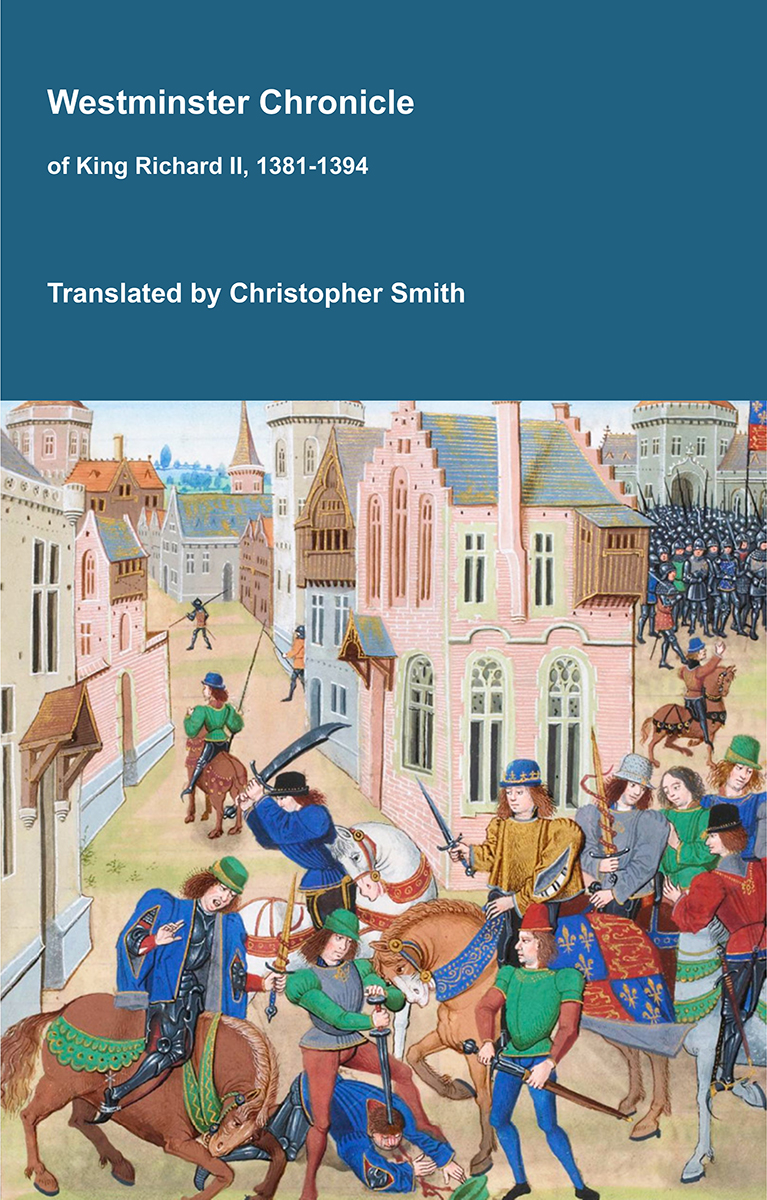 Westminster Chronicle. The duke of Lancaster and the earl of Buckingham [aged 28]1, his brother, around the twenty-fourth day of August, hearing that the king of France had come down towards our regions with so great a multitude of armed men, of which they forewarned the king by their letters, set out into Kent and stayed there near the sea-shore until after the feast of Saint Michael [29th September], with their whole retinue. These lords thought that the king would swiftly gather his army and, omitting all other matters, hasten with all possible speed to fight with the king of France. But the king, being in the northern parts, after the report reached him that the king of France had come near his land with a great army, without drawing out any delay, came quickly with a few men to London around the feast of the Exaltation of the Holy Cross [14th September]. When his council had been summoned concerning this matter, the answer was that the king could not have an army prepared in so short a time, namely within one week or two, nor would it be honourable for the king to appear in the open field before the whole power of the king of France except with noble equipment. And this would be costly, and there was not enough in the royal treasury to accomplish the things he desired. Thus his intention in this manner was frustrated.
Dux Lancastriæ et comes Buckyngham frater suus circa xxiiii diem Augusti audientes quod rex Franciæ versus partes nostras descendit cum tanta multitudine armatorum, de quo literis suis præmunierunt regem, profecti sunt in Cantiam et ibi morati sunt juxta litus maris usque post festum sancti Michaelis cum suo toto retenemento. Putabant isti domini quod rex exercitum suum celeriter congregaret ac cum celeritate possibili ad dimicandum cum rege Franciæ omissis ceteris impiger festinaret. Rex vero existens in partibus borealibus postquam fama ad eum pervenit quod rex Franciæ venisset prope terram suam cum ingenti exercitu, nulla mora protracta, celeriter cum paucis venit Londoniam circa festum Exaltationis sanctæ crucis, convocatoque super isto suo concilio responsum est quod rex non potuit habere tam brevi tempore, scilicet per unam septimanam vel duas, exercitum præparatum, nec esset honorificum regi in lato campo coram tota potentia regis Franciæ comparare nisi nobili apparatu ; et hoc esset sumptuosum, nec habetur in ærario regio ad complendum ca quæ affectat et sic sua intentio isto modo fuit frustrata.
Note 1. Thomas of Woodstock, 1355-1397, son of King Edward III and Queen Philippa of Hainaut, younger brother of John of Gaunt. Married in 1374 Eleanor Bohun. He was created Earl of Buckingham in 1377, and Duke of Gloucester around 1385. He was killed in 1397 whilst imprisoned at Calais for his part in the Lords Appellant; Walsingham, St Albans Chronicle: The Chronica Maiora: "Meanwhile, because it did not seem safe to the king that the Duke of Gloucester should make his defense publicly, on account of the favour of the people, who were excessively devoted to him, the king ordered the Earl Marshal to have him secretly killed. And he, having sent instruments of wickedness, caused him to be suffocated, mattresses and feather-beds being heaped over his face. Thus perished that most noble man, both the king's son and the king's uncle, in whom had been placed the hopes and consolation of the whole community of the realm. Afterwards the king craftily arranged for that parliament to be postponed until after Christmas, when it was to be resumed, or rather continued, at Shrewsbury, on the borders of Wales."
Westminster Chronicle. Around the feast of Saint Matthew the Evangelist [21st September 1384], the duke of Lancaster, the earl of Buckingham [aged 29] his brother, and the others who had been sent to Calais for the purpose of negotiations with the French, returned and faithfully reported to the lord king and his council the outcome of the whole negotiation. They affirmed as true that, according to their understanding, it pleased the wishes of the French more to have war than peace. Nevertheless, they had agreed that a certain truce, both by land and by sea, should be confirmed between us and them, together with our adherents, until the beginning of the next following month of May, provided that we wished to accept it, and that in the meantime, should it seem good to us, we might also treat with them concerning peace. For it pleased everyone to ratify the said truce. Therefore messengers were at once sent on our behalf to the French, and the truce was confirmed between us and them, together with our adherents, until the same time.
Circa festum vero sancti Mathei Evangelistæ dux Lancastriæ, comes de Bukyngham frater suus et alii qui causa tractatus cum Francigenis missi fuerant Calesiam redierunt et effectus totius tractatus fideliter domino regi et ejus consilio intimarunt, affirmantes pro vero quod secundum intellectum eorum plus placuit votis Francorum bellum habere quam pacem. Nihilominus tamen quandam treugam, tam per terram quam per mare, inter nos et eos cum adhærentibus usque in principium mensis Maii proxime sequentis concesserunt firmari si voluerimus acceptare ; ac interim si nobis visum fuerit etiam cum illis de pace tractare. Placuit enim omnibus dictam treugçam ratam habere. Unde protinus ad Francigenos ex parte nostra directis nuntiis inter nos et illos usque idem tempus cum adhærentibus est treuga firmata.
On 12th March 1385 [his daughter] Isabel Plantagenet was born to Thomas of Woodstock 1st Duke of Gloucester [aged 30] and [his wife] Eleanor Bohun Duchess Gloucester [aged 19]. She a granddaughter of King Edward III of England. Coefficient of inbreeding 1.67%.
Westminster Chronicle. Immediately afterwards, when a council was held at Westminster, the archbishop of Canterbury [aged 43] and other prelates of the churches, together with some of the temporal lords, complained gravely about those counsellors moving about the king, because they had induced the king to consent to the killing of the duke of Lancaster so cruelly in private. This was both because it was a matter of evil example, and because it would follow from this that whenever the king bore a hateful heart or mind towards some great or middling person, perhaps, in like manner, God forbid, he would order that person to be killed. Thus, by this, the approved laws and customs would suffer no slight injury, and quarrels, lawsuits, disputes, contentions, dissensions, and other such things would perhaps arise everywhere in the realm, God forbid. Therefore such crimes must be avoided in future, lest, because of unlawful acts of this kind, it should plainly happen that the realm be made worse. These words, or words like them, the archbishop of Canterbury delivered to the king on behalf of the lords then present there. When the king had heard them, he rose at once in anger against the archbishop and threatened him. On that day the king dined with the mayor of London. When the meal was finished, the king went onto the river Thames, and between his palace and Lambeth he met the archbishop. For the aforesaid archbishop had come to the king under the safe-conduct of the earl of Buckingham [aged 30]. Then, when the matter which the archbishop had pursued before dinner had been recited again, the king, drawing his sword, would have pierced the archbishop through at once, had not the earl of Buckingham, Lord John Devereux [aged 48], and Sir Thomas Trivet [aged 54] strongly resisted him. Since the king was angry with them, they immediately leapt out of the king’s boat, through fear, into the archbishop’s boat, and so at that time they departed from him in discord.
Incontinenti postea apud Westmonasterium consilio celebrato, archiepiscopus Cantuariensis, aliique ecelesiarum prælati ac de dominis temporalibus aliqui de istis consiliariis Circa regem conversantibus graviter sunt conquesti, co quod induxerunt regem assentire interfectioni ducis Lancastriæ tam crudeliter in privato tum quia fuit res mali exempli tum quia sequeretur ex hoc quod quandocunque rex versus magnam sive mediocrem personam cor sive animum gestierat odiosum consimili modo forsitan illam, quod absit, mandaret occidi. Ut sic per hoc leges et consuetudines approbatæ læsionem non modicam paterentur, rixæ lites jurgia contentiones dissensiones et cetera talia in regno, quod absit, ubique forsitan nascerentur, ‘Igitur abstinendum est a talibus sceleribus in futurum ne propter hujusmodi illicita deterioratio regni fieri manifesti contingat. Ista verba sive consimilia archiepiscopus Cantuariensis retulit regi ex parte dominorum tunc ibidem existentium. Quibus auditis rex iratus versus archiepiscopum illico surrexit et minas ei intulit. Ilo namque die comedit rex cum majore Londoniæ finito prandio rex flumen Thamense ,intravit et inter palatium suum et Lambheth archiepiseopum habuit obvium. Venerat enim præfatus archiepiscopus ad regem sub salvo conductu comitis de Buckyngham. Demum recitata materia quam ante prandium archiepiscopus fuerat proseeutus, rex extracto ense archiepiscopum illico perfodisset nisi comes Buckyngham, dominus Johannes Deuereye et dominus Thomas Tryvet eidem fortiter restitissent. Quibus rex iratus igitur de seapha regis propter metum in cymbam archiepiscopi statim prosiliebant et sic ab eo protunc in discordia recesserunt.
On 6th August 1385 [his brother] Edmund of Langley 1st Duke of York [aged 44] was created 1st Duke York by [his nephew] King Richard II of England [aged 18]. [his sister-in-law] Isabella of Castile Duchess York [aged 30] by marriage Duchess York.
Thomas of Woodstock 1st Duke of Gloucester [aged 30] was created 1st Duke Albemarle, and 1st Duke Gloucester. [his wife] Eleanor Bohun Duchess Gloucester [aged 19] by marriage Duchess Albemarle and Duchess Gloucester.
Michael de la Pole 1st Earl Suffolk [aged 55] was created 1st Earl Suffolk. Katherine Wingfield Countess Suffolk [aged 45] by marriage Countess Suffolk.
Westminster Chronicle. Also, on the ninth day of November, at Westminster, in full parliament, the king appointed two of his uncles as dukes, namely Lord [his brother] Edmund of Langley [aged 44], earl of Cambridge, whom he promoted to duke of York, and Thomas Woodstock [aged 30], earl of Buckingham, whom he raised to duke of Gloucester. They were adorned with various ornaments appropriate to their rank, and suitably endowed by the king, and they did homage to him on bended knees. Also on the same day in Parliament, the king raised Lord Michael de la Pole [aged 55], knight and chancellor of England, likewise endowed with lands, to be earl of Suffolk. After suitable ornaments concerning his rank had been assigned to him, and after homage had been done to the king, he withdrew among the other earls according to his degree. Also on the same day, Lord James [aged 26], earl of Ormond, received the belt of knighthood from the king. When these things had duly been performed, the king and queen, together with the aforesaid magnates thus honoured and the other nobles then present there, courteously went to the banquet of the duke of Lancaster, lavishly and splendidly prepared for that occasion.
Item ix die Novembris apud Westmonasterium in pleno parliamento rex duos suos patruos præfecit in duces, videlicet dominum Edmundum de Langelee comitem de Cantabrigiæ promovit in ducem Eboracensem, et Thomam Wodestok comitem Buckyngham in ducem Gloucestriæ exaltavit, qui variis ornamentis eorum statui congruentibus insigniti ac per regem competenter dotati homagium sibi flexis genibus præstiterunt. Item eodem die in Parliamento dominum Michaelem de la Pole militem et cancellarium Angliæ rex etiam terris dotatum erexit in comitem de Southfolk appropriatisque sibi etiam ornamentis ejus statum concernentibus, facto regi homagio, inter alios comites juxta suum gradum secessit. Item eodem die dominus Jacobus comes de Ormond cingulum militiæ recepit a rege ; quibus rite peractis rex et regina una cum prædictis magnatibus taliter insignitis ceterisque nobilibus tunc ibidem præsentibus ad convivium ducis Lancastriæ ea de causa laute ac splendide apparatum comiter adierunt.
Chronicle of Adam of Usk [~1352-1430]. September 1386. Owing to the many ill-starred crises of [his nephew] king Richard's [aged 19] reign, which were caused by his youth, a solemn parliament was holden at Westminster, wherein twelve of the chief men of the land were advanced, by full provision of parliament, to the government of the king and the kingdom, in order to bridle the wantonness and extravagance of his servants and flatterers, and, in short, to reform the business of the realm; but alas! only to lead to the weary deeds which are hereinafter written1.
Note 1. The actual number of the commissioners appointed by the Wonderful Parliament of 1386 was eleven, or fourteen if the three principal officers of state be included. The eleven were: the archbishops of Canterbury [aged 44] and York [aged 45], the dukes of [his brother] York [aged 45] and Gloucester [aged 31], the bishops of Winchester [aged 66] and Exeter, the abbot of Waltham, the earl of Arundel, John de Cobham, Richard le Scrope, and John Devereux. Thomas Arundel [aged 33], bishop of Ely, had replaced Michael de la Pole [aged 25], earl of Suffolk, as chancellor; John Gilbert, bishop of Hereford, was treasurer; and John de Waltham, keeper of the privy seal. It will be remembered that John of Gaunt [aged 46] was at this time in Spain, as a reason for his name not appearing on the commission.
Westminster Chronicle. Also, while the king was at Windsor on the feast of Saint George [23rd April 1387], certain wicked and very evil men stirred up the king against Lord Thomas, duke of Gloucester [aged 32], his uncle, to such an extent that, if he had waited there until the next day, he would undoubtedly not have escaped the noose of death. When he learned this, and after dinner had been held, he asked leave of the king and immediately departed. Also, on the twenty-fourth day of April, fifteen fishermen from Normandy were captured by the men of Calais. Also, on the twenty-seventh day of April, at the instance of the duke of Ireland [aged 25], the king granted John Northampton a full charter concerning all his forfeitures, and that he should have again all his goods, movable and immovable. This profited him little.
Item existente rege apud Wyndeshoram in festo sancti Georgii quidam iniqui et pessimi excitarunt regem contra dominum Thomam ducem Gloucestriæ avuneulum suum in tantum si ibidem diem crastinum expectasset indubie mortis laqueum minime evasisset; quo comperto et prandio celebrato petita a rege licentia confestim recessit. Item xxiiii die Aprilis capti sunt per Calesienses de Normannia quindecim piscatores. Item xxvii die Aprilis ad instantiam ducis Hiberniæ rex concessit Johanni Northampton unam cartam plenariam super omnibus forisfactis suis et quod rehaberet omnia bona sua mobilia et immobilia Cui modicum sibi profecit.
Westminster Chronicle. On the following day [29th October 1387], the king sent for the duke of Gloucester [aged 32] and the earl of Arundel, asking that they come to him. But they excused themselves, asserting that they had their mortal enemies beside him, and therefore did not dare approach him. Therefore, by the king’s command, on the twelfth day of November it was proclaimed in London, under forfeiture of all goods, that no one of the city should sell anything to the earl of Arundel, or provide him with necessities in any way. This deed displeased many, because he was one of the more powerful nobles of the whole land. Also, Michael de la Pole [aged 57], earl of Suffolk, wickedly and repeatedly advised the king, always, that, leaving the others aside, before all else the earl of Warwick [aged 49] should be killed, for this reason: that it was due to him that those lords, ordered to come to the king, did not come at all because of his wicked persuasion, but wickedly prepared to resist him as rebels. Thus, he said, it was clear that Warwick adhered more to the said lords rebelling in this way than to his king, to whom he ought to render help and support him with all his strength, setting aside all others whatsoever. Also, this earl, together with other lords, namely the duke of Gloucester, the earl of Arundel, the [his nephew] earl of Derby [aged 20], and the earl of Nottingham [aged 19], had treacherously conspired for the king’s death or for his deposition, and therefore was plainly proved worthy of death. And indeed, once he had been destroyed, the other lords would not dare raise their horns against the king, because up to this point they had been led, and likewise strengthened, by his judgement, diligence, and counsel.
Sequenti vero die misit rex pro duce Gloucestriæ et comite Arundell ut venirent ad illum. Illi autem excusabant se asserentes eos inimicos capitales juxta latus suum habere et ideo non audebant sibi appropinquare. Igitur præcepto regis xii die Novembris fuit proclamatum Londoniis sub forisfactura omnium bonorum quod nullus de civitate comiti Arundelliæ aliquid venderet seu illi in aliquo necessaria ministraret. Quodque factum multis displieuit eoquod erat unus de valentioribus optimatibus totius terræ. Item Michael de la Pole comes Suffolkiæ nequiter et sæpius semper suasit regi quatinus utcæteris prætermissis ante omnia comes Warwyk oceideretur ista ratione quia per eum stetit quominus illi domini jussi venire ad regem ejus suasu nefario nequaquam venerunt sed ei resistere tanquam rebelles nequiter paraverunt, sicque patet magis illum dictis dominis ita rebellantibus adhærere quam suo regi cui juvamen impenderet et illum pro viribus sustineret cæteris postpositis quibuseunque. Item comes iste cum aliis dominis, scilicet duce Gloucestriæ, comite Arundelliæ, comite Derbeye et comite Notyngham in mortem regis sive in ejus depositionem proditorie conspiravit, igitur dignus morte manifeste probatur. Et profecto eo extincto cæteri domini contra regem erigere cornua non audebant quia ejus sensu et industria atque consilio hucusque sunt ducti pariterque fortificati.
Westminster Chronicle. Meanwhile it became known to these lords how Sir Thomas Trivet [aged 56] had advised the king to go out into the open field and unfurl his banner against these lords who had thus risen, and this counsel greatly displeased them. Nevertheless, at the urging of reverend men, on the seventeenth day of November they came to the king with two hundred horses, in the great hall at Westminster, where he was seated on the royal throne. Entering the hall, these three, namely the duke of Gloucester [aged 32], the earl of Arundel, and the earl of Warwick [aged 49], on seeing the king at once fell prostrate to the ground, and did this three times before they reached him. At length, by the king’s command, they rose and stood, and said to him that he should not wonder that they had come to him late, nor now be astonished at their arrival in such array, because, as they had learned from others, their mortal enemies were continually residing beside him. Therefore it was no wonder if they had been slow in coming to him, since, saving always their allegiance, they wished to preserve their lives as long as they could, setting aside all other considerations.
Interim innotuit istis dominis quomodo dominus Thomas Tryvet consuluit regem exire in latum campum et suum vexillum expandere contra istos dominos sic levatos quodque consilium valde eis displicuit. Nihilominus tamen ad instantiam reverendorum virorum xvii die Novembris et cum cce. equis venerunt ad regem in magna aula apud Westmonasterium in sede regia collocatum et intrantes aulam hi tres, sceilicet dux Gloucestriæ, comes Arundelliæ et comes Warwykiæ, videntesque regem protinus corruerunt proni in terram sicque tribus vicibus fecerunt antequam pervenerunt ad eum. Demum jussu regis erexerunt se stantes dixeruntque ei quod non miraretur quamvis tarde venerunt ad eum, nec jam propter corum adventum sub tali apparatu obstupesceret quia, prout didicerant ab aliis, eorum capitales inimici juxta latus suum continue residebant. Unde mirum non esset licet fuissent morosi in veniendo ad eum quia vitam eorum quamdiu possent salvis semper eorum ligeanciis vellent cæteris postpositis conservare.
On 19th December 1387 an army of the Lords Appellant led by the future [his nephew] King Henry IV of England [aged 20] prevented the forces of King Richard II of England [aged 20] commanded by Robert de Vere 1st Duke Ireland [aged 25] from crossing the bridge [Map] over the River Thames at Radcot in Oxfordshire. When Thomas of Woodstock 1st Duke of Gloucester [aged 32] arrived with further Lord Appellant's men the King's men were encircled. The King's men attempted to force the crossing of the bridge at which time the only casualties occurred including Thomas Molyneux [aged 49] who was killed by Thomas Mortimer [aged 37]. Around 800 men drowned in the marshes whilst trying to escape. Robert de Vere 1st Duke Ireland narrowly escaped to France.
In 1388 [his daughter] Philippa Plantagenet died.
In 1388 [his daughter] Philippa Plantagenet was born to Thomas of Woodstock 1st Duke of Gloucester [aged 32] and [his wife] Eleanor Bohun Duchess Gloucester [aged 22]. She a granddaughter of King Edward III of England. Coefficient of inbreeding 1.67%. She died aged less than one years old.
Westminster Chronicle. On the third day of February, the king held a parliament at Westminster, in which Thomas [aged 33], Duke of Gloucester, [his nephew] Henry [aged 20], Earl of Derby, Richard, Earl of Arundel, Thomas, Earl of Warwick, and Thomas, Earl of Nottingham publicly excused themselves before the whole parliament, saying that they had never consented to, thought of, or imagined the death of the king, either secretly or openly. They declared that they were willing to prove this with their own hands against anyone contradicting them, and to defend themselves in these matters against any opponent who had a head, the king alone excepted. And since no contradictor appeared in response to this, they were considered by all to have been cleared.
Tertio die Februarii tenuit rex parliamentum apud Westmonasterium in quo Thomas dux Gloucestriæ, Henricus comes Derbeye, Ricardus comes Arundelliæ, Thomas comes Warwyk, et Thomas comes Notyngham exeusarunt se publice coram toto parliamento quod nunquam consenserunt cogitarunt aut imaginarunt mortem regis neque occulte neque aperte et hoc cuilibet contradicenti manu propria vellent probare et se de his defendere contra quemlibet opponentem caput habentem rege solo excepto. Cumque ad hæc nullus apparuit contradictor pro excusatis ab omnibus habebantur.
Around August 1391 [his son-in-law] Thomas Stafford 3rd Earl Stafford [aged 23] and Anne of Gloucester Plantagenet Countess Eu and Stafford [aged 8] were married. She by marriage Countess Stafford. She would, eight years later marry his younger brother Edmund Stafford 5th Earl Stafford [aged 13]; an example of a Married to Two Siblings. She the daughter of Thomas of Woodstock 1st Duke of Gloucester [aged 36] and Eleanor Bohun Duchess Gloucester [aged 25]. He the son of Hugh Stafford 2nd Earl Stafford and Philippa Beauchamp Countess Stafford [aged 57]. They were third cousin once removed. He a great x 3 grandson of King Edward I of England. She a granddaughter of King Edward III of England.
Westminster Chronicle. Around the beginning of September, the king held his council at Canterbury, where, according to the agreement, the French would also have gathered to negotiate peace, if they had kept their promises. But because they did not appear, the king immediately brought the council to an end. But before they departed from one another, the Duke of Gloucester [aged 36], in the presence of all who were there, sought and obtained licence from the king to go to the land of Prussia. When this had been done, each man returned to his own home. Around the feast of the Nativity of the Blessed Mary, the French came to Eltham to negotiate peace with the king. Having received an answer, they returned to France.
Circa prinecipium Jvero Septembris rex tenuit suum consilium apud Cantuariam ubi secundum condictum Francigenæ ad tractandum de pace etiam confluissent si promissa servassent, et quia non comparuerunt confestim rex finem imposuit consilio. Sed antequam ab invicem discesserunt dux Giloucestriæ in præsentia omnium qui aderant licentiam petiit a rege et obtinuit eundi ad terram Prussyæ. Quo facto unusquisque ad propria remeavit. Circa festum nativitatis beatæ Mariæ venerunt Francigenæ apud Eltham ad tractandum de pace cum rege, qui accepto responso in Franciam sunt reversi.
Westminster Chronicle. Therefore, on the 26th day of September, after commending himself to St Peter and St Edward, the patrons of the aforesaid church, the aforesaid Duke of Gloucester [aged 36] set out on his journey towards Prussia. Around the middle of the month of October he put to sea. The [his son-in-law] Earl of Stafford [aged 23]1 crossed with him; in that summer he had married the [his daughter] daughter [aged 8] of the aforesaid duke. Around the beginning of the month of October, Lord Thomas Arundel, Archbishop of York, was made the lord king’s chancellor. Also, on the 17th day of October, Damian de Cattaneis, messenger of the lord pope, came into England. Also, on the 17th day of October, Sir John Clanvowe, an excellent knight, ended his last day in a certain village near Constantinople in Greece. For this reason Sir William Neville, his companion on the journey, whom he loved no less than himself, grieving inconsolably, never afterwards took food. And so, after the next two days had passed, he lamentably breathed his last in the same village. These knights were famous among the English: noble and vigorous men, and also sprung from distinguished lineage.
lgitur xxvi die Septembris postquam commendasset se beato Petro et sancto Edwardo, prædictæ ecclesiæ patronis, præfatus dux Gloucestriæ iter suum arripuit versus Pruyssyam et circa medium mensis Octobris mare intravit, transivitque cum eo comes Staffordiæ qui in ista æstate filiam ducis prædicti duxit in uxorem. Circa principium mensis Octobris dominus Thomas Arundell Eboracensis archiepiscopus factus est cancellarius domini regis. Item xvii die Octobris venit Damianus de Cathaneys nuncius domini papæ in Angliam. Item xvii die Octobris dominus Johannes Clanvowe miles egregius in quodam vico juxta Constantinopolim in Græcia diem clausit extremum. Quam ob causam dominus Willelmus Nevyle ejus comes in itinere, quem non minus se ipsum diligebat, inconsolabiliter dolens numquam postea sumpsit cibum. Unde transactis duobus diebus sequentibus in eodem vico lamentabiliter exspiravit. Erant isti milites inter Anglicos famosi viri nobiles et strenui ac etiam de genere claro producti.
Note 1. Thomas Stafford, 1368-1392, 3rd Earl of Stafford married Anne of Gloucester, 1383-1438. Following Thomas' death in 1392 she married in 1398 Thomas' younger brother Edmund Stafford [aged 13], 1378-1403, 5th Earl of Stafford. Following Edmund's death in 1403, she being twice widowed before the age of twenty, she married William Bourchier [aged 17], 1374-1420, Count of Eu.
In 1392 John Cobham was appointed a deputy to Thomas of Woodstock, Duke of Gloucester [aged 36], as constable in the Court of Chivalry and accompanied [his nephew] Richard II [aged 24] to Ireland as an Esquire of the Household.
On 23rd December 1392 [his sister-in-law] Isabella of Castile Duchess York [aged 37] died. She was buried at King's Langley Priory, Hertfordshire [Map]. She the wife of Edmund of Langley 1st Duke of York [aged 51]. Isabella had travelled to England with her sister Constance of Castile Duchess of Lancaster [aged 38] who had married Edmund's elder brother John of Gaunt 1st Duke Lancaster [aged 52]. Isabella and Edmund's marriage was not, apparently, a happy one. She is known to have had an affair with John Holland 1st Duke Exeter [aged 40] who may have been the father of Richard of Conisbrough 1st Earl Cambridge [aged 7] progenitor of the House of York.
On 4th November 1393 [his brother] Edmund of Langley 1st Duke of York [aged 52] and [his sister-in-law] Joan Holland Duchess York [aged 13] were married. She by marriage Duchess York. The difference in their ages was 38 years. She the daughter of Thomas Holland 2nd Earl Kent [aged 43] and Alice Fitzalan Countess Kent [aged 43]. He the son of [his father] King Edward III of England and [his mother] Philippa of Hainaut Queen Consort England. They were half second cousin once removed. She a great x 2 granddaughter of King Edward I of England.
Froissart Book 4 Chapter 73. However much others might be pleased, it was not so with the duke of Gloucester [aged 40]; for he saw plainly that by this marriage peace would be established between the two kingdoms, which sorely displeased him, unless it should be such a peace as would redound to the honour of England, and every thing were placed on the same footing as when the war broke out in Gascony. He frequently conversed on this subject with his brother the duke of York [aged 54], and, whenever the occasion was favourable, endeavoured to draw him over to his way of thinking, for he was but of weak understanding. He dared not speak so freely to his elder brother of Lancaster [aged 55], who was of the king's party, and well satisfied with this marriage, on account of his two daughters the queens of Castille [aged 22] and Portugal [aged 35].
On or after 13th January 1396 [his brother] John of Gaunt 1st Duke Lancaster [aged 55] and [his sister-in-law] Katherine Swynford aka Roet Duchess Lancaster [aged 45] were married at Lincoln Cathedral [Map]. She by marriage Duchess Lancaster. He the son of [his father] King Edward III of England and [his mother] Philippa of Hainaut Queen Consort England.
Froissart Book 4 Chapter 73. [13th January 1396]. At this period, the duke of Lancaster [aged 55] married his third wife [Katherine Swynford aka Roet Duchess Lancaster [aged 45]], the daughter of a Hainaut knight, called sir Paon de Ruet: he had formerly been one of the knights to the good and noble queen Philippa of England, who much loved the Hainauters, as she was herself of that country.
This lady whom the duke of Lancaster married was called Catherine, and in her youth had been of the household of the duchess Blanche of Lancaster. Before the lady Blanche's death, and even when the duke was married to his second wife Constance, the daughter of don Pedro, he cohabited with the lady Catherine de Ruet, who was then married to an English knight [Hugh Swynford] now dead.
The duke of Lancaster had three children1 by her, previous to his marriage, two sons and a daughter: the eldest son was named John [aged 23] lord Beaufort of Lancaster; the other Thomas [Henry] [aged 21], whom the duke kept at the schools in Oxford, and made a great churchman and civihan. He was afterward bishop of Lincoln, which is the richest bishopric in the kingdom: from affection to these children, the duke married their mother, to the great astonishment of France and England, for Catherine Swynford was of base extraction in comparison to his two former duchesses Blanche and Constance. When this marriage was announced to the ladies of high rank in England, such as the duchess of Gloucester [aged 30], the countess of Derby2, the countess of Arundel [aged 20], and others connected with the royal family, they were greatly shocked, and thought the duke much to blame. They said, "he had sadly disgraced himself by thus marrying his concubine;" and added, that, "since it was so, she would be the second lady in the kingdom, and the queen [aged 6] would be dishonourably accompanied by her; but that, for their parts, they would leave her to do the honours alone, for they would never enter any place where she was. They themselves would be disgraced if they suffered such a base-born duchess, who had been the duke's concubine a long time before and during his marriages, to take precedence, and their hearts would burst with grief were it to happen." Those who were the most outrageous on the subject were the duke [aged 41] and duchess of Gloucester. They considered the duke of Lancaster as a doating fool for thus marrying his concubine, and declared they would never honour his lady by calling her sister. The duke of York [aged 54] made light of the matter, for he lived chiefly with the king and his brother of Lancaster. The duke of Gloucester was of a different way of thinking: although the youngest of the three brothers, he yielded to no man's opinion, was naturally very proud and overbearing, and in opposition to the king's ministers, unless he could turn them as he willed. Catherine Ruet, however, remained duchess of Lancaster, and the second lady in England, as long as she lived. She was a lady accustomed to honours, for she had been brought up at court during her youth, and the duke fondly loved the children he had by her, as he showed during his life and at his death.
Note 1. Froissart mistakes in the number, and Thomas for Henry. According to Sandford, he had four children by Catherine Swynford: — John Beaufort, earl of Somerset, — Henry Beaufort, bishop of Winchester and cardinal of Beaufort, — Thomas Beaufort [aged 19], duke of Exeter and earl of Dorset, — Joan Beaufort [aged 17], countess of Westmoreland. For farther particulars, see Sandford and Dugdale.
Note 2. This reference to the Countess of Derby is confusing. In 1396 the Earl of Derby was Henry [aged 28], future King Henry IV, who inherited the title from his mother Blanche when she died in 1368. Henry's first wife Mary Bohun had died in 1394, and he marired his second wife Joanna of Navarre Queen Consort England [aged 26] in 1403?
Life Charles VI by a Monk of St Denis [~1420]. Among all that was to be done, the king, with utmost diligence, intended to make the marriage of his firstborn daughter Lady Isabella [aged 6] and the King of England conspicuous and in his presence; having been prevailed upon by the king with strong prayers, he sent to him the Duke of Burgundy, his uncle, to inquire how this could be accomplished more advantageously and honourably. He, according to the custom of the firstborn, recommending his departure to blessed Denis, when he had reached Guînes, a town in Picardy, on the vigil of the Assumption of the Blessed Virgin Mary [15th August 1396], met the Counts of the Marshal and of [his nephew] Rutland [aged 23]; thence he encountered the prelates of the kingdom of England, and subsequently the Dukes of [his brother] Lancaster [aged 56] and Gloucester [aged 41], the king's uncles, accompanied by five hundred knights and squires, who escorted him with musical instruments all the way to Calais.
Inter omnia gerenda, rex, summa sollicitudine intendens connubium filie sue primogenite domine Ysabellis et regis Anglie reddere conspicuum et in ejus presencia, ipsius regis victus vallidis precibus, ad eum ducem Burgundie patruum suum misit, ad querendum qualiter id commodius et honorificencius agi posset. Qui, primogenitorum more, recessum suum beato Dyonisio recommendans, cum Guinnas, Picardie villam, attigisset, vigilia Assumpcionis beate Marie, comites Marescalli ac Rotlandi obvios habuit, inde regni Anglie prelatos, ac successive Lencastrie et Glocestrie duces, patruos regis, quingentis militibus et armigeris stipatos, qui eum cum instrumentis musicis usque Calesium conduxerunt.
Froissart Book 4 Chapter 92. 1397. News of this event was sooner known in France and Flanders than in England. The French rejoiced much at it; for it was commonly reported that there would never be any solid peace between France and England as long as the duke of Gloucester [aged 41] lived; and it was well remembered, that in the negotiations for peace he was more obstinate in his opinions than either of his brothers; and, for this reason, his death was no loss to France. In like manner, many knights and squires of the king of England's household, who were afraid of him, for his severe and rough manners, were pleased at his death. They recounted how he had driven the duke of Ireland to banishment, and had ignominiously beheaded that prudent and gallant knight sir Simon Burley, who had been so much beloved by the prince of Wales, and had done essential services to his country. The deaths of sir Robert Trevilian, sir Nicholas Bramber, sir John Standwich, and others, were not forgotten, so that the duke of Gloucester was but little lamented in England, except by those who were of his party and manner of thinking.
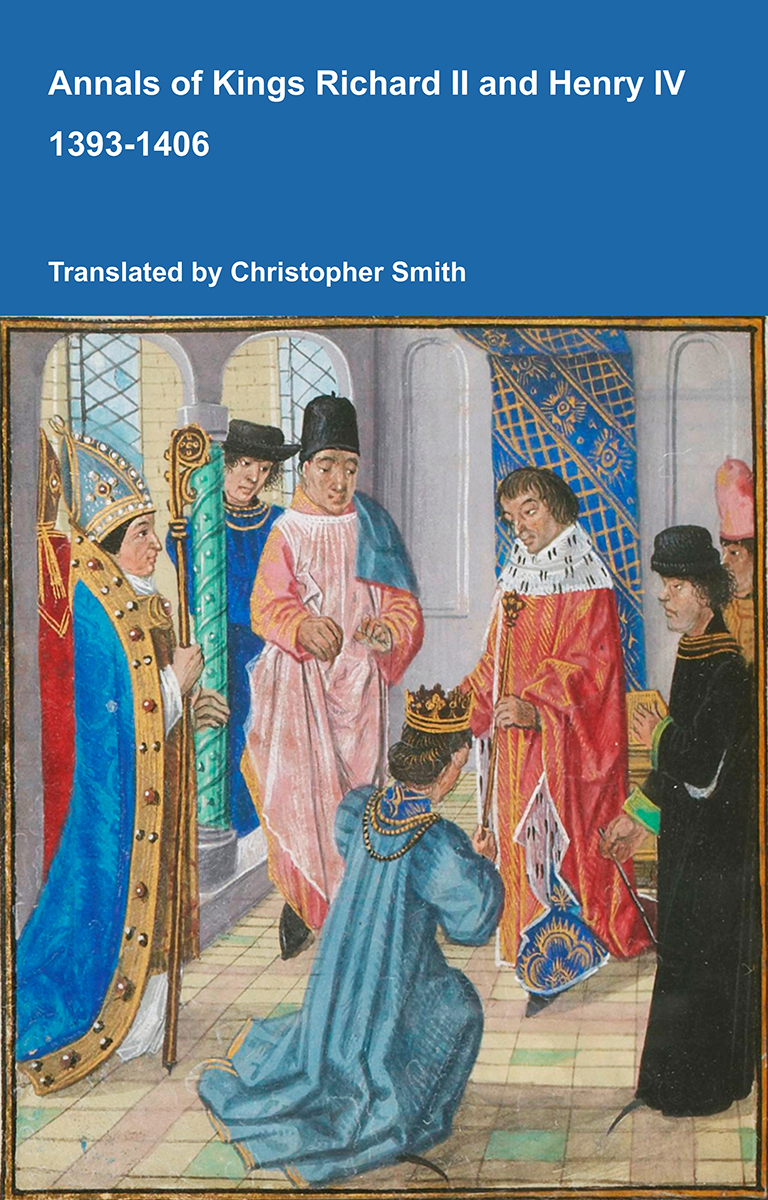 Annals of Kings Richard II and Henry IV. On the evening of that same night, the King sent to the Mayor of London, ordering him to arm as many men as could be found in the city fit for arms, so that they would be ready within the space of two or three hours to follow the King wherever he wished. Accordingly, the King, and the Earls of Rutland, Kent, Huntingdon, and Nottingham, and all those who were of the King’s household, armed themselves; and with the Londoners and the auxiliaries whom they were then able to gather, they advanced towards Pleshey [Map] in Essex, where the Duke of Gloucester [aged 42] was staying. For the most part, those present did not know where this force was heading. When they had drawn near to the said place, the King reviewed the people who had followed him in a certain field. Their number was estimated by the heralds at fifteen thousand.
Sub ejusdem noctis vespera, Rex misit ad Majorem Londoniarum, jubens ut armaret quotquot inveniri possent habiles ad arma in civitate, ut parati forent, sub duarum aut trium horarum spatio, sequi Regem quocunque vellet. Rex proinde, et Comes de Ruthlond, de Kancia, de Huntingdonia, et de Notyngham, et quotquot erant de familia Regis, armati, cum Londoniensibus et auxiliariis quos contrahere pro tunc potuerunt, processerunt versus Plashi in Essexia, ubi Dux Gloucestriæ morabatur; ignorantibus pro majori parte, quorsum tenderet apparatus [iste] Cumque propinquassent loco prædicto, Rex recensuit populum qui eum secutus fuerat, in quodam campo; quorum numerus autumabatur ad quindecim millia per præcones.
Annals of Kings Richard II and Henry IV. For on the sixth day before the Ides of July [10th July 1397], he resolved to hold a feast, which would have been more infamous for its infamies, if his malice had answered his wishes, than once was the gathering of Herod. Indeed, he caused the Duke of Gloucester [aged 42], the Earls of Arundel [aged 51] and Warwick, and several others whom he hated, to be invited to it, so that, on such an occasion, he might seize so many nobles gathered together without disturbance or uproar. But the Duke, being gravely ill, excused himself. The Earl of Arundel, to whom the King’s malice was better known because of the very experiences he had suffered, refrained from coming to the feast, waiting instead in his castle of Reigate, well fortified. Only the Earl of Warwick [aged 59] came to the feast out of all those invited. On that same day, before dinner, the King, being a most cunning dissembler, showed him so fair a countenance and spoke such fair words that the Earl suspected nothing of the King’s treachery. For the King, taking the Earl by the hand, urged him to be of good courage and not to be saddened by the loss of the lands of Gower, swearing that even if he had lost them, the King himself would provide him with lands of equal value. Yet when the feast had ended, he caused the Earl to be arrested. Shortly afterwards he sent him to be kept in custody until the time of the Parliament which he had resolved to hold, to the destruction of many.
Sexto nempe Idus Julii, statuit celebrare convivium, quod suis infamiis fuisset famosius, si malitia respondisset votis suis, quam fuit olim Herodis conventiculum. Revera fecit ad illud invitari Ducem Glowcestriæ, Comites Arundeliæ et Warwici, et plures alios quos odivit, ut occasione tali tot proceres adunatos, sine turba vel strepitu, capere potuisset; sed Dux, graviter infirmatus, se excusavit. Comes Arundeliæ, cui melius fuit nota Regis malitia propter ipsa experimenta quæ senserat, venire ad convivium supersedit, expectans in castro suo de Reygate, bene munito. Solus Comes Warwici venit ad convivium ex invitatis omnibus. [Cui] ipso die, ante prandium, Rex, ut erat simulator callidissimus, tam bonum vultum exhibuit, tam bona verba fecit, quod Comes nihil minus quam de Regis infidelitate dubitabat. Monuit nempe Rex, apprehensa manu Comitis, ut esset bono animo, et non tristaretur pro terrarum de Gower amissione; jurans quod etsi perdidisset cas, ipse sibi terras ad tantum valorem provideret. Sed tamen cum finitum fuisset convivium, fecit Comitem arestari; quem cito postea misit ad; custodiendum usque ad tempus Parliamenti, quod statuit, in multorum perniciem, celebrare.
Betrayal and Death of King Richard II. [Around 25th July 1397] Afterwards he [Thomas of Woodstock 1st Duke of Gloucester [aged 42]] sent to the Earl Marshal,1 who was captain of Calais, to the Earl of Warwick, and to the Archbishop of Canterbury [aged 44],2 and desired that they would come to Arundel on a certain day; and he also sent to the Earl of Arundel to say that he would come to dine there with him, and that he would bring with him all the other lords. The Earl of Arundel [aged 51] returned him answer, that he would be right welcome, and all the lords it would please him to bring with him in his company. It is true that the Duke of Gloucester arrived at Arundel the eighth day before the month of August in the year thirteen hundred fourscore and sixteen,3 as well as the Earl of Derby, the Earl Marshal, the Archbishop of Canterbury, the Abbot of St. Albans, and the Prior of Westminster. As these lords were seated at dinner, there arrived the Earl of Warwick [aged 59];4 and when he joined the company of the lords, the Duke of Gloucester said to him, 'My brave man, you must take the same oath as we have taken:' and the Earl replied, 'My lord, what do you wish me to swear?' The Duke said, 'You will swear as we have done, if you please, to be true and faithful to the realm, and also to be true and faithful to each other.'
Note 1. Thomas of Mowbray [aged 29], Earl of Nottingham, the first hereditary Earl Marshal, shortly afterwards created Duke of Norfolk. He was then absent from Calais on furlough. His leave of absence is dated Oct, 3, 1396, extending for one year. The assigned reason is, that he might travel into Picardy for matters relating to the safe custody of the city. (Rymer, Fœdera,) Chastelnin's version calls him 'fustre cappitaine de Calleys.' I have not been able to obtain a satisfactory explanation of this word, The Earl could boast of royal descent by his mother Elizabeth, daughter and heiress of John Lord Segrave by Margaret Plantagenet, daughter and heiress of Thomas de Brotherton, Earl of Norfolk and Marshal of England, youngest son of Edward the First by his second consort, Margaret of France, (Dugdale, Baronage.)
Note 2. Thomas Fitzalan, third son of the Iate Earl of Arundel, he had been Bishop of Ely, and Chancellor, during the prosecution of Richard's favourites. He was afterwards translated to York, and succeeded Archbishop Courtenay in the see of Canterbury in August 1397, according to the Monk of Evesham, but in 1395 according to Spelman, (Concilia).
Note 3. As Brest was not given up till June 1397, this is undoubtedly a wrong date. It should have been August 1397, and I think it very probable that it was so in the original MS. The Monk of St. Denys in his chronicles corrects the error, 'At the head of the factions (anno 1397) was the King's uncle, the Duke of Gloucester, the Earl Arundel, and the Earl Warwick, who, as we have related, conspired the preceding year against the King.' (Chronicles of the Monk of St. Denys, chap. v. b. xviii.) (It must never be forgotten that the year commenced at Easter.) The London Chronicle places Gloucester's arrest on the 21st of July. The conspiracy was revealed before the middle of the month, and probably before the meeting at Arundel; for, on the 13th of July 1397, an order wns made out for the arrest of Gloucester, Arundel, and Warwick, (Rymer, Fœdera.) This order, agreed upon at Windsor, does not appear to have been issued, as a second order was made and published from Westminster on the 28th of the month, (Fœdera.)
Note 4. Thomas, son of Thomas Beauchamp, Earl of Warwick, by Catherine, daughter of Roger Mortemer, first Earl of March. Perhaps the Earl was the more readily induced to join the conspirators, as he would naturally be incensed at the loss of the honour of Gower, recovered at this time by the Earl Marshal. See Otterbourne, Scriptores Veleres, p. 189.
Before 8th September 1397 Thomas of Woodstock 1st Duke of Gloucester [aged 42] was imprisoned in Calais [Map] to await trial for treason for being the leader of the Lords Appellant.
On 16th September 13971 Thomas of Woodstock 1st Duke of Gloucester [aged 42] was murdered in Calais [Map] for his role as leader of the Lords Appellant. Duke Albemarle, Duke Gloucester, Earl Essex forfeit. His son Humphrey [aged 16] succeeded 2nd Earl Buckingham.
Walter Clopton was part of the inquiry into his death the outcome of which is not known. A John Hall was executed for the murder.
Note 1. The date based on the reference in the Annals of Richard II and Henry IV in which the Chronicler write that the Hereford-Mowbray duel of 16th September 1398 took place "on the anniversary of the very day on which the same Duke of Norfolk had caused the Duke of Gloucester to be suffocated."
Froissart Book 4 Chapter 92. Around 8th September 1397. When the duke of Gloucester [aged 42] saw himself confined in the castle of Calais [Map], abandoned by his brothers, and deprived of his attendants, he began to be much alarmed. He addressed himself to the earl-marshal [aged 29]: "For what reason am I thus carried from England and confined here? It seems that you mean to imprison me. Let me go and view the castle, its garrison, and the people of the town." "My lord," replied the earl, "I dare not comply with your demands, for you are consigned to my guard, under pain of death. The [his nephew] king [aged 30] our lord is at this moment somewhat wroth with you; and it is his orders that you abide here a while, in banishment with us, which you must have patience to do, until we have other news, and God grant that it may be soon! for, as the Lord may help me, I am truly concerned for your disgrace, and would cheerfully aid you if I could, but you know the oath I have taken to the king, which I am bound in honour to obey." The duke of Gloucester could not obtain any other answer. He judged, from appearances of things around him, that he was in danger of his life, and asked a priest who had said mass, if he would confess him. This he did, with great calmness and resignation, and with a devout and contrite heart cried before the altar of God, the Creator of all things, for his mercy. He was repentant of all his sins, and lamented them greatly. He was in the right thus to exonerate his conscience, for his end was nearer than he imagined. I was informed, that on the point of his sitting down to dinner, when the tables were laid, and he was about to wash his hands, four men rushed out from an adjoining chamber, and, throwing a towel round his neck, strangled him, by two drawing one end and two the other1. When he was quite dead, they carried him to his chamber, undressed him, and placed the body between two sheets, with his head on a pillow, and covered him with furred mantles. They then re-entered the hall, properly instructed what to say and how to act, and declared the duke of Gloucester had been seized with a fit of apoplexy as he was washing his hands before dinner, and that they had great difficulty to carry him to bed. This was spoken of in the castle and town, where some believed it, but others not. "Within two days after, it was published abroad that the duke of Gloucester had died in his bed at the castle of Calais; and, in consequence, the earl marshal put on mourning, for he was nearly related to him, as did all the knights and squires in Calais.
Note 1. He was smothered with pillows, not strangled. Hall, one of the accomplices, made a particular confession of all the circumstances. See Parl Plac[?] viii p. 452. Ed.
Annals of Kings Richard II and Henry IV. In these days, so that the King might complete all his malice against the Duke of Gloucester [aged 42], he sent to Calais a certain justice named William Rickhill, an Irishman by birth, to ask the said Duke whether he had made armed ridings against the King, etc.; and to write down whatever the Duke confessed in this matter, and to report to the King and to Parliament whatever he had discovered from the words of the said Duke of Gloucester. It happened that he reported the Duke’s words, but in a sense other than the Duke had intended, nor was his testimony suitable. And so the King, striving by every means he could to kill the Duke, and thinking that this could not be done publicly because of the commons of the realm, who loved him most tenderly, ordered the Earl of Nottingham, Marshal, that is Lord Thomas Mowbray, who had custody of the Duke at Calais, secretly to have the Duke’s throat cut. But he, at first fearing to commit so great a crime, delayed carrying out the King’s commands. For this reason it is said that the King was so greatly moved against the said Earl that he swore he would have him killed unless he hastened more quickly to destroy the Duke. At length, compelled in this way, Mowbray had the Duke summoned in the middle of the night, as though he were to return to England, and led him to a certain lodging in the town of Calais. There, after his own attendants had been removed, he caused the said Duke to be suffocated by certain valets, who had first been prepared to carry out the said crime. They threw cushions, or feather-filled beds, over his face, and, lying upon him for so long, violently pressed him down and strangled his breath until, suffocated, he was deprived of life.
Sub hiis diebus, Rex, ut omnem suam posset complere malitiam in Ducem Gloverniæ, misit Calesiam quemdam Justiciarium, dictum Willelmum de Rikille, Hibernicum mnatione, qui requireret a dicto Duce,nunquid fecisset equitationes contra Regem etc, ets scriberet quæcunque Dux in hac materia fateretur, Regique referret, et Parliamento, quæcunque de dictis verbis Ducis Gloucestriæ comperisset. Factum fuit quod ipse renunciaret verba Ducis, sed in alia sententia quam Dux intenderat, nec esset conveniens testificatio sua Rex itaque, nitens Ducem viis omnibus quibus valebat occidere, et putans hoc non posse fieri publice, propter communes regni, qui diligebant eum tenerrime, mandavit Comiti Notynghamiæ, Marescallo, et Domino Thomæ Moumbray, qui custodiam Ducis habebat Calesiæ, ut occulte Ducem faceret jugulari. Ile vero, primo metuens tantum scelus committere, distulit perficere jussa Regis. Quamobrem fertur quod Rex tantum commovebatur contra dictum Comitem, ut juraret ipsum occidendum, nisi celerius Ducem perimere maturasset. Qui tandem, tali modo coactus, Ducem evocatum nocte media, quasi ad redeundum in Angliam, duxit ad quoddam hospitium in villa Calesiæ; ubi, amotis suis familiaribus, dictum Ducem suffocari fecit per quosdam valectos, ad dictum facinus perpetrandum primitus præparatos. Qui, injectis culcitris, vel lectis pluma refertis, super ejus faciem, tam diu incumbentes super eum jacuerunt, eundem violenter opprimentes, et ejus halitum strangulantes, donec suffocatus spiritu privaretur.
Walsingham Chronica Majora. [8th September 1397] Meanwhile, because it did not seem safe to the king that the Duke of Gloucester [aged 42] should make his defense publicly, on account of the favor of the people, who were excessively devoted to him, the king ordered the Earl Marshal [aged 29] to have him secretly killed. And he, having sent instruments of wickedness, caused him to be suffocated, mattresses and feather-beds being heaped over his face. Thus perished that most noble man, both the king's son and the king's uncle, in whom had been placed the hopes and consolation of the whole community of the realm. Afterwards the king craftily arranged for that parliament to be postponed until after Christmas, when it was to be resumed, or rather continued, at Shrewsbury, on the borders of Wales.
Interea, quia non videbatur tutum Regi ut Dux Gloverniæ responsis astaret publice, propter favorem populi, qui ei nimis afficiebatur, Rex jussit Comiti Marescallo, ut eum occulte occideret; qui, missis iniquitatis ministris, fecit eum suffocari, superjectis culcitris et lectis, pluma refertis, super os ejus: sic que mortuus est ille vir optimus, Regis filius et Regis patruus, in quo posita fuere spes et solatium totius regni communitatis. Postea Rex astute fecit illud Parliamentum differri usque post Natale Domini, quod reincipitur, vel potius, continuaretur apud Salopian in confinibus Walliarum.
On 3rd October 1399 [his former wife] Eleanor Bohun Duchess Gloucester [aged 33] died. She was buried at the Chapel of St Edmund, Westminster Abbey [Map]. She has a monumental brass, representing the deceased in her conventual dress, as a nun of Barking Abbey [Map].
Chronicle of Gregory. 1404. And that year Serle, that was one of thoo that mortheryd the Duke of Glouceter at Calys, was takyn in the Marche of Schotlond, and was brought unto London, and was hangyd at Tyburne.
Parliament Rolls Richard II. 5. The following are assigned to be triers of petitions from England, Ireland, Wales, and Scotland:
[his brother] The duke of Guyenne and duke of Lancaster.
The duke of Gloucester.
[his nephew] The Earl of Derby.
William Thirning.
William Rickhill.
John Wadham.
to act all together, or at least six of the aforesaid prelates and lords; consulting with the chancellor, treasurer, steward, and chamberlain, and also the king's serjeants when necessary. And they shall hold their session in the chamberlain's room near the Painted Chamber [Map].
Kings Wessex: Great x 9 Grand Son of King Edmund "Ironside" I of England
Kings Godwinson: Great x 9 Grand Son of King Harold II of England
Kings England: Son of King Edward III of England
Kings Scotland: Great x 7 Grand Son of King Malcolm III of Scotland
Kings France: Great Grand Son of King Philip IV of France
Kings Duke Aquitaine: Great x 13 Grand Son of Ranulf I Duke Aquitaine
Kings Spain: Great x 5 Grand Son of Alfonso VII King Castile VII King Leon
Great x 4 Grandfather: King Henry "Curtmantle" II of England  Grandson of King Henry I "Beauclerc" England
Great x 3 Grandfather: King John of England son of King Henry "Curtmantle" II of England
Great x 4 Grandmother: Eleanor of Aquitaine Queen Consort Franks and England 4 x Great Granddaughter of Hugh I King of the Franks
Great x 2 Grandfather: King Henry III of England son of King John of England
Great x 4 Grandfather: Aymer I Count Angoulême  12 x Great Grandson of Charles "Charlemagne aka Great" King of the Franks King Lombardy Holy Roman Emperor
Great x 3 Grandmother: Isabella of Angoulême Queen Consort England 5 x Great Granddaughter of Hugh I King of the Franks
Great x 4 Grandmother: Alice Courtenay Countess Angoulême  4 x Great Granddaughter of Hugh I King of the Franks
Great x 1 Grandfather: King Edward I of England son of King Henry III of England
Great x 4 Grandfather: Alfonso Barcelona II Count Provence  son of Alfonso II King Aragon
Great x 3 Grandfather: Raymond IV Count Provence Grandson of Alfonso II King Aragon
Great x 4 Grandmother: Gersenda II Sabran Countess Provence
Great x 2 Grandmother: Eleanor of Provence Queen Consort England Great Granddaughter of Alfonso II King Aragon
Great x 4 Grandfather: Thomas Savoy I Count Savoy 12 x Great Grandson of Charles "Charlemagne aka Great" King of the Franks King Lombardy Holy Roman Emperor
Great x 3 Grandmother: Beatrice Savoy Countess Provence 13 x Great Granddaughter of Charles "Charlemagne aka Great" King of the Franks King Lombardy Holy Roman Emperor
Great x 4 Grandmother: Margaret Geneva Countess Savoy
Grandfather: King Edward II of England son of King Edward I of England
Great x 4 Grandfather: Ferdinand II King Leon  son of Alfonso VII King Castile VII King Leon
Great x 3 Grandfather: Alfonso IX King Leon Grandson of Alfonso VII King Castile VII King Leon
Great x 4 Grandmother: Urraca Burgundy Queen Consort Leon  4 x Great Granddaughter of Hugh I King of the Franks
Great x 2 Grandfather: Ferdinand III King Castile III King Leon Great Grandson of Alfonso VII King Castile VII King Leon
Great x 4 Grandfather: Alfonso VIII King Castile Grandson of Alfonso VII King Castile VII King Leon
Great x 3 Grandmother: Berengaria Ivrea I Queen Castile Granddaughter of King Henry "Curtmantle" II of England
Great x 4 Grandmother: Eleanor Plantagenet Queen Consort Castile daughter of King Henry "Curtmantle" II of England
Great x 1 Grandmother: Eleanor of Castile Queen Consort England 2 x Great Granddaughter of Alfonso VII King Castile VII King Leon
Great x 4 Grandfather: Alberic Dammartin
Great x 3 Grandfather: Simon Dammartin 10 x Great Grandson of Charles "Charlemagne aka Great" King of the Franks King Lombardy Holy Roman Emperor
Great x 4 Grandmother: Mathilde Clermont 9 x Great Granddaughter of Charles "Charlemagne aka Great" King of the Franks King Lombardy Holy Roman Emperor
Great x 2 Grandmother: Joan Dammartin Queen Consort Castile and Leon 2 x Great Granddaughter of Alfonso VII King Castile VII King Leon
Great x 4 Grandfather: William Montgomery IV Count Ponthieu 6 x Great Grandson of Hugh I King of the Franks
Great x 3 Grandmother: Marie Montgomery Countess Ponthieu Great Granddaughter of Alfonso VII King Castile VII King Leon
Great x 4 Grandmother: Alys Capet Countess Ponthieu Granddaughter of Alfonso VII King Castile VII King Leon
Father: King Edward III of England son of King Edward II of England
Great x 4 Grandfather: King Louis VIII of France son of King Philip II of France
Great x 3 Grandfather: King Louis IX of France son of King Louis VIII of France
Great x 4 Grandmother: Blanche Ivrea Queen Consort France Granddaughter of King Henry "Curtmantle" II of England
Great x 2 Grandfather: King Philip III of France son of King Louis IX of France
Great x 4 Grandfather: Raymond IV Count Provence Grandson of Alfonso II King Aragon
Great x 3 Grandmother: Margaret Provence Queen Consort France Great Granddaughter of Alfonso II King Aragon
Great x 4 Grandmother: Beatrice Savoy Countess Provence 13 x Great Granddaughter of Charles "Charlemagne aka Great" King of the Franks King Lombardy Holy Roman Emperor
Great x 1 Grandfather: King Philip IV of France son of King Philip III of France
Great x 4 Grandfather: Peter II King Aragon son of Alfonso II King Aragon
Great x 3 Grandfather: James I King Aragon Grandson of Alfonso II King Aragon
Great x 4 Grandmother: Marie Montpellier Queen Consort Aragon
Great x 2 Grandmother: Isabella Barcelona Queen Consort France Great Granddaughter of Alfonso II King Aragon
Great x 4 Grandfather: King Andrew II of Hungary 3 x Great Grandson of King Harold II of England
Great x 3 Grandmother: Violant Árpád Queen Consort Aragon 4 x Great Granddaughter of King Harold II of England
Grandmother: Isabella of France Queen Consort England daughter of King Philip IV of France
Great x 4 Grandfather: Theobald Blois III Count Champagne  2 x Great Grandson of King William "Conqueror" I of England
Great x 3 Grandfather: Theobald IV King Navarre Great Grandson of Alfonso VII King Castile VII King Leon
Great x 4 Grandmother: Blanche Ramirez Granddaughter of Alfonso VII King Castile VII King Leon
Great x 2 Grandfather: Henry I King Navarre 2 x Great Grandson of Alfonso VII King Castile VII King Leon
Great x 4 Grandfather: Archambaud "Great" Dampierre 
Great x 3 Grandmother: Margaret Bourbon Queen Consort Navarre
Great x 4 Grandmother: Alix Forez
Great x 1 Grandmother: Joan Blois I Queen Navarre Great Granddaughter of King Louis VIII of France
Great x 4 Grandfather: King Louis VIII of France son of King Philip II of France
Great x 3 Grandfather: Robert Capet Count of Artois son of King Louis VIII of France
Great x 4 Grandmother: Blanche Ivrea Queen Consort France Granddaughter of King Henry "Curtmantle" II of England
Great x 2 Grandmother: Blanche Capet Queen Navarre Granddaughter of King Louis VIII of France
Great x 4 Grandfather: Henry Reginar II Duke Brabant Great Grandson of King Stephen I England
Great x 3 Grandmother: Matilda Reginar Countess Saint Pol 2 x Great Granddaughter of King Stephen I England
Great x 4 Grandmother: Marie Swabia Duchess Brabant
Thomas of Woodstock 1st Duke of Gloucester son of King Edward III of England
Great x 4 Grandfather: James Avesnes
Great x 3 Grandfather: Bouchard Avesnes
Great x 4 Grandmother: Adela Guise 
Great x 2 Grandfather: John of Avesnes I Count Hainaut 4 x Great Grandson of King William "Conqueror" I of England
Great x 4 Grandfather: Baldwin IX Count Flanders VI Count Hainaut 5 x Great Grandson of Hugh I King of the Franks
Great x 3 Grandmother: Margaret II Countess Flanders 3 x Great Granddaughter of King William "Conqueror" I of England
Great x 4 Grandmother: Marie Blois Countess Flanders 2 x Great Granddaughter of King William "Conqueror" I of England
Great x 1 Grandfather: John of Avesnes II Count Hainaut II Count Holland 3 x Great Grandson of King Stephen I England
Great x 4 Grandfather: William Gerulfing I Count Holland  Great Grandson of King David I of Scotland
Great x 3 Grandfather: Floris Gerulfing IV Count Holland 2 x Great Grandson of King David I of Scotland
Great x 4 Grandmother: Adelaide Guelders Countess Holland
Great x 2 Grandmother: Adelaide Gerulfing Countess Hainaut 2 x Great Granddaughter of King Stephen I England
Great x 4 Grandfather: Henry Reginar VIII Duke Lower Lorraine I Duke Brabant 8 x Great Grandson of King Edward "Elder" of the Anglo Saxons
Great x 3 Grandmother: Mathilde Reginar Countess Holland and Palatine Great Granddaughter of King Stephen I England
Great x 4 Grandmother: Maud Metz Granddaughter of King Stephen I England
Grandfather: William of Avesnes I Count Hainaut III Count Avesnes III Count Holland II Count Zeeland 4 x Great Grandson of King Stephen I England
Great x 4 Grandfather: Henry Luxembourg III Duke Limburg  9 x Great Grandson of King Edward "Elder" of the Anglo Saxons
Great x 3 Grandfather: Waleran Luxembourg III Duke Limburg 10 x Great Grandson of King Edward "Elder" of the Anglo Saxons
Great x 4 Grandmother: Sophia Saarbrücken Duchess Limburg
Great x 2 Grandfather: Henry "Great" Luxembourg V Count Luxembourg III Count Namur 8 x Great Grandson of King Edward "Elder" of the Anglo Saxons
Great x 4 Grandfather: Henry "Blind" Namur IV Count Luxembourg I Count Namur 6 x Great Grandson of King Edward "Elder" of the Anglo Saxons
Great x 3 Grandmother: Erminsende Namur Countess of Bar 7 x Great Granddaughter of King Edward "Elder" of the Anglo Saxons
Great x 4 Grandmother: Agnes Guelders Countess Namur and Luxemburg
Great x 1 Grandmother: Philippa Luxembourg Countess Hainaut and Holland 5 x Great Granddaughter of King William "Conqueror" I of England
Great x 4 Grandfather: Theobald of Bar I Count of Bar 2 x Great Grandson of King William "Conqueror" I of England
Great x 3 Grandfather: Henry of Bar II Count of Bar 3 x Great Grandson of King William "Conqueror" I of England
Great x 4 Grandmother: Erminsende of Bar Sur Seine Countess Bar
Great x 2 Grandmother: Margaret of Bar Countess Luxembourg and Namur 4 x Great Granddaughter of King William "Conqueror" I of England
Great x 4 Grandfather: Robert Capet II Count Dreux 4 x Great Grandson of Hugh I King of the Franks
Great x 3 Grandmother: Philippa Capet Countess of Bar 5 x Great Granddaughter of Hugh I King of the Franks
Great x 4 Grandmother: Yolande Coucy Countess Dreux 5 x Great Granddaughter of Hugh I King of the Franks
Mother: Philippa of Hainaut Queen Consort England Great Granddaughter of King Philip III of France
Great x 4 Grandfather: King Louis VIII of France son of King Philip II of France
Great x 3 Grandfather: King Louis IX of France son of King Louis VIII of France
Great x 4 Grandmother: Blanche Ivrea Queen Consort France Granddaughter of King Henry "Curtmantle" II of England
Great x 2 Grandfather: King Philip III of France son of King Louis IX of France
Great x 4 Grandfather: Raymond IV Count Provence Grandson of Alfonso II King Aragon
Great x 3 Grandmother: Margaret Provence Queen Consort France Great Granddaughter of Alfonso II King Aragon
Great x 4 Grandmother: Beatrice Savoy Countess Provence 13 x Great Granddaughter of Charles "Charlemagne aka Great" King of the Franks King Lombardy Holy Roman Emperor
Great x 1 Grandfather: Charles Valois I Count Valois son of King Philip III of France
Great x 4 Grandfather: Peter II King Aragon son of Alfonso II King Aragon
Great x 3 Grandfather: James I King Aragon Grandson of Alfonso II King Aragon
Great x 4 Grandmother: Marie Montpellier Queen Consort Aragon
Great x 2 Grandmother: Isabella Barcelona Queen Consort France Great Granddaughter of Alfonso II King Aragon
Great x 4 Grandfather: King Andrew II of Hungary 3 x Great Grandson of King Harold II of England
Great x 3 Grandmother: Violant Árpád Queen Consort Aragon 4 x Great Granddaughter of King Harold II of England
Grandmother: Joan Valois Countess Zeeland Holland Avesnes and Hainaut Granddaughter of King Philip III of France
Great x 4 Grandfather: King Louis VIII of France son of King Philip II of France
Great x 3 Grandfather: King Charles Capet of Sicily son of King Louis VIII of France
Great x 4 Grandmother: Blanche Ivrea Queen Consort France Granddaughter of King Henry "Curtmantle" II of England
Great x 2 Grandfather: Charles II King Naples Grandson of King Louis VIII of France
Great x 4 Grandfather: Raymond IV Count Provence Grandson of Alfonso II King Aragon
Great x 3 Grandmother: Beatrice Provence Queen Consort Sicily Great Granddaughter of Alfonso II King Aragon
Great x 4 Grandmother: Beatrice Savoy Countess Provence 13 x Great Granddaughter of Charles "Charlemagne aka Great" King of the Franks King Lombardy Holy Roman Emperor
Great x 1 Grandmother: Margaret Capet Countess Valois Great Granddaughter of King Louis VIII of France
Great x 4 Grandfather: Béla IV King of Hungary 4 x Great Grandson of King Harold II of England
Great x 3 Grandfather: Stephen V of Hungary 5 x Great Grandson of King Harold II of England
Great x 2 Grandmother: Mary of Hungary Queen Consort Naples 6 x Great Granddaughter of King Harold II of England
Great x 3 Grandmother: Elizabeth Cuman