

Paternal Family Tree: Ufford
Before 1298 [his father] Robert Ufford 1st Baron Ufford [aged 18] and [his mother] Cecily Valoignes Baroness Ufford [aged 13] were married.
On 9th August 1298 Robert Ufford 1st Earl Suffolk was born to Robert Ufford 1st Baron Ufford [aged 19] and Cecily Valoignes Baroness Ufford [aged 14].
Before 1316 [his father] Robert Ufford 1st Baron Ufford [aged 36] was created 1st Baron Ufford. [his mother] Cecily Valoignes Baroness Ufford [aged 31] by marriage Baroness Ufford.
Before 9th September 1316 [his father] Robert Ufford 1st Baron Ufford [aged 37] died. His son Robert [aged 18] succeeded 2nd Baron Ufford.
Around 1317 [his daughter] Catherine Ufford Baroness Scales was born to Robert Ufford 1st Earl Suffolk [aged 18] and [his future wife] Margaret Norwich Countess Suffolk [aged 31]. She married before 1354 Robert Scales 3rd Baron Scales, son of Roger Scales 2nd Baron Scales and Egeline or Eleanor Courtenay Baroness Scales, and had issue.
In 1324 Robert Ufford 1st Earl Suffolk [aged 25] and Margaret Norwich Countess Suffolk [aged 38] were married. She by marriage Baroness Ufford.
On 16th July 1325 [his mother] Cecily Valoignes Baroness Ufford [aged 41] died.
Around 1327 [his daughter] Cecily Ufford Baroness Willoughby of Eresby was born to Robert Ufford 1st Earl Suffolk [aged 28] and [his wife] Margaret Norwich Countess Suffolk [aged 41]. She married before 1349 John Willoughby 3rd Baron Willoughby, son of John Willoughby 2nd Baron Willoughby and Joan Roscelyn Baroness Willoughby and Latimer, and had issue.
Around 1330 [his son] Margaret Ufford was born to Robert Ufford 1st Earl Suffolk [aged 31] and [his wife] Margaret Norwich Countess Suffolk [aged 44].
On 22nd July 1332 [his son] Thomas Ufford was born to Robert Ufford 1st Earl Suffolk [aged 33] and [his wife] Margaret Norwich Countess Suffolk [aged 46]. He married before 13th June 1362 Elizabeth Beauchamp, daughter of Thomas Beauchamp 11th Earl Warwick and Katherine Mortimer Countess Warwick.
In January 1337 King Edward III of England [aged 24] created a number of new Earldom's probably in preparation for his forthcoming war against France...
William Montagu 1st Earl Salisbury [aged 36] was created 1st Earl Salisbury. Catherine Grandison Countess of Salisbury [aged 33] by marriage Countess Salisbury.
William Bohun 1st Earl of Northampton [aged 27] was created 1st Earl of Northampton. Elizabeth Badlesmere Countess Northampton [aged 24] by marriage Countess of Northampton.
Hugh Audley 1st Earl Gloucester [aged 46] was created 1st Earl Gloucester probably as compensation for his daughter Margaret Audley Countess Stafford [aged 19] having been abducted by Ralph Stafford 1st Earl Stafford [aged 35].
Robert Ufford 1st Earl Suffolk [aged 38] was created 1st Earl Suffolk. [his wife] Margaret Norwich Countess Suffolk [aged 51] by marriage Countess Suffolk.
On 30th May 1338 [his son] William Ufford 2nd Earl Suffolk was born to Robert Ufford 1st Earl Suffolk [aged 39] and [his wife] Margaret Norwich Countess Suffolk [aged 52]. He married 1. before 12th June 1376 Joan Montagu Countess Suffolk, daughter of Edward Montagu 1st Baron Montagu and Alice Plantagenet, and had issue 2. 12th June 1376 Isabella Beauchamp Countess Suffolk, daughter of Thomas Beauchamp 11th Earl Warwick and Katherine Mortimer Countess Warwick.
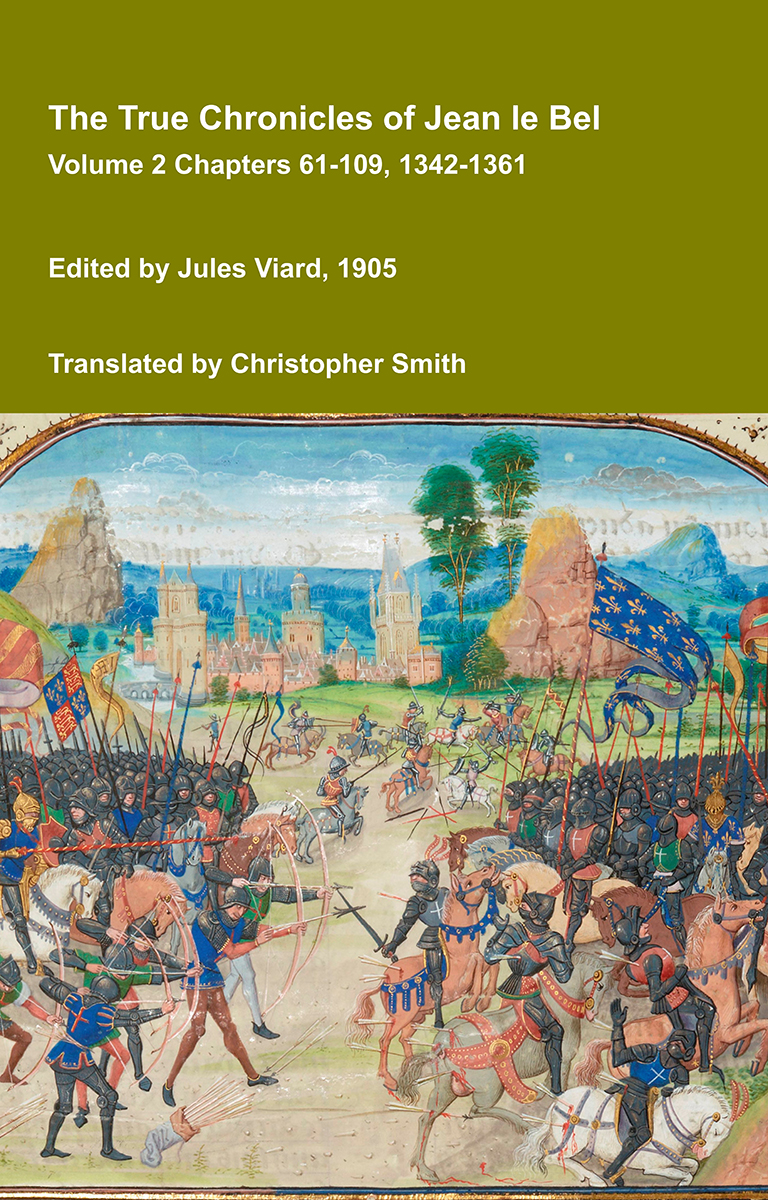 Chronicle of Jean le Bel Volume 2. The noble king gave the lady a great feast and great honour, and so did all the other lords, because she defended herself so valiantly and pursued her husband's cause. Then the noble king, on the advice of Sir Robert d'Artois1, told her and promised her that before the truces had expired he would send such aid there that she would be supremely avenged upon her enemies, even if he had to leave all other business aside. And at once, without delay, the noble king urged the said Sir Robert d'Artois, the Earl of Salisbury, the Earl of Suffolk [aged 44]2, the Earl of Pembroke3, the Earl of Kent, the Baron Stafford4, and many other lords5, to take on enough soldiers to have up to four thousand men in armour, ten thousand footmen, and as many archers, and to prepare themselves to put to sea, and to spare nothing until they had restored the valiant countess to her inheritance despite all her enemies; and furthermore, if need be, he would go there himself with all his power.
Le noble roy fist à la dame grand feste et grand honnour, et aussy firent tous les aultres seigneurs pour tant qu'elle se deffendoit si vassaument et pourchassoit la besongne de son mary. Si luy dit le noble roy, par le conseil de messire R[obert] d'Artois, et luy promit que ainchois que les treves fussent faillies, il y envoyeroit Lel secours que elle seroit souverainement vengée de ses anemis, voire et deust il laisser toutes aultres besongnes. Et prya tantost le noble roy, sans delay, audit messire R[obert] d'Artoys, au conte de Salbry, au conte de Suflort, au conte de Pennebroch, au conte de Kenfort, au baron de Staflortt et à mains aulires seigneurs qu'ilz prissent de souldoiers tant qu'ilz eussent jusques à IIIIM armeures de fer, X mille hommes à pyé el autant d'archiers, et s'apareillassent d'entrer en mer, et n'espargnassent riens tant qu'ilz eussent remis la vaillant contesse en son heritage malgré tous ses anemis, et encores, se ille faloit, iliroit celle part à toute sa poissance.
Note 1. As early as 10th March, Robert d'Artois was preparing to cross over to Brittany. On that date, Edward gave him forty pounds from his own treasury. See Record Office, Liberate Rolls, no. 601, m. 10. By letters of 3rd July 1342, Edward III ordered his collectors to ensure the wages of Robert d'Artois, who was to cross to Brittany with four bannerets, twenty-nine knights, eighty-six squires, and one hundred and twenty archers. See Rymer 2.1201: 'For Robert d'Artois, about to set out for the regions of Brittany. The king, to the collectors and receivers of our wool in the county of Suffolk, according to the apportionment of ten thousand sacks of wool within our kingdom of England for the present year, greeting. Since, by the advice of our council, we have assigned to our beloved and faithful Robert d'Artois, who, with one hundred and twenty men-at-arms, of whom the said Robert and four others shall be bannerets, twenty-nine knights, and eighty-six squires, and with one hundred and twenty archers, is about to set out to the regions of Brittany in our service, according to the ordinance made thereupon, at our wages, one hundred and fifty-eight sacks of wool from our aforesaid wool to be collected by you in the aforesaid county, each sack valued at six pounds, for his loan and subsidy, beyond the custom of half a mark due thereon, to be received through your hands toward the wages of the said Robert and his aforesaid men: namely, the said Robert receiving eight shillings, and each of the others, that is, each banneret four shillings, each knight two shillings, each squire twelve pence, and each archer four pence, per day; We command you that you deliver without delay to the same Robert, or to his attorney in this matter, the said one hundred and fifty-eight sacks of wool from our aforesaid wool from the aforesaid county, each sack being of the weight of twenty-six stones, each stone containing fourteen pounds, by indenture to be made thereupon in due form, at the aforesaid weights, as aforesaid; and we shall cause due allowance to be made to you for this in your account. Witness the king at the Tower of London, on the third day of July. By bill of the treasury.'
1. Dès le 10 mars, Robert d'Artois s'apprétait à passer en Bretagne. A cette date, Édouard lui donnait sur son propre trésor quarante livres. (Record Office, Liberate Rolls, n° 601, m. 10.) Par lettres du 3 juillet 1342, Édouard II manda à ses col lecteurs d'assurer les gages de Robert d'Artois, qui devait passer en Bretagne avec quatre bannerets, vingt-neuf chevaliers, quatre-vingt-six écuyers et cent vingt archers. (Rymer t. II, IIe partie, p. 1201.)
Note 2. Edward III had given Robert d'Ufford, Earl of Suffolk, 500 marks as the price of his ransom. He had them paid to him in November 1342 to cover the heavy expenses he had had to incur for the expedition to Brittany. See Record Office, Privy Seals, file 287, no. 15163.
2. Édouard III avait donné à Robert d'Ufford, comte de Suffolk, 500 marcs pour prix de sa rançon. Il les lui ft solder en novembre 1342 pour le couvrir des grosses dépenses qu'il avait dû faire pour l'expédition de Bretagne. (Record Office, Privy Seals, file 287, n° 15163.)
Note 3. On 26th September 1342, the Earl of Pembroke had not yet left England. On that date, Edward III requested the chancellor, Robert Parvyng, to order Henry Peverel, Theobald de Monteny, Baldwin de Stapleton, and John de Bitterley to charter and equip all available ships for the passage of the aforesaid earl to Brittany, and to assemble the flotilla at the port of Dartmouth. See Record Office, Privy Seals, file 286, no. 15038.
3. Le 26 septembre 1342, le comte de Pembroke n'avait pas encore quitté l'Angleterre. A cette date, Édouard Ill priait le chancelier Robert Parvyng de donner ordre à Henri Peverel, Thiébaud de Monteny, Baudoin de Stapelton et Jean de Bitterlé de noliser et d'équiper tous les bateaux disponibles pour le passage du susdit comte en Bretagne, et de réunir la flottille au port de Dartmouth. (Record Office, Privy Seals, file 286, n° 15038.)
Note 4. By letters of 25th June 1342, Edward III ordered his collectors to ensure the wages of Ralph de Stafford, who was about to cross to Brittany with two bannerets, sixteen knights, thirty-one squires, and fifty mounted archers. See Rymer 2.1201: 'For Ralph de Stafford, concerning wages. The king, to the collectors, etc. Since our beloved and faithful Ralph de Stafford has undertaken, before us and our council, to set out in our service to the regions of Brittany with fifty men-at-arms, of whom the said Ralph himself and two others shall be bannerets, sixteen knights, and thirty-one squires, and with fifty mounted archers, at our wages, each of them receiving per day, namely: each banneret, four shillings; each knight, two shillings; each squire, twelve pence; and each archer, six pence, for as long as they remain in our service there; We, wishing the aforesaid Ralph to be satisfied, for himself and his aforesaid men, for such wages for one quarter of a year, which amount to four hundred and fifty-five pounds, have, by the advice of our said council, assigned to the same Ralph fifty-seven sacks of wool from our aforesaid wool, each sack valued at eight pounds; Which fifty-seven sacks of wool, according to that valuation, amount to four hundred and fifty-six pounds, to be had and received through your hands toward his aforesaid wages. And therefore we command you that you deliver to the same Ralph, or to his attorney in this matter, the said fifty-seven sacks of wool from our aforesaid wool, to be thus collected by you in the said county, by indenture to be made thereupon between you and him in due form, toward his aforesaid wages, as aforesaid; And we shall cause due allowance to be made to you for this in your account. Witness the king at Woodstock, on the twenty-fifth day of June [1342]. By bill of the treasury.' As early as April, the sheriff of the county of Kent had requisitioned bridges, hurdles, and empty barrels for the embarkation of Ralph's horses. See Record Office, Exchequer Accounts, Q. R. 21, 39.
4. Par leures du 25 juin 1342, Édouard III manda à ses collecteurs d'assurer les gages de Raoul de Stalford, qui était sur le point de passer en Bretagne avec deux bannerets, seize chevaliers, trente et un écuyers et cinquante archers à cheval. (Rymer LH, I° partie, p. 1201.) Le shériff du comté de Kent, dès le mois d'avril, avait réquisitionné des ponts, des claies, des tonneaux vides pour l'embarquement des chevaux de Raoul. (Record Office, Erchequer Accounts, Q. R. 21, 39.)
Note 5. On 20th June 1342, Edward III ordered that all the ships needed for the passage of the Earl of Northampton to Brittany with an army be assembled at Portsmouth; this crossing was to take place within the fortnight following the coming feast of Saint John the Baptist [24th June]. See Rymer 2.1201. On 3rd July, he arranged for the wages of William Kildesby, who was to cross to Brittany with ten knights, thirty-nine squires, and one hundred archers. See Rymer 2.1202. On the 13th of the same month, Edward arranged for the wages of Robert, Earl of Suffolk, who was taking with him one banneret, fourteen knights, thirty-five squires, and fifty mounted archers; of Reginald Cobham, with forty men-at-arms; of Philip de Weston, with twenty men-at-arms; of Thomas Hatfield, with twenty men-at-arms; of Thomas Beauchamp, Earl of Warwick, with eighty men-at-arms; of John de Vere, Earl of Oxford, with forty men-at-arms; of Michael de Poynings, with fifteen men-at-arms; of Thomas de Bradeston, with twenty men-at-arms; of Maurice de Berkeley, with twenty men-at-arms; of Hugh Courtenay, Earl of Devonshire, with fifty men-at-arms; and of Hugh Audley, Earl of Gloucester, with one hundred men-at-arms. See Rymer 2.1203.
5. Le 20 juin 1342, Édouard III manda de réunir à Portsmouth tous les navires nécessaires pour le passage du comte de Northampton en Bretagne avec une armée; ce passage devait avoir lieu dans la quinzaine de la prochaine fête de saint Jean-Baptiste. (Rymer t. II, Il° partie, p. 1201.) Le 3 juillet, il fait assurer les gages de Guillaume Kildesby, qui devait passer en Bretagne avec dix chevaliers, trente-neuf écuyers et cent archers. (Ibid., p. 1202.) Le 13 du même mois, Édouard fait assurer les gages de Robert, comte de Suffolk, qui emmène avec lui un banneret, quatorze chevaliers, trente-cinq écuyers et cinquante archers à cheval, de Regnault de Cobeham, avec quarante hommes d'armes, de Philippe de Weston, avec vingt hommes d'armes, de Thomas de Hatfeld, avec vingt hommes d'armes, de Thomas de Beauchamp, comte de Warwick, avec quatre-vingis hommes d'armes, de Jean de Veer, comte d'Oxford, avec quarante hommes d'armes, de Michel de Ponynges, avec quinze hommes d'armes, de Thomas de Bradeston, avec vingt hommes d'armes, de Maurice de Berkeley, avec vingt hommes d'armes, de Hugue de Courtenay, comte de Devonshire, avec cinquante hommes d'armes, de Hugue d'Audeley, comte de Glocester, avec cent hommes d'armes. (Ibid., p. 1203.)
On 3rd October 1343 [his son] Walter Ufford was born to Robert Ufford 1st Earl Suffolk [aged 45] and [his wife] Margaret Norwich Countess Suffolk [aged 57]. He married before 1361 Elizabeth Montagu Countess Suffolk, daughter of Edward Montagu 1st Baron Montagu and Alice Plantagenet.
On 26th August 1346 the army of King Edward III of England [aged 33] defeated the French army at the Battle of Crécy. The English army was commanded by King Edward III of England, his son Edward "Black Prince" [aged 16], Thomas Beauchamp 11th Earl Warwick [aged 33], William Bohun 1st Earl of Northampton [aged 36] and John Beauchamp 1st Baron Beauchamp Warwick [aged 30].
The English army was included: Bishop Thomas of Hatfield [aged 36], Hugh Despencer 1st Baron Despencer [aged 38], Bernard Brocas [aged 16], Thomas Felton [aged 16], James Audley [aged 28], Robert Bourchier 1st Baron Bourchier, Bartholomew "The Elder" Burghesh 1st Baron Burghesh [aged 59], Bartholomew "The Younger" Burghesh 2nd Baron Burghesh [aged 18], Reginald Cobham 1st Baron Cobham [aged 51], John Darcy 1st Baron Darcy of Knayth [aged 66], Robert Ferrers 3rd Baron Ferrers of Chartley [aged 37], Richard Scrope 1st Baron Scrope of Bolton [aged 19], William Scrope [aged 21], Stephen Scrope [aged 21], William Latimer 4th Baron Latimer of Corby [aged 16], John Lisle 2nd Baron Lisle [aged 28], Gerard Lisle 1st Baron Lisle [aged 42], Nicholas Longford [aged 61], Edward Montagu 1st Baron Montagu, Walter Paveley 4th Baron Burghesh [aged 27], Michael Poynings 1st Baron Poynings [aged 28], Robert Ufford 1st Earl Suffolk [aged 48], John de Vere 7th Earl of Oxford [aged 34], Thomas West [aged 34], John Willoughby 2nd Baron Willoughby [aged 43], John Wingfield [aged 26], Henry Percy 11th and 3rd Baron Percy [aged 25], Hugh Courtenay 2nd or 10th Earl Devon [aged 43] (possibly), Walter "Elder" Devereux [aged 37], John Devereux [aged 44], Enion Sais Brecon, John Chandos [aged 26], Richard Pembridge [aged 26] and John Sully [aged 63].
The French army suffered significant casualties. King Philip "Fortunate" VI of France [aged 52] was wounded. William de Coucy [aged 60] and his son Enguerrand 6th Lord de Coucy [aged 33] and were killed.
Charles II Count Alençon [aged 49] was killed. His son Charles [aged 9] succeeded Count Alençon.
Louis Chatillon II Count Blois I Count Chatillon was killed. His son Louis succeeded III Count Blois.
Louis Dampierre II Count Nevers I Count Flanders [aged 42] was killed. His son Louis [aged 15] succeeded III Count Nevers, II Count Flanders.
King John I of Bohemia [aged 50] was killed. His son Charles [aged 30] succeeded IV King Bohemia, Holy Roman Emperor Luxemburg. Blanche Valois Holy Roman Empress Luxembourg [aged 29] by marriage Holy Roman Empress Luxemburg.
Rudolph "Valiant" Metz I Duke Lorraine [aged 26] was killed. His son John succeeded I Duke Lorraine.
Jean IV de Harcourt [aged 39] was killed.
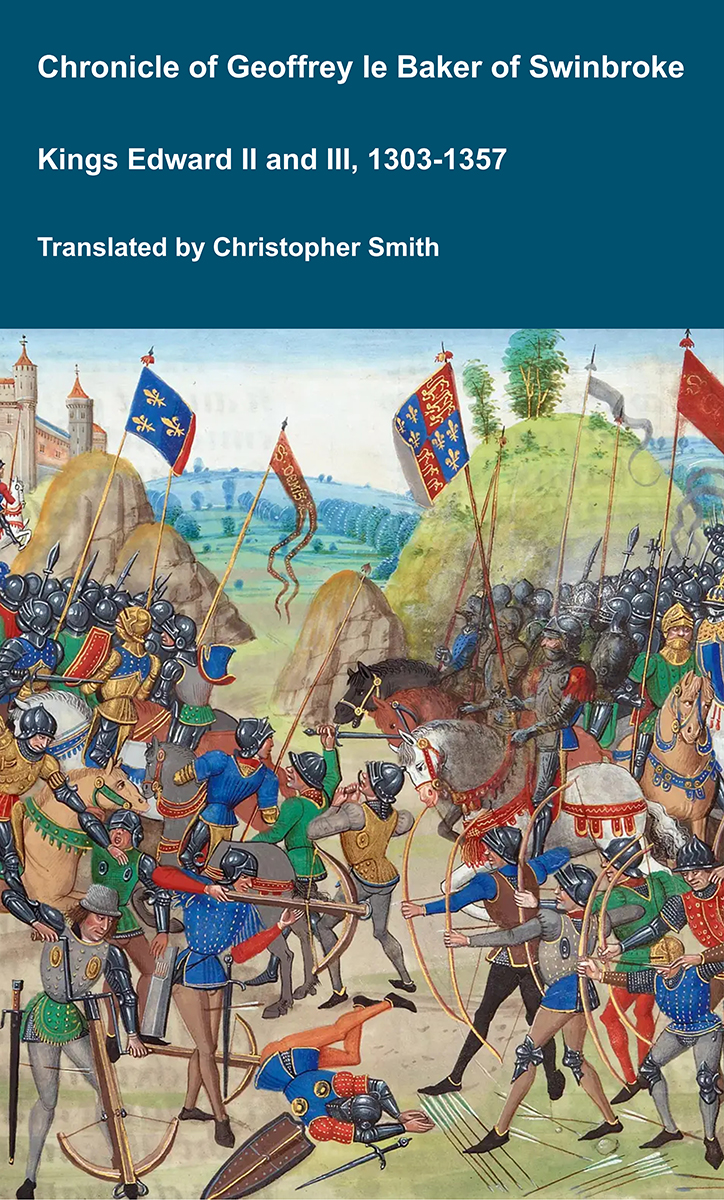 Chronicle of Geoffrey le Baker of Swinbroke. In this year, after the feast of Saint Martin, there assembled at Calais1 the Bishop of Norwich [aged 50], the Earl of Lancaster, the Earl of Suffolk [aged 50], and Lord Walter Mauny [aged 38] on the part of the English; and on the part of the French, the Bishop of Lyon, the Duke of Bourbon, the Duke of Dauphiné, the Count of Guînes, the Lord of Tancarville, and Lord Geoffrey de Charny [aged 42], for the purpose of renewing the truces. But the Earl of Lancaster refused to give his assent until two fortifications at Calais, which were harmful and built contrary to the terms of the previous truces, had been demolished. Once that had been done, the truces were renewed, set to last until the first day of December of the following year.
Isto anno, post festum sancti Martini, convenerunt apud Calesiam episcopus Norwycensis, comes Lancastrie, comes Suthfolchie, et dominus Walterus Magne, ex parte Anglorum; item, episcopus Lugdunensis, dux de Burbone et dux Dactenes et comes de Gynes et dominus de Tankerville et dominus Galfridus de Charny, ex parte Francorum, pro treugis renovandis; quibus noluit comes Lancastrie assentire, quousque duo fortalicia Calesie nociva et contra formam pristinarum treugarum edificata fuerant diruta. Quo facto, renovate sunt treuge, usque ad primum diem Decembris anni proximo futuri durature.
Note 1. The commission to the English envoys is dated 25th September 1348. The French envoys were Hugues, bishop of Laon, Jean de Nesle, sire d'Offemont, Geoffroi de Charny, and the master of the crossbowmen. The prolongation of the truce to the 1st September (not December) of the following year was agreed to on the 13th November. Rymer's Fœdera 3.173, 177. Baker appears to have confused the negotiations of this and the next year.
Before 1349 [his son-in-law] John Willoughby 3rd Baron Willoughby [aged 25] and Cecily Ufford Baroness Willoughby of Eresby [aged 21] were married. When John married Cecily he changed his arms from  Willoughby Arms to
  Willoughby de Eresby Arms. She the daughter of Robert Ufford 1st Earl Suffolk [aged 50] and Margaret Norwich Countess Suffolk [aged 62].
In 23rd April 1349 King Edward III of England [aged 36] created new Garter Knights:
26th William Fitzwarin [aged 33]. The date may be earlier.
27th. Robert Ufford [aged 50].
28th William Bohun 1st Earl of Northampton [aged 39].
Chronicle of Geoffrey le Baker of Swinbroke. In this year,1 on the feast day of Saint George [23rd April 1350], the king held a great banquet at Windsor Castle [Map], where he established a chantry of twelve priests, and founded a hospital, in which impoverished knights, whose means were insufficient, could, in the service of the Lord, receive suitable support from the perpetual alms of the founders of that college. Besides the king, other nobles contributed to the foundation of this hospital, namely: the king's eldest son, the Earl of Northampton [aged 40], the Earl of Warwick [aged 37], the Earl of Suffolk [aged 51], the Earl of Salisbury [aged 21], and other barons. Also included were simple knights, such as: Roger de Mortimer [aged 21], now Earl of March, Lord Walter de Mauny [aged 40], Lord William FitzWarin [aged 34], John de Lisle [aged 14], John de Mohun [aged 30], John de Beauchamp [aged 31], Walter de Pavely [aged 31], Thomas Wale [aged 47] and Hugh de Wrottesley [aged 16]. Men whose proven virtue ranked them among the wealthiest earls. Together with the king, all these men were clothed in robes of powdered russet, with garters of Indian colour, also wearing garters on their right legs, and mantles of blue, adorned with the shield of Saint George. In such attire, bareheaded, they devoutly attended a solemn Mass, sung by the bishops of Canterbury, Winchester, and Exeter. They then sat together at a common table, in honour of the holy martyr, to whom they dedicated this noble brotherhood, calling their company "The Knights of Saint George of the Garter."
Isto anno, in die sancti Georgii, rex celebravit grande convivium apud Wyndesore in castro, ubi instituit cantariam xij. sacerdotum, et fundavit zenodochium, in quo milites depauperati, quibus sua non sufficerent, possent in Domini servitute de perpetuis elemosinis fundatorum illius collegii sustentacionem competentem habere. Preter regem fuerunt alii compromittentes in fundacionem istius zenodochii, scilicet regis primogenitus, comes Norhamptonie, comes Warewici, comes Suthfolchie, comes Salisbiriensis, et alii barones; simplices quoque milites, scilicet Rogerus de Mortuo mari, nunc comes Marchie, dominus Walterus de Magne, dominus Willelmus filius Garini, Iohannes de Insula, Iohannes de Mohun, Iohannes de Bealchampe, Walterus de Pavely, Thomas Wale, et Hughe de Wrotesley, quos probitas experta ditissimis comitibus associavit. Una cum rege fuerunt omnes isti vestiti togis de russeto pulverizato cum garteriis Indie coloris, habentes eciam tales garterias in tibiis dextris, et mantella de blueto cum scutulis armorum sancti Georgii. Tali apparatu nudi capita audierunt devote missam celebrem per antistites Cantuariensem, Wintoniensem, et Exoniensem decantatam, et conformiter sederunt in mensa communi ob honourem sancti martiris, cui tam nobilem fraternitatem specialiter intitularunt, appellantes istorum comitivam sancti Georgii de la gartiere.
Note 1. Stow Annales 390: "This yeere, on Saint Georges day [23rd April 1350], the king held a great and solemne feast at his castle of Windsor, where he had augmented the chappel which Henry the first and other his progenitors, kings of England, had before erected, of eight chanons. He added to those eight chanons a deane and fifteene chanons more, and 24 poore and impotent knights, with other ministers and servants, as appeareth in his charter dated the two and twentieth of his reigne. Besides the king, there were other also that were contributors to the foundation of this colledge, as followeth: i. The sovereigne king Edward the third, 2. Edward, his eldest sonne, prince of Wales, 3. Henry, duke of Lancaster, 4. the earle of Warwicke, 5. Captaine de Bouch [aged 19], 6. Ralph, earle of Stafford [aged 48], 7. William Montacute, earle of Salisburie, 8. Roger, lorde Mortimer, earle of March, 9. sir John de Lisle [aged 31], 10. sir .
It will be seen that Stow here alters the names to tally with the list of the original knights or First Founders of the order of the Garter. Baker seems to be anticipating. William Bohun, 1st earl of Northampton, and Robert Ufford, 1st earl of Suffolk, and sir William Fitz-Warine became knights of the order at an early date; but Roger Mortimer, here styled 'now Earl of March,' did not have that title before 1352, and sir Walter Manny did not receive the garter till the end of 1359.
The date of the foundation of the order of the Garter has never been exactly determined. Froissart 203.
The Brute chronicle (Egerton MS. 650) has this description, although under a wrong year: "And in the XIX yere of his regne, anone aftre, in Jannuere, before Lenten, the same kyng Edward lete make fulle noble iustice and grete festes in the place of hys byrth, at Wyndsore, that ther were never none suche seyne before that tyme, ne I trowe sythene. At whech iustice, festis and ryalte weryn II kinges, II quenys, and the prince of Wales and the duke of Cornewale, ten erles, nine countesse, many barons, knyghttes, and worthy burgesse, the whech myght not lyghtly be nombrede; and also of dyverse londes as byyonde the see were many strangers. And at that tyme, whene the iustes had done, the kyng Edward made a grete souper, in the wheche he begone fyrst hys round table, and ordayned stedfastly the day of the forsayd table to be holde ther at Wyndessore in the Whytesonwyke evermore yerely."
Relying on the date given in the statutes of the order and on this passage in Baker, writers on the subject have adopted 1349 or 1350 as the year of foundation. But an entry in the household-book of the Black Prince affords a reason for dating the event a year earlier, payment having been made on the 18th November 1348, for twenty-four garters which were given by the prince "militibus de societate garterias" i.e. "garters [were given] to the knights of the society"; Beltz, Memorials of the Order of the Garter, pp. XXXII, 385. Proof however is not conclusive, as the ministers' accounts in the household-book were rendered between 1352 and 1365, and there is therefore room for error; moreover, the garters in question may have been prepared in anticipation. The date of 1349, which is given in the preamble to the earliest copies of the statutes, although it is true that those copies are not contemporary, is not to be lightly set aside. It is, indeed, most probable that the order was never solemnly instituted at an early period, but that it was gradually taking shape during the years following the foundation of the Round Table. Edward's patent, bearing date of 22nd August 1348, whereby he instituted a chapel at Windsor, with a fraternity of eight secular canons and a warden, fifteen other canons, and four-and-twenty poor knights, appears to be the first formal document which can be quoted as a foundation-deed of the order. After this there is no direct reference to it until 1350, when robes were issued for the King against the coming Feast of St. George, together with a Garter containing the King's motto, "Hony soyt qui mal y pense!" Nicolas, History of Orders of Knighthood, 1.24.
Before 1354 [his son-in-law] Robert Scales 3rd Baron Scales and Catherine Ufford Baroness Scales [aged 36] were married. She by marriage Baroness Scales. She the daughter of Robert Ufford 1st Earl Suffolk [aged 55] and Margaret Norwich Countess Suffolk [aged 67].
On 19th September 1356 the army of Edward "Black Prince" [aged 26] defeated the French and Scottish army led by King John "The Good" II of France [aged 37] at the Battle of Poitiers
King John "The Good" II of France was captured by three captains including Ivon aka John Fane.
The the English army included: Bernard Brocas [aged 26], Thomas Felton [aged 26], James Audley [aged 38], Thomas Beauchamp 11th Earl Warwick [aged 43], Bartholomew "The Younger" Burghesh 2nd Baron Burghesh [aged 28], Reginald Cobham 1st Baron Cobham [aged 61], Edward Despencer 1st Baron Despencer, Baron Burghesh [aged 21], Ralph Ferrers [aged 27], William Scrope [aged 31], William Montagu 2nd Earl Salisbury [aged 28], Walter Paveley 4th Baron Burghesh [aged 37], Robert Ufford 1st Earl Suffolk [aged 58], William Ufford 2nd Earl Suffolk [aged 18], John de Vere 7th Earl of Oxford [aged 44], John Willoughby 3rd Baron Willoughby [aged 33], Thomas Arderne [aged 19], Enion Sais Brecon, John Chandos [aged 36], Richard Pembridge [aged 36], Jean Grailly [aged 25], Robert de Fouleshurst [aged 26] and John Sully [aged 73]
John Savile of Shelley and Golcar [aged 31] probably fought having received letters of protection to travel overseas.
Hugh Courtenay 2nd or 10th Earl Devon [aged 53] protected the baggage train.
The French and Scottish army included: King John "The Good" II of France, Philip "Bold" Valois II Duke Burgundy [aged 14], Jean Bourbon I Count La Marche [aged 12], Archibald "Grim" Douglas 3rd Earl Douglas [aged 26], John "Sans Terre" Artois 1st Count of Eu [aged 35]; all captured.
Guichard d'Angle 1st Earl Huntingdon and William Douglas 1st Earl Douglas [aged 33] fought.
Peter Bourbon Duke Bourbon [aged 45] was killed. His son Louis [aged 19] succeeded II Duke Bourbon.
Gauthier VI Comte de Brienne [aged 54] was killed.
Before 1361 Walter Ufford [aged 17] and Elizabeth Montagu Countess Suffolk [aged 16] were married. She would later marry his brother William Ufford 2nd Earl Suffolk [aged 22]; an example of Married to Two Siblings. He the son of Robert Ufford 1st Earl Suffolk [aged 62] and Margaret Norwich Countess Suffolk [aged 74].
Before 13th June 1362 Thomas Ufford [aged 29] and Elizabeth Beauchamp [aged 17] were married. She the daughter of Thomas Beauchamp 11th Earl Warwick [aged 49] and Katherine Mortimer Countess Warwick [aged 48]. He the son of Robert Ufford 1st Earl Suffolk [aged 63] and Margaret Norwich Countess Suffolk [aged 76].
Between 3rd April 1367 and 29th June 1368 [his son] Thomas Ufford [aged 34] died.
On 2nd April 1368 [his wife] Margaret Norwich Countess Suffolk [aged 82] died.
Before 25th May 1368 [his son] Margaret Ufford [aged 38] died.
On 4th November 1369 Robert Ufford 1st Earl Suffolk [aged 71] died. His son William [aged 31] succeeded 2nd Earl Suffolk, 3rd Baron Ufford. Joan Montagu Countess Suffolk [aged 20] by marriage Countess Suffolk.

Around 1400. Window in the Chicheley Chapel at St Andrew's Church, Wimpole [Map] from the late 14th early 15th Century depicting alliances of the Ufford family (who are thought to have owned the manor of Wimpole before the Chicheleys) and the Plantagenets through the marriage of [his brother] Ralph Ufford and Maud Plantagenet Countess Ulster, daughter of Henry Plantagenet 3rd Earl of Leicester 3rd Earl Lancaster .
From top to bottom, left to right:
 Tiptoft Arms. The Tiptoft family owned the nearby manor of Harleston.
 Avenell Arms. The Avenell family once held a manor in Wimpole.
Telemache Arms.
 Ufford Arms. Believed to be the arms of [his son] William Ufford 2nd Earl Suffolk. Note the difference of an annulet argent (white) in the top left corner.
 Bohun Arms. Possibly William Bohun 1st Earl of Northampton.
 Henry Plantagenet 3rd Earl of Leicester 3rd Earl Lancaster 1281 1345 Arms. Possibly Henry Plantagenet 3rd Earl of Leicester 3rd Earl Lancaster although the label doesn't appear to have the fleur de lys of France.
Bassingbourne Arms.
Engaine Arms. John de Engaine lived in Huntingdonshire.
 Lisle Arms. Possibly Robert Lisle 1st Baron Lisle. Robert settled at nearby Rampton.
Robert Ufford 1st Earl Suffolk who married [his former wife] Margaret Norwich Countess Suffolk whose father [his former father-in-law] Walter Norwich owned the manor of Cobbs in Wimpole.
Ufford Arms with a label three points. Believed to be Robert Ufford who predeceased his father Robert Ufford 1st Earl Suffolk.
Bassingbourne Arms.
The figure in the middle is believed to represent William Ufford 2nd Earl Suffolk.
From an original description by James C Powell 1903.
[his daughter] Maud Ufford was born to Robert Ufford 1st Earl Suffolk and Margaret Norwich Countess Suffolk.
[his son] Robert Ufford was born to Robert Ufford 1st Earl Suffolk and Margaret Norwich Countess Suffolk.
[his daughter] Joan Ufford was born to Robert Ufford 1st Earl Suffolk and Margaret Norwich Countess Suffolk.
Father: Robert Ufford 1st Baron Ufford
Robert Ufford 1st Earl Suffolk
Grandfather: Robert Valoignes 
Mother: Cecily Valoignes Baroness Ufford
