

Paternal Family Tree: Burghesh
Around 1282 [his father] Robert Burghesh 1st Baron Burghesh [aged 28] and [his mother] Maud Badlesmere Baroness Burghesh [aged 17] were married.
Around 1287 Bartholomew "The Elder" Burghesh 1st Baron Burghesh was born to Robert Burghesh 1st Baron Burghesh [aged 33] and Maud Badlesmere Baroness Burghesh [aged 22]. He was named for his uncle Bartholomew Badlesmere 1st Baron Badlesmere [aged 11].
On 12th November 1303 [his father] Robert Burghesh 1st Baron Burghesh [aged 49] was created 1st Baron Burghesh by writ of summons. [his mother] Maud Badlesmere Baroness Burghesh [aged 38] by marriage Baroness Burghesh.
In 1306 [his father] Robert Burghesh 1st Baron Burghesh [aged 52] died. He was buried in the St Catherine Chantry at Lincoln Cathedral [Map]. His son [his brother] Stephen [aged 23] succeeded 2nd Baron Burghesh.
In 1306 [his mother] Maud Badlesmere Baroness Burghesh [aged 41] died.
In 1310 [his brother] Stephen Burghesh 2nd Baron Burghesh [aged 27] died. His daughter [his niece] Maud [aged 6] succeeded 3rd Baroness Burghesh.
Before 1314 Bartholomew "The Elder" Burghesh 1st Baron Burghesh [aged 26] and Elizabeth Verdun Baroness Burghesh [aged 13] were married.
Around 1314 [his son] Henry Burghesh was born to Bartholomew "The Elder" Burghesh 1st Baron Burghesh [aged 27] and [his wife] Elizabeth Verdun Baroness Burghesh [aged 14]. He married Isabel St John 4th Baroness St John of Basing, daughter of Hugh St John 2nd Baron St John of Basing and Isabel Wake Baroness St John Basing.
Around 1315 [his daughter] Maud Burghesh Baroness Grey Rotherfield was born to Bartholomew "The Elder" Burghesh 1st Baron Burghesh [aged 28] and [his wife] Elizabeth Verdun Baroness Burghesh [aged 15] at Rotherfield, Oxfordshire. She married in or before 1347 her half fifth cousin once removed John Grey 2nd Baron Grey, son of John Grey 1st Baron Grey and Catherine Fitzalan Baroness Grey Rotherfield, and had issue.
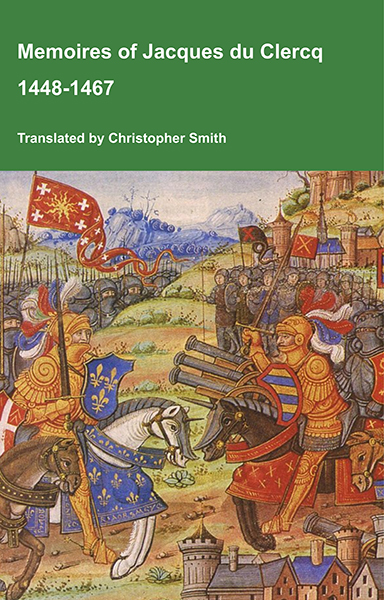
This is a translation of the 'Memoires of Jacques du Clercq', published in 1823 in two volumes, edited by Frederic, Baron de Reissenberg. In his introduction Reissenberg writes: 'Jacques du Clercq tells us that he was born in 1424, and that he was a licentiate in law and a counsellor to Philip the Good, Duke of Burgundy, in the castellany of Douai, Lille, and Orchies. It appears that he established his residence at Arras. In 1446, he married the daughter of Baldwin de la Lacherie, a gentleman who lived in Lille. We read in the fifth book of his Memoirs that his father, also named Jacques du Clercq, had married a lady of the Le Camelin family, from Compiègne. His ancestors, always attached to the counts of Flanders, had constantly served them, whether in their councils or in their armies.' The Memoires cover a period of nineteen years beginning in in 1448, ending in in 1467. It appears that the author had intended to extend the Memoirs beyond that date; no doubt illness or death prevented him from carrying out this plan. As Reissenberg writes the 'merit of this work lies in the simplicity of its narrative, in its tone of good faith, and in a certain air of frankness which naturally wins the reader’s confidence.' Du Clercq ranges from events of national and international importance, including events of the Wars of the Roses in England, to simple, everyday local events such as marriages, robberies, murders, trials and deaths, including that of his own father in Book 5; one of his last entries.
Available at Amazon in eBook and Paperback format.
Around 1319 [his daughter] Joan Burghesh Baroness Mohun was born to Bartholomew "The Elder" Burghesh 1st Baron Burghesh [aged 32] and [his wife] Elizabeth Verdun Baroness Burghesh [aged 19] at Burwash. She married in or before 1357 her fifth cousin John Mohun 2nd Baron Mohun of Dunster and had issue.
On 27th May 1320 [his brother] Bishop Henry Burghesh [aged 28] was appointed Bishop of Lincoln due to the influence of his uncle Bartholomew Badlesmere 1st Baron Badlesmere [aged 44] despite the chapter having already elected a new bishop.
On 13th October 1321 Isabella of France Queen Consort England [aged 26] was returning from Canterbury, Kent [Map] to London. She sought accommodation at Leeds Castle, Kent [Map] which was under the protection of Margaret Clare Baroness Badlesmere [aged 34] the wife of [his uncle] Bartholomew Badlesmere 1st Baron Badlesmere [aged 46]. Margaret Clare Baroness Badlesmere refused entry to the Queen killing around six of her retinue when they tried to force entry. King Edward II of England [aged 37] commenced the Siege of Leeds Castle. Once King Edward II of England gained possession of the castle, he had the garrison hanged from the battlements. His wife Margaret Clare Baroness Badlesmere, her five children (Margery Badlesmere Baroness Ros of Helmsley [aged 13], Maud Badlesmere Countess of Oxford [aged 13], Elizabeth Badlesmere Countess Northampton [aged 8], Giles Badlesmere 2nd Baron Badlesmere [aged 6] and Margaret Badlesmere Baroness Tibetot [aged 6]), and her nephew Bartholomew "The Elder" Burghesh 1st Baron Burghesh [aged 34], were imprisoned in the Tower of London [Map].
Around 1322 [his son] John Burghesh was born to Bartholomew "The Elder" Burghesh 1st Baron Burghesh [aged 35] and [his wife] Elizabeth Verdun Baroness Burghesh [aged 22] at East Worldham, Alton. He married before 1343 Maud Kerdeston and had issue.
Rymer's Fœdera Volume 2. Of the safe-conduct for the Count of Holland and his daughter Philippa.
The King, to the sheriffs, bailiffs, officials, and all his faithful subjects, both within liberties and without, to whom, etc., greeting.
Whereas we are sending our beloved and faithful servants Bartholomew de Burghersh [aged 40], constable of our castle of Dover, and William de Clinton [aged 23], to conduct the noble man William, Count of Hainaut and Zealand, and the noble maiden Philippa, his daughter, who are about to come shortly into our realm, and to lead them, together with the nobles and others of their company, to us, as has been more fully enjoined upon them by us:
We command you, and each of you, firmly enjoining that, together with the aforesaid Bartholomew and William, you meet the aforesaid Count and maiden and their household whenever and whenever you shall have been forewarned by the said Bartholomew and William, or by either of them;
And that you treat the said Count and maiden and their household honourably when they pass through the districts of your jurisdictions, and, so far as lies within you, cause them to be so treated by others; and that you be attentive, advising and assisting the said Bartholomew and William in the premises, as they shall make known to you on our behalf.
In witness whereof, etc.
To endure until the feast of the Purification of the Blessed Virgin Mary next ensuing.
Witness the King, at Clipstone, on the 28th day of November [1327].
By the King himself.
De conductu pro comite Hollandiæ & Philippa, filiâ suâ.
REX, vicecomitibus, ballivis, ministris, & omnibus fidelibus suis, tam infra libertates quam extra, ad quos, &c. salutem.
Cùm mittamus dilectos & fideles nostros, Bartholomæum de Burghersh, constabularium castri nostri Dovorr', & Willielmum de Clynton, ad conducendum nobilem virum Willielmum Hanoniæ & Selandiæ comitem, & nobilem domicellam Philippam, filiam suam, qui infra regnum nostrum in proximò sunt venturi, & ipsos, unà cum nobilibus & aliis, in comitivâ suâ, ad nos ducendum, prout eis per nos pleniùs est injunctum;
Vobis, & cuilibet vestrum, mandamus, firmiter injungentes, quòd, unà cum præfatis Bartholomæo & Willielmo, præfatis comiti & domicellæ, ac eorum familiaribus, occurratis, quotiens & quando per ipsos, Bartholomæum & Willielmum, vel eorum alterum, fueritis præmuniti:
Ipsosque, comitem & domicellam, ac familiares suos, cum per locorum vestrorum districtus transierint, honorificè pertractetis, & quantum in vobis est, ab aliis pertractari faciatis; eisdemque Bartholomeo & Willielmo, in præmissis, sitis intendentes, consulentes, & auxiliantes, prout vobis scire facient ex parte nostrâ.
In cujus, &c. usque ad festum Purificationis Beatæ Mariæ Virginis proximò futurum, duraturas.
Teste Rege, apud Clypston, xxviii. die Novembris.
Per ipsum Regem.
In or before 1328 [his son] Bartholomew "The Younger" Burghesh 2nd Baron Burghesh was born to Bartholomew "The Elder" Burghesh 1st Baron Burghesh [aged 40] and [his wife] Elizabeth Verdun Baroness Burghesh [aged 27]. He married before 10th May 1335 his fourth cousin once removed Cecily Weyland and had issue.
In 1329 Bartholomew "The Elder" Burghesh 1st Baron Burghesh [aged 42] was sent to King Philip IV of France [aged 35] to explain the reasons for the delay in King Edward III [aged 16] rendering of his homage.
Patent Rolls. 14th April 1329. Wallingford. General pardon to John Mautravers [aged 39]. [Rymer's Fœdera 2.760] By p.s.
The like to Bartholomew de Burgherssh [aged 42]. By K.
Rymer's Fœdera Volume 2. Concerning the Pardon for John Mautravers [aged 39]
The King, to all his bailiffs and faithful subjects to whom, etc., greeting.
Know that whereas, in our parliament held at Westminster in the first year of our reign, taking into account the pleasing and praiseworthy services rendered in many ways by our beloved and faithful John Mautravers to Queen Isabella of England, our most dear mother, and to ourselves, both in the cause of our said mother and of ourselves against Hugh le Despenser the Younger and others, then our enemies and rebels, as well as in other places, by the assent of the prelates, earls, barons, and magnates of our realm, we granted pardon to the same John for the suit of our peace which belonged to us, for all homicides, felonies, robberies, burglaries, larcenies, and whatsoever other transgressions committed by him against the peace of Lord Edward, late King of England, our father, and against our own peace, within our realm, for which he had been indicted, arraigned, or appealed;
And we also pardoned to the same John all manner of actions, obligations, complaints, accusations, and demands which we then had or could have had against him, because he, by armed force, had entered the castles, towns, and manors which belonged to the said Hughs [i.e. Hugh le Despenser the Elder and Younger], or to their adherents, or to our other enemies both in England and in Wales; and had caused those castles to be besieged, had taken and imprisoned men, and had carried away the goods and chattels of the said Hughs and of the said enemies found in those castles, towns, and manors, or elsewhere; and also any outlawries that might have been promulgated against him on account of these things, and we granted him our firm peace therein:
Willing that he should not, on account of the premises or any of them, by us or by our heirs, or by any of our officers whatsoever, be troubled, molested, or burdened in any way.
And since the said John did not at that time sue out our letters of such pardon, we, taking into consideration the good and laudable conduct of the same John, and also the acceptable service which he rendered us in the second year of our reign, when lately, to restrain the rebellion of certain men then opposing us, he rode with our army, wishing to provide for his security, we have pardoned to him the suit of our peace, which belongs to us, for all homicides, felonies, robberies, burglaries, and whatsoever other transgressions committed by him against our peace within our realm up to the making of these presents, for which he stands indicted, arraigned, or appealed;
And also all manner of actions, obligations, complaints, accusations, and demands which we have or may have against him, because he by armed force entered the castles, towns, and manors which belonged to the said Hughs or their adherents, or to any others lately opposing us in our said campaign, and caused those castles to be besieged, took and imprisoned men, and carried off goods and chattels found in those castles, towns, and manors, or elsewhere within our land of England and Wales; and also any outlawries that may have been promulgated against him on account of these matters, and we grant him our firm peace therein:
Willing that the aforesaid John, on account of the premises or any of them, shall not be molested or burdened in any way by us or our heirs, or by any of our officers whatsoever.
In witness whereof, etc.
Given at Wallingford, the 14th day of April [1329].
By writ of the privy seal.
He has similar letters: Bartholomew de Burghersh [aged 42] likewise.
Witness as above.
By the King himself.
De pardonatione pro Johanne de Mautravers.
Rex, omnibus ballivis & fidelibus suis, ad quos, &c. salutem.
Sciatis quod cum in parliamento nostro apud Westm' tento, anno regni nostri primo, attendentes grata & laudabilia obsequia per dilectum & fidelem nostrum Johannem Mautravers, Isabellæ Reginæ Angl', matri nostræ carissimæ, & nobis, tam in querelâ ipsius matris nostræ, & nostrâ, versus Hugonem le Despenser juniorem, ac alios, tunc inimicos & rebelles nostros, quam alibi, multipliciter impensa, de assensu prelatorum, comitum, baronum, & procerum regni nostri, pardonâssemus eidem Johanni sectam pacis nostræ, quæ ad nos pertinuit, pro homicidiis, feloniis, roberiis, burgariis, latrociniis, & aliis transgressionibus quibuscumque, per ipsum contra pacem domini E. nuper Regis Angl', patris nostri, & nostram, in regno nostro perpetratis: unde indictatus, rectatus, seu appellatus extitit;
Pardonâssemus eciam eidem Johanni omnimodas actiones, obligaciones, querelas, accusaciones, & demandas, si quas erga ipsum tunc habuimus vel habere potuimus, pro eo quod castra, villas, & maneria, quæ fuerunt predictorum Hugonis & Hugonis, seu eis adherentium, aut aliorum inimicorum nostrorum tam in Angliâ quam in Walliâ, armatâ potenciâ ingressus fuit, & eadem castra obsideri fecit, homines cepit & imprisonavit, bona & catalla, quæ fuerunt predictorum Hugonis & Hugonis, ac aliorum inimicorum nostrorum predictorum in eisdem castris, villis & maneriis, seu alibi inventa, asportavit; & utlagarias, si quæ in ipsum hiis occasionibus fuissent promulgatæ, & firmam pacem nostram ei indè concesserimus:
Nolentes quod ipse, occasione premissorum, vel alicujus eorum, per nos vel heredes nostros, seu ministros nostros quoscumque, occasionaretur, molestaretur in aliquo, seu gravaretur:
Et idem Johannes litteras nostras de hujusmodi pardonacione tunc non fuit prosecutus:
Nos, ad bonum & laudabilem gestum ipsius Johannis, necnon ad gratum servicium quod nobis fecit, anno regni nostri secundo, dum nuper ad refrenandum rebellionem quorumdam nobis tunc contrariantium, cum excercitu nostro equitabamus, consideracionem habentes; ac volentes securitati ejusdem Johannis providere, pardonavimus ei sectam pacis nostræ, quæ ad nos pertinet pro homicidiis, feloniis, roberiis, burgariis, & aliis transgressionibus quibuscumque per ipsum contra pacem nostram, usque ad confectionem presencium, in regno nostro perpetratis, unde indictatus, rectatus, seu appellatus existit;
Necnon omnimodas actiones, obligaciones, querelas, accusaciones & demandas, si quas erga ipsum habemus vel habere poterimus, pro eo quod castra, villas, maneria, quæ fuerunt predictorum Hugonis & Hugonis, seu eis adherencium, aut aliorum quorumcumque nuper contrariancium in equitatu nostro predicto, armata potenciâ ingressus fuit, & eadem castra obsideri fecit, homines cepit & imprisonavit, bona & catalla in eisdem castris, villis & maneriis, seu alibi infra terram nostram Angl' & Wallie inventa, asportavit; & utlagarias, si quæ in ipsum hiis occasionibus fuerint promulgatæ, & firmam pacem nostram ei indè concedimus:
Nolentes quod predictus Johannes occasione premissorum, vel alicujus eorum, per nos & heredes nostros, seu ministros nostros, quoscumque molestetur in aliquo, seu gravetur.
T. R. apud Walyngford, xiiii. die Aprilis.
Per breve de privato sigillo.
Consimiles litteras habet Bartholomeus de Burghersh'.
T. ut supra.
Per ipsum Regem.
On 25th January 1330 Bartholomew "The Elder" Burghesh 1st Baron Burghesh [aged 43] was created 1st Baron Burghesh. [his wife] Elizabeth Verdun Baroness Burghesh [aged 30] by marriage Baroness Burghesh.
On 31st August 1330 John Mohun 1st Baron Dunster [aged 61] died. His grandson [his future son-in-law] John [aged 10] succeeded 2nd Baron Mohun of Dunster. Given his young age he became a ward of the King who sold his wardship and marriage to Bishop Henry Burghesh [aged 38] who then married him to his niece Joan Burghesh Baroness Mohun [aged 11], daugher of his brother Bartholomew "The Elder" Burghesh 1st Baron Burghesh [aged 43].
Before 10th May 1335 [his son] Bartholomew "The Younger" Burghesh 2nd Baron Burghesh [aged 7] and [his daughter-in-law] Cecily Weyland [aged 21] were married. They were fourth cousin once removed. He a great x 5 grandson of King John of England. She a great x 4 granddaughter of King John of England.
Jean de Waurin's Chronicle of England Volume 6 Books 3-6: The Wars of the Roses
Jean de Waurin was a French Chronicler, from the Artois region, who was born around 1400, and died around 1474. Waurin’s Chronicle of England, Volume 6, covering the period 1450 to 1471, from which we have selected and translated Chapters relating to the Wars of the Roses, provides a vivid, original, contemporary description of key events some of which he witnessed first-hand, some of which he was told by the key people involved with whom Waurin had a personal relationship.
Available at Amazon in eBook and Paperback format.
After October 1336 Bartholomew "The Elder" Burghesh 1st Baron Burghesh [aged 49] was appointed Warden of the Cinque Ports and Constable of Dover Castle which offices he held, with occassional interruption, to his death.
In 1337 Bartholomew "The Elder" Burghesh 1st Baron Burghesh [aged 50] was appointed Admiral of the Fleet from the mouth of the Thames westward, Constable of the Tower of London, Lord Chamberlain of the Household and Seneschal of Ponthieu.
On 4th December 1340 [his brother] Bishop Henry Burghesh [aged 48] died at Ghent [Map]. He was buried in the St Catherine Chantry at Lincoln Cathedral [Map].
Before 1343 [his son] John Burghesh [aged 20] and [his daughter-in-law] Maud Kerdeston [aged 16] were married.
On 26th August 1346 the army of King Edward III of England [aged 33] defeated the French army at the Battle of Crécy. The English army was commanded by King Edward III of England, his son Edward "Black Prince" [aged 16], Thomas Beauchamp 11th Earl Warwick [aged 33], William Bohun 1st Earl of Northampton [aged 36] and John Beauchamp 1st Baron Beauchamp Warwick [aged 30].
The English army was included: Bishop Thomas of Hatfield [aged 36], Hugh Despencer 1st Baron Despencer [aged 38], Bernard Brocas [aged 16], Thomas Felton [aged 16], James Audley [aged 28], Robert Bourchier 1st Baron Bourchier, Bartholomew "The Elder" Burghesh 1st Baron Burghesh [aged 59], Bartholomew "The Younger" Burghesh 2nd Baron Burghesh [aged 18], Reginald Cobham 1st Baron Cobham [aged 51], John Darcy 1st Baron Darcy of Knayth [aged 66], Robert Ferrers 3rd Baron Ferrers of Chartley [aged 37], Richard Scrope 1st Baron Scrope of Bolton [aged 19], William Scrope [aged 21], Stephen Scrope [aged 21], William Latimer 4th Baron Latimer of Corby [aged 16], John Lisle 2nd Baron Lisle [aged 28], Gerard Lisle 1st Baron Lisle [aged 42], Nicholas Longford [aged 61], Edward Montagu 1st Baron Montagu, Walter Paveley 4th Baron Burghesh [aged 27], Michael Poynings 1st Baron Poynings [aged 28], Robert Ufford 1st Earl Suffolk [aged 48], John de Vere 7th Earl of Oxford [aged 34], Thomas West [aged 34], John Willoughby 2nd Baron Willoughby [aged 43], John Wingfield [aged 26], Henry Percy 11th and 3rd Baron Percy [aged 25], Hugh Courtenay 2nd or 10th Earl Devon [aged 43] (possibly), Walter "Elder" Devereux [aged 37], John Devereux [aged 44], Enion Sais Brecon, John Chandos [aged 26], Richard Pembridge [aged 26] and John Sully [aged 63].
The French army suffered significant casualties. King Philip "Fortunate" VI of France [aged 52] was wounded. William de Coucy [aged 60] and his son Enguerrand 6th Lord de Coucy [aged 33] and were killed.
Charles II Count Alençon [aged 49] was killed. His son Charles [aged 9] succeeded Count Alençon.
Louis Chatillon II Count Blois I Count Chatillon was killed. His son Louis succeeded III Count Blois.
Louis Dampierre II Count Nevers I Count Flanders [aged 42] was killed. His son Louis [aged 15] succeeded III Count Nevers, II Count Flanders.
King John I of Bohemia [aged 50] was killed. His son Charles [aged 30] succeeded IV King Bohemia, Holy Roman Emperor Luxemburg. Blanche Valois Holy Roman Empress Luxemburg [aged 29] by marriage Holy Roman Empress Luxemburg.
Rudolph "Valiant" Metz I Duke Lorraine [aged 26] was killed. His son John succeeded I Duke Lorraine.
Jean IV de Harcourt [aged 39] was killed.
In or before 1347 [his son-in-law] John Grey 2nd Baron Grey [aged 30] and [his daughter] Maud Burghesh Baroness Grey Rotherfield [aged 31] were married. She by marriage Baroness Grey of Rotherfield. They were half fifth cousin once removed. He a great x 4 grandson of King Henry "Curtmantle" II of England. She a great x 5 granddaughter of King John of England.
In November 1348 [his son] Henry Burghesh [aged 34] died.
On 30th June 1349 [his son] John Burghesh [aged 27] died at Ewelme, Oxfordshire.
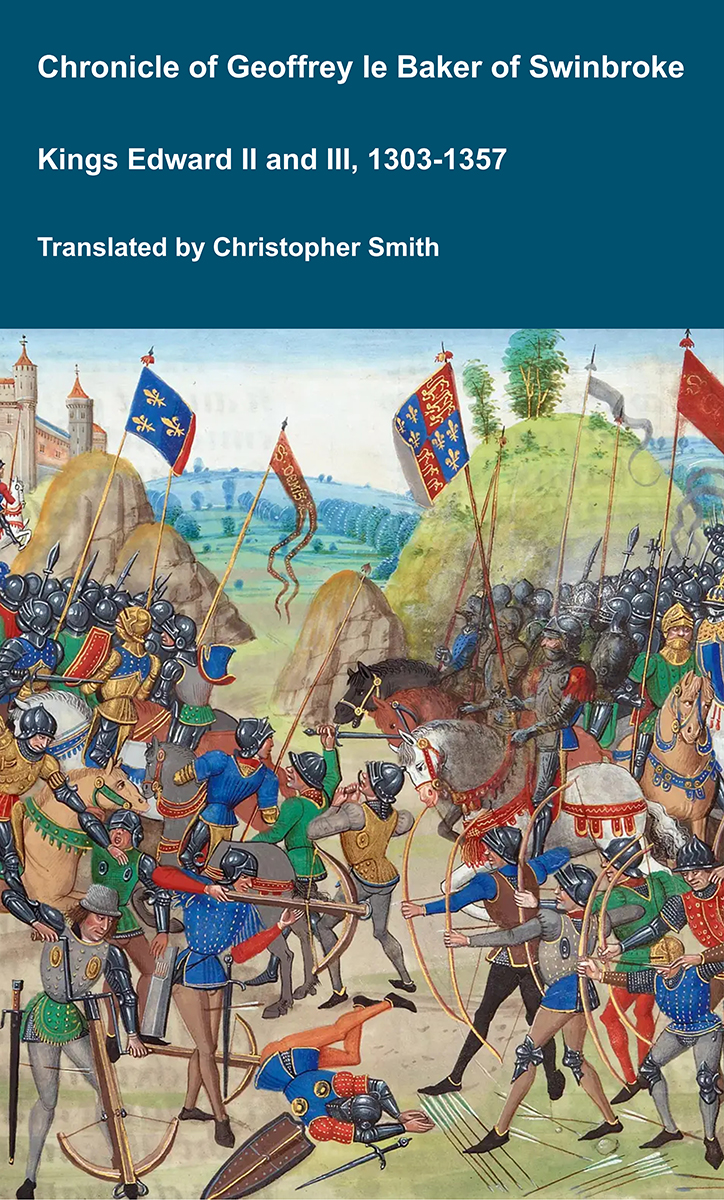 Chronicle of Geoffrey le Baker of Swinbroke. In the same year, the Earl of Lancaster,1 the Barons of Stafford [aged 48] and Greystoke [aged 28], along with the heirs of the Lords Percy [aged 28] and Neville [aged 12], as well as Lord Furnival and Bartholomew de Burghersh [aged 62], together with many others, crossed over to Gascony around the Feast of All Saints [1st November 1349], to oppose the ravaging campaigns of John of Valois, son of the tyrant of the French, who was heavily harassing that duchy.
Eodem anno comes Lancastrie et barones Staffordie et de Greistoke, item heredes dominorum de Percy et de Neville atque dominus de Fornival et Bartholomeus de Burghasshe, cum multis aliis, circa festum Omnium Sanctorum transfretaverant in Vasconiam, posituri resistenciam debacacioni Iohannis de Valesio, filii tiranni Francorum, qui ducatum illum nimis infestavit.
Note 1. The earl of Lancaster was appointed lieutenant of Poitou on the 18th October 1349. Rymer's Fœdera 3.190. Knighton. William, lord Greystock, succeeded in 1323 and died in 1358. The heirs of Percy and Nevill were Henry, afterwards 3rd lord Percy, 1352-1368, who had fought at Crécy, and was brother-in-law of Lancaster; and John Nevill, who had been present with his father at Nevile's Cross, married Percy's sister, and became 3rd lord Nevill, 1367-1388. Thomas, lord Furnival, had also fought at Crécy, and died about 1364. Both Bartholomew, lord Burghersh, and his son [aged 21], of the same name, served in this campaign.

On 3rd August 1355 Bartholomew "The Elder" Burghesh 1st Baron Burghesh [aged 68] died at Dover, Kent [Map]. He was buried in the St Catherine Chantry at Lincoln Cathedral [Map] with his father and brother. His son Bartholomew [aged 27] succeeded 2nd Baron Burghesh.
On 1st May 1360 [his former wife] Elizabeth Verdun Baroness Burghesh [aged 60] died. She was buried at Croxden Abbey, Staffordshire [Map].
Abbot John Whethamstede’s Chronicle of the Abbey of St Albans
Abbot John Whethamstede's Register aka Chronicle of his second term at the Abbey of St Albans, 1451-1461, is a remarkable text that describes his first-hand experience of the beginning of the Wars of the Roses including the First and Second Battles of St Albans, 1455 and 1461, respectively, their cause, and their consequences, not least on the Abbey itself. His text also includes Loveday, Blore Heath, Northampton, the Act of Accord, Wakefield, and Towton, and ends with the Coronation of King Edward IV. In addition to the events of the Wars of the Roses, Abbot John, or his scribes who wrote the Chronicle, include details in the life of the Abbey such as charters, letters, land exchanges, visits by legates, and disputes, which provide a rich insight into the day-to-day life of the Abbey, and the challenges faced by its Abbot.
Available at Amazon in eBook and Paperback format.
[his daughter] Elizabeth Burghesh Countess Kildare was born to Bartholomew "The Elder" Burghesh 1st Baron Burghesh and Elizabeth Verdun Baroness Burghesh. She married her half third cousin once removed Maurice Fitzgerald 4th Earl of Kildare, son of Thomas Fitzgerald 2nd Earl of Kildare and Joan Burgh Countess Kildare, and had issue.
Bartholomew "The Elder" Burghesh 1st Baron Burghesh 
Grandfather: Gunselin Badlesmere 
mother: Maud Badlesmere Baroness Burghesh
Grandmother: Joan Fitzbernard