

Tower of London is in London.
18th February 1478 Execution of George Duke of Clarence
1483 Robert Brackenbury appointed Constable of the Tower of London
1503 Death and Funeral of Elizabeth of York
1536 Trial of Anne and George Boleyn
In 1220 Stephen Segrave [aged 49] was appointed Constable of the Tower of London.
On 23rd June 1267 Alan Zouche [aged 64] was appointed Warden of London and Constable of the Tower of London which offices he held until September.
In October 1335 Nicholas de la Beche was appointed Constable of the Tower of London.
In 1337 Bartholomew "The Elder" Burghesh 1st Baron Burghesh [aged 50] was appointed Admiral of the Fleet from the mouth of the Thames westward, Constable of the Tower of London, Lord Chamberlain of the Household and Seneschal of Ponthieu.
In 1345 John Darcy 1st Baron Darcy of Knayth [aged 65] was appointed Constable of the Tower of London.
In 1361 Richard Vache was appointed Constable of the Tower of London.
Before 1381 Thomas Morieux was appointed Constable of the Tower of London.
On 7th October 1399 Thomas Rempston was appointed Constable of the Tower of London.
In 1413 John Abrichecourt was appointed Constable of the Tower of London.
In 1420 John Holland 2nd Duke Exeter [aged 24] was appointed Constable of the Tower of London.
In 1433 Richard Woodville [aged 48] was appointed Constable of the Tower of London.
Patent Rolls. 2nd December 1461. Westminster Palace [Map]. Grant for life to the king's [aged 19] kinsman John, Earl of Worcester [aged 34], of the office of the constable of the Tower of London, with the accustomed fees.

On 17th July 1483 Robert Brackenbury was appointed Constable of the Tower of London for life. As Constable he was in direct care of The Princes in the Tower: King Edward V of England [aged 12] and his brother Richard of Shrewsbury 1st Duke of York [aged 9].
Close Rolls Edward IV Edward V Richard III 1476-1485. 9th March 1484 King Richard III of England [aged 31]. Westminster Palace [Map]. Grant for life to the king's servant Robert Brackenbury of the office of Constable of the Tower of London and £100 yearly for his wages from the issues of the manors or lordships of Wrottell, Haveryng, Boyton, Hadlegh, Raylegh and Rocheford, co Essex, and Tunbrich, Penshurste, Middleton and Merdon and the hundred of Middleton, co Kent, with arrears from 17 July last, in lieu of a grant to him by letters patent of that date surrendered. By p.s.
On 28th May 1524 William Kingston [aged 48] was appointed Constable of the Tower of London.
Wriothesley's Chronicle [1508-1562]. 2nd May 1536. ... and the same daie, about five of the clocke at nighta, Anne Bolleine [aged 35] was brought to the Towre of London by my Lord Chauncelor [aged 48]b, the Duke of Norfolke [aged 63], Mr. Secretarie [aged 51],c and Sir William Kingston [aged 60], Constable of the Tower; and when she came to the court gate,d entring in, she fell downe on her knees before the said lordes, beseeching God to helpe her as she was not giltie of her accusement,e and also desired the said lordes to beseech the Kinges grace to be good unto her, and so they left her their prisoner.f
Note a. "In the afternoon." — Stow.
Note b. Sir Thomas Audley.
Note c. Sir Thomas Cromwell, afterwards Earl of Essex.
Note d. "Towergate" in Stow.
Note e. On her arrest she was informed of the accusation of adultery.
Note f. Anne's prison-chamber was that in which she had slept the night before her coronation.

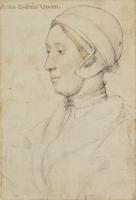
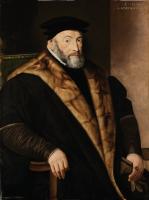


In 1540 John Gage [aged 60] was appointed Constable of the Tower of London.
In 1557 Robert Oxenbridge [aged 49] was appointed Constable of the Tower of London.
In 1685 George Legge 1st Baron Dartmouth [aged 38] was appointed Constable of the Tower of London.
Geoffrey Mandeville was appointed Constable of the Tower of London.
William Mandeville was appointed Constable of the Tower of London.

In 1397 Thomas Beauchamp 12th Earl Warwick [aged 58] was imprisoned at Beauchamp Tower, Tower of London [Map] during the Lords Appellant.
On 12th May 1537 Abbot Adam Sedbar [aged 35] was captured. He was imprisoned in the Beauchamp Tower, Tower of London [Map] where his inscribed name on the wall "ADAM SEDBAR. ABBAS JOREVALL 1537" can still be seen.
On 26th February 1563 Arthur Pole of Lordington in Sussex [aged 32] was found guilty of treason. He was imprisoned in the Beauchamp Tower [Map], where an inscription can be found that reads: "Deo Servire / Penitentiam Inire / Fato Obedire / Regnare Est / A Poole / 1564 / IHS" ("To be subject to God, to enter upon penance, to be obedient to fate, is to reign, A Poole, 1564, Jesus").

Around 1821. Frederick Nash [aged 39]. "Inscriptions in the Prison Room, Beauchamp Tower, Tower of London [Map].
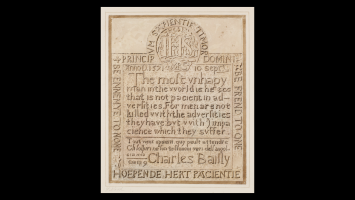
Around 1821. Frederick Nash [aged 39]. "Inscriptions in the Prison Room, Beauchamp Tower, Tower of London [Map].

Around 1821. Frederick Nash [aged 39]. "Inscriptions in Prison Room, Beauchamp Tower, Tower of London [Map]", probably by John Dudley 1st Duke Northumberland.
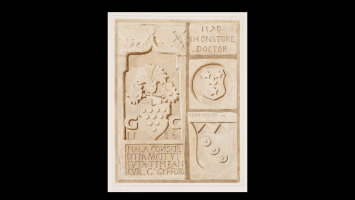
Around 1821. Frederick Nash [aged 39]. "Inscriptions in Prison Room, Beauchamp Tower, Tower of London [Map]".
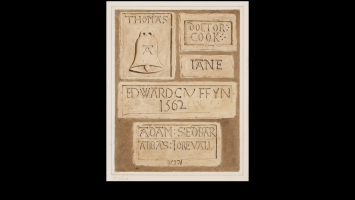
Around 1821. Frederick Nash [aged 39]. "Inscriptions in the Prison Room, Beauchamp Tower, Tower of London [Map].

Around 1821. Frederick Nash [aged 39]. "Entrance under the Bloody Tower, Tower of London [Map]".

6th March 1821. Frederick Nash [aged 39]. "Bloody Tower, Tower of London [Map].

28th May 1821. Frederick Nash [aged 39]. "View of the Bloody Tower, Tower of London [Map]".

1898. John Benjamin Stone [aged 59]. Photograph of the Bloody Tower [Map], Wakefield Tower [Map], Traitor's Gate [Map] and St Thomas's Tower [Map] at the Tower of London.
On 18th February 1478 George York 1st Duke of Clarence [aged 28] was drowned in a butt of wine (Malmsey) wine in the Bowyer Tower in the Tower of London [Map]. "in a butt of Malmsey wine" may refer to 1. a butt full of Malmsey wine or 2. a butt that once contained Malmsey wine that was subsequently re-used for another purpose such as washing or bathing.
William Hussey [aged 35] conducted the impeachment of the Duke of Clarence for treason.
Richard, Duke of Gloucester [aged 25] succeeded 2nd Earl Richmond.
The only other person known to have been executed, or ritually killed, by drowning in a butt of wine is Muirchertach mac Muiredaig High King of Ireland (as reported by the Annals of Ulster) in his case at Newgrange Passage Tomb [Map].

Around 1821. Frederick Nash [aged 39]. "Bowyer Tower, Tower of London [Map].
Samuel Pepys' Diary. 4th March 1669. Up, and a while at the office, but thinking to have Mr. Povy's [aged 55] business to-day at the Committee for Tangier, I left the Board and away to White Hall, where in the first court I did meet Sir Jeremy Smith, who did tell me that Sir W. Coventry [aged 41] was just now sent to the Tower, about the business of his challenging the Duke of Buckingham [aged 41], and so was also Harry Saville [aged 27] to the Gate-house; which, as [he is] a gentleman, and of the Duke of York's [aged 35] bedchamber, I heard afterwards that the Duke of York is mightily incensed at, and do appear very high to the King [aged 38] that he might not be sent thither, but to the Tower [Map], this being done only in contempt to him. This news of Sir W. Coventry did strike me to the heart, and with reason, for by this and my Lord of Ormond's [aged 58] business, I do doubt that the Duke of Buckingham will be so flushed, that he will not stop at any thing, but be forced to do any thing now, as thinking it not safe to end here; and, Sir W. Coventry being gone, the King will have never a good counsellor, nor the Duke of York any sure friend to stick to him; nor any good man will be left to advise what is good. This, therefore, do heartily trouble me as any thing that ever I heard. So up into the House, and met with several people; but the Committee did not meet; and the whole House I find full of this business of Sir W. Coventry's, and most men very sensible of the cause and effects of it. So, meeting with my Lord Bellassis [aged 54], he told me the particulars of this matter; that it arises about a quarrel which Sir W. Coventry had with the Duke of Buckingham about a design between the Duke and Sir Robert Howard, to bring him into a play at the King's house, which W. Coventry not enduring, did by H. Saville send a letter to the Duke of Buckingham, that he had a desire to speak with him. Upon which, the Duke of Buckingham did bid Holmes [aged 47], his champion ever since my Lord Shrewsbury's business1, go to him to know the business; but H. Saville would not tell it to any but himself, and therefore did go presently to the Duke of Buckingham, and told him that his uncle Coventry was a person of honour, and was sensible of his Grace's liberty taken of abusing him, and that he had a desire of satisfaction, and would fight with him. But that here they were interrupted by my Lord Chamberlain's [aged 67] coming in, who was commanded to go to bid the Duke of Buckingham to come to the King, Holmes having discovered it. He told me that the King did last night, at the Council, ask the Duke of Buckingham, upon his honour, whether he had received any challenge from W. Coventry? which he confessed that he had; and then the King asking W. Coventry, he told him that he did not owne what the Duke of Buckingham had said, though it was not fit for him to give him a direct contradiction. But, being by the King put upon declaring, upon his honour, the matter, he answered that he had understood that many hard questions had upon this business been moved to some lawyers, and that therefore he was unwilling to declare any thing that might, from his own mouth, render him obnoxious to his Majesty's displeasure, and, therefore, prayed to be excused: which the King did think fit to interpret to be a confession, and so gave warrant that night for his commitment to the Tower. Being very much troubled at this, I away by coach homewards, and directly to the Tower, where I find him in one Mr. Bennet's house, son to Major Bayly, one of the Officers of the Ordnance, in the Bricke Tower [Map]2 where I find him busy with my Lord Halifax [aged 35] and his brother [aged 50]; so I would not stay to interrupt them, but only to give him comfort, and offer my service to him, which he kindly and cheerfully received, only owning his being troubled for the King his master's displeasure, which, I suppose, is the ordinary form and will of persons in this condition. And so I parted, with great content, that I had so earlily seen him there; and so going out, did meet Sir Jer. Smith going to meet me, who had newly been with Sir W. Coventry. And so he and I by water to Redriffe [Map], and so walked to Deptford, Kent [Map], where I have not been, I think, these twelve months: and there to the Treasurer's house, where the Duke of York is, and his Duchess [aged 31]; and there we find them at dinner in the great room, unhung; and there was with them my Lady Duchess of Monmouth, the Countess of Falmouth [aged 24], Castlemayne [aged 28], Henrietta Hide [aged 23] (my Lady Hinchingbroke's [aged 24] sister), and my Lady Peterborough [aged 47]. And after dinner Sir Jer. Smith and I were invited down to dinner with some of the Maids of Honour, namely, Mrs. Ogle [aged 17], Blake [aged 16], and Howard [aged 18], which did me good to have the honour to dine with, and look on; and the Mother of the Maids, and Mrs. Howard [aged 43], the mother of the Maid of Honour of that name, and the Duke's housekeeper here. Here was also Monsieur Blancfort [aged 28], Sir Richard Powell, Colonel Villers [aged 48], Sir Jonathan Trelawny [aged 46], and others. And here drank most excellent, and great variety, and plenty of wines, more than I have drank, at once, these seven years, but yet did me no great hurt. Having dined and very merry, and understanding by Blancfort how angry the Duke of York was, about their offering to send Saville to the Gate-house, among the rogues; and then, observing how this company, both the ladies and all, are of a gang, and did drink a health to the union of the two brothers, and talking of others as their enemies, they parted, and so we up; and there I did find the Duke of York and Duchess, with all the great ladies, sitting upon a carpet, on the ground, there being no chairs, playing at "I love my love with an A, because he is so and so: and I hate him with an A, because of this and that:" and some of them, but particularly the Duchess herself, and my Baroness Castlemayne, were very witty. This done, they took barge, and I with Sir J. Smith to Captain Cox's; and there to talk, and left them and other company to drink; while I slunk out to Bagwell's; and there saw her, and her mother, and our late maid Nell, who cried for joy to see me, but I had no time for pleasure then nor could stay, but after drinking I back to the yard, having a month's mind para have had a bout with Nell, which I believe I could have had, and may another time.
Note 1. Charles II wrote to his sister [aged 24] (Henrietta, Duchess of Orléans), on March 7th, 1669: "I am not sorry that Sir Will. Coventry has given me this good occasion by sending my Lord of Buckingham a challenge to turne him out of the Councill. I do intend to turn him allso out of the Treasury. The truth of it is, he has been a troublesome man in both places and I am well rid of him" (Julia Cartwright's "Madame", 1894, p. 283).
Note 2. The Brick Tower [Map] stands on the northern wall, a little to the west of Martin tower, with which it communicates by a secret passage. It was the residence of the Master of the Ordnance, and Raleigh was lodged here for a time.

Around 1821. Frederick Nash [aged 39]. "Inside the Byward Tower, Tower of London [Map].

Around 1821. Frederick Nash [aged 39]. "Byward Tower, Tower of London [Map]".

1898. John Benjamin Stone [aged 59]. Photograph of the Byward Tower, Tower of London [Map].

1898. John Benjamin Stone [aged 59]. Photograph of the Devereux Tower, Tower of London [Map].
Samuel Pepys' Diary. 23rd February 1663. Thence to my Lord Sandwich [aged 37], who though he has been abroad again two or three days is falling ill again, and is let blood this morning, though I hope it is only a great cold that he has got. It was a great trouble to me (and I had great apprehensions of it) that my Lord desired me to go to Westminster Hall [Map], to the Parliament-house door, about business; and to Sir Wm. Wheeler [aged 52], which I told him I would do, but durst not go for fear of being taken by these rogues; but was forced to go to White Hall and take boat, and so land below the Tower at the Iron-gate [Map]; and so the back way over Little Tower Hill [Map]; and with my cloak over my face, took one of the watermen along with me, and staid behind a wall in the New-buildings behind our garden, while he went to see whether any body stood within the Merchants' Gate, under which we pass to go into our garden, and there standing but a little dirty boy before the gate, did make me quake and sweat to think he might be a Trepan1. But there was nobody, and so I got safe into the garden, and coming to open my office door, something behind it fell in the opening, which made me start. So that God knows in what a sad condition I should be in if I were truly in the condition that many a poor man is for debt: and therefore ought to bless God that I have no such reall reason, and to endeavour to keep myself, by my good deportment and good husbandry, out of any such condition.
Note 1. Trickster.


In 1664 Samuel Martin worked at the Ordnance Office, Tower of London.
The Red Bulwarke, Tower of London [Map], or The Bulwarke Gate, was a brick extension to the entrance of the Tower of London [Map] built during the reign of King Edward IV of England. It is now longer extant being demolished before 1668.
Annales of England by John Stow. 28th January 1547. Edward [aged 9] the first borne at Hampton court [Map] (by the decease of k. Henry [aged 55] his father) began his raigne the 28 of January, and was proclaimed k. of England, France and Ireland, defender of the faith, and of the churches of England and also of Ireland the supreme head immedlatly in earth under God, & on the last day of January, in the yere of Christ after the Church of England 1546 but after the accompt of them that begin the yere at Christmas 1547 being then of the age of nine yéeres. And the same day in the afternoone the saide young king came to the tower of London [Map] from Hertford, and rode into the City at Aldgate, and so along the wall by the crossed Friars [Map] to the Tower hill, & entred at the red bulwarke [Map], where be was received by sir John Gage [aged 67] constable of the tower, and the lieutenant on horseback, the Earle of Hertford [aged 47] riding before the king, and sir Anthony Browne [aged 47] riding after him: and on the bridge next the warde gate, the archbishop of Canterbury [aged 57], the lorde Chancellor [aged 41], with other great lords of the Councell received him, and so brought him to his chamber of pretence, there they were sworne to his majesty.
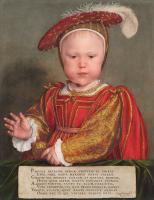
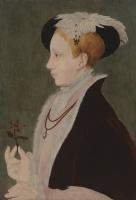


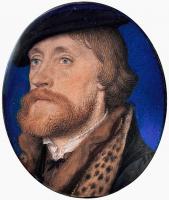

Around 1821. Frederick Nash [aged 39]. "Inscription inside the Salt Tower, Tower of London [Map].

1898. John Benjamin Stone [aged 59]. Photograph of the Salt Tower, Tower of London [Map].
1898. John Benjamin Stone [aged 59]. Photograph of the Bloody Tower [Map], Wakefield Tower [Map], Traitor's Gate [Map] and St Thomas's Tower [Map] at the Tower of London.
1898. John Benjamin Stone [aged 59]. Photograph of the Bloody Tower [Map], Wakefield Tower [Map], Traitor's Gate [Map] and St Thomas's Tower [Map] at the Tower of London.
On 21st May 1471 Henry VI [aged 49] died (possibly murdered), traditionally in the Wakefield Tower [Map] in the Tower of London. He was buried at Altar, St George's Chapel, Windsor Castle [Map].
The descriptions of his death may be categorised as follows:
1. Those that describe his death as natural:
History of the Arrival of Edward IV: "that, of pure displeasure, and melencoly, he [King Henry VI] dyed the xxiij. day of the monithe of May"
A Brief Latin Chronicle: "the former king, was returned to the Tower of London, and dying there happily on the Eve of the Ascension of the Lord."
MS. Arundel, (College of Arms) No. 5, fol. 171, vº: "Henry, recently King, is laid to rest in the Tower of London, and, sleeping on the eve [22nd May 1471] of the Ascension, there happily dying"
2. Those that describe his death as unnatural, without providing more information:
Croyland Chronicle: "I would pass over in silence the fact that at this period king Henry was found dead in the Tower of London; may God spare and grant time for repentance to the person, whoever be was, who thus dared to lay sacrilegious hands upon the Lord's anointed!"
MS. Cotton. Otho, B. xiv. fol. 221, v: "King Henry the Sixth is stabbed and killed in the Tower of London."
3. Those that describe his being killed by Richard, Duke of Gloucester, the future King Richard III:
Chronicle in Collectanea by John Leland: "was King Henry, being Prisoner yn the Tourre, put to Deth: the Duke of Glocestre, and dyverse other, beyng there that Night."
Memoirs of Philip de Commines: "the Duke of Gloucester (who was King Edward's brother, and afterwards called King Richard) slew this poor King Henry with his own hand, or caused him to be carried into some private place, and stood by while he was killed."
Warkworth's Chronicle: "Kynge Herry, beynge inwarde in presone in the Toure of Londone, was putt to dethe, the xxj day of Maij, on a tywesday nyght, betwyx xj and xij of the cloke, beynge thenne at the Toure the Duke of Gloucetre, brothere to Kynge Edwarde, and many other;"
Chronicle of Robert Fabyan: "Of ye deth of this pryne dyuerse tales were tolde: but the moost comon fame wente, that he was stykked with a dagger, by the handes of the duke of Glouceter".
MS. London Chronicle. Bibl. Cotton. Vitell. A. xvI. fol. 133, rº: "Kyng Henry was brought from the tower thrugh Chepe unto Powlys upon a bere, and abowte the beere more glevys and stavys than torches; who was slayne, as it was said, by the Duke of Glowcetir; but howe he was deed [nobody knewe, but] thedir he was brought deed".
1898. John Benjamin Stone [aged 59]. Photograph of the Bloody Tower [Map], Wakefield Tower [Map], Traitor's Gate [Map] and St Thomas's Tower [Map] at the Tower of London.
The Newgate Calendar Volume 2. His lordfhip's place of confinement was the round tower [Map], near the draw-bridge. Two wardens conftantly attended in his room, and one waited at the door. At the bottom of the ftairs two foldiers were placed, with their bayonets fixed; and a third was flationcd on the draw-bridge: and the gates of the Tower were fhut an hour before the ufual time, on occafion of this imprifonment.
Mrs. Clifford now brought her four children to London, and taking lodgings in Tower-ftreet, fhe fent meffages to his lordfhip feveral times in the day, and anfwers being fent, the communication became troublefome; fo that their meflages were forbid to pafs more than once in the day.
While in the Tower, lord Ferrers lived in a regular manner. His breakfaft confitted of a muffin, and a bafon of tea, with a fpoonful of brandy in it. After dinner and fupper, he drank a pint of wine mixed with water. His behaviour in general was very decent, but he fometimes exhibited evident proofs of difcompofure of mind. His natural children were permitted to be with him fome times but Mrs. Clifford was denied admitrance, after repeated applications.
Preparations being made for lord Ferrers strial, and lord Henley (the Chancellor) being created high fteward on the occafion, the trial came on before the Houfe of Peers, in Weftminfter-hall, on the 16th of April, 1760. The proof of the fact was fufficiently clear: but lord Ferrers crofs-examined the witneffes in fuch a manner as gave fufficient proof of the fanity of his mind, of which fome doubts had been entertained.
Being found guilty by the Unanimous voice of the peers of Great-Britain, the lord high fteward paffed fentence that he fhould be executed on the 21ft of April; but his fentence was refpited to the 5th of May.

Around 1821. Frederick Nash [aged 39]. "Inside the Well Tower, Tower of London [Map].
Henry Machyn's Diary. 1st October 1561. The furst day of October was a fyre whet-in [within] the Towre of London be-yond the Whyt Towre [Map].
John Evelyn's Diary. 7th September 1666. I went this morning on foot from Whitehall [Map] as far as London Bridge [Map], through the late Fleet Street [Map], Ludgate hill by St. Paul's [Map], Cheapside [Map], Exchange, Bishops-gate [Map], Aldersgate Ward, and out to Moorfields [Map], thence through Cornhill [Map], etc., with extraordinary difficulty, clambering over heaps of yet smoking rubbish, and frequently mistaking where I was; the ground under my feet so hot, that it even burnt the soles of my shoes. In the meantime, his Majesty [aged 36] got to the Tower [Map] by water, to demolish the houses about the graff, which, being built entirely about it, had they taken fire and attacked the White Tower [Map], where the magazine of powder lay, would undoubtedly not only have beaten down and destroyed all the bridge, but sunk and torn the vessels in the river, and rendered the demolition beyond all expression for several miles about the country.
The Antiquarian Repertory. The Sunday [12th February 1503] next following the corps [deceased] was removed from her Chamber to the Chappell [Map] in manner that followeth.
First there was The Abbott of Westminster [aged 39] in pontificalibus with the Dean of the kings Chappell [aged 63] and the whole company of the same fowr knights bearing the Canapye with great Number of Gentlemen which went two and two together on every syde of the prossion great Number of torches brening borne by the Kings and the Queens servants after them the Officers of Armes and the Greatest estates and other Lords their present layd their hands to the Corps the Lady Elizabeth Stafford [aged 24] was that day principall Mourner and all the other Laides followed her two and two together in such most sadd and simplest Clothing that they had on their heads thredden kierchiefs hanging on their shoulders and close under their Chins and this daily until their slopps mantells hoodes and paris were made and Ordyned. And when the Corps was sett under the hearse in the Chapell [Map] Coverd with a rich Cloth of black velvet with a Crosse of Cloth of Gold. And an Officer of Armes in an high voice said for Queen EHzebeth soule and all Xtn souls Pater noster and every ...... and atoremus before the Collect Aminabus inlykewise.
That night and every Night following was ordyned a goodly watch both of men and Gentlewomen at the lest iiij gentlewomen ij [2] officers of Armes and vij yeomen and grooms. The gentlewomen were relieved with vj [6] ladies which continually did knele about the Corps.
Then the kings Chaplin began and Redd the sawter that done to the laudes and Commendations.
After that the Deane of the kings Chappell all the nobles officers of Armes other gentle and honest persons went to the great chamber for the Ladys to the Masse of Requiem.
Then was the Lady Catherin [aged 23] sister of the noble Queene Cheif mourner led by the Earle of Surry [aged 60] and Earle of Essex her train borne by the Lady Elizabeth Stafford accompanied also with all the other Laidies and Gentlewomen of the Court And when they were comen to the quier the foresaid vj Laides gave roome to there betters in tyme masse was done after which they continued their watch.
The Cheif Mourner kneled at the heade alone then an officer of Arms began for the Queene &c And so began the masse songen by the Abbot of Westminster at the Offringe the Lady was led by ij [2] of the greatest Estates there present and the lest gave her the offring having before her the Chamberlain and the Officers of Arms passing always by the Corps did their obeysance as before.
Then offered the other six Laides before any Estate ij [2] and ij [2] together then the greatest estates and all the Laides and Gentlewomen then all the other Laides and knights and squires with other Gentlemen. So this order as before was dayly kept as long as she was in the Tower every day in pontificalibus by a Bishop or an Abbott at the least as the next day by the Abbott of Barmsey The iij [3] by the Abbott Albones The iiijth by the Abbott of Winchcomb The vth by the Abbott of Towerhill The vjth by the Abbott of Stratford The vijth day there was iij [3] solempne masses. The first of our lady sungen by the Abbott of Redyng att that masse offered a piece of Gold of xld for the masse pennye the principle Mourner and no other person The second masse songen by the bishop Landaffe and likewise at the masse none offered but she and then offered a piece of Gold of 5s. The iijd Masse songen by the bishop of Norwigge and att that Masse she offered a Noble Then offered the Laides and the Nobles as before The viijth day the service was done by the Bishop of Bangor The ixth day by the Bishop of Exeter the xii day by the Bishop of Lincolne.


The Antiquarian Repertory. And after that the corps was could the Serjeant of the Chandry with such officers that belong to that Office had the Charge of baumeing with other serimonies theirto belonging and were allowed xl [40] ells of lynning holland Cloth of Ell bredth with there gomes baumes Spices sweet wines and other as thereto belongeth and was thereto according.
Item after that she was sered by the Kings Plumer Closed her in lead with an Epitaph of lead what she was and then all that was Chested in borcle sufficiently Coverd for bearing of the same which was covered with white and black velvet with a Crosse of white damaske.
Item in the quire of the Chappell of the Tower [Map] was ordeyned a hearse of fine prncipills with Renninge lights about the Church and all the windowes rayled about a good heighte furnish'd with burninge tapers and also hanged with black Cloth furnish'd with scochins of her Armes.

Around 1821. Frederick Nash [aged 39]. "Chapel in the White Tower [Map]".
The King's Hall [Map] at the Tower of London was located on the first floor of the White Tower.
On 15th May 1536 Queen Anne Boleyn [aged 35] tried at the King's Hall in the Tower of London [Map].
Thomas Howard 3rd Duke of Norfolk [aged 63] was appointed Lord High Steward and presided. Henry Howard Earl of Surrey [aged 20] attended. Henry Pole 1st Baron Montagu [aged 44] was one of the judges. Elizabeth Browne Countess of Worcester [aged 34] was the principal witness.
The jurors were:
Charles Brandon 1st Duke of Suffolk [aged 52].
Edward Clinton 1st Earl Lincoln [aged 24].
Thomas Fiennes 9th Baron Dacre Gilsland [aged 21].
George Hastings 1st Earl Huntingdon [aged 49].
Thomas Manners 1st Earl of Rutland [aged 44].
John Mordaunt 1st Baron Mordaunt [aged 56].
Ralph Neville 4th Earl of Westmoreland [aged 38].
Henry Parker 11th Baron Marshal 10th Baron Morley [aged 55].
Edward Stanley 3rd Earl of Derby [aged 27].
Thomas Stanley 2nd Baron Monteagle [aged 28].
John de Vere 15th Earl of Oxford [aged 65].
Thomas Wentworth 1st Baron Wentworth [aged 35].
Henry Somerset 2nd Earl of Worcester [aged 40].
Henry Percy 5th Earl of Northumberland.
Thomas Burgh 7th Baron Cobham 5th Baron Strabolgi 1st Baron Burgh [aged 48].
Henry Courtenay 1st Marquess Exeter [aged 40].
William Fitzalan 11th or 18th Earl of Arundel [aged 60].
Henry Fitzalan 12th or 19th Earl of Arundel [aged 24].
Thomas Audley 1st Baron Audley Walden [aged 48].
Edward Powers Lord Powers.
William Sandys 1st Baron Sandys of the Vyne [aged 66].
Thomas Ware.
Andrew Windsor 1st Baron Windsor [aged 69].
George Brooke 9th Baron Cobham [aged 39].
She was found guilty and sentenced to be beheaded. John Spelman [aged 56] signed the death warrant.
After Anne's trial her brother George Boleyn Viscount Rochford [aged 33] was also tried and found guilty.