

Admiral is in Navy.

In 1745 Admiral Edward Vernon [aged 60] was appointed Admiral.
In 1778 Augustus Keppel 1st Viscount Keppel [aged 52] was appointed Admiral.


On 14th May 1857 Admiral George Francis Seymour-Conway [aged 69] was appointed Admiral.
In 1865 Henry John Chetwynd-Talbot 3rd Earl Talbot 18th Earl of Shrewsbury [aged 61] was appointed Admiral.


In 1386 Richard Fitzalan 9th Earl of Surrey 4th or 11th Earl of Arundel [aged 40] was appointed Admiral England.
In 1447 William "Jackanapes" de la Pole 1st Duke of Suffolk [aged 50] was appointed Admiral England.
In 1666 Admiral Jeremy Smith was appointed Admiral of the Blue.
John Evelyn's Diary. 31st May 1672. I received another command to repair to the seaside; so I went to Rochester, Kent [Map], where I found many wounded, sick, and prisoners, newly put on shore after the engagement on the 28th, in which the Earl of Sandwich [deceased], that incomparable person and my particular friend, and divers more whom I loved, were lost. My Lord (who was Admiral of the Blue) was in the "Prince", which was burnt, one of the best men-of-war that ever spread canvas on the sea. There were lost with this brave man, a son of Sir Charles Cotterell [aged 57] (Master of the Ceremonies), and a son [aged 32] of Sir Charles Harbord (his Majesty's [aged 42] Surveyor-General), two valiant and most accomplished youths, full of virtue and courage, who might have saved themselves; but chose to perish with my Lord, whom they honoured and loved above their own lives.


On 8th February 1693 Admiral David Mitchell [aged 43] was appointed Rear-Admiral of the Blue.

In 1805 Admiral Peter Rainier [aged 63] was promoted to Admiral of the Blue in the celebratory promotions following the British victory at the Battle of Trafalgar.
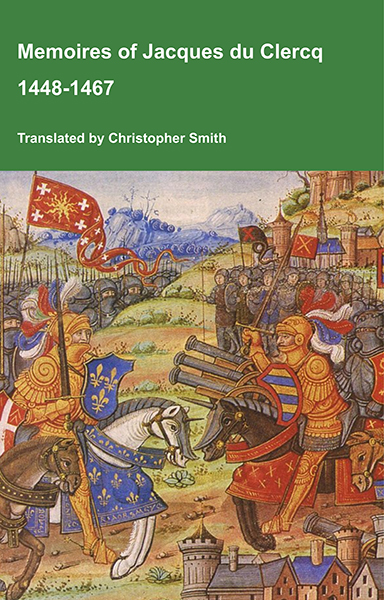
This is a translation of the 'Memoires of Jacques du Clercq', published in 1823 in two volumes, edited by Frederic, Baron de Reissenberg. In his introduction Reissenberg writes: 'Jacques du Clercq tells us that he was born in 1424, and that he was a licentiate in law and a counsellor to Philip the Good, Duke of Burgundy, in the castellany of Douai, Lille, and Orchies. It appears that he established his residence at Arras. In 1446, he married the daughter of Baldwin de la Lacherie, a gentleman who lived in Lille. We read in the fifth book of his Memoirs that his father, also named Jacques du Clercq, had married a lady of the Le Camelin family, from Compiègne. His ancestors, always attached to the counts of Flanders, had constantly served them, whether in their councils or in their armies.' The Memoires cover a period of nineteen years beginning in in 1448, ending in in 1467. It appears that the author had intended to extend the Memoirs beyond that date; no doubt illness or death prevented him from carrying out this plan. As Reissenberg writes the 'merit of this work lies in the simplicity of its narrative, in its tone of good faith, and in a certain air of frankness which naturally wins the reader’s confidence.' Du Clercq ranges from events of national and international importance, including events of the Wars of the Roses in England, to simple, everyday local events such as marriages, robberies, murders, trials and deaths, including that of his own father in Book 5; one of his last entries.
Available at Amazon in eBook and Paperback format.
On 31st July 1810 Philip Yorke 3rd Earl of Hardwicke [aged 53] was appointed Admiral of the Blue.


On 7th November 1860 Augustus Clifford 1st Baronet [aged 72] was appointed Admiral of the Blue.
In 1310 Simon Montagu 1st Baron Montagu [aged 60] was appointed Admiral of the Fleet.
In 1337 Bartholomew "The Elder" Burghesh 1st Baron Burghesh [aged 50] was appointed Admiral of the Fleet from the mouth of the Thames westward, Constable of the Tower of London, Lord Chamberlain of the Household and Seneschal of Ponthieu.
In 1403 Thomas Beaufort 1st Duke Exeter [aged 25] was appointed Admiral of the Fleet.
In 1417 Walter Hungerford 1st Baron Hungerford [aged 38] was appointed Admiral of the Fleet.
In May 1418 Edward Courtenay [aged 33] was appointed Admiral of the Fleet.
Before 1683 George Legge 1st Baron Dartmouth [aged 35] was appointed Admiral of the Fleet.
In February 1397 John Beaufort 1st Marquess Somerset and Dorset [aged 24] was appointed Admiral of the Irish Fleet, Constable of Dover Castle and Warden of the Cinque Ports.
In 1294 John Botetort 1st Baron Botetort [aged 29] was appointed Admiral of the North.
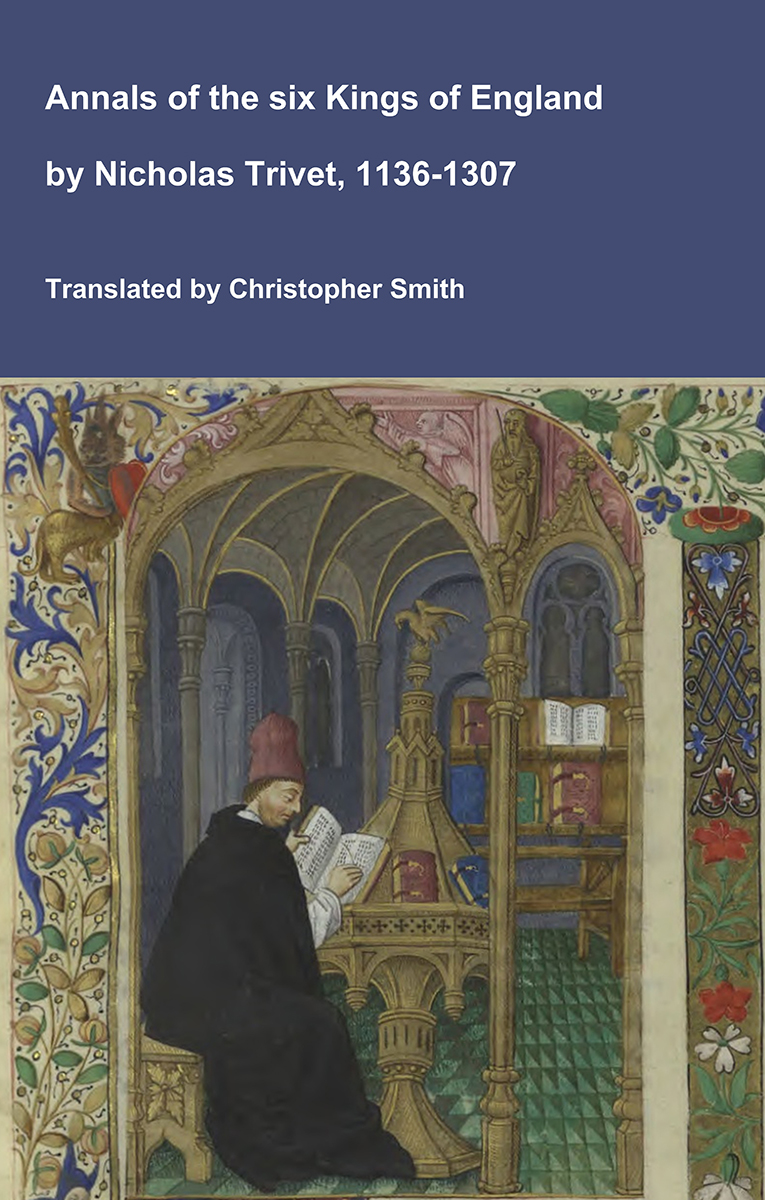
Annals of the six Kings of England by Nicholas Trivet
Translation of the Annals of the Six Kings of England by that traces the rise and rule of the Angevin aka Plantagenet dynasty from the mid-12th to early 14th century. Written by the Dominican scholar Nicholas Trivet, the work offers a vivid account of English history from the reign of King Stephen through to the death of King Edward I, blending political narrative with moral reflection. Covering the reigns of six monarchs—from Stephen to Edward I—the chronicle explores royal authority, rebellion, war, and the shifting balance between crown, church, and nobility. Trivet provides detailed insight into defining moments such as baronial conflicts, Anglo-French rivalry, and the consolidation of royal power under Edward I, whose reign he describes with particular immediacy. The Annals combines careful year-by-year reporting with thoughtful interpretation, presenting history not merely as a sequence of events but as a moral and political lesson. Ideal for readers interested in medieval history, kingship, and the origins of the English state, this chronicle remains a valuable and accessible window into the turbulent world of the Plantagenet kings.
Available at Amazon in eBook and Paperback format.
In 1315 John Botetort 1st Baron Botetort [aged 50] was appointed Admiral of the North.
On 20th May 1388 John Beaumont 4th Baron Beaumont [aged 27] was appointed Admiral of the North.
In May 1397 John Beaufort 1st Marquess Somerset and Dorset [aged 24] was appointed Admiral of the Northern Fleet.
In 1864 Augustus Clifford 1st Baronet [aged 75] was appointed Admiral of the Red.
Chronicle of Gregory. 1405. Ande that year Syr Thomas [aged 17] the kyngys son was Amerelle of the See, and he wente unto Flaundrys and brent bothe in Cachante and in Flaundrys, ande londyd at Scluse [Map] and gaffe there to a strong sawte. Alle so he toke carrekys of Jene and brought them unto Wynchylse [Map], and they were brent thorowe mysse governaunce and moche of the goode ther ynne.
Around 1440 John Beaufort 1st Duke of Somerset [aged 37] was appointed Admiral of the Sea.

On 16th March 1666 Thomas Allin 1st Baronet [aged 54] was appointed Admiral of the White.

In 1690 Thomas Herbert 8th Earl Pembroke 5th Earl Montgomery [aged 34] was appointed First Lord of the Admiralty.
In 1693 Anthony Carey 5th Viscount Falkland [aged 36] was appointed First Lord of the Admiralty.
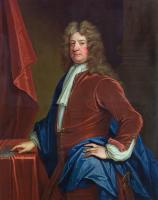
In 1710. John James Baker. Known as "Whig Junto". From www.tate.org ... This is a portrait of a political group named the Whig Junto and a Black servant, whose identity is unknown. It is the only known portrait of the Junto, which was an ideologically close-knit group of political peers who formed the leadership of the Whig party in the late seventeenth and early eighteenth centuries. The members of the group are shown gathered together on a grand terrace, while a vista onto a garden is revealed by the Black servant, who holds back a heavy velvet curtain. The grand architectural setting is imagined, and is deliberately evocative of power and status. The picture was commissioned by Edward Russell, 1st Earl of Orford [aged 57], who stands on the right, as if welcoming the company. It is not known if Orford had a Black servant in his household or whether the individual was included to emphasise Orford's wealth and social standing. At the time, Britain was profiting heavily from the trade of enslaved people from West Africa. The presence of Black servants, many of whom were enslaved, in both aristocratic and merchant households had come to symbolise property and wealth. This reflected the dehumanising view of enslaved Black people held by the British elite.
The scene conjures one of the Junto's country house meetings where, in between parliamentary sessions, policy and party strategy were formulated. From left to right the sitters round the table can be identified as Charles Spencer, 3rd Earl of Sunderland [aged 34]; Thomas Wharton, 1st Marquess of Wharton [aged 61]; John Somers, 1st Baron Somers (1C 1697) [aged 58]; Charles Montagu, 1st Earl of Halifax [aged 48]; and William Cavendish, 2nd Duke of Devonshire [aged 38]. The lavish surroundings probably represent Orford's house, Chippenham, where Junto meetings sometimes took place. It was also ideally located for the nearby Newmarket horse races, which the members of the Junto frequently attended when parliament was not sitting.
The portrait is dated 1710, before the crushing electoral defeat of the Whigs in October of that year. It shows the political allies while in power, when Sunderland was Secretary of State, Wharton Lord Lieutenant of Ireland, Somers Lord President of the Privy Council, Devonshire Lord Steward and a member of the Privy Council, and Orford First Lord of the Admiralty. On the surface the portrait shows a relaxed gathering of fellow connoisseurs, seated round a table consulting antique medals and books of prints. Fittingly, Somers and Halifax sit at the centre of the company, holding a book and handling a medal respectively. Both were known collectors and antiquarians - Somers was one of the founders of the Whig Kit-Cat Club, a convivial drinking and dining club, but which also had a political propagandist agenda; he had also purchased the Resta collection of drawings from Italy in 1709. Halifax had a celebrated library and a collection of antique medals (sold in 1740), to which those being consulted presumably allude. Behind this exterior of cultural appreciation, however, the portrait advertises Whig policy in 1709-10, which supported the continuation of war against France in opposition to Tory calls for peace. The two visible prints are friezes from Trajan's column showing episodes from the Dacian wars, with the Roman army crossing the Danube. The viewer is invited to make parallels between the valour and victories of the Roman emperors and the current military greatness achieved for Britain by the Duke of Marlborough's campaigns. The globe, showing the Pacific, presumably alludes to Whig foreign policy ambitions beyond Europe. By defeating France in Europe, they aimed to gain commercial access to Spanish American trade routes. It reflects the competitive European colonial pursuit of new markets, including the selling of enslaved West African people to Spanish territories overseas.
John James Baker (or Backer, or Bakker) is thought to have been Flemish, from Antwerp. He was Godfrey Kneller's [aged 63] (1646-1723) long-time studio assistant and drapery painter, and this is his largest, most ambitious and complex work. The symbolic programme was presumably devised by Orford in discussion with Baker. The Duke of Devonshire was not a regular member of the Junto, although an increasingly important Whig peer, but his inclusion here is presumably because of his kinship relationship with Orford. The picture is thus a demonstration of Orford's private as well as professional networks, and also his pride and ambition. It would have been displayed at Chippenham in the newly appointed, fashionable interiors, alongside other works that Orford commissioned to advertise his public achievement and the private and professional networks that sustained his power and influence.



Anne Boleyn. Her Life as told by Lancelot de Carle's 1536 Letter.
In 1536, two weeks after the execution of Anne Boleyn, her brother George and four others, Lancelot du Carle, wrote an extraordinary letter that described Anne's life, and her trial and execution, to which he was a witness. This book presents a new translation of that letter, with additional material from other contemporary sources such as Letters, Hall's and Wriothesley's Chronicles, the pamphlets of Wynkyn the Worde, the Memorial of George Constantyne, the Portuguese Letter and the Baga de Secrets, all of which are provided in Appendices.
Available at Amazon in eBook and Paperback format.
In 1756 Richard Grenville-Temple 2nd Earl Temple [aged 44] was appointed First Lord of the Admiralty which office he held until 1757.
In 1782 Augustus Keppel 1st Viscount Keppel [aged 56] was appointed First Lord of the Admiralty.

In 1800 William Eliot 2nd Earl St Germans [aged 32] was appointed First Lord of the Admiralty.
In 1859 Edward Adolphus Seymour 12th Duke of Somerset [aged 54] was appointed First Lord of the Admiralty.
On 27th March 1905 Frederick Archibald Vaughan Campbell 3rd Earl Cawdor [aged 58] was appointed First Lord of the Admiralty.
In 1435 John Holland 2nd Duke Exeter [aged 39] was appointed Lord Admiral of all England Ireland and Aquitaine.
Close Rolls Edward IV Edward V Richard III 1476-1485. 25th July 1483. John Howard 1st Duke of Norfolk [aged 58] was appointed Lord Admiral of all England Ireland and Aquitaine. King Richard III of England [aged 30]. Westminster Palace [Map]. Grant for life to the king's kinsman Henry, duke of Norfolk, of the office of admiral of England, Ireland and Aquitaine, with certain specified powers and the accustomed fees. By p.s.
In 1673 George Carteret 1st Baronet [aged 63] was appointed Lord of the Admiralty.
From 1682 to 1684 Henry Savile [aged 40] was appointed Lord of the Admiralty.
In March 1689 Michael Wharton [aged 41] was appointed Lord of the Admiralty.
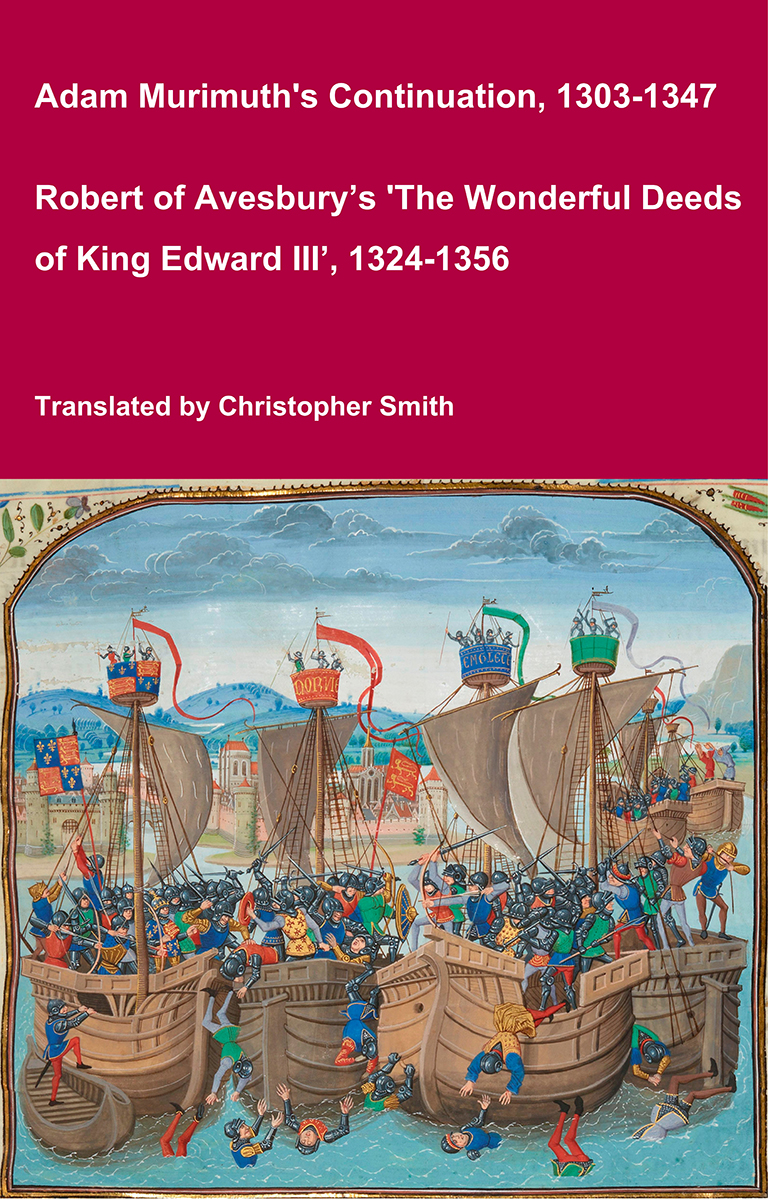
Adam Murimuth's Continuation and Robert of Avesbury’s 'The Wonderful Deeds of King Edward III'
This volume brings together two of the most important contemporary chronicles for the reign of Edward III and the opening phases of the Hundred Years’ War. Written in Latin by English clerical observers, these texts provide a vivid and authoritative window into the political, diplomatic, and military history of fourteenth-century England and its continental ambitions. Adam Murimuth Continuatio's Chronicarum continues an earlier chronicle into the mid-fourteenth century, offering concise but valuable notices on royal policy, foreign relations, and ecclesiastical affairs. Its annalistic structure makes it especially useful for establishing chronology and tracing the development of events year by year. Complementing it, Robert of Avesbury’s De gestis mirabilibus regis Edwardi tertii is a rich documentary chronicle preserving letters, treaties, and official records alongside narrative passages. It is an indispensable source for understanding Edward III’s claim to the French crown, the conduct of war, and the mechanisms of medieval diplomacy. Together, these works offer scholars, students, and enthusiasts a reliable and unembellished account of a transformative period in English and European history. Essential for anyone interested in medieval chronicles, the Hundred Years’ War, or the reign of Edward III.
Available at Amazon in eBook and Paperback format.
In 1693 Henry Killigrew [aged 41] was appointed Lord of the Admiralty.
In 1725 George Oxenden 5th Baronet [aged 30] was appointed Lord of the Admiralty.
In 1727 Thomas Lyttelton 4th Baronet [aged 41] was appointed Lord of the Admiralty in which post he served until 1741.
In 1730 Thomas Winnington [aged 33] was appointed Lord of the Admiralty.
In 1765 Charles Townshend 1st Baron Bayning [aged 35] was appointed Lord of the Admiralty which position he held until 1770.

The Times. 20th February 1891. We regret to announce that EARL BEAUCHAMP [deceased], Lord Lieutenant of Worcestershire, died suddenly yesterday at Madresfield Court, his Worcestershire seat. He was taken ill while at luncheon, after a journey to a neighbouring town, and died before medical aid could be obtained, the cause of death being heart disease. His death will be felt as a serious loss, both in the English Church and in the Conservative party. A strong and moderately "high" Churchman, he took a leading position in his own diocese and in the Church at large in the promotion and defence of Anglican interests and; though he did not come prominently before the public as a politician, he exercised for many years considerable influence in the councils of the Tory' leaders. Frederic Lygon was the second son of the fourth Earl Beauchamp by Lady Susan Caroline Eliot, daughter of the secoud earl of St. Germans. He was born in 1830, and was educated at Eton and Christ Church, Oxford. In 1852 he was elected a Fellow of All Souls, and the received tho degree of D.C.L. from his University in 1870. As the Hon. Frederick Lygon, he entered Parliament as member for Tewkesbury in 1857, for which place be sat till 1863, when be was elected for West Worcestershire. At his elder brother's death, without issue, in 1866, he succeeded to the peerage as sixth Earl. Both as a member of the House of Commons and as a peer he hold posts in Conservative Governments. In 1859 he was for a short time a Lord of the Admiralty. During the whole of Mr. Disraeli's Ministry which lasted from 1874 to 1880 he was Lord Steward of the Queen's Household. On the return of the Conservatives to power in 1885 he ras Paymaster-General of the Forces for the few months that the Government lasted, and he returned the same post when the general election put an end to Mr. Gladstone's short-lived Administration in 1886. He did not, however, remain in the Goverornent for a year, as he resigned in June, 1887. Since 1876 he had been Lord Lieutenant of Worcestershire. The deceased earl was twice married, 1st, in 1868, to Lady Mary Catharine, only daughter of the sixth Earl Stanhope (she died in 1876), and, secondly, to Lady Emily Annora Charlotte [aged 37], daughter of the third Earl Mdanvers [aged 66]. He is succeeded by his eldest son, William, Viscount Elmley, who was born in 1872.