

22nd July 1298 Battle of Falkirk
1301 Baron's Letter to the Pope
1308 Coronation of Edward II and Isabella
In 1269 Henry I King Navarre and [his mother] Blanche Capet Queen Navarre were married. She the daughter of [his grandfather] Robert Capet Count of Artois and [his grandmother] Matilda Reginar Countess Saint Pol. He the son of Theobald IV King Navarre and Margaret Bourbon Queen Consort Navarre.
On 8th April 1269 [his father] Edmund "Crouchback" Plantagenet 1st Earl of Leicester 1st Earl Lancaster and Aveline Forz 6th Countess Albemarle and Lancaster were married. She by marriage Countess Lancaster. She the daughter of William Forz 4th Earl Albemarle and Isabella Redvers 8th Countess Devon and Albemarle. He the son of [his grandfather] King Henry III of England and [his grandmother] Eleanor of Provence Queen Consort England.
On 3rd February 1276 [his father] Edmund "Crouchback" Plantagenet 1st Earl of Leicester 1st Earl Lancaster and [his mother] Blanche Capet Queen Navarre were married. She by marriage Countess Lancaster. She the daughter of [his grandfather] Robert Capet Count of Artois and [his grandmother] Matilda Reginar Countess Saint Pol. He the son of King Henry III of England and Eleanor of Provence Queen Consort England.
Around 1281 Henry Plantagenet 3rd Earl of Leicester 3rd Earl Lancaster was born to Edmund "Crouchback" Plantagenet 1st Earl of Leicester 1st Earl Lancaster and Blanche Capet Queen Navarre.
On 16th August 1284 [his brother-in-law] King Philip IV of France and [his half-sister] Joan Blois I Queen Navarre were married. She by marriage Queen Consort of France. She the daughter of Henry I King Navarre and [his mother] Blanche Capet Queen Navarre. He the son of King Philip III of France and Isabella Barcelona Queen Consort France.
On 5th October 1285 King Philip III of France died of dysentery; see Annals of Dunstable. [his brother-in-law] King Philip IV of France succeeded IV King France: Capet. [his half-sister] Joan Blois I Queen Navarre by marriage Queen Consort of France.
On 30th December 1292 Henry Plantagenet 3rd Earl of Leicester 3rd Earl Lancaster and Maud Chaworth were married. He the son of Edmund "Crouchback" Plantagenet 1st Earl of Leicester 1st Earl Lancaster and Blanche Capet Queen Navarre.
In 1294 [his brother] Thomas Plantagenet 2nd Earl of Leicester, 2nd Earl Lancaster, Earl of Salisbury and Lincoln and [his sister-in-law] Alice Lacy Countess Leicester, and Lancaster 5th Countess of Salisbury 5th Countess Lincoln were married. She the daughter of Henry Lacy 4th Earl Lincoln, Earl Salisbury and Margaret Longespée 4th Countess of Salisbury and Lincoln. He the son of [his father] Edmund "Crouchback" Plantagenet 1st Earl of Leicester 1st Earl Lancaster and [his mother] Blanche Capet Queen Navarre.
On 5th June 1296 [his father] Edmund "Crouchback" Plantagenet 1st Earl of Leicester 1st Earl Lancaster died at Bayonne. He was buried at Westminster Abbey. [his brother] Thomas Plantagenet 2nd Earl of Leicester, 2nd Earl Lancaster, Earl of Salisbury and Lincoln succeeded 2nd Earl of Leicester, 2nd Earl Lancaster. [his sister-in-law] Alice Lacy Countess Leicester, and Lancaster 5th Countess of Salisbury 5th Countess Lincoln by marriage Countess of Leicester, Countess Lancaster.
On 22nd July 1298 [his uncle] King Edward I of England defeated the Scottish army led by William Wallace during the 22nd July 1298 Battle of Falkirk at Falkirk using archers to firstly attack the Scottish shiltrons with the heavy cavalry with infantry completing the defeat.
John de Graham and John Stewart of Bonkyll were killed.
The English were described in the Falkirk Roll that lists 111 men with their armorials including:
Guy Beauchamp 10th Earl Warwick.
Walter Beauchamp.
Humphrey Bohun 3rd Earl Hereford 2nd Earl Essex.
Robert Clifford 1st Baron Clifford.
Hugh "Elder" Despencer 1st Earl Winchester.
William Ferrers 1st Baron Ferrers of Groby.
Thomas Berkeley 6th and 1st Baron Berkeley.
Maurice Berkeley 7th and 2nd Baron Berkeley.
Henry Grey 1st Baron Grey of Codnor.
Reginald Grey 1st Baron Grey of Wilton.
John Grey 2nd Baron Grey of Wilton.
Simon Montagu 1st Baron Montagu.
William Ros 1st Baron Ros Helmsley.
John Segrave 2nd Baron Segrave.
Nicholas Segrave.
Robert de Vere 6th Earl of Oxford.
Alan Zouche 1st Baron Zouche Ashby.
[his brother] Thomas Plantagenet 2nd Earl of Leicester, 2nd Earl Lancaster, Earl of Salisbury and Lincoln.
Henry Plantagenet 3rd Earl of Leicester 3rd Earl Lancaster.
John Warenne 6th Earl of Surrey.
Henry Percy 9th and 1st Baron Percy.
Hugh Courtenay 1st or 9th Earl Devon.
Richard Fitzalan 1st or 8th Earl of Arundel.
Philip Darcy.
Robert Fitzroger.
Robert Fitzwalter 1st Baron Fitzwalter, or possiby a Roger Fitzwalter?.
Aymer de Valence 2nd Earl Pembroke.
John Wake 1st Baron Wake of Liddell, and.
Henry Lacy 4th Earl Lincoln, Earl Salisbury.
William Scrope was knighted.
John Moels 1st Baron Moels fought.
John Lovell 1st Baron Lovel fought.
Before 9th March 1301 seven Earls and 96 Barons signed a letter to the Pope refuting the Pope's claim that Scotland was subject to the Pope's feudal overlordship. The letter was never sent. Those who signed include: John Warenne 6th Earl of Surrey, [his brother] Thomas Plantagenet 2nd Earl of Leicester, 2nd Earl Lancaster, Earl of Salisbury and Lincoln, Ralph Monthermer 1st Earl of Gloucester and Hertford, Humphrey Bohun 4th Earl Hereford 3rd Earl Essex, Roger Bigod 5th Earl Norfolk, Richard Fitzalan 1st or 8th Earl of Arundel, Guy Beauchamp 10th Earl Warwick, Aymer de Valence 2nd Earl Pembroke, William Leybourne 1st Baron Leybourne, Henry Plantagenet 3rd Earl of Leicester 3rd Earl Lancaster, William Latimer 1st Baron Latimer of Corby, Edmund Hastings, John Hastings 2nd Baron Hastings 14th Baron Abergavenny, Edmund Mortimer 2nd Baron Mortimer of Wigmore, Fulk Fitzwarin 2nd Baron Fitzwarin, Henry Percy 9th and 1st Baron Percy, Robert Fitzwalter 1st Baron Fitzwalter, John Beauchamp 1st Baron Beauchamp Somerset, William de Braose 2nd Baron de Braose 10th Baron Bramber, John Botetort 1st Baron Botetort, Reginald Grey 1st Baron Grey of Wilton, John Moels 1st Baron Moels, Thomas Berkeley 6th and 1st Baron Berkeley, Robert de Vere 5th Earl of Oxford, John Strange 1st Baron Strange Knockin, Thomas Multon 1st Baron Multon, Robert Clifford 1st Baron Clifford, Walter Beauchamp, Alan Zouche 1st Baron Zouche Ashby, John Segrave 2nd Baron Segrave, William Ferrers 1st Baron Ferrers of Groby, Simon Montagu 1st Baron Montagu, Piers Mauley, Ralph Neville 1st Baron Neville of Raby, John Mohun 1st Baron Dunster, Roger Scales 1st Baron Scales, Thomas Furnival 1st Baron Furnivall, Hugh Bardolf 1st Baron Bardolf, Gilbert Talbot 1st Baron Talbot, William Deincourt 2nd Baron Deincourt, Edmund Stafford 1st Baron Stafford, Walter Fauconberg 1st Baron Fauconberg.
On 2nd May 1302 [his mother] Blanche Capet Queen Navarre died.
In 1305 [his daughter] Blanche Plantagenet Baroness Wake Liddell was born to Henry Plantagenet 3rd Earl of Leicester 3rd Earl Lancaster and [his wife] Maud Chaworth. She married after 1305 Thomas Wake 2nd Baron Wake of Liddell, son of John Wake 1st Baron Wake of Liddell and Joan Fiennes Baroness Wake Liddell.
After 1305 [his son-in-law] Thomas Wake 2nd Baron Wake of Liddell and Blanche Plantagenet Baroness Wake Liddell were married. She by marriage Baroness Wake of Liddell. She the daughter of Henry Plantagenet 3rd Earl of Leicester 3rd Earl Lancaster and Maud Chaworth.
On 2nd April 1305 [his half-sister] Joan Blois I Queen Navarre died.
Close Rolls Edward II 1307-1313. 9th February 1308 King Edward II of England. Dover, Kent. To Alice, late wife of Roger Bigod, Earl of Norfolk and Marshall of England. Order to meet the king at Dover, Kent on his return from France with his consort about Sunday next after the Feast of the Purification of St Mary. Witnessed by Piers Gaveston 1st Earl Cornwall.
The like to:
Elizabeth, Countess of Hereford and Essex.
Henry de Lancastre.
Robert de Monte Alto.
Almaric de Sancto Amando[Ibid].
To R Archbishop of Canterbury. Order to attend the king's coronaion on Sunday next after the feast of St Valentine [14 Feb] at Westminster, to execute what pertains to his office.
To the Sheriff of Surrey. Order to proclaim in market towns, etc., that no knight, esquire, or other shall, under pain of forfeiture, pressure to tourney or make jousts or bordices (torneare, justos seu burdseicas facere), or otherwise go armed at Croydon, Surrey or elsewhere before the king's coronation.
On 25th February 1308 King Edward II of England was crowned II King of England at Westminster Abbey by Henry Woodlock, Bishop of Winchester. [his niece] Isabella of France Queen Consort England was crowned Queen Consort England.
Piers Gaveston 1st Earl Cornwall carried the Royal Crown.
William Marshal 1st Baron Marshal carried the Gilt Spurs.
Humphrey Bohun 4th Earl Hereford 3rd Earl Essex carried the Royal Sceptre.
Edmund Fitzalan 2nd or 9th Earl of Arundel was Chief Butler, a heriditary office.
Henry Plantagenet 3rd Earl of Leicester 3rd Earl Lancaster carried the Royal Rod.
[his brother] Thomas Plantagenet 2nd Earl of Leicester, 2nd Earl Lancaster, Earl of Salisbury and Lincoln carried the sword Curtana.
Roger Mortimer 1st Earl March carried the table bearing the Royal Robes.
Thomas Grey and Robert Fitzwalter 1st Baron Fitzwalter attended.
Around 1310 [his son] Henry of Grosmont 1st Duke Lancaster was born to Henry Plantagenet 3rd Earl of Leicester 3rd Earl Lancaster and [his wife] Maud Chaworth at Grosmont Castle. He married 1328 Isabel Beaumont Duchess Lancaster, daughter of Henry Beaumont Earl Buchan and Alice Comyn 4th Countess Buchan, and had issue.
Around 1310 [his daughter] Maud Plantagenet Countess Ulster was born to Henry Plantagenet 3rd Earl of Leicester 3rd Earl Lancaster and [his wife] Maud Chaworth. She married 1. 16th November 1327 William Donn Burgh 3rd Earl of Ulster and had issue 2. in or before 1345 Ralph Ufford, son of Robert Ufford 1st Baron Ufford and Cecily Valoignes Baroness Ufford, and had issue.
In February 1311 Henry Lacy 4th Earl Lincoln, Earl Salisbury died at Lincoln's Inn. [his sister-in-law] Alice Lacy Countess Leicester, and Lancaster 5th Countess of Salisbury 5th Countess Lincoln succeeded 5th Countess Salisbury, 5th Countess Lincoln, 10th Baroness Pontefract, 11th Baroness Halton. [his brother] Thomas Plantagenet 2nd Earl of Leicester, 2nd Earl Lancaster, Earl of Salisbury and Lincoln by marriage Earl Salisbury, Earl Lincoln.
Around 1312 [his daughter] Joan Plantagenet Baroness Mowbray was born to Henry Plantagenet 3rd Earl of Leicester 3rd Earl Lancaster and [his wife] Maud Chaworth at Grosmont Castle. She married before 24th June 1340 John Mowbray 3rd Baron Mowbray, son of John Mowbray 2nd Baron Mowbray and Aline de Braose Baroness Mowbray, and had issue.
Around 1317 [his daughter] Isabel Plantagenet was born to Henry Plantagenet 3rd Earl of Leicester 3rd Earl Lancaster and [his wife] Maud Chaworth.
In 1318 [his brother] Thomas Plantagenet 2nd Earl of Leicester, 2nd Earl Lancaster, Earl of Salisbury and Lincoln and [his sister-in-law] Alice Lacy Countess Leicester, and Lancaster 5th Countess of Salisbury 5th Countess Lincoln were divorced.
On 11th September 1318 [his daughter] Eleanor Plantagenet Countess Arundel and Surrey was born to Henry Plantagenet 3rd Earl of Leicester 3rd Earl Lancaster and [his wife] Maud Chaworth. She married 1. 6th November 1330 John Beaumont 2nd Baron Beaumont, son of Henry Beaumont Earl Buchan and Alice Comyn 4th Countess Buchan, and had issue 2. 5th April 1345 Richard Fitzalan 3rd or 10th Earl of Arundel 8th Earl of Surrey, son of Edmund Fitzalan 2nd or 9th Earl of Arundel and Alice Warenne Countess Arundel, and had issue.
Around 1320 [his daughter] Mary Plantagenet Baroness Percy was born to Henry Plantagenet 3rd Earl of Leicester 3rd Earl Lancaster and [his wife] Maud Chaworth at Tutbury Castle, Staffordshire. She married before 10th November 1341 Henry Percy 11th and 3rd Baron Percy, son of Henry Percy 10th and 2nd Baron Percy and Idonia Clifford Baroness Percy, and had issue.
On 16th March 1322 the rebel army led by [his brother] Thomas Plantagenet 2nd Earl of Leicester, 2nd Earl Lancaster, Earl of Salisbury and Lincoln attempted to cross the bridge over the River Ure (between Ripon and York) at Boroughbridge Bridge. Their path was blocked by forces loyal to the King led by Andrew Harclay 1st Earl Carlisle. Bartholomew Badlesmere 1st Baron Badlesmere, Roger Mortimer 1st Earl March, John Botetort 1st Baron Botetort and John Maltravers 1st Baron Maltravers fought for the rebels. Roger Clifford 2nd Baron Clifford, Nicholas Longford, Thomas Plantagenet 2nd Earl of Leicester, 2nd Earl Lancaster, Earl of Salisbury and Lincoln, John Mowbray 2nd Baron Mowbray were captured.
Warin Lisle was hanged after the battle at Pontefract.
Following the battle Hugh Audley 1st Earl Gloucester and his wife Margaret Clare Countess Gloucester were both imprisoned. He in Nottingham Castle and she in Sempringham Priory.
John Clinton 2nd Baron Clinton, Ralph Greystoke 1st Baron Greystoke, William Latimer 2nd Baron Latimer of Corby, Robert Lisle 1st Baron Lisle, Domhnall Mar II Earl of Mar and Peter Saltmarsh fought for the King.
Adam Everingham 1st Baron Everingham of Laxton was captured.
Humphrey Bohun 4th Earl Hereford 3rd Earl Essex was killed. John Bohun 5th Earl Hereford 4th Earl Essex succeeded 5th Earl Hereford, 4th Earl Essex.
Piers Grandison 2nd Baron Grandison fough for the rebels, and was captured.
Hugh Audley 1st Baron Audley of Stratton Audley surrendered before the battle and was imprisoned in Wallingford Castle for the rest of his life
Roger Mortimer 1st Earl March was imprisoned at Tower of London.


On 22nd March 1322 [his brother] Thomas Plantagenet 2nd Earl of Leicester, 2nd Earl Lancaster, Earl of Salisbury and Lincoln was beheaded at Pontefract Castle following his capture six days before at the Battle of Boroughbridge. He was buried at Pontefract Priory. Earl of Leicester, Earl Lancaster forfeit.
On 25th March 1322 Andrew Harclay 1st Earl Carlisle was created 1st Earl Carlisle in reward for his capture of [his brother] Thomas Plantagenet 2nd Earl of Leicester, 2nd Earl Lancaster, Earl of Salisbury and Lincoln at the Battle of Boroughbridge.
On 3rd December 1322 [his wife] Maud Chaworth died.
On 29th March 1324 Henry Plantagenet 3rd Earl of Leicester 3rd Earl Lancaster was restored 3rd Earl of Leicester.
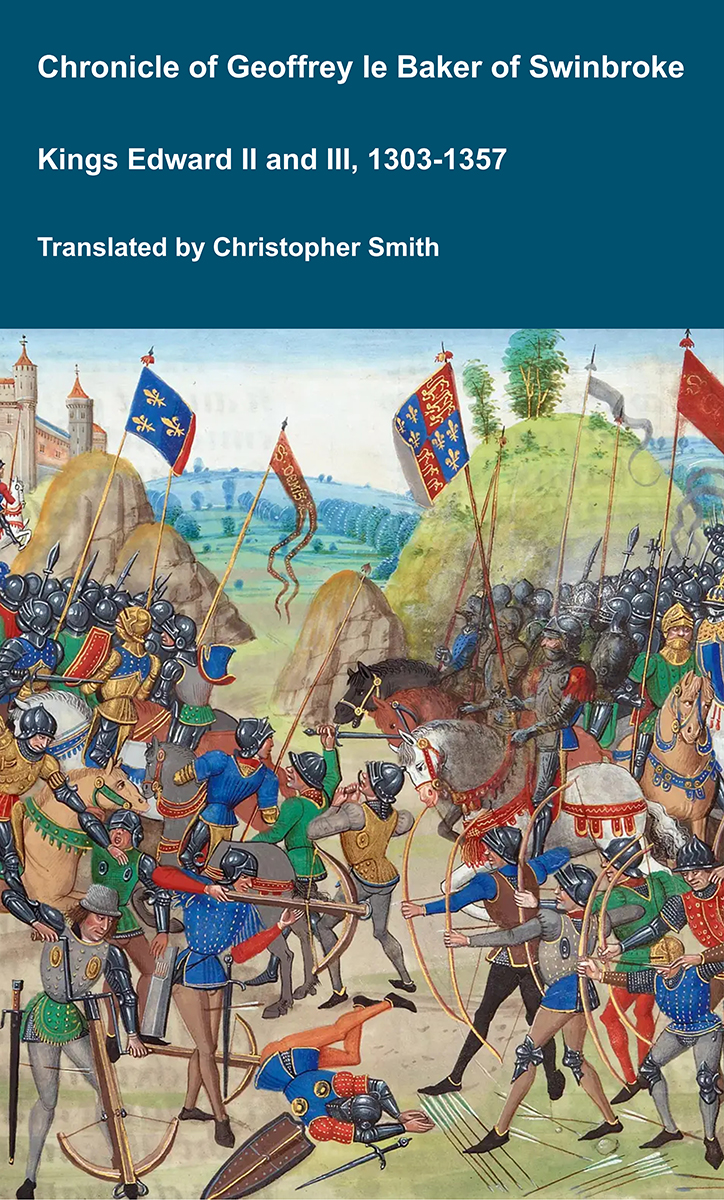 Chronicle of Geoffrey le Baker of Swinbroke. Thus the noble Lord Edward, formerly king, patiently accepted the deprivation of the royal crown and his liberty for the love of Jesus Christ, the poor crucified one. He remained with his kinsman, Henry, Earl of Leicester, needing nothing more than what was fitting for a recluse, living almost monastically. In the depths of his misfortune, this servant of God lamented nothing, except that his wife, whom he could not help but love, refused to see him. He had lived bereft of her embrace for more than a year, and she did not allow their son, the new king, nor any of their children, to offer him the comfort of their presence. How many tender laments did he utter in a soft voice, like a second Orpheus, but in vain. How often did he weep, mourning aloud, that one so noble and so endowed by nature with beauty could become embittered with the gall of betrayal. When others listened to him, he did not keep silent under oath, declaring that after first seeing her, he had never been able to love another woman. The love of this suffering man, his patience in all other misfortunes, so moved the earl his keeper and all their household, that they could not keep from informing his wife of the noble knight's lingering affection. But she, not moved by love but stirred by fury, the iron virago, began in secret thought to fear1 that the Church, accustomed to showing mercy to the wretched, might someday compel her to take back her rejected husband to her marriage bed. For she reasoned that even stronger men, indifferent or innocent of pity, might be turned to mercy by the sight of his suffering. And indeed, he had, through the endurance of his trials and the rich fragrance of every virtue, already won the pity of many who once were his enemies, whom she herself had appointed as his keepers.
Itaque generosus dominus Edwardus, quondam rex, regie corone atque libertatis privacionem pro amore Iesu Christi pauperis crucifixi pacienter admittens, cum suo consanguineco comite Leicestrie Henrico mansit, nullo egens quo reclusus et quasi monasticus indigebat. Nullum infortunium in ima depressus deplanxit Dei servus, nisi quod uxor sua, quam non potuit non amare, nolebat ipsum videre, cuius amplexibus plus quam per annum vixit viduatus, et quod nec illa permisit filium suum novum regem aut aliquem suorum liberorum sibi presenciale solacium prebere. Quot amorosa teleumata voce submissa tamquam alter Orfeus concinuit, set incassum Haa quociens deflevit querulus quod tam generosa et tot nature dotibus tam speciosa potuit prodicionis amaricari felle Auscultantibus quandoque non siluit sub iuramento quod, postquam primo vidit illam, nunquam aliam mulicrem potuit amare. Amor languentis, in ceteris adversis paciencia, comitem custodem et omnes illorum familiares ad miseracionem tantam provocarunt, quod generosi militis amorem languidum uxoris sue cordi duriori incude adamantino non dimiserunt nunciare. Unde, non amore mota set furore commota, ferrea virago secreto cogitatu cepit expavescere, ne unquam per ecclesiam, miseris consuetam misereri, foret compulsa viro repudiato iterum impertire torum. Excogitavit enim quod a forciori homines indifferentes et pietatis alumnos in sui miseracionem provocaret, qui suos inimicos, quos ipsa supra ministros ordinavit, per adversitatum tolleranciam et omnium virtutum uberem fragranciam ad pietatem sui inclinavit.
Note 1. One of the charges to which Orleton answered in his apology was that the queen was prevented from returning to her husband through his influence. Scriptores 10.2766-8: "As to the third charge, which is falsely alleged. The said libel claims that, through my false and deceitful preaching and assertions, I instilled such fear in the Lady Queen, the mother of our lord the king, while she was at Wallingford, that she did not dare approach her husband, the aforesaid king; and that, as a result, the good of the marriage, both in terms of the procreation of offspring and of mutual fidelity and the sacrament, was impeded. In reply, I say and assert that when the said Queen Isabella was staying at Wallingford with her son, our present lord the king, and heard certain criticisms concerning the fact that she had not gone to her husband in person, she took counsel with deliberate intent. With the advice of the reverend fathers of blessed memory, Walter, then Archbishop of Canterbury, John, then Bishop of Winchester, now Archbishop-elect of Canterbury, William, Bishop of Norwich; and the noble lords the Earls of Lancaster, Kent, and other nobles of her council, at which I myself, then Bishop of Hereford, was present, it was enjoined upon me to publicly state certain specific reasons by which the queen could justly fear the cruelty of the said king, which she had frequently experienced. I was to defend her against such slanders and accusations. This I did, in accordance with the information given to me, in the presence of the Archbishop of Canterbury and the nobles named above, adding nothing of my own, and omitting nothing that had been instructed. Furthermore, while I was outside the kingdom of England, the said Lady Queen, because of continued criticism, caused a great assembly to be held at Stamford [23–24 April 1327], summoning the same bishops and nobles, along with many other prelates, earls, barons, and nobles of the realm, in great number. There, after careful discussion, it was unanimously agreed and advised to the said Lady Queen that under no circumstances should she be permitted to approach the said king, even though she had offered herself ready and willing to do so, if it could be done in safety. All these things are so public and well known throughout the kingdom of England that there is no room for denial. From this, it is manifestly clear how false and malicious are the inventions and fabrications of those things contained in the third part of the said appeal or scandalous libel. Moreover, the aforesaid Lady Queen, long before the said sermon [of Bishop Orleton], while she was still in France, had a just fear of the cruelty of the king, her husband, as is evident from a letter sent on this matter to the late reverend father Lord W[alter], by the grace of God, Archbishop of Canterbury, of blessed memory, containing the following: 'Reverend father in God, we have carefully read your letter, in which you request that we return to the company of our most dear lord and husband, and you inform us that Sir Hugh le Despenser is not our enemy, but rather wishes us well, as you say. Of this we greatly marvel, for neither you nor anyone of sound understanding ought to believe that we would leave the company of our said lord without very great and reasonable cause. And if it were not to avoid danger to our person, and out of fear of the said Hugh, who had the governance of our said lord and of the whole realm, and who sought to dishonour us to the utmost of his power, as we are certain, and have well proven, though we long dissembled it to avoid danger. Indeed, we desire above all things, after God and the salvation of our soul, to be in the company of our said lord, to live and die in it. Therefore, we beg you as much as we can that you excuse us for not being able to do what you request in this matter, for we cannot in any way return to the company of our said lord without putting ourselves in danger of death, of which we are in such great peril that we cannot even write more fully." Given at Paris, Wednesday after Candlemas [5th February 1326].
It has already been seen, from Dene's account, that Orleton declared in the parliament of the 7th January that the queen would be murdered by her husband, if she returned to him. In the judgement passed upon Mortimer in the parliament of November 1330, one of the charges was [Parliament Rolls, 2.53.]: "The said Roger [de Mortimer], falsely and maliciously, sowed discord between our lord the king's father and the queen his wife, and made her believe that, if she were to come to him, he would kill her with a knife or murder her in some other way. Because of this, and by his other deceits, he caused the said queen never to come to her said lord, to the great dishonour of the king and of the queen his mother, and to the great harm of the entire realm, with consequences that may arise in time to come, God forbid."
A touching passage of the Brute chronicle (Harley MS. 2279) may also here be quoted: "And this Edwarde of Carnarvon was in the castel of Barkelegh, under the kepyng of sir Morice of Berkelee and of sir John of Mautravers; and to hem he made his compleynt of his sorowe and his disease. And ofte tymes he axede of his wardeyns what he had trespassed ayens dame Isabelle his wife and sir Edward his sone, that was newe made kyng, that thei wolde noujte visite him. Tho answerde on of his wardeynes: 'Mi worthi lorde, displese yow noughte that I shalle yow telle the incheson is, for hit is done hem to understonde that if my ladie your wife come eny thing nygh yow that ye wolde hire strangle and quelle; and also that ye wolde done to my lorde youre sone.' Then answerde he with simple chere and seide: 'Alas! alas! Am I nought in prison and alle atte youre owene wille? Now God hit wote, I thoujte hit never; and now I wolde that I were dede, so wolde God that I were, for than were alle my sorowe passede.'"
In 1327 Melbourne Castle was given to Henry of Lancaster by the Crown.
After 27th January 1327 Henry Plantagenet 3rd Earl of Leicester 3rd Earl Lancaster was restored 3rd Earl Lancaster.
On 16th November 1327 [his son-in-law] William Donn Burgh 3rd Earl of Ulster and Maud Plantagenet Countess Ulster were married. She by marriage Countess of Ulster. She the daughter of Henry Plantagenet 3rd Earl of Leicester 3rd Earl Lancaster and Maud Chaworth.
Around 1328 Henry of Grosmont 1st Duke Lancaster and Isabel Beaumont Duchess Lancaster were married. She the daughter of Henry Beaumont Earl Buchan and Alice Comyn 4th Countess Buchan. He the son of Henry Plantagenet 3rd Earl of Leicester 3rd Earl Lancaster and Maud Chaworth.
On 6th November 1330 [his son-in-law] John Beaumont 2nd Baron Beaumont and Eleanor Plantagenet Countess Arundel and Surrey were married. She the daughter of Henry Plantagenet 3rd Earl of Leicester 3rd Earl Lancaster and Maud Chaworth. He the son of Henry Beaumont Earl Buchan and Alice Comyn 4th Countess Buchan.
Before 24th June 1340 [his son-in-law] John Mowbray 3rd Baron Mowbray and Joan Plantagenet Baroness Mowbray were married. She by marriage Baroness Mowbray. She the daughter of Henry Plantagenet 3rd Earl of Leicester 3rd Earl Lancaster and Maud Chaworth.
Before 10th November 1341 [his son-in-law] Henry Percy 11th and 3rd Baron Percy and Mary Plantagenet Baroness Percy were married. She by marriage Baroness Percy of Alnwick. She the daughter of Henry Plantagenet 3rd Earl of Leicester 3rd Earl Lancaster and Maud Chaworth.
In or before 1345 [his son-in-law] Ralph Ufford and Maud Plantagenet Countess Ulster were married. She the daughter of Henry Plantagenet 3rd Earl of Leicester 3rd Earl Lancaster and Maud Chaworth.
In 1345 [his daughter] Isabel Plantagenet died.
On 5th April 1345 [his son-in-law] Richard Fitzalan 3rd or 10th Earl of Arundel 8th Earl of Surrey and Eleanor Plantagenet Countess Arundel and Surrey were married at Ditton Church, Stoke Poges. She by marriage Countess Arundel. She the daughter of Henry Plantagenet 3rd Earl of Leicester 3rd Earl Lancaster and Maud Chaworth. He the son of Edmund Fitzalan 2nd or 9th Earl of Arundel and Alice Warenne Countess Arundel.
On 22nd September 1345 Henry Plantagenet 3rd Earl of Leicester 3rd Earl Lancaster died at Leicester Castle. [his son] Henry of Grosmont 1st Duke Lancaster succeeded 4th Earl of Leicester, 4th Earl Lancaster.
After 22nd September 1345 Henry Plantagenet 3rd Earl of Leicester 3rd Earl Lancaster was buried at Church of the Annunciation of our Lady of the Newark, or possibly the Hospital Chapel, at a ceremony attended by King Edward III of England and his wife Philippa of Hainaut Queen Consort England. His son Henry of Grosmont 1st Duke Lancaster subsequently had his remains moved to St Mary de Castro Leicester, Leicestershire.
Chronicle of Geoffrey le Baker of Swinbroke. In this year, after the feast of Saint Martin, there assembled at Calais1 the Bishop of Norwich, the Earl of Lancaster, the Earl of Suffolk, and Lord Walter Mauny on the part of the English; and on the part of the French, the Bishop of Lyon, the Duke of Bourbon, the Duke of Dauphiné, the Count of Guînes, the Lord of Tancarville, and Lord Geoffrey de Charny, for the purpose of renewing the truces. But the Earl of Lancaster refused to give his assent until two fortifications at Calais, which were harmful and built contrary to the terms of the previous truces, had been demolished. Once that had been done, the truces were renewed, set to last until the first day of December of the following year.
Isto anno, post festum sancti Martini, convenerunt apud Calesiam episcopus Norwycensis, comes Lancastrie, comes Suthfolchie, et dominus Walterus Magne, ex parte Anglorum; item, episcopus Lugdunensis, dux de Burbone et dux Dactenes et comes de Gynes et dominus de Tankerville et dominus Galfridus de Charny, ex parte Francorum, pro treugis renovandis; quibus noluit comes Lancastrie assentire, quousque duo fortalicia Calesie nociva et contra formam pristinarum treugarum edificata fuerant diruta. Quo facto, renovate sunt treuge, usque ad primum diem Decembris anni proximo futuri durature.
Note 1. The commission to the English envoys is dated 25th September 1348. The French envoys were Hugues, bishop of Laon, Jean de Nesle, sire d'Offemont, Geoffroi de Charny, and the master of the crossbowmen. The prolongation of the truce to the 1st September (not December) of the following year was agreed to on the 13th November. Rymer's Fœdera 3.173, 177. Baker appears to have confused the negotiations of this and the next year.
After 1353 Henry Plantagenet 3rd Earl of Leicester 3rd Earl Lancaster was reburied at Church of the Annunciation of our Lady of the Newark.
On 23rd April 1376 King Edward III of England created a number of new Garter Knights..
54th John Montfort V Duke Brittany.
55th Thomas Banastre.
56th William Ufford 2nd Earl Suffolk.
57th Hugh Stafford 2nd Earl Stafford.
58th [his grandson-in-law] Thomas Holland 2nd Earl Kent. He the son of Joan "Fair Maid of Kent" Princess Wales whose second husband was Edward III's son Edward "Black Prince".
59th Thomas Percy 1st Earl of Worcester was appointed 59th. He the son of Mary Plantagenet Baroness Percy daughter of Henry Plantagenet 3rd Earl of Leicester 3rd Earl Lancaster who was the first cousin of Edward III's father King Edward II of England.

Around 1400. Window in the Chicheley Chapel at St Andrew's Church, Wimpole from the late 14th early 15th Century depicting alliances of the Ufford family (who are thought to have owned the manor of Wimpole before the Chicheleys) and the Plantagenets through the marriage of [his former son-in-law] Ralph Ufford and Maud Plantagenet Countess Ulster, daughter of Henry Plantagenet 3rd Earl of Leicester 3rd Earl Lancaster .
From top to bottom, left to right:
 Tiptoft Arms. The Tiptoft family owned the nearby manor of Harleston.
 Avenell Arms. The Avenell family once held a manor in Wimpole.
Telemache Arms.
 Ufford Arms. Believed to be the arms of William Ufford 2nd Earl Suffolk. Note the difference of an annulet argent (white) in the top left corner.
 Bohun Arms. Possibly William Bohun 1st Earl of Northampton.
 Henry Plantagenet 3rd Earl of Leicester 3rd Earl Lancaster 1281 1345 Arms. Possibly Henry Plantagenet 3rd Earl of Leicester 3rd Earl Lancaster although the label doesn't appear to have the fleur de lys of France.
Bassingbourne Arms.
Engaine Arms. John de Engaine lived in Huntingdonshire.
 Lisle Arms. Possibly Robert Lisle 1st Baron Lisle. Robert settled at nearby Rampton.
Robert Ufford 1st Earl Suffolk who married Margaret Norwich Countess Suffolk whose father Walter Norwich owned the manor of Cobbs in Wimpole.
Ufford Arms with a label three points. Believed to be Robert Ufford who predeceased his father Robert Ufford 1st Earl Suffolk.
Bassingbourne Arms.
The figure in the middle is believed to represent William Ufford 2nd Earl Suffolk.
From an original description by James C Powell 1903.
